



غالبًا ما يؤدي اختيار المادة المناسبة للتطبيقات الصناعية شديدة التآكل إلى المقارنة بين سبيكتين من سبائك النيكل والحديد والكروم القوية: سبيكة 20 (UNS N08020) وسبائك Incoloy 825 (UNS N08825). في حين أن كلاهما مصمم لتحمل الوسائط العدوانية، إلا أن الفروق المعدنية الدقيقة بينهما تحدد مدى ملاءمتهما لعمليات كيميائية محددة. تستكشف هذه المقالة الاختلافات الفنية ومعايير الأداء ومعايير الاختيار لهذه السبائك.
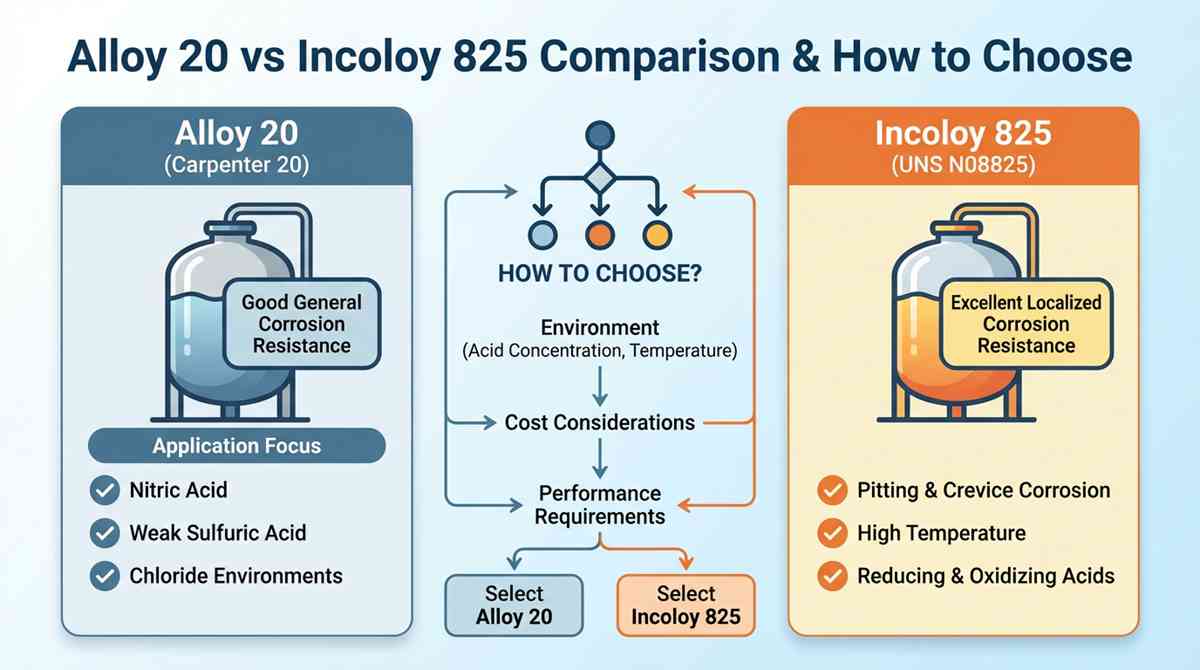
مقارنة سبيكة 20 مع سبيكة الإنكولويد 825
من المنظور المعدني، كلتا المادتين عبارة عن سبائك “أوستنيتي فائقة” أو سبائك عالية النيكل مصممة لسد الفجوة بين الفولاذ المقاوم للصدأ القياسي من السلسلة 300 والسبائك الفائقة عالية التكلفة ذات القاعدة النيكلية. ومع ذلك، فإن عناصر التثبيت ومحتوى النيكل يميزهما عن بعضهما البعض.
يتم تثبيت سبيكة 20، التي يُشار إليها غالبًا باسم “كاربنتر 20”، بالنيوبيوم (كولومبيوم). تمنع هذه الإضافة التآكل بين الخلايا الحبيبية عن طريق تثبيط ترسيب الكربيد أثناء اللحام. من ناحية أخرى، يتم تثبيت سبيكة Incoloy 825 بالتيتانيوم، الذي يخدم غرضًا مماثلًا ولكنه يتصرف بشكل مختلف في البيئات المؤكسدة.
مقارنة الخصائص الكيميائية والميكانيكية
| الممتلكات | سبيكة 20 (UNS N08020) | سبيكة الإنكولوي 825 (UNS N08825) |
| نيكل (نيكل) % | 32.5 - 38.0 | 38.0 - 46.0 |
| الكروم (كروم) % | 19.0 - 21.0 | 19.5 - 23.5 |
| النحاس (النحاس) % | 3.0 - 4.0 | 1.5 - 3.0 |
| الموليبدينوم (Mo) % | 2.0 - 3.0 | 2.5 - 3.5 |
| المثبت | النيوبيوم (Nb) | التيتانيوم (Ti) |
| قوة الشد (ksi) | 80 دقيقة | 85 دقيقة |
| قوة الخضوع (إزاحة 0.2%، كسي) | 35 دقيقة | 35 دقيقة |
بينما تتميز سبيكة Incoloy 825 بمحتوى أعلى من النيكل - مما يمنح مقاومة فائقة للتشقق الإجهادي الناجم عن الكلوريد (SCC) - تتميز سبيكة 20 بمستويات أعلى من النحاس، وهو سر أدائها الأسطوري في تقليل الأحماض.
كيفية الاختيار بين سبيكة 20 مقابل سبيكة الإنكولوي 825
نادرًا ما يكون القرار بين سبيكة 20 وسبائك Incoloy 825 حول أيهما “أفضل”، بل أيهما “مناسب” للكيمياء البيئية المحددة.
-
مقاومة الكلوريد: إذا كان استخدامك ينطوي على مستويات عالية من الكلوريد (مثل مياه البحر أو المياه قليلة الملوحة) حيث يكون التنقر والتآكل الشقوق من المخاوف الأساسية، فإن Incoloy 825 عادةً ما يكون الرهان الأكثر أمانًا. يوفر محتواه العالي من الموليبدينوم والنيكل رقمًا مكافئًا لمقاومة التنقر (PREN).
-
حدود درجة الحرارة: عادةً ما يتم تصنيف Incoloy 825 للخدمة حتى ()، على الرغم من أن خواصها الميكانيكية تظل مستقرة في درجات الحرارة المبردة أيضًا. تُستخدم السبيكة 20 في كثير من الأحيان في العمليات التي تظل فيها درجات الحرارة أقل من .
-
كفاءة التكلفة: من الناحية التاريخية، كانت سبيكة 20 هي الخيار الأكثر فعالية من حيث التكلفة لمصانع المعالجة الكيميائية التي تركز بشكل صارم على حامض الكبريتيك. ومع ذلك، نظرًا لاستخدام سبيكة Incoloy 825 على نطاق أوسع في قطاع النفط والغاز، فإن التوافر العالمي يمكن أن يجعل 825 في بعض الأحيان أكثر سهولة على الرغم من ارتفاع محتوى النيكل.
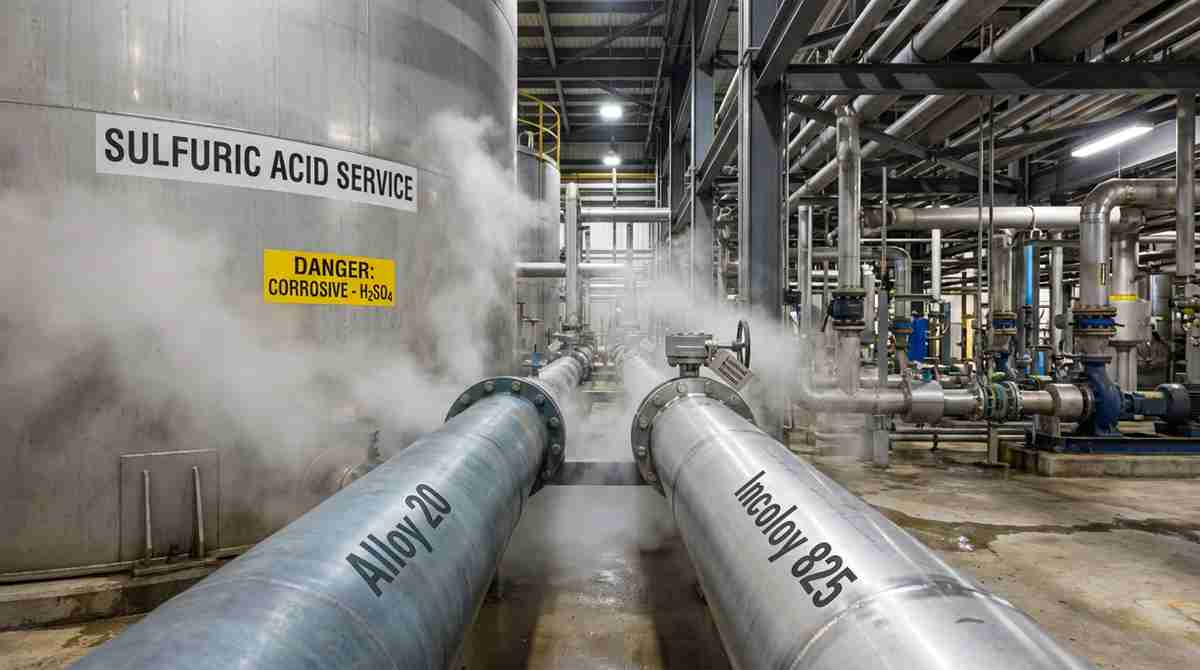
سبيكة 20 مقابل 825 لخدمة حامض الكبريتيك
حمض الكبريتيك () هي ساحة المعركة الأساسية لهاتين السبيكتين. تم تطوير سبيكة 20 خصيصًا لخدمة حامض الكبريتيك. محتواها العالي من النحاس () يسمح لها بالحفاظ على طبقة واقية في وجود هذا الحمض المختزل، حتى في التركيزات التي من شأنها أن تدمر بسرعة الفولاذ المقاوم للصدأ 316L.
-
أداء سبيكة 20: غالبًا ما تكون “المعيار الذهبي” لـ إلى حمض الكبريتيك في درجات حرارة مرتفعة. يُظهر مقاومة ممتازة عبر نطاق التركيز بأكمله حتى حوالي ().
-
أداء سبيكة الإنكولوي 825: في حين أن سبيكة 825 ممتازة أيضًا في , ، يُفضل في كثير من الأحيان عندما يكون الحمض “مخلوطًا” يحتوي على أملاح مؤكسدة (مثل أيونات الحديديك أو النحاسية) أو الكلوريدات. في حمض الكبريتيك عالي التركيز في درجات الحرارة العالية ()، تبدأ كلتا السبيكتين في الوصول إلى حدودها القصوى، وغالبًا ما تتطلب مواد أكثر تخصصًا مثل Hastelloy® C276.
وباختصار، بالنسبة لحلقات حامض الكبريتيك النقية “النظيفة”، توفر السبيكة 20 أطول عمر يمكن الاعتماد عليه. أما بالنسبة للتيارات الكيميائية المعقدة والملوثة، توفر سبيكة Incoloy 825 نطاقًا أوسع من الحماية.
أسئلة وأجوبة ذات صلة
س1: هل السبيكة 20 أكثر مقاومة للتشقق الإجهادي (SCC) من سبيكة Incoloy 825؟ بشكل عام، لا. في حين أن سبيكة 20 مقاومة للتآكل الإجهادي (SCC)، فإن محتوى النيكل الأعلى في سبيكة Incoloy 825 () دفاعًا أقوى قليلاً ضد التشقق الإجهادي الناتج عن الكلوريد في البيئات القاسية.
س2: هل يمكن استخدام السبيكة 20 في خدمة حمض النيتريك؟ نعم. نظرًا لمحتواها من الكروم، تتمتع سبيكة 20 بمقاومة جيدة للأحماض المؤكسدة مثل حمض النيتريك. ومع ذلك، إذا كانت البيئة مؤكسدة بشكل صارم، فقد يتم تقييم سبيكة Incoloy 825 أو حتى سبيكة 600 اعتمادًا على التركيز ودرجة الحرارة.
س3: ما السبيكة الأسهل لحامًا؟ تتمتع كلتا السبيكتين بقابلية لحام ممتازة. إن تثبيت النيوبيوم في سبيكة 20 يجعلها مقاومة للغاية للتآكل بين الخلايا الحبيبية في المنطقة المتأثرة بالحرارة (HAZ). يعد استخدام معدن الحشو الصحيح (على سبيل المثال، ER320LR للسبائك 20 و ERNiCrMo-3 للسبائك 825) أمرًا بالغ الأهمية للحفاظ على مقاومة التآكل.