Material failure in aggressive chemical processing or high-heat environments is rarely a sudden event; it is usually a symptom of severe metallurgical misalignment. Engineers frequently ask how to choose درجات سبائك النيكل that will actually survive specific combinations of acids, chlorides, and thermal cycling. Making the wrong specification leads to localized pitting, catastrophic stress corrosion cracking, and unacceptable downtime. The secret lies not just in scanning generic grade names, but in understanding the specific microstructural behavior of the alloying elements under operational stress.
Analyzing Corrosive Media for Nickel Alloy Selection
When determining how to choose nickel alloy families, your first diagnostic step must be a rigorous assessment of the corrosive medium. Is the environment oxidizing or reducing? This fundamental question dictates your elemental requirements.
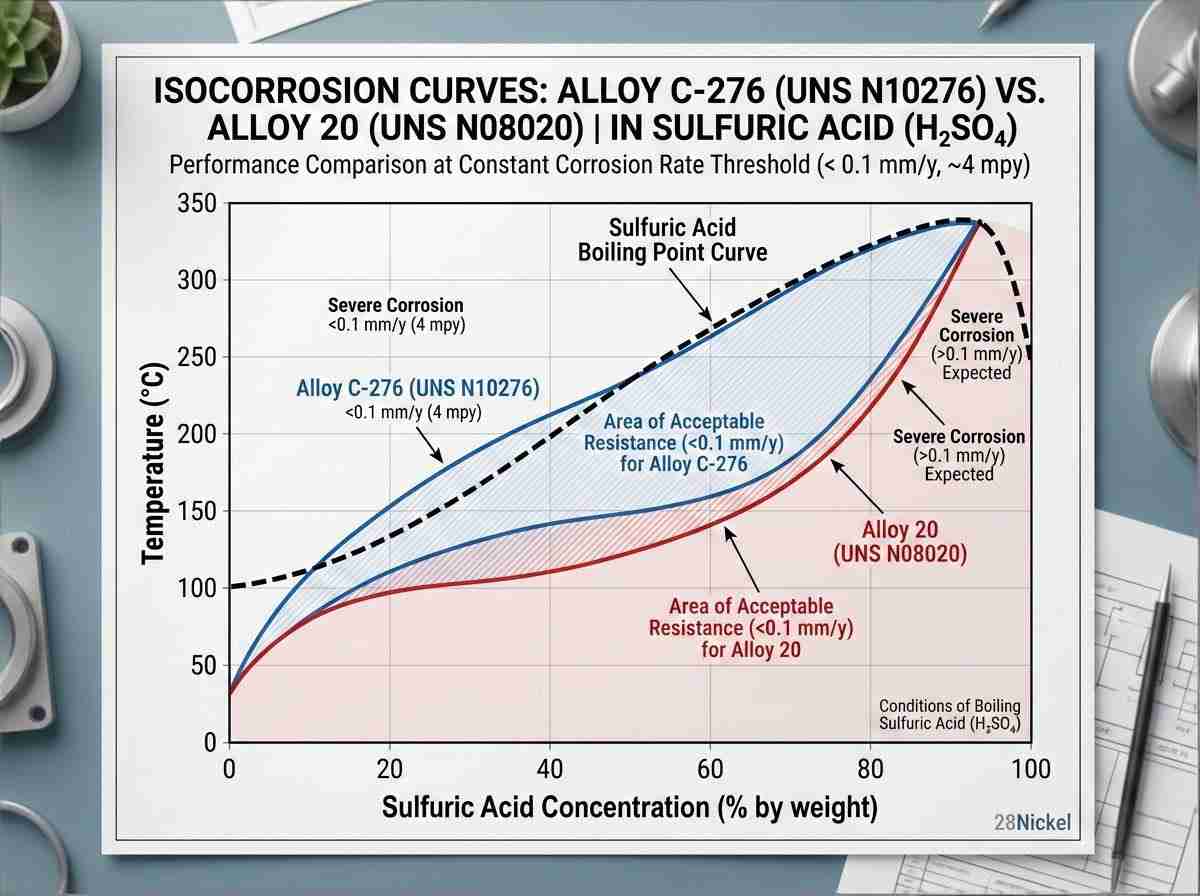
In reducing environments, such as those containing hydrochloric or hydrofluoric acid, high molybdenum and copper additions are critical. The Ni-Cu matrix, exemplified by Alloy 400, offers excellent thermodynamic stability under these precise conditions. Conversely, oxidizing environments require significant chromium to form a passive, tenacious oxide layer.
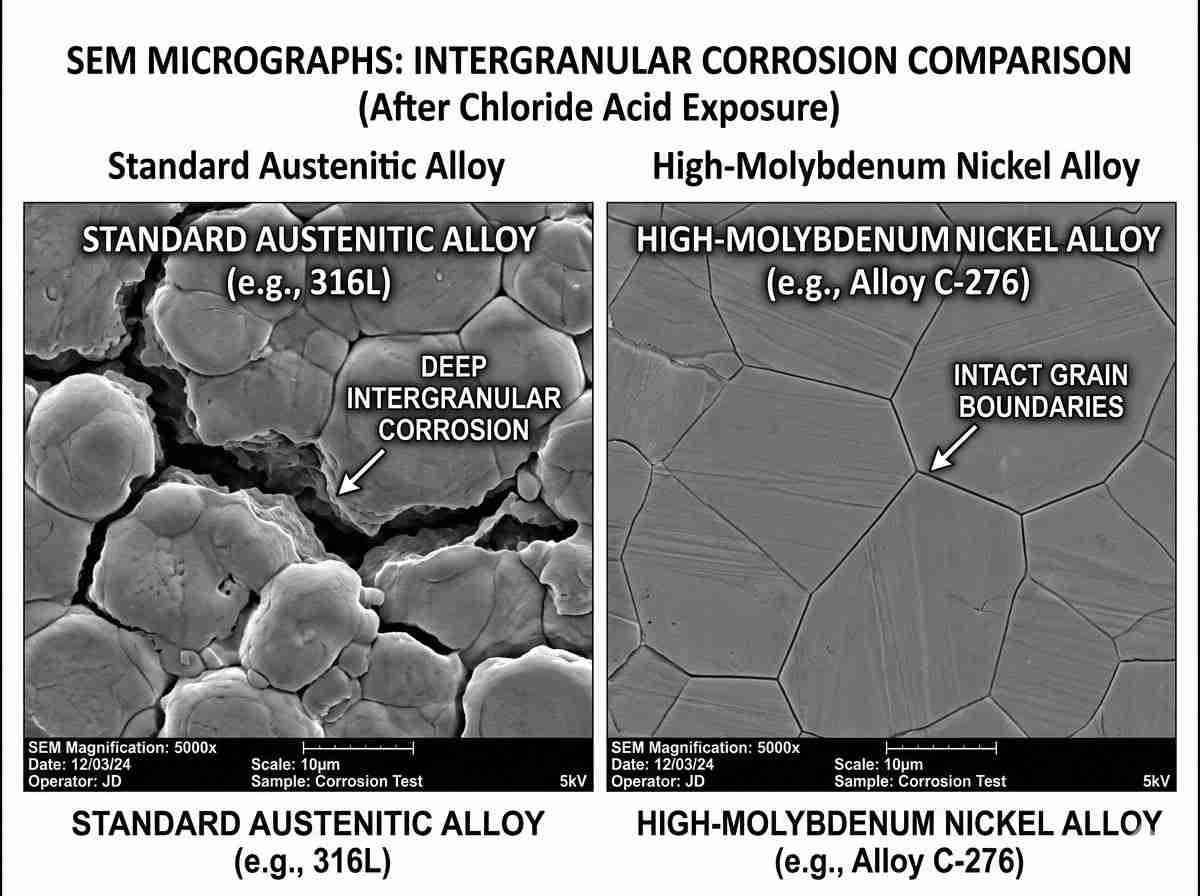
For mixed media involving both oxidizing and reducing conditions, coupled with high chloride concentrations, the Ni-Cr-Mo system is mandatory. A classic example is Alloy C-276. It contains high molybdenum (approx. 16%) and tungsten (approx. 4%), which provide exceptional resistance to localized pitting and crevice corrosion. If your engineering team is struggling with how to choose nickel alloy for wet scrubbers or sour gas wells, calculating the Pitting Resistance Equivalent Number (PREN) is a non-negotiable first step.
| درجة السبيكة | ني (%) | كر (%) | مو (%) | الحديد (%) | Estimated PREN | درجة الحرارة القصوى للخدمة |
| سبيكة 400 | 63.0 دقيقة | – | – | 2.5 كحد أقصى | غير متاح | 1000°F (538°C) |
| سبيكة 625 | 58.0 دقيقة | 20.0 - 23.0 | 8.0 - 10.0 | 5.0 كحد أقصى | 45 - 50 | 1800°F (982°C) |
| سبيكة 718 | 50.0 - 55.0 | 17.0 - 21.0 | 2.8 - 3.3 | الرصيد | 26 – 31 | 1300°F (704°C)* |
| سبيكة C-276 | الرصيد | 14.5 - 16.5 | 15.0 - 17.0 | 4.0 - 7.0 | > 64 | 1900°F (1038°C) |
The Role of Nickel in Mitigating Stress Corrosion Cracking
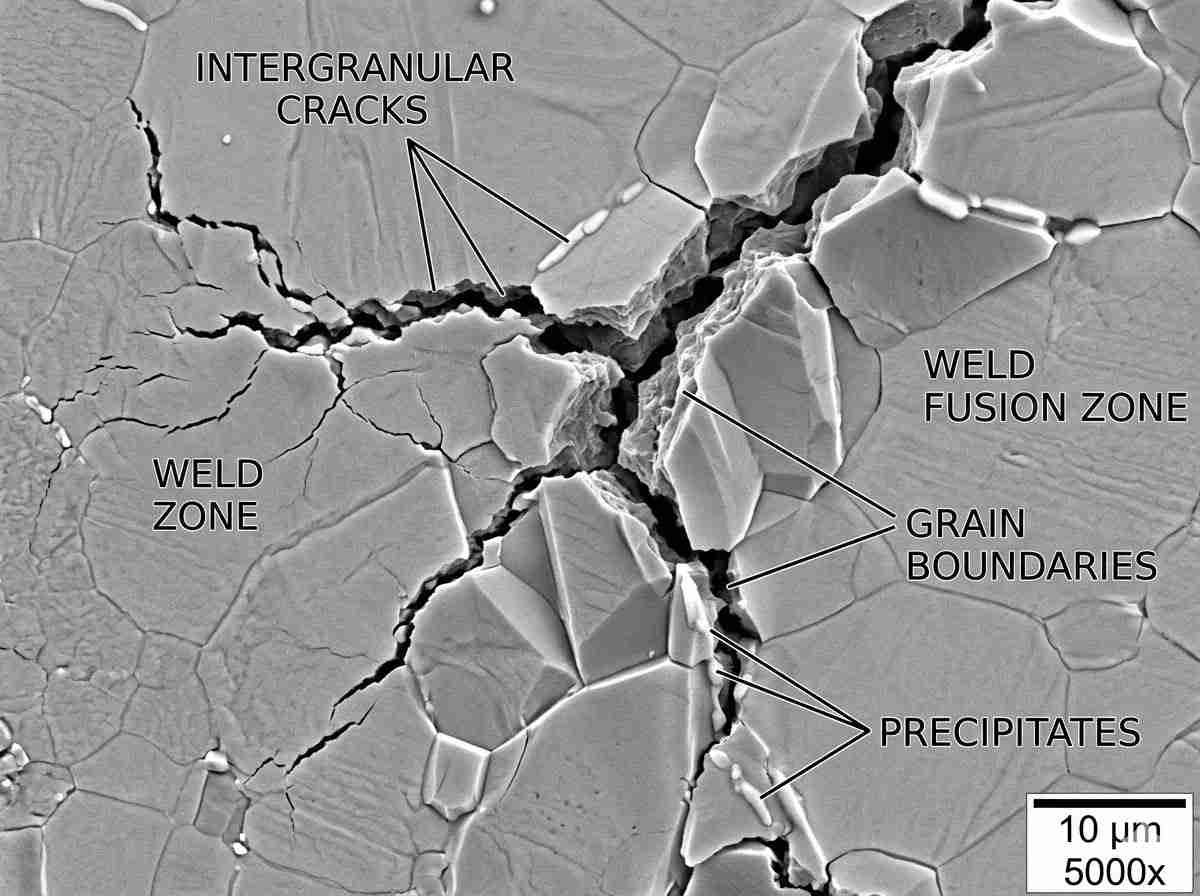
One of the most insidious failure mechanisms in chemical processing is Chloride Stress Corrosion Cracking (CSCC). Standard 300-series stainless steels are notoriously susceptible to this phenomenon at temperatures above 60°C in chloride-bearing environments. When determining how to choose nickel alloy replacements to combat CSCC, the fundamental metric is the total nickel weight percentage.
The famous Copson Curve illustrates that susceptibility to CSCC drops dramatically as nickel content increases. Alloys with a nickel content exceeding 42%, such as Alloy 825, offer near-immunity to chloride-induced cracking. For absolute certainty in the most aggressive high-temperature chloride brines, scaling up to a high-nickel grade like Alloy 600 or Alloy 625 (both exceeding 58% nickel) is the standard engineering practice. However, simply maximizing nickel is not always the answer. If the environment also contains sulfur compounds, high-nickel alloys without sufficient chromium can suffer from severe sulfidation. Therefore, when you are evaluating how to choose nickel alloy for mixed-gas petrochemical environments, a careful equilibrium between nickel, chromium, and silicon must be maintained.
Mechanical Stability and High-Temperature Criteria
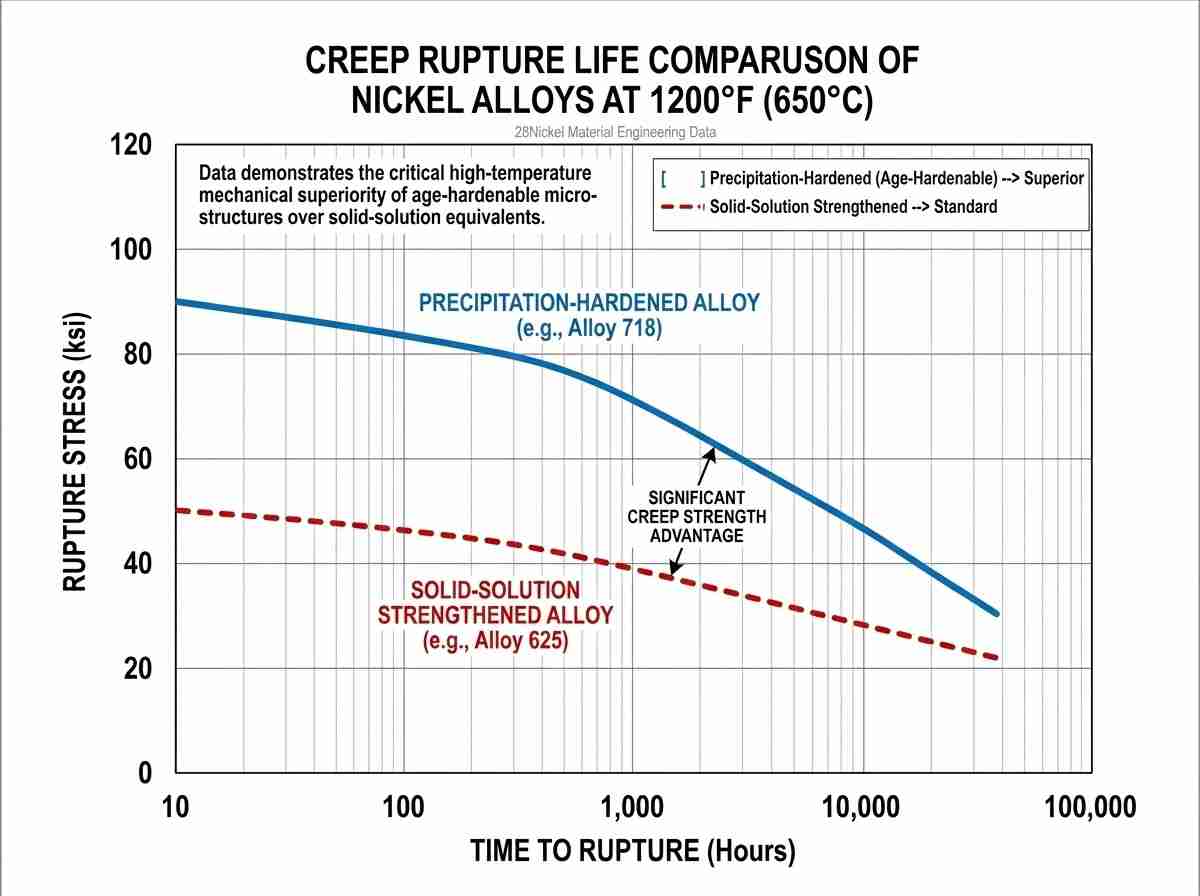
Corrosion resistance is only half the battle. If your application involves elevated temperatures, how to choose nickel alloy depends heavily on mechanical stability and creep resistance. You must differentiate between solid-solution strengthened alloys and precipitation-hardenable (age-hardenable) alloys.
Solid-solution alloys, such as Alloy 625, rely on the stiffening effect of molybdenum and niobium within the nickel-chromium matrix. They retain high tensile strength and toughness from cryogenic temperatures up to roughly 1800°F (982°C). However, for applications requiring extreme yield strength under sustained high-temperature loading—like gas turbine blades or high-pressure extrusion dies—you need an age-hardenable microstructure.
Alloy 718 utilizes additions of titanium and aluminum, alongside niobium, to form microscopic precipitates (gamma prime and gamma double-prime phases) during heat treatment. These precipitates lock the crystal lattice, preventing dislocation movement. When figuring out how to choose nickel alloy for these high-stress scenarios, one must meticulously evaluate the time-temperature-transformation (TTT) diagrams to avoid the precipitation of brittle phases.
Thermal Cycling and Phase Embrittlement
Evaluating how to choose مواد سبائك النيكل also requires a deep understanding of thermal fatigue. Constant heating and cooling cycles induce internal stresses due to thermal expansion. سبائك النيكل generally have lower coefficients of thermal expansion than standard austenitic stainless steels, making them superior for cyclical high-heat applications. However, extended exposure to intermediate temperatures (1200°F – 1600°F) can cause metallurgical instability. If you want to know how to choose nickel alloy that resists this specific degradation, you must analyze long-term aging data rather than just room-temperature tensile tests.
Engineering a Lasting Solution
Ultimately, specifying a material for severe service is a complex metallurgical puzzle. Knowing exactly how to choose nickel alloy requires balancing chemical compatibility, mechanical limits, and long-term microstructural stability. A slight variation in operating temperature or the introduction of a trace impurity in your process fluid can completely alter the required alloy profile. Do not rely on generalized datasheets or guesswork. At 28Nickel, our materials engineering team provides deep-dive metallurgical analysis tailored to your specific operational parameters. Reach out to our technical department to discuss your exact environmental data, and we will help you engineer a reliable, rigorously tested solution.
أسئلة وأجوبة ذات صلة:
Q1: Why is the PREN value critical when deciding how to choose nickel alloy for seawater applications?
A1: The Pitting Resistance Equivalent Number (PREN) calculates an alloy’s resistance to localized pitting based on its Chromium, Molybdenum, and Nitrogen content. In chloride-rich seawater, alloys must typically possess a PREN > 40 (like Alloy 625) to prevent rapid intergranular attack and crevice corrosion under marine biofilms.
Q2: How does sigma phase embrittlement affect nickel alloy selection at high temperatures?
A2: Sigma phase is a hard, brittle intermetallic compound that forms in high-chromium/molybdenum alloys during prolonged exposure to temperatures between 1200°F and 1600°F. If your application operates in this range, selecting an alloy with tighter compositional controls or specifically optimized for thermal stability is mandatory to prevent a catastrophic loss of impact ductility.
Q3: Can I substitute Alloy C-276 for Alloy 400 in reducing acid environments?
A3: While Alloy C-276 is an exceptional all-rounder, Alloy 400 (a Ni-Cu matrix) is thermodynamically superior in de-aerated, reducing acids like pure hydrofluoric acid. Over-specifying to a Ni-Cr-Mo alloy like C-276 in strict reducing conditions without oxidizers might not yield better performance and represents an unnecessary metallurgical overkill.