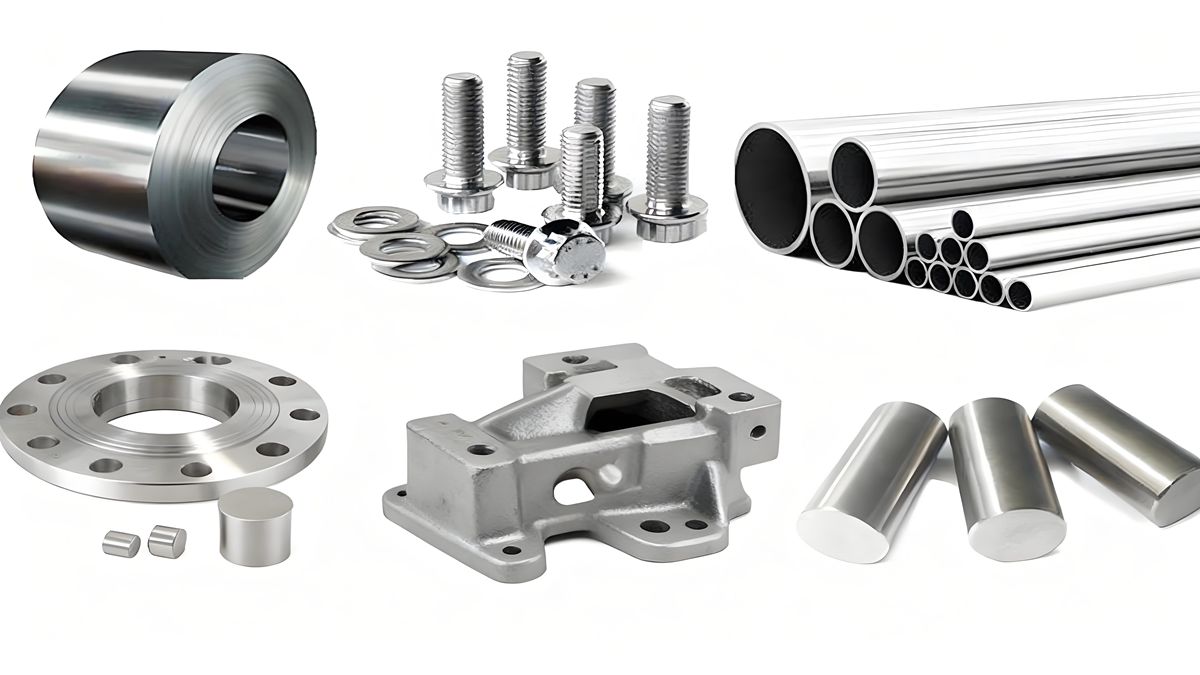
In the demanding landscape of chemical processing and marine engineering, material failure is rarely an option. While austenitic stainless steels serve a broad range of applications, they frequently meet their limit in non-oxidizing acids and high-velocity seawater. This is where Monel corrosion resistance becomes the decisive factor for technical specification. As a nickel-copper solid-solution alloy, Monel (specifically Alloy 400 and K-500) offers a unique electrochemical profile that remains noble in environments where chromium-based alloys suffer from rapid depassivation.
The Electrochemical Synergy of Nickel and Copper
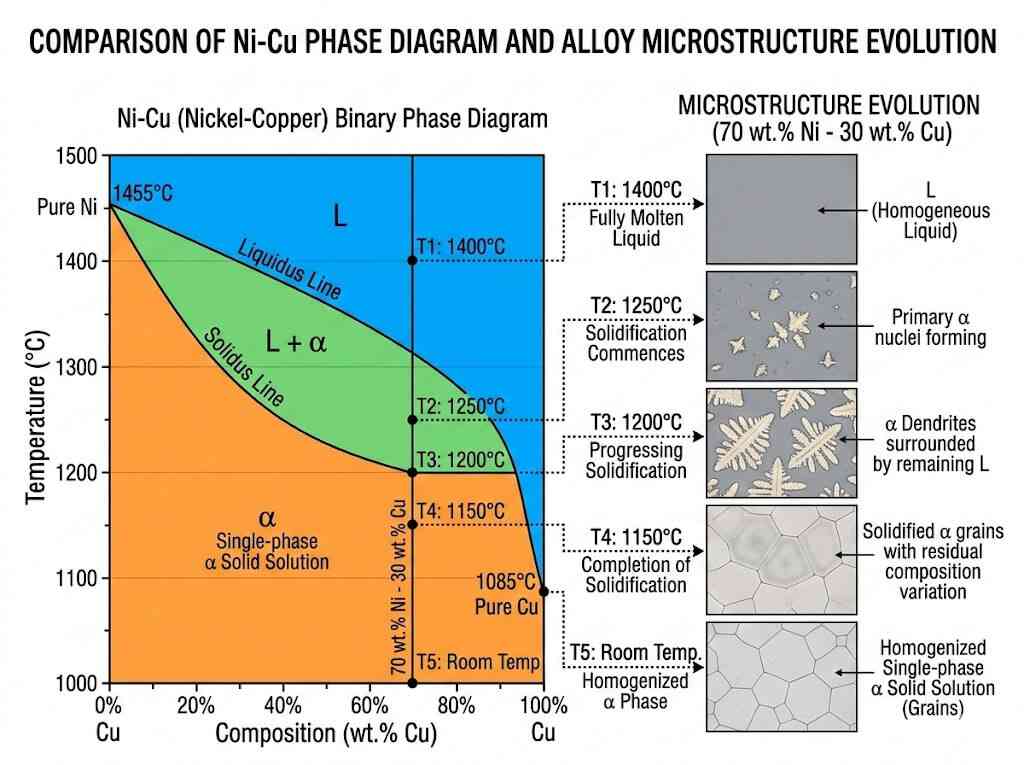
The fundamental reason behind the superior Monel corrosion resistance lies in its binary composition. By alloying approximately 63% nickel with 28-34% copper, the material benefits from the noble characteristics of both elements. Unlike stainless steels, which rely on a fragile chromium-oxide “passive” layer that can be stripped away by chlorides or reducing agents, Monel is inherently resistant to many non-oxidizing conditions.
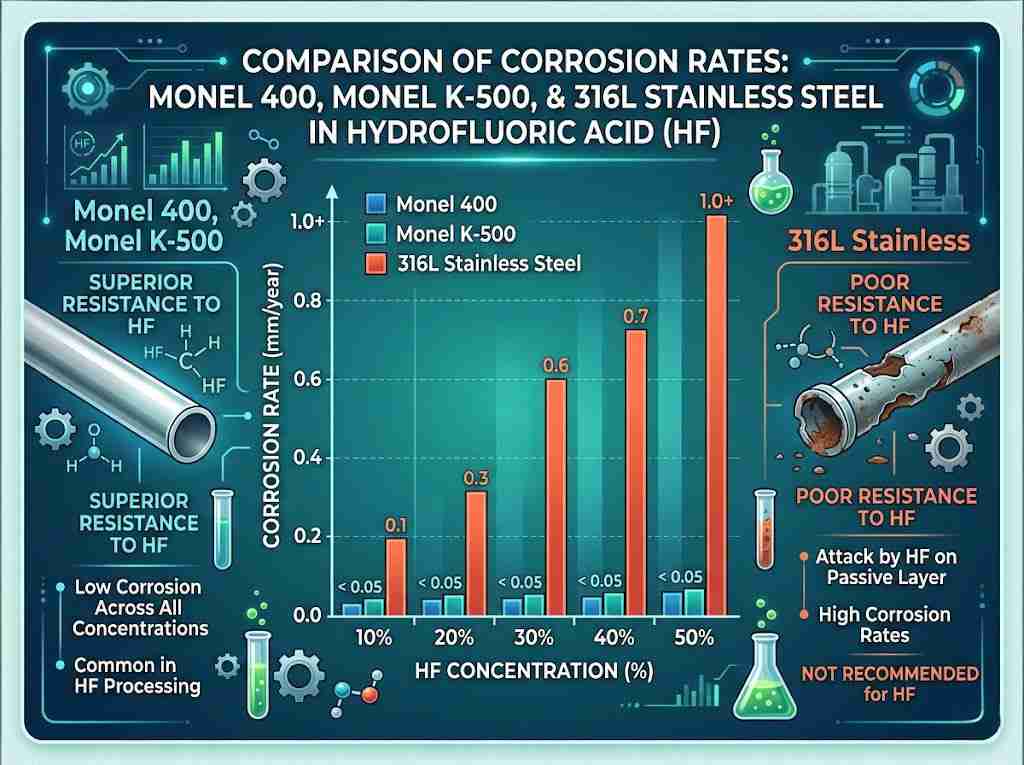
In hydrofluoric acid (HF) alkylation units—one of the most aggressive environments in refining—Monel 400 is the industry standard. It maintains a low corrosion rate across all concentrations up to the boiling point, provided that the acid is not highly aerated.
Comparative Performance: Monel 400 vs. Common Alloys
The following table highlights the performance metrics of Monel compared to other industrial alloys in specific corrosive media.
| Environment | مونيل 400 | 316L Stainless | C276 Hastelloy |
| Boiling 70% HF Acid | ممتاز | الفشل السريع | جيد |
| Stagnant Seawater | Subject to Pitting | Moderate Pitting | متفوقة |
| Flowing Seawater (>3m/s) | Exceptional | Erosion/Corrosion | Exceptional |
| Reducing Sulfuric Acid | Good (up to 80%) | فقير | ممتاز |
Mitigating Stress Corrosion Cracking (SCC)
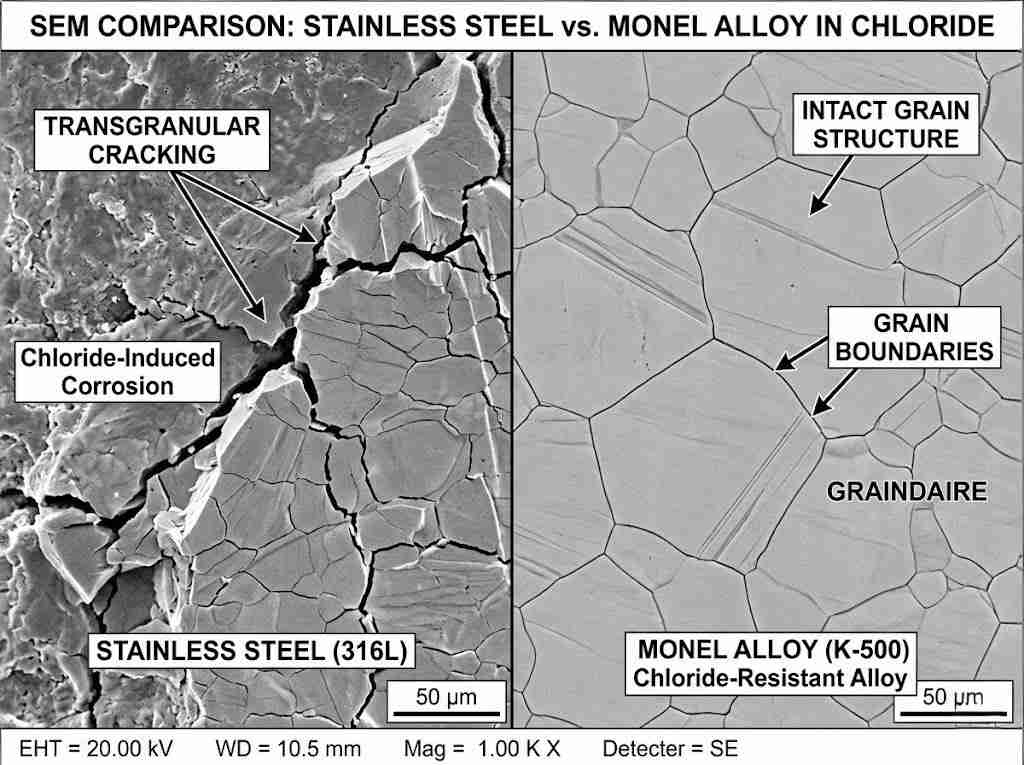
One of the most significant advantages of the Monel series is its virtual immunity to chloride-ion induced Stress Corrosion Cracking (SCC). In high-pressure marine components, 300-series stainless steels often fail catastrophically due to micro-fissures that propagate in the presence of chlorides.
مونيل K-500, which adds aluminum and titanium for precipitation hardening, maintains the high Monel corrosion resistance of the 400 grade while providing a yield strength ($\sigma_y$) comparable to many alloy steels. However, engineers must be cautious of hydrogen embrittlement in K-500 when used in “sour” ($H_2S$) environments under high-tension loads.
Cavitation and Erosion Resistance in Marine Hardware
In the maritime sector, corrosion is often compounded by mechanical wear. Pump impellers and propeller shafts face high-velocity flow that causes “cavitation erosion.” The copper content in Monel provides a natural bio-fouling resistance, preventing the attachment of marine organisms that lead to localized crevice corrosion. Furthermore, its high ductility ensures that the material absorbs energy from collapsing cavitation bubbles without the surface pitting typical of more brittle metals.
أسئلة وأجوبة ذات صلة:
Q1: How does aeration affect the corrosion rate of Monel 400 in acidic environments?
A1: Monel is a “reducing-environment” alloy. In acids like Hydrofluoric or Sulfuric, the presence of dissolved oxygen (aeration) significantly increases the corrosion rate. Oxygen acts as a depolarizer, facilitating the cathodic reaction and stripping the protective film. For high-aeration scenarios, a more highly alloyed material like Hastelloy C276 may be required.
Q2: Can Monel K-500 be used in sour gas ($H_2S$) service according to NACE standards?
A2: Yes, but with limitations. While K-500 has excellent general resistance, it can be susceptible to Hydrogen-Induced Stress Cracking (HISC) if the hardness exceeds certain levels (typically 35 HRC) or if it is coupled to galvanized/cathodically protected steel which generates nascent hydrogen.
Q3: Why is Monel preferred over Titanium for certain seawater piping systems?
A3: While Titanium offers near-perfect corrosion resistance, Monel is often preferred for heat exchangers and piping due to its superior thermal conductivity and its natural anti-fouling properties. Copper ions released at the surface inhibit the growth of barnacles and algae, maintaining high flow efficiency without chemical biocides.