







In der modernen Industrielandschaft, in der extreme Temperaturen und stark korrosive Umgebungen die Norm sind, werden handelsübliche Standardmetalle den hohen Anforderungen kritischer Anwendungen oft nicht gerecht. Hier werden maßgeschneiderte Nickellegierungen zum Rückgrat einer nachhaltigen und effizienten Infrastruktur. Wir bei 28Nickel wissen, dass der Unterschied zwischen einem erfolgreichen Projekt und einem katastrophalen Versagen oft in der präzisen chemischen Zusammensetzung und der mechanischen Verarbeitung der verwendeten Legierungen liegt. Ingenieurteams wenden sich zunehmend von “Einheitslösungen” ab und setzen stattdessen auf maßgeschneiderte Metallurgie.
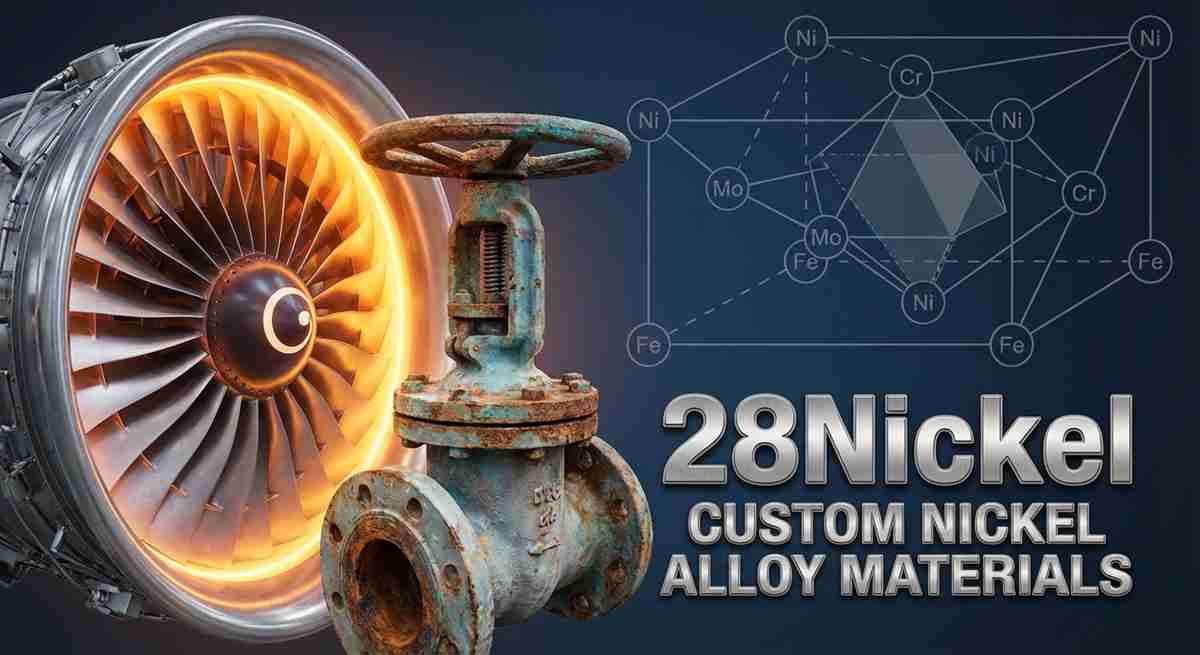
Definition von hochleistungsfähigen kundenspezifischen Nickellegierungen
Nickellegierungen sind bekannt für ihre außergewöhnliche Hitzebeständigkeit und ihre Widerstandsfähigkeit gegen Oxidation und Korrosion. Maßgeschneiderte Nickellegierungen gehen jedoch noch einen Schritt weiter, indem sie die Anteile von Chrom, Molybdän, Eisen und Kobalt so anpassen, dass sie spezifischen Umgebungsanforderungen gerecht werden. So kann beispielsweise ein erhöhter Molybdängehalt die Beständigkeit gegen Lochfraß in chloridreichen Meeresumgebungen drastisch verbessern, während die Zugabe von Aluminium oder Titan die Ausscheidungshärtung für Anwendungen in der Luft- und Raumfahrt begünstigt.
Bei der Beschaffung maßgeschneiderter Nickellegierungen müssen Ingenieure die “Einsatzumgebung” berücksichtigen. Ist die größte Gefahr chemische Erosion, Hochdruckbelastung oder Temperaturwechselbeanspruchung? Durch die individuelle Anpassung der Legierung hilft 28Nickel seinen Kunden, die Lebensdauer ihrer Bauteile zu optimieren und so die Gesamtbetriebskosten (TCO) zu senken – trotz der höheren Anfangsinvestition in Spezialwerkstoffe.
Wichtige Anwendungsbereiche von kundenspezifischen Nickellegierungen
Die Nachfrage nach Speziallegierungen erstreckt sich über zahlreiche Branchen mit hohen Anforderungen. Jeder Sektor benötigt spezifische Eigenschaften, die nur maßgeschneiderte Nickellegierungen bieten können:
-
Öl und Gas: Bohrlochwerkzeuge und Unterwasserarmaturen sind mit Sauergasumgebungen konfrontiert (hoher ). Durch die Anpassung von Nickel-Chrom-Molybdän-Legierungen wird sichergestellt, dass diese Teile nicht von sulfidinduzierten Spannungsrissen betroffen sind.
-
Chemische Verarbeitung: In Reaktoren, in denen mit heißer Schwefel- oder Phosphorsäure gearbeitet wird, sind speziell angefertigte Nickellegierungen wie Hastelloy-Varianten unerlässlich, um eine rasche Wandverdünnung und ein Versagen des Behälters zu verhindern.
-
Luft- und Raumfahrt: Komponenten von Strahltriebwerken werden bei Temperaturen betrieben, die nahe am Schmelzpunkt des Metalls liegen. Speziell entwickelte Superlegierungen behalten unter diesen extremen Bedingungen ihre strukturelle Integrität und Kriechfestigkeit bei.
Technische Daten und Materialvergleich
Um die Vielseitigkeit dieser Metalle besser zu verstehen, werden in der folgenden Tabelle gängige Sorten von kundenspezifischen Nickellegierungen und ihre wichtigsten Vorteile gegenübergestellt:
| Legierungssorte | Wichtige Legierungselemente | Hauptvorteil | Häufiger Anwendungsfall |
| Inconel 625 | Ni, Cr, Mo, Nb | Ermüdungs- und Oxidationsbeständigkeit | Abgassysteme für Schiffe |
| Hastelloy C-276 | Ni, Mo, Cr, W | Außergewöhnliche Korrosionsbeständigkeit | Auskleidungen für Abfallbehandlungsanlagen |
| Monel 400 | Ni, Cu | Beständigkeit gegen Meerwasser/Flusssäure | Schiffsmaschinenbau |
| Incoloy 825 | Ni, Fe, Cr, Mo, Cu | Beständigkeit gegenüber sauren Umgebungen | Rohrleitungen für die Öl- und Gasindustrie |
Warum sollten Sie sich bei der Beschaffung von kundenspezifischen Nickellegierungen für 28Nickel entscheiden?
Bei der Auswahl des richtigen Partners für maßgeschneiderte Nickellegierungen geht es um mehr als nur den Preis. Es erfordert ein tiefgreifendes Verständnis internationaler Normen (ASTM, ASME, DIN, EN) sowie die Fähigkeit, fundierte Prüfdaten vorzulegen. Bei 28Nickel legen wir großen Wert auf Qualitätskontrolle durch Ultraschallprüfung, Röntgenprüfung und präzise chemische Analysen.
Unsere Lieferkette ist darauf ausgelegt, maßgeschneiderte Werkstoffe aus Nickellegierungen zu liefern, die gemäß Ihren genauen Konstruktionszeichnungen geschmiedet, gewalzt oder bearbeitet werden. Indem wir uns auf die spezifische Kornstruktur und die thermische Vorgeschichte des Metalls konzentrieren, stellen wir sicher, dass das Endprodukt im Einsatz eine gleichbleibende Leistung erbringt. Darüber hinaus ermöglicht die Möglichkeit, kleinere, maßgeschneiderte Chargen zu bestellen, Forschungseinrichtungen und spezialisierten Herstellern Innovationen ohne die Belastung durch hohe Mindestbestellmengen.
Die Zukunft maßgeschneiderter Nickellegierungen
Mit dem Wachstum grüner Energiesektoren wie der Wasserstoffproduktion und der Kohlenstoffabscheidung und -speicherung (CCS) wird ein sprunghafter Anstieg des Bedarfs an maßgeschneiderten Nickellegierungen erwartet. Wasserstoffversprödung ist bei herkömmlichen Stählen ein erhebliches Problem; hochnickelhaltige Legierungen bieten jedoch einen wirksamen Schutz vor diesem Phänomen. 28Nickel steht an der Spitze dieser Entwicklung und stellt das metallurgische Fachwissen bereit, das für die nächste Generation industrieller Durchbrüche erforderlich ist.
Verwandte Fragen und Antworten
Frage 1: Was sind die Hauptvorteile von maßgeschneiderten Nickellegierungen gegenüber Edelstahl? Während Edelstahl sich durch eine hervorragende allgemeine Korrosionsbeständigkeit auszeichnet, bieten Nickellegierungen eine überlegene Leistungsfähigkeit bei Temperaturen über 540 °C (1000 °F) sowie in stark aggressiven sauren oder alkalischen Umgebungen, in denen Edelstahl unter Lochfraß oder Spannungsrisskorrosion leiden würde.
Frage 2: Wie gewährleistet 28Nickel die Qualität seiner kundenspezifischen Nickellegierungen? Wir legen für jede Lieferung Werksprüfzeugnisse (MTRs) vor, die die chemische Zusammensetzung und die mechanischen Eigenschaften bestätigen. Darüber hinaus unterstützen wir Prüfungen durch unabhängige Dritte (SGS, TÜV), um die Einhaltung globaler technischer Standards sicherzustellen.
Frage 3: Können kundenspezifische Nickellegierungen an bestimmte Schweißanforderungen angepasst werden? Ja. Durch die Steuerung der Spurenelemente und des Kohlenstoffgehalts in der Legierung können wir die Schweißbarkeit verbessern und das Risiko von Heißrissen nach dem Schweißen verringern, was für komplexe industrielle Fertigungsprozesse von entscheidender Bedeutung ist.