










Im Korrosionsschutz ist die Unversehrtheit der Oberfläche kein zweitrangiges Thema. Sie ist das Hauptthema. A Hastelloy C-22 Farbeindringprüfung Qualitätscheckliste ist daher nicht nur eine Prüfhilfe für Schweißer oder Mitarbeiter der Qualitätskontrolle, sondern ein Kontrolldokument, das die Qualität der Fertigung schützt, bevor das Bauteil jemals mit Chloriden, feuchtem Chlor, Mischsäuren oder oxidierenden Verunreinigungen in Berührung kommt. Bei einer Ni-Cr-Mo-W-Legierung wie Hastelloy C-22, bei der die Abnehmer eine außergewöhnliche Beständigkeit gegen lokale Korrosion erwarten, kann selbst eine kleine Oberflächenunterbrechung zu einem kostspieligen Streit zwischen dem Werk, dem Verarbeiter, dem Prüfer und dem Endverbraucher führen.
Umso wichtiger ist es, dass C-22 häufig für Anwendungen gewählt wird, bei denen ein Ausfall teuer und unangenehm ist: Wäscher, Reaktoren, Wärmetauscher, ausgekleidete Übergangsstücke, geschweißte Spulen und aggressive chemische Prozessanlagen. Bei diesen Anwendungen ist ein Hastelloy C-22 Farbeindringprüfung Qualitätscheckliste hilft bei der Standardisierung von Prüfvariablen, die allzu oft der Gewohnheit überlassen werden: Oberflächenvorbereitung, Penetriermittel-Familie, Verweilzeit, Entwicklerbedingungen, Betrachtungsbedingungen und Akzeptanzinterpretation. Wenn diese Variablen abdriften, häufen sich die Fehlalarme, werden relevante Hinweise übersehen und die Nacharbeit beginnt, den Zeitplan zu sprengen.
Warum eine Qualitätscheckliste für Hastelloy C-22-Farbeindringprüfung wichtig ist
Hastelloy C-22 (UNS N06022) ist nicht ferromagnetisch, so dass die Magnetpulverprüfung nicht die Methode der Wahl ist. Die Farbeindringprüfung ist die praktische ZfP-Methode für Schweißflächen, zugängliche Wurzelbereiche, geformte Zonen, Reparaturbereiche und bearbeitete Oberflächen. Das ist genau der Grund, warum eine Hastelloy C-22 Farbeindringprüfung Qualitätscheckliste müssen diszipliniert und nicht allgemein gehalten sein.
Aus werkstofftechnischer Sicht bringt C-22 mehrere Prüfmöglichkeiten mit sich:
- Das Korrosionsverhalten hängt stark von der Beschaffenheit der Oberfläche ab.
- Geschweißte Bereiche können mit Oberflächenfehlern behaftet sein, die zwar mechanisch klein, aber für den Betrieb bedeutsam sind.
- Starkes Schleifen, Schmiermetall, Oxidverfärbungen, eingebettetes Eisen oder unvollständige Reinigung können echte Diskontinuitäten verdecken oder zu irreführenden Anzeigen führen.
- Die Akzeptanz kann nicht auf der Grundlage von “sieht akzeptabel aus” erfolgen. Sie muss mit den geltenden Vorschriften, der Kundenspezifikation oder dem Projekt-ITP verknüpft sein.
Eine gute Hastelloy C-22 Farbeindringprüfung Qualitätscheckliste Außerdem verhindert dies einen häufigen Fehler in der Fertigung: Nickellegierungen hinsichtlich der Qualität der Oberflächenvorbereitung genauso zu behandeln wie Kohlenstoffstahl. Bei dieser Abkürzung liegen oft die Ursachen für viele Probleme bei der Qualitätsprüfung.
Kontrollen vor dem Auftragen des Penetriermittels
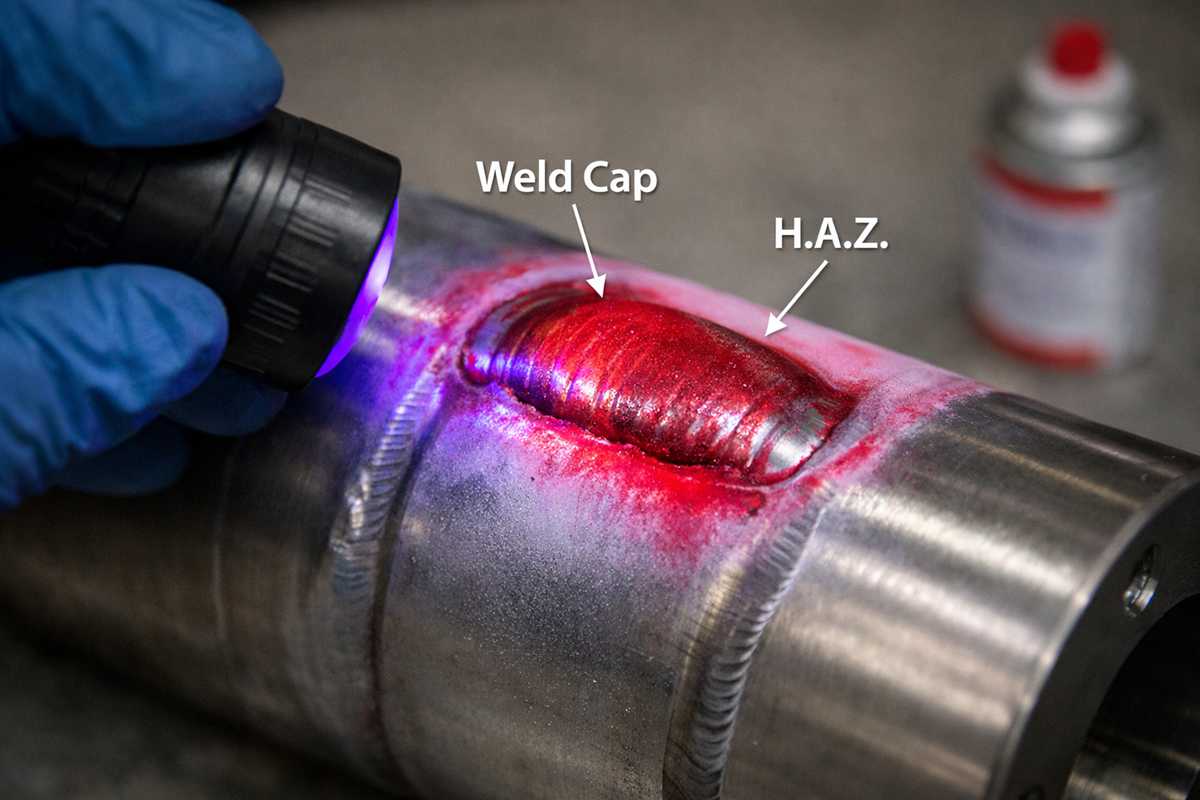
Bevor das Eindringmittel das Teil überhaupt berührt, hat die Oberfläche bereits einen Großteil des Ergebnisses bestimmt. In der Praxis ist das beste Hastelloy C-22 Farbeindringprüfung Qualitätscheckliste beginnt mit drei Fragen: Ist die Oberfläche sauber? Ist sie offen für die Oberfläche? Befindet sie sich im richtigen Zustand für die Interpretation?
Bei C-22-Schweißnähten und gefertigten Teilen ist Folgendes zu überprüfen:
1. Oberflächengüte ist geeignet
Zu grobes Schleifen kann das Eindringmittel einschließen und eine laute Geräuschkulisse erzeugen. Übermäßiges Polieren kann Metall verschmieren und feine Risse teilweise schließen. Das Ziel ist eine saubere, gleichmäßige, inspektionsfreundliche Oberfläche, kein kosmetischer Spiegel.
2. Oxide, Wärmetönungen und Verunreinigungen aus der Werkstatt werden entfernt
Bei Schweißnähten aus Nickellegierungen können Oxidschichten oder Verfärbungen zurückbleiben. Wenn diese zurückbleiben, wird das Eindringmittel weniger zuverlässig. Die Reinigung sollte Öl, Fett, Farbe, Schmutz und chemische Rückstände entfernen, ohne chlorierte oder schwefelhaltige Verunreinigungen zu hinterlassen.
3. Keine Verunreinigung durch freies Eisen vorhanden
Die Kreuzkontamination durch Werkzeuge aus Kohlenstoffstahl, Drahtbürsten oder Arbeitstische ist nach wie vor eines der am meisten unterschätzten Risiken bei der Bearbeitung von Nickellegierungen. Sie kann nicht nur das Korrosionsverhalten beeinflussen, sondern auch das Vertrauen in das Prüfergebnis beeinträchtigen.
4. Die Temperatur liegt innerhalb des qualifizierten Untersuchungsbereichs
Das Verfahren sollte die zulässige Teile- und Umgebungstemperatur festlegen. Verweilzeit und Entwicklungsverhalten ändern sich mit der Temperatur, ebenso die Empfindlichkeit.
Eine ernste Hastelloy C-22 Farbeindringprüfung Qualitätscheckliste sollte den verwendeten Reiniger, den Typ des Eindringmittelsystems, die Rückverfolgbarkeit der Charge (falls erforderlich) und den Zustand der Oberfläche vor der Prüfung aufzeichnen. Dieses Maß an Disziplin unterscheidet einen brauchbaren Bericht von einem dekorativen Bericht.
Praktische Hastelloy C-22 Farbeindringprüfung Qualitätscheckliste
Im Folgenden finden Sie eine feldtaugliche Checklistenstruktur, mit der Ingenieure, QS-Manager und Fremdprüfer tatsächlich arbeiten können.
| Kontrollpunkt | Was zu überprüfen ist | Bevorzugte Praxis für Hastelloy C-22 | Risiko bei Versäumnis |
|---|---|---|---|
| Identifizierung des Materials | Schmelznummer, Artikelbezeichnung, Legierungsgrad | Bestätigung der Rückverfolgbarkeit von UNS N06022 / Projekt vor der Inspektion | Falsches Material oder gemischte Teile gelangen in den Datensatz |
| Anwendbares Verfahren | Standard und Revisionsstand | Verwendung eines genehmigten PT-Verfahrens, das mit der Projektspezifikation und den ASTM/ASME-Anforderungen übereinstimmt | Ungültige Prüfungsgrundlage |
| Sauberkeit der Oberfläche | Öl, Fett, Schmutz, Farbe, Rückstände | Lösungsmittel oder zugelassener Reiniger; trockene, rückstandsfreie Oberfläche | Verdeckte Mängel oder falsche Angaben |
| Entfernung von Oxid-/Hitzefärbungen | Schweißnahtverfärbung und Oxidschicht | Entfernung durch geeignete mechanische/chemische Vorbereitung ohne Beschädigung der Oberfläche | Reduziertes Eindringen des Eindringmittels in Diskontinuitäten |
| Oberflächengüte | Schliffbild und Rauhigkeit | Vermeiden Sie tiefe Schleifspuren und verschmiertes Metall | Übermäßiger Hintergrund oder versteckte feine Fehler |
| Kompatibilität mit Eindringmitteln | Produktfamilie und Verfallsdatum | Qualifiziertes Eindring-/Entwicklungs-/Reinigungssystem verwenden; Verfallsdatum prüfen | Geringere Sensibilität oder Nichteinhaltung der Vorschriften |
| Verweilzeit | Tatsächliche Kontaktzeit | Genaues Befolgen des Verfahrens; Vermeiden von Mutmaßungen des Bedieners | Unterentwickelte oder übertriebene Anzeichen |
| Entfernung von überschüssigem Eindringmittel | Reinigung nach der Verweildauer | Entfernen Sie Oberflächenüberschüsse, ohne Diskontinuitäten zu spülen | Schwache oder gelöschte relevante Hinweise |
| Anwendung für Entwickler | Deckung und Zustand | Dünne, gleichmäßige Schicht; kein Überschwemmen oder fleckiges Austrocknen | Schlechtes Ausbluten und schlechte Interpretation |
| Bedingungen für die Einsichtnahme | Lichtstärke / UV-Intensität | Überprüfung der erforderlichen sichtbaren oder fluoreszierenden Untersuchungsbedingungen | Vermisste lineare Anzeigen |
| Zeitplan für die Prüfung | Entwicklung bis zum Interpretationsintervall | Lesen innerhalb des angegebenen Zeitfensters; nicht zu früh, nicht zu spät | Falsche Ablehnung oder falsche Annahme |
| Bewertung der Akzeptanz | Relevante vs. nicht relevante Indikationen | Beurteilen Sie nach Code-/Projektkriterien, nicht nach den Vorlieben der Inspektoren | Streitigkeiten, unnötige Reparaturen, übersehene Mängel |
| Nach dem Reinigen | Rückstandsentfernung nach PT | Chemikalienreste entfernen und saubere Oberfläche wiederherstellen | Oberflächenverschmutzung vor dem Einsatz oder der Weiterverarbeitung |
| Dokumentation | Vollständigkeit des Berichts | Aufzeichnung von Bereich, Methode, Ergebnissen, Inspektor, Datum, Verfahren, Disposition | Schwache Rückverfolgbarkeit und Prüfbarkeit |
Lesehinweise für Hastelloy C-22-Schweißnähte und -Fertigungsstücke
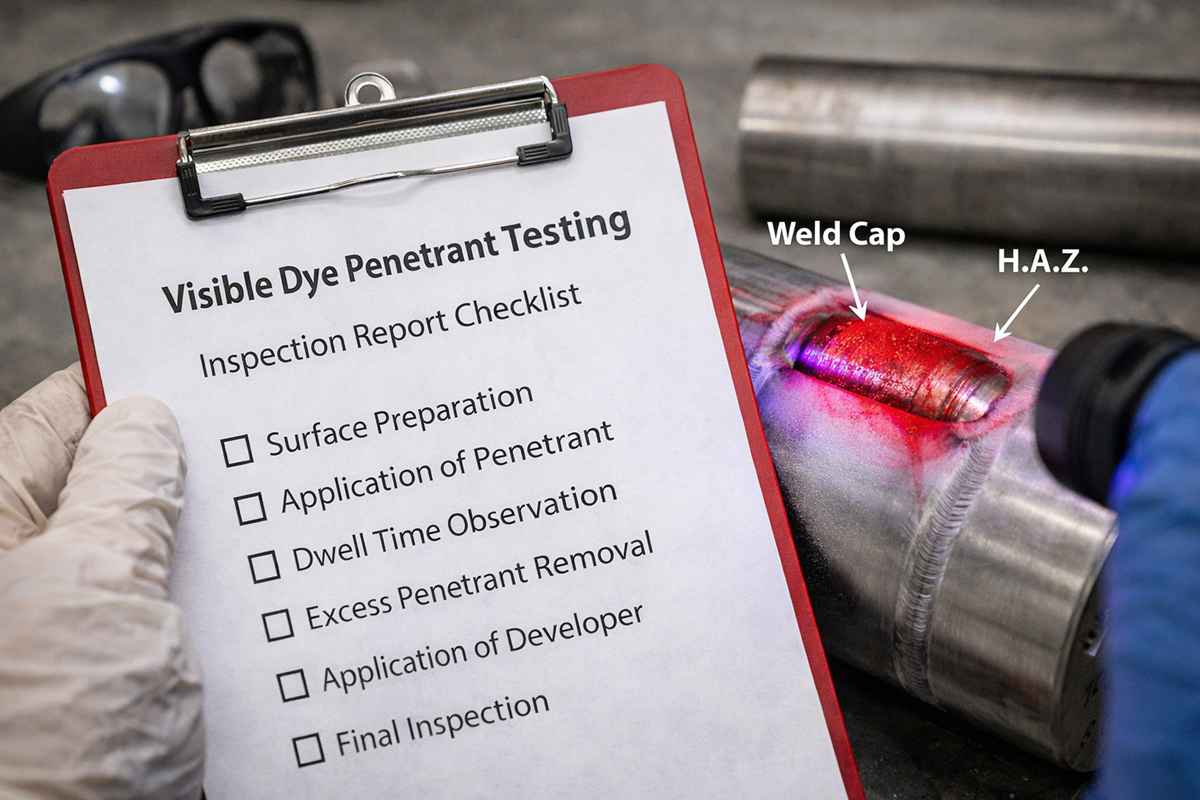
Dies ist der Punkt, an dem Erfahrung zählt. A Hastelloy C-22 Farbeindringprüfung Qualitätscheckliste ist nicht vollständig, wenn sie bei Prozessschritten stehen bleibt und nichts über die Interpretationsdisziplin aussagt.
Bei C-22-Schweißnähten ist die wichtigste Unterscheidung zwischen relevanten linearen Anzeichen und harmlosen Prozessmarken. Lineare Anzeichen in der Nähe der Schweißnahtspitze, der Kraterzone, des Wiederanlaufbereichs oder der Reparaturmischung verdienen weitaus mehr Aufmerksamkeit als abgerundete, isolierte, nicht fortschreitende Markierungen aufgrund der Oberflächenstruktur. Schlackenartige Probleme sind weniger ein klassisches Muster als bei einigen anderen Legierungen, aber fehlende Schmelzöffnung an der Oberfläche, Kraterrisse, Schleifrissbildung und örtlich begrenzte Oberflächenrisse müssen ernst genommen werden.
Ein weiterer Punkt, auf den erfahrene Inspektoren achten: Nach dem Schleifen von Reparaturen kann die Oberfläche optisch “besser” aussehen, während sie sich im Penetrationstest verschlechtert, weil der Metallschmierstoff nicht richtig entfernt wurde. Das ist genau der Grund, warum die Hastelloy C-22 Farbeindringprüfung Qualitätscheckliste sollte eine Wiederherstellung des reparierten Bereichs vor einer erneuten Prüfung erfordern, nicht nur einen weiteren schnellen PT-Zyklus.
Wo Geschäfte normalerweise scheitern
Bei Audits und Fehlerkontrollen treten Schwachstellen erstaunlich häufig auf:
- PT auf einer Oberfläche, die zwar technisch sauber, aber nicht prüfbar ist.
- Annahmekriterien, die von einem anderen Legierungsauftrag kopiert wurden, ohne die Anwendbarkeit des Codes zu prüfen.
- Überschüssiges Eindringmittel wurde zu aggressiv entfernt, insbesondere bei fein geöffneten Oberflächenfehlern.
- Der Entwickler hat zu stark aufgetragen, was die Klarheit beeinträchtigt, anstatt sie zu verbessern.
- Berichte, in denen weder der Oberflächenzustand noch die Reparaturhistorie oder der genaue Untersuchungsbereich erwähnt werden.
Eine robuste Hastelloy C-22 Farbeindringprüfung Qualitätscheckliste schließt diese Lücken. Noch wichtiger ist jedoch, dass die Konsistenz zwischen Schichten, Subunternehmern und Inspektoren gewährleistet wird. Für die Beschaffungsteams verringert diese Konsistenz das Risiko, Komponenten zu erhalten, die zwar den Papierkram erfüllen, aber die Erwartungen an den Service nicht erfüllen.
Abschließende Überlegungen
Für den Einsatz in aggressiven Chemikalien wird in der Regel Hastelloy C-22 spezifiziert, da sich das Werk keine Unsicherheit leisten kann. Die Inspektion sollte der gleichen Logik folgen. Eine gut gebaute Hastelloy C-22 Farbeindringprüfung Qualitätscheckliste trägt dazu bei, dass die PT nicht als eine Übung zum Ankreuzen von Kästchen behandelt wird, sondern als eine sinnvolle Kontrolle der Oberflächenintegrität, der Schweißqualität und der Fertigungsdisziplin.
Wenn Ihr Projekt C-22-Bleche, -Rohre, -Fittings, -Schweißbaugruppen oder -Reparaturen umfasst, lohnt es sich, die Checkliste auf die genaue Betriebsumgebung, die Codebasis und den Endzustand des Teils abzustimmen. Dies ist der Punkt, an dem viele generische Prüfvorlagen versagen. Bei 28Nickel sind Diskussionen zur technischen Unterstützung am nützlichsten, wenn die Zeichnung, die Schweißroute, der Endzustand und die Abnahmegrundlage zusammen und nicht getrennt geprüft werden.
Verwandte Fragen und Antworten
1. Ist die fluoreszierende Eindringprüfung für Hastelloy C-22 besser als die Eindringprüfung mit sichtbaren Farbstoffen?
Nicht automatisch, aber Fluoreszenz-PT ist im Allgemeinen empfindlicher für feine Anzeichen von Oberflächenbrüchen, wenn das Verfahren, die UV-Kontrollen und die abgedunkelten Sichtbedingungen gut gehandhabt werden. PT mit sichtbarem Farbstoff kann für viele Herstellungskontrollen immer noch effektiv sein, insbesondere wenn die Praktikabilität vor Ort wichtig ist.
2. Sollten gebeizte oder chemisch gereinigte C-22-Oberflächen nach zusätzlichem Schleifen erneut getestet werden?
Ja. Jedes Schleifen, Verblenden oder lokale Ausbessern kann die Offenheit der Oberfläche verändern und Diskontinuitäten verdecken oder offenlegen. Nachdem die Oberfläche ordnungsgemäß instandgesetzt wurde, sollte die PT in der betroffenen Zone wiederholt werden.
3. Was ist der größte Fehler bei der Prüfung von Hastelloy C-22-Schweißnähten?
Der häufigste Fehler ist eine schlechte Oberflächenvorbereitung in Verbindung mit einer überzogenen Interpretation. Viele Fehlentscheidungen sind auf grobes Schleifen, verschmiertes Metall, Restoxide oder auf die Anwendung eines Abnahmeurteils zurückzuführen, das sich nicht an den geltenden Spezifikationen orientiert.