











Die chemische Analyse und mechanische Prüfung von Nickellegierungen ist keine überflüssige Maßnahme, die von vorsichtigen Ingenieuren eingeführt wurde, die Freude an Papierkram haben. Sie ist eine der wenigen zuverlässigen Methoden, um sicherzustellen, dass eine Nickellegierungscharge nicht nur korrekt gekennzeichnet ist, sondern auch die für das Projekt erwartete Leistung erbringen kann. Bei korrosionsbeständigen Anwendungen, dem Einsatz bei erhöhten Temperaturen oder bei druckführenden Bauteilen beschränken sich die Kosten eines Fehlers selten auf eine zurückgewiesene Charge. Eine Abweichung in der chemischen Zusammensetzung kann die Lochfraßbeständigkeit, die Schweißbarkeit oder die Phasenstabilität verändern. Ein Mangel an mechanischen Eigenschaften kann die Streckgrenze, die Dehnung oder die Bruchzuverlässigkeit beeinträchtigen. Deshalb sind die chemische Analyse und die mechanische Prüfung von Nickellegierungen bei seriösen Beschaffungsprozessen nach wie vor eine grundlegende Kontrollmaßnahme und kein bloßes „Nice-to-have“-Extra.
Dies wird besonders deutlich, wenn die Lieferkette komplex ist. Ein Einkäufer sieht möglicherweise einen ihm bekannten Legierungsnamen im Angebot und geht davon aus, dass die Materialherkunft bereits geklärt ist. Doch ähnliche Handelsnamen können unterschiedliche Produktformen, Zustände und Herstellungsgeschichten abdecken. Stangen, Bleche, Rohre, Schmiedeteile und Gussteile verhalten sich nicht alle gleich, selbst wenn die zugrunde liegende Legierungsfamilie vertraut erscheint. Durch chemische Analysen und mechanische Prüfungen von Nickellegierungen können Ingenieure vor der Fertigung, dem Schweißen oder dem Versand von Annahmen zu gesicherten Erkenntnissen gelangen, bevor die Isolierung eines Problems kostspieliger wird.
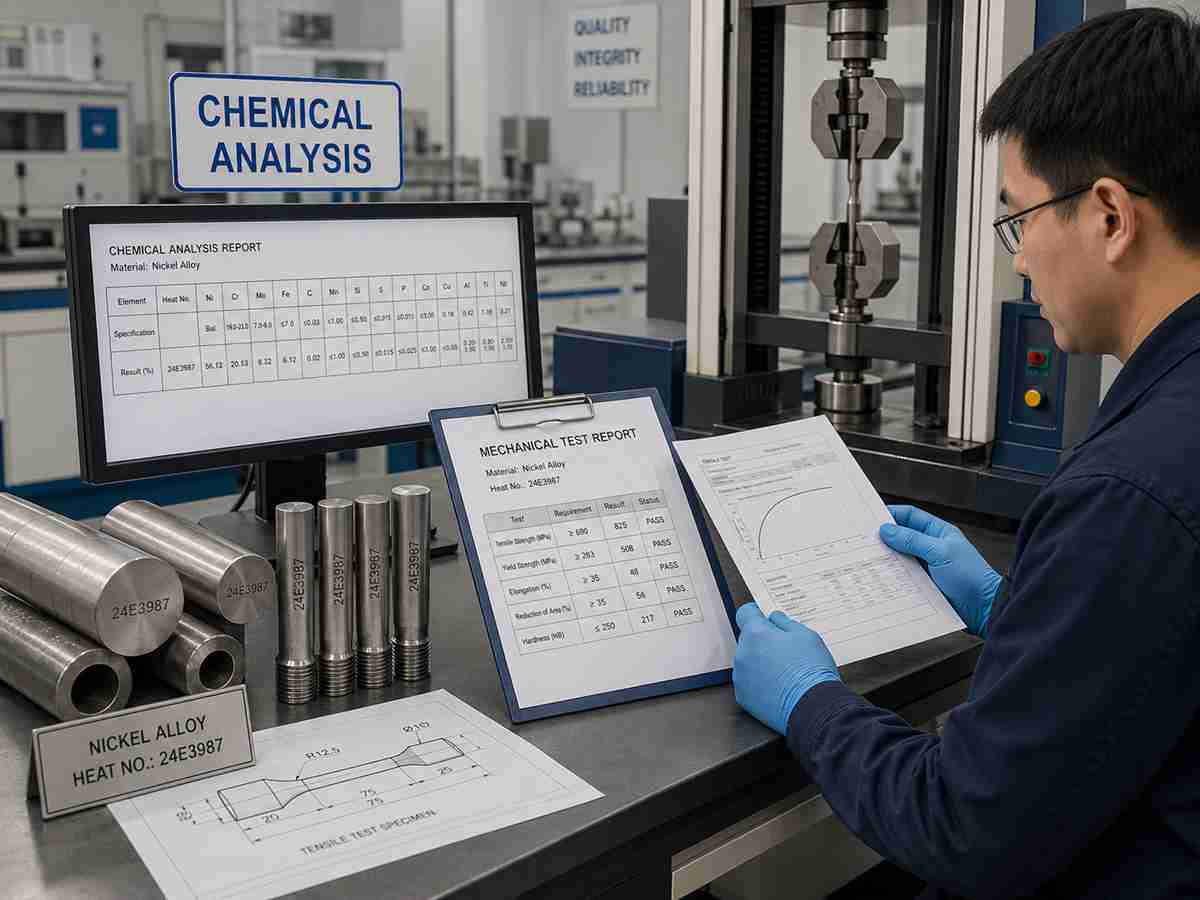
Warum sollten chemische und mechanische Eigenschaften gemeinsam geprüft werden?
Der Grund, warum chemische Analysen und mechanische Prüfungen von Nickellegierungen gemeinsam betrachtet werden sollten, ist einfach: Die chemische Zusammensetzung allein sagt nichts über die Leistungsfähigkeit aus, und Zugfestigkeitswerte allein beweisen nicht die Identität der Legierung. Die chemische Analyse bestätigt, ob sich die wichtigsten Legierungselemente innerhalb des geforderten Bereichs befinden und ob die gelieferte Charge tatsächlich der bestellten Güteklasse entspricht. Dies ist bei Nickellegierungen von Bedeutung, da das Gleichgewicht von Chrom, Molybdän, Niob, Titan, Kobalt, Eisen und Kohlenstoff das Korrosionsverhalten, das Alterungshärtungsverhalten und die Warmfestigkeitseigenschaften auf eine Weise beeinflussen kann, die dem äußeren Erscheinungsbild nicht zu entnehmen ist. Mechanische Prüfungen zeigen hingegen, ob das Produkt im Lieferzustand tatsächlich die erwarteten Werte für Streckgrenze, Zugfestigkeit, Dehnung und manchmal auch Härte oder Schlagzähigkeit erfüllt, die in der Spezifikation gefordert werden.
Werden diese beiden Datensätze gemeinsam ausgewertet, erhält der Käufer ein wesentlich realistischeres Bild von der Lieferqualität. Chemische Analysen und mechanische Prüfungen von Nickellegierungen können eine Charge aufdecken, die chemisch zwar nahe am Sollwert liegt, mechanisch jedoch aufgrund einer falschen Wärmebehandlung, übermäßiger Kaltverformung oder unkontrollierter Verarbeitung außerhalb des zulässigen Bereichs liegt. Es kann auch das gegenteilige Problem aufdecken: ein Werkstück, das mechanisch akzeptabel erscheint, jedoch zur falschen Legierungsfamilie gehört und im Einsatz ein falsches Korrosions- oder Schweißverhalten aufweisen würde. Bei kritischen Projekten ist diese kombinierte Betrachtung weitaus wertvoller als das Verlassen auf Katalogwerte oder allgemeine Konformitätserklärungen.
| Testbereich | Was dies bestätigt | Auf typische Bedenken von Käufern eingegangen |
| Chemische Analyse | Die Haupt- und Nebenlegierungselemente liegen innerhalb der Güteklassengrenzen | Falsche Güteklasse, ungleichmäßige Erwärmung oder chemische Zusammensetzung außerhalb der Spezifikation |
| Zugversuch | Streckgrenze, Zugfestigkeit und Dehnung im Lieferzustand | Zu schwaches oder überhärtetes Produkt |
| Härteprüfung | Lokale Gegebenheiten und mögliche Fertigungsempfindlichkeit | Übermäßige Härte, Bedenken hinsichtlich der Säurebeständigkeit oder unsachgemäße Wärmebehandlung |
| Zusätzliche Prüfungen | Aufprall, Abflachung, Ausweitung oder andere formspezifische Anforderungen | Abnahme der Produktform über die grundlegenden chemischen Eigenschaften und Zugfestigkeitsdaten hinaus |
Wann Käufer mehr als nur die grundlegenden Werksdaten anfordern sollten
Es gibt viele Routinekäufe, bei denen die Standarddokumentation des Herstellers ausreicht, doch manche Aufträge erfordern eine genauere Prüfung. Die chemische Analyse und mechanische Prüfung von Nickellegierungen gewinnt besonders an Bedeutung, wenn das Material für vom Auftraggeber genehmigte Verpackungen, den Einsatz mit korrosiven Chemikalien, den Betrieb bei erhöhten Temperaturen, Komponenten für die Luft- und Raumfahrt oder die Energiewirtschaft oder die Bearbeitung teurer Rohlinge vorgesehen ist. Dies ist auch dann sinnvoll, wenn die Beschaffungsquelle unbekannt ist, wenn mehrere ähnliche Güteklassen gemeinsam gelagert werden oder wenn das Projekt keine Quarantäne zulässt, nachdem das Material in der Werkstatt eingetroffen ist. Unter diesen Umständen sind zusätzliche Prüfungen oft kostengünstiger als selbst eine einzige Verzögerung im weiteren Verlauf des Prozesses.
Käufer sollten daher bereits in der Angebotsanfragephase über den Prüfumfang nachdenken und nicht erst nach Abschluss der Produktion. Fragen Sie, ob der Lieferant legierungsspezifische chemische Daten, produktspezifische mechanische Werte sowie Klarheit darüber liefern kann, wer die Prüfungen durchgeführt hat und nach welcher Norm. Bei 28Nickel empfehlen wir in der Regel, die chemische Analyse und die mechanische Prüfung von Nickellegierungen an das tatsächliche Risiko des Auftrags anzupassen: Einsatzumgebung, Produktform, Komplexität der Legierung und Folgen eines Fehlers. Dieser Ansatz vermeidet willkürliche Überprüfungen, verhindert aber auch den häufig begangenen Fehler, anzunehmen, dass ein bekannter Legierungsname automatisch eine kontrollierte Materialqualität bedeutet. Bei Verpackungen mit schwerwiegenden Folgen dienen chemische Analysen und mechanische Prüfungen von Nickellegierungen oft als Nachweis, der es ermöglicht, die technische Begutachtung ohne Spekulationen voranzutreiben.
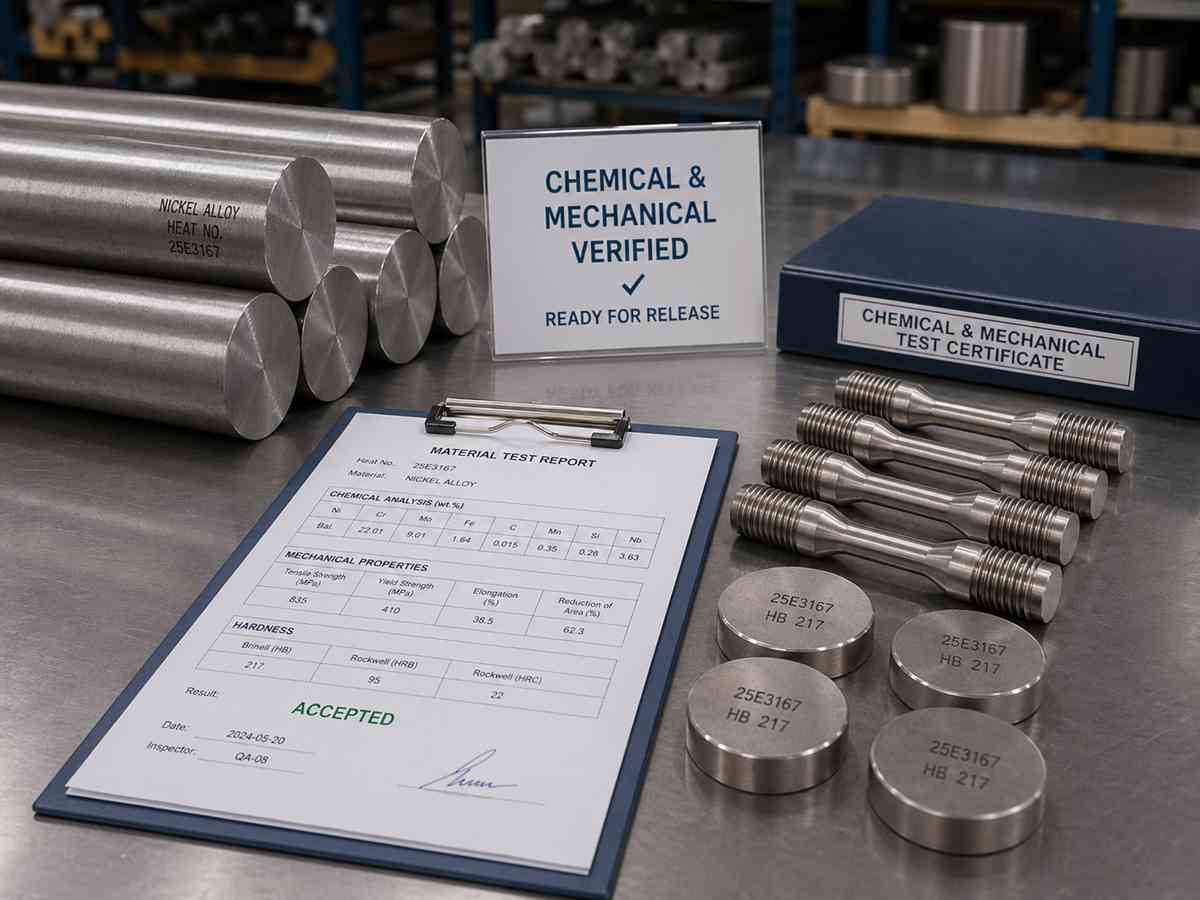
Schlussfolgerung
Prüfungen dienen nicht dazu, ein Dokumentenpaket zu verschönern. Bei Nickellegierungen sind sie eine der eindeutigsten Möglichkeiten, um zu überprüfen, ob die gelieferte Charge sowohl die richtige chemische Zusammensetzung als auch die für den Einsatzzweck geeigneten Eigenschaften aufweist. Wenn die chemische Analyse und die mechanische Prüfung von Nickellegierungen korrekt spezifiziert sind, erhalten Käufer eine messbare Grundlage für die Freigabe – statt einer bloßen Hoffnung. Wenn Sie Hilfe bei der Entscheidung benötigen, welcher Prüfumfang für eine Bestellung von Nickellegierungen technisch sinnvoll ist, kann 28Nickel Ihnen dabei helfen, den Materialweg vor der Freigabe zu überprüfen und ein Kontrollniveau zu empfehlen, das dem tatsächlichen Risiko entspricht.
Verwandte Fragen und Antworten
F: Reicht eine chemische Analyse allein aus, um nachzuweisen, dass eine Nickellegierung den Anforderungen entspricht?
Nein. Die chemische Analyse und die mechanische Prüfung von Nickellegierungen sollten gemeinsam betrachtet werden, da die chemische Analyse die Identität bestätigt, während die mechanischen Prüfungen die tatsächliche Leistungsfähigkeit bestätigen.
F: Warum kann ein Heat die chemische Prüfung bestehen, aber dennoch die Reihenfolge nicht erfüllen?
Denn eine falsche Wärmebehandlung, übermäßige Kaltverformung oder eine unkontrollierte Verarbeitung können die Festigkeit und Duktilität verändern, selbst wenn die Legierungselemente nominell korrekt sind.
F: Sollten Käufer bei jeder Bestellung zusätzliche Prüfungen verlangen?
Nicht immer. Der richtige Umfang hängt von der Produktform, der Kritikalität der Dienstleistung, dem Vertrauen in den Lieferanten und den Kosten ab, die entstehen, wenn ein Problem zu spät entdeckt wird.