




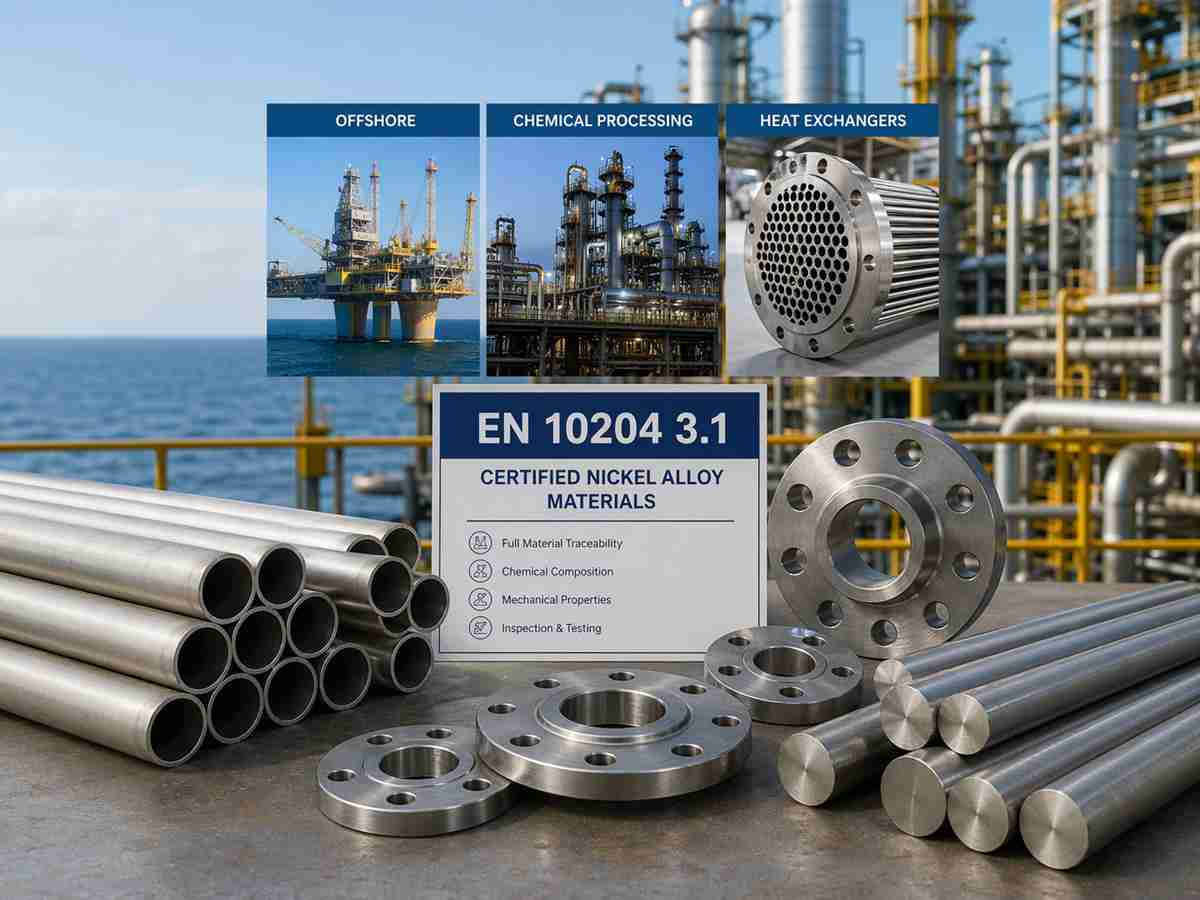
Wenn in einer Projektspezifikation nach EN 10204 3.1 zertifizierte Werkstoffe aus Nickellegierungen gefordert werden, handelt es sich dabei nicht um bloße Formalität. In chloridhaltigen Betriebsumgebungen, Sauwasseranlagen, Rauchgasreinigungssystemen und druckbeaufschlagten Wärmeübertragungsanlagen kann schon ein einziger Fehler bei der Wärmebehandlung zu Schweißreparaturen, einer Ablehnung durch den Kunden oder einer umfassenden Untersuchung im Rahmen einer Betriebsunterbrechung führen. Ingenieure verlangen in der Regel nach nach EN 10204 3.1 zertifizierten Werkstoffen aus Nickellegierungen, da die Angabe der Legierungsbezeichnung allein nicht ausreicht. Sie benötigen vor Beginn der Fertigung Informationen zur chemischen Zusammensetzung, mechanische Prüfergebnisse, die Kontinuität der Schmelznummern sowie eine unterzeichnete Werksbescheinigung. Der praktische Vorteil liegt auf der Hand: Sie verringern das Risiko von Streitigkeiten über die Materialidentität, nachdem das Material bereits in die Produktion gelangt ist.
Bei Nickellegierungen spielt dies eine noch größere Rolle als bei gewöhnlichen Edelstahlsorten. Geringfügige Änderungen des Chrom-, Molybdän-, Niob-, Titan- oder Kupfergehalts können die Korrosionsbeständigkeit, das Warmumformverhalten und das Schweißverhalten in einer Weise verändern, deren späte Feststellung mit hohen Kosten verbunden ist. Ein Rohr, das als „Alloy 625“ gekennzeichnet ist, aber aus gemischtem Lagerbestand stammt, stellt nicht nur ein Beschaffungsproblem dar. Es kann Verfahren ungültig machen, die Freigabe nach der Wasserdruckprüfung verzögern und einen Käufer dazu zwingen, jedes damit verbundene Schnittstück unter Quarantäne zu stellen. Aus diesem Grund betrachten erfahrene Beschaffungsteams nach EN 10204 3.1 zertifizierte Werkstoffe aus Nickellegierungen als Teil der technischen Risikokontrolle und nicht als bloße administrative Beilage.
Was die Norm EN 10204 3.1 für die Rückverfolgbarkeit von Nickellegierungen bedeutet
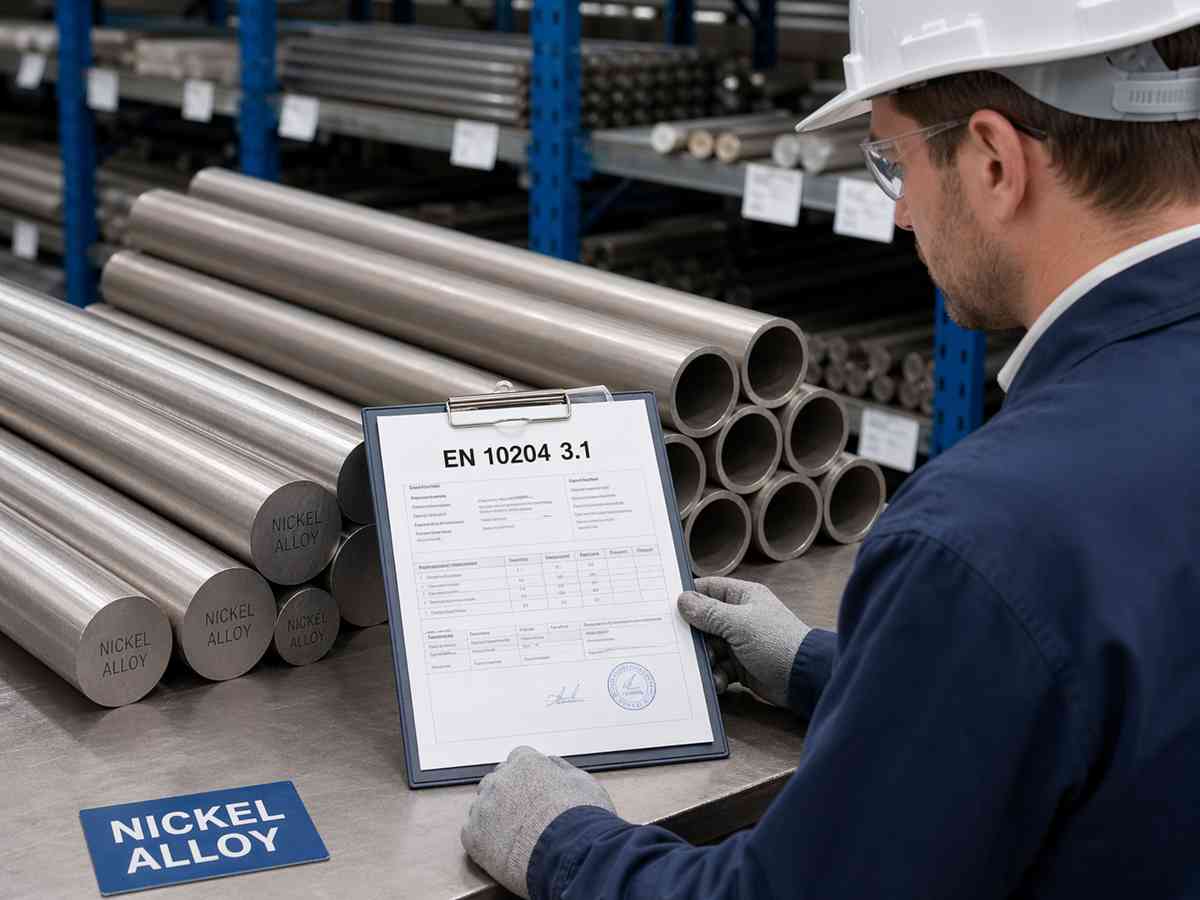
Gemäß EN 10204 wird ein Prüfzertifikat 3.1 vom Hersteller ausgestellt und von einem autorisierten Vertreter bestätigt, der unabhängig von der Fertigungsabteilung ist. Bei Nickellegierungen ist diese Unterscheidung von Bedeutung. Ein glaubwürdiges 3.1-Prüfzeugnis sollte das gelieferte Produkt einer bestimmten Schmelznummer zuordnen und die Produktform, die Abmessungen, die geltende Norm, die Gütebezeichnung sowie die Messergebnisse angeben. Bei Stangen, Rohren, Blechen oder Schmiedeteilen sollte das Zertifikat die tatsächlichen Werksdaten wie chemische Zusammensetzung, Zugfestigkeitseigenschaften und Wärmebehandlungszustand widerspiegeln und keine aus Katalogen kopierten Werte enthalten. Wenn die Bestellung an ASTM-, ASME- oder projektspezifische Materialanforderungen gebunden ist, sollte das Dokument Zeile für Zeile mit diesen Anforderungen übereinstimmen.
Käufer sollten außerdem bedenken, was ein 3.1-Zertifikat nicht leistet. Es ist nicht mit der Norm EN 10204 3.2 gleichzusetzen, die eine externe oder vom Kunden autorisierte Validierung vorsieht, und es ersetzt nicht die Wareneingangskontrolle. Oberflächenbeschaffenheit, Abmessungen, Kennzeichnungen und manchmal auch die Materialzusammensetzung (PMI) müssen weiterhin beim Lieferanten oder beim Verarbeiter überprüft werden. Werden jedoch nach EN 10204 3.1 zertifizierte Werkstoffe aus Nickellegierungen ordnungsgemäß geliefert, bilden die Nachweise des Erstherstellers die Grundlage und nicht das Versprechen eines Wiederverkäufers. Diese Unterscheidung wird entscheidend, sobald Stangen auf kürzere Längen zugeschnitten oder Rohre in Fertigungschargen aufgeteilt werden, da die Dokumentationsunterlagen die Rückverfolgbarkeitskette aufrechterhalten, wenn physische Markierungen weniger sichtbar werden.
| Dokumenttyp | Wer unterschreibt das? | Was dies beweist | Typische Anwendungsbereiche von Nickellegierungen |
| EN 10204 2.2 | Hersteller | Allgemeine Konformitätserklärung, in der Regel ohne chargenspezifische Prüfwerte | Risikoarme kommerzielle Nachschubversorgung |
| EN 10204 3.1 | Vom Hersteller autorisierter unabhängiger Vertreter | Wärmespezifische Testergebnisse in Verbindung mit dem gelieferten Material | Druckbetrieb, korrosive Prozessanlagen, Exportprojekte |
| EN 10204 3.2 | Hersteller sowie Vertreter eines Drittunternehmens oder des Käufers | Wärmespezifische Daten mit externer Beglaubigung oder Validierung | Kritische, vom Eigentümer genehmigte Pakete und EPC-Aufträge mit weitreichenden Folgen |
Wo nach EN 10204 3.1 zertifizierte Nickel-Legierungen am wichtigsten sind
In der Praxis machen sich nach EN 10204 3.1 zertifizierte Werkstoffe aus Nickellegierungen überall bezahlt, wo die Kosten für eine fehlerhafte Schmelze weitaus höher sind als die Kosten für eine umfassendere Dokumentationsunterlage. Typische Anwendungsfälle sind Meerwassersysteme, schwefelhaltige Ströme, Einbauten in thermischen Oxidationsanlagen, Rauchgasentschwefelungsanlagen, Beizlinien, Druckrohrleitungen im Einsatz mit Säuremischungen sowie Komponenten von Wärmetauschern, bei denen Chloridbeständigkeit unverzichtbar ist. Die Dokumentationskette ist sowohl bei korrosionsbeständigen Werkstoffen wie Alloy 625, Alloy 825 und C-276 als auch bei Produkten aus handelsreinem Nickel oder Nickel-Kupfer von Bedeutung, bei denen die chemischen Bedingungen im Einsatz gnadenlos sein können. Ingenieure verlangen nicht nach nach EN 10204 3.1 zertifizierten Nickellegierungen, weil sie Spaß an Papierkram haben. Sie verlangen dies, weil eine erneute Qualifizierung nach einem Versagen der Rückverfolgbarkeit weitaus teurer ist, als die Freigabe gleich beim ersten Mal korrekt durchzuführen.
Ein umsichtiger Einkäufer sollte daher vor dem Versand der Bestellung das Zertifikatsformat anfordern, überprüfen, ob jedes Bündel oder jede Kiste denselben Chargennummern zugeordnet ist, und nachfragen, wie die Rückverfolgbarkeit nach dem Zuschneiden, dem Umbündeln oder der Exportverpackung gewährleistet wird. Gute Lieferanten stellen im Voraus Kopien der Zertifikate, Fotos der Kennzeichnungen sowie eine Packliste zur Verfügung, die die Rückverfolgbarkeit nach Schmelze gewährleistet. Bei dringenden Stilllegungsarbeiten spart diese Vorbereitung Tage. In vielen kundenspezifischen Vorgaben sind nach EN 10204 3.1 zertifizierte Nickellegungswerkstoffe die Mindestvoraussetzung für die Freigabe korrosionskritischer Materialien. Bei 28Nickel empfehlen wir unseren Kunden in der Regel, das Betriebsmedium, die Auslegungstemperatur, die maßgebliche Spezifikation und den erforderlichen Dokumentationsumfang gemeinsam zu übermitteln. Das erleichtert die Entscheidung erheblich, ob nach EN 10204 3.1 zertifizierte Nickellegierungen allein ausreichen oder ob die Bestellung mit einer Materialidentitätsprüfung (PMI), einer Prüfung durch Dritte oder einer zusätzlichen Beglaubigung kombiniert werden sollte.
Schlussfolgerung
Bei der Beschaffung kritischer Nickellegierungen ist ein 3.1-Zertifikat keine bürokratische Hürde. Es ist eine der kostengünstigsten Absicherungsmaßnahmen, die ein Einkäufer ergreifen kann, bevor sich Fertigungs- und Versandkosten summieren. Wenn nach EN 10204 3.1 zertifizierte Nickellegierungen korrekt spezifiziert werden, beseitigen sie Unsicherheiten, bevor diese zu Verzögerungen führen. Wenn Sie Hilfe bei der Überprüfung einer Spezifikation, der Abstimmung der Legierungssorte auf die Einsatzumgebung oder der Prüfung benötigen, ob die Unterlagen eines Lieferanten technisch einwandfrei sind, kann 28Nickel Sie bei der Überprüfung unterstützen, bevor das Material versandt wird.
Verwandte Fragen und Antworten
F: Reicht die Norm EN 10204 3.1 immer für die Abnahme durch den Auftraggeber aus?
Nicht immer. Bei vielen Projekten gelten nach EN 10204 3.1 zertifizierte Werkstoffe aus Nickellegierungen als Standard, doch einige Endnutzer oder EPC-Pakete verlangen nach wie vor die Einhaltung von EN 10204 3.2, die Begleitschau durch eine unabhängige Stelle oder eine zusätzliche Materialzusammensetzungsanalyse (PMI). Die richtige Antwort hängt vom Prüfplan, der Betriebskritikalität und dem Genehmigungsverfahren des Eigentümers ab.
F: Kann ein 3.1-Zertifikat gemischte Chargen oder mehrere, nicht miteinander in Zusammenhang stehende Chargen abdecken?
Das sollte nicht der Fall sein. Ein ordnungsgemäßes Zertifikat muss sich auf die jeweilige Schmelze beziehen. Wenn ein Lieferant versucht, nicht miteinander in Zusammenhang stehende Materialbündel mit einem einzigen allgemeinen Dokument abzudecken, verliert der Käufer genau jene Rückverfolgbarkeit, die durch nach EN 10204 3.1 zertifizierte Werkstoffe aus Nickellegierungen eigentlich gewährleistet werden soll.
F: Sollten Käufer neben der 3.1-Zertifizierung auch eine PMI-Zertifizierung verlangen?
Bei Stangen und Rohren mit höherem Risiko ist dies in der Tat oft eine sinnvolle Kombination. Das Dokument 3.1 belegt die Werksdaten, während die PMI dabei hilft, vor Beginn der Fertigung zu überprüfen, ob der im Lager gelieferte Artikel noch der erwarteten Legierungsfamilie entspricht.