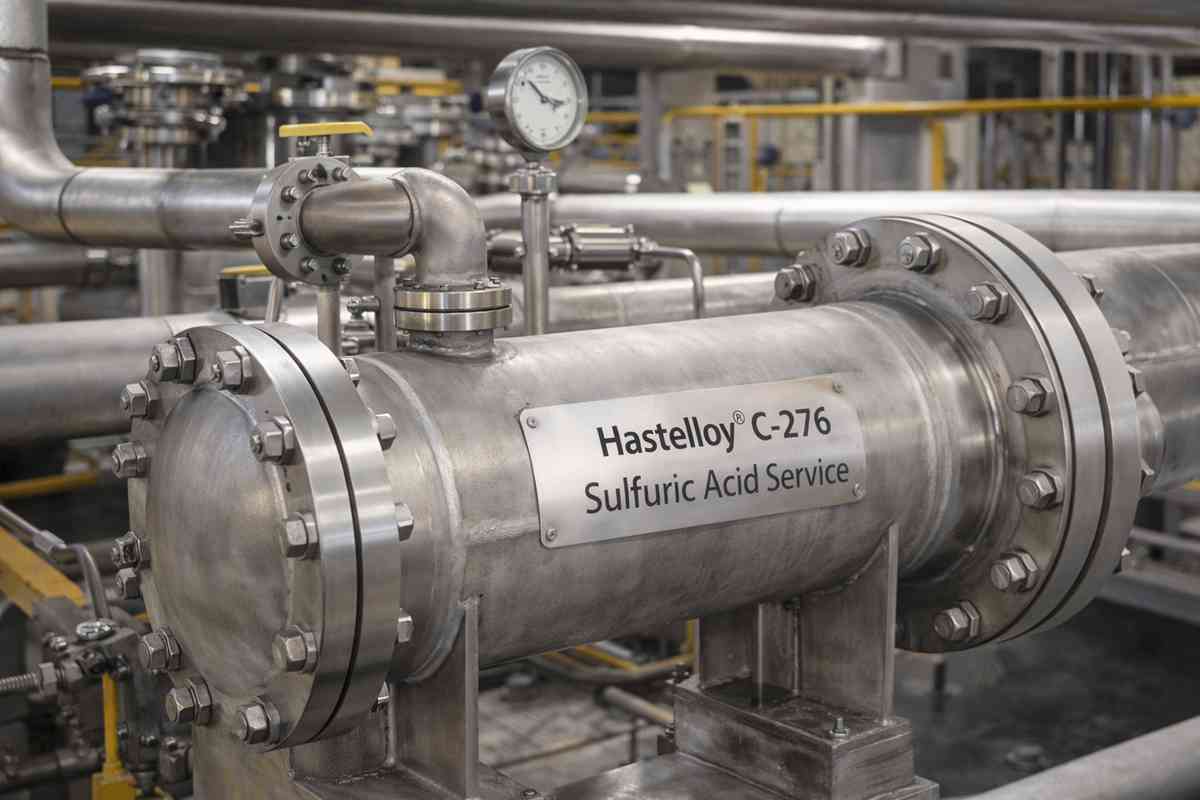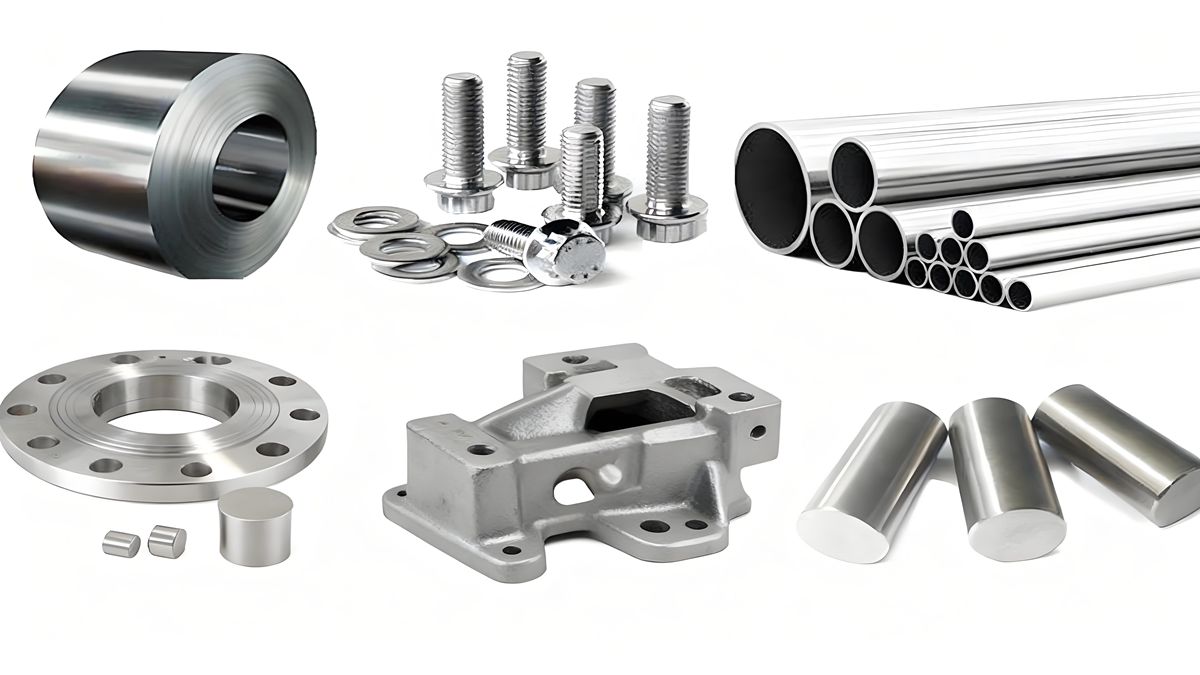
Wenn Ingenieure fragen wie man wählt Incoloy 825 for sour gas service, the real question is rarely about a datasheet. It is about risk. In sour gas systems, H₂S is only part of the story; the actual failure envelope is usually created by the combination of H₂S, CO₂, chlorides, temperature, water chemistry, solids, and upset conditions. Incoloy 825, or UNS N08825, is often selected because it offers a useful balance of nickel, chromium, molybdenum, and copper. But balance is not the same as universality. If the service is badly characterized, even a good alloy can be the wrong alloy.
Also, how to choose Incoloy 825 for sour gas service in a way that stands up to engineering review, procurement scrutiny, and field reality? Start by treating the alloy as a system decision, not a material name on a purchase order. The correct selection depends on corrosion mechanism, fabrication route, product form, and the real operating window rather than the nominal one.
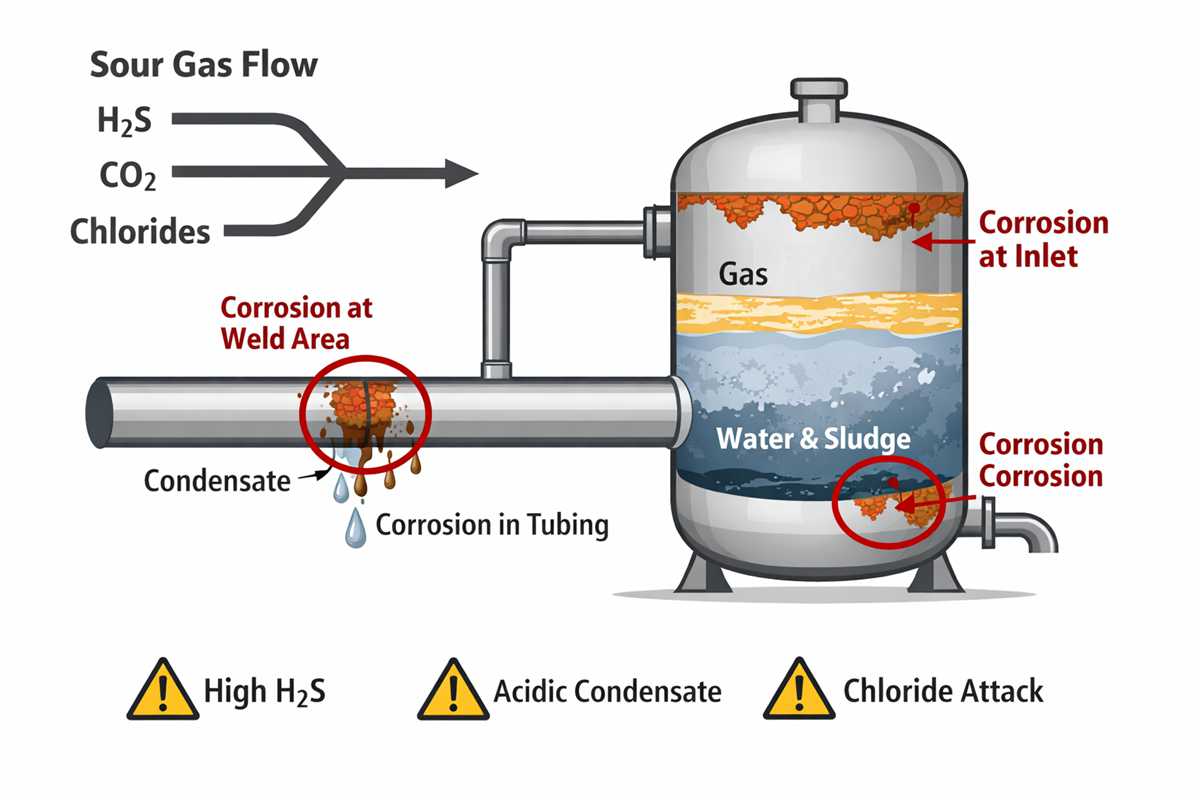
In practical terms, Incoloy 825 is attractive in wet sour gas environments because its nickel content improves resistance to chloride stress corrosion cracking, while chromium and molybdenum support general corrosion and localized corrosion resistance. Copper also helps in sulfuric or reducing acid environments that may appear during shutdown, contamination, or acid carryover. That said, experienced materials engineers do not approve 825 just because the media contains H₂S. They first define what kind of sour service they are dealing with: continuous wet sour production, intermittent condensation, produced water handling, amine contamination, under-deposit attack, or a mixed environment with chlorides and oxygen ingress.
How to Choose Incoloy 825 for Sour Gas Service in Real Projects
If you want a reliable answer to how to choose Incoloy 825 for sour gas service, begin with the environment, not the alloy brochure.
First, determine whether the service is truly dry or only “apparently dry.” A dry sour gas line may still develop corrosion if water condenses during startup, shutdown, pressure reduction, or insulation failure. Many wrong selections happen because the design basis assumes dry gas while the plant actually sees intermittent wetting.
Second, quantify chloride level and temperature together. This pair matters because localized corrosion and crevice attack become more aggressive when chlorides rise and stagnant geometries exist. Incoloy 825 is much more forgiving than 316L in this area, but that does not mean every chloride-bearing sour stream is automatically acceptable. Once deposits, solids, or shielded crevices enter the picture, the corrosion margin can narrow quickly.
Third, review partial pressures and secondary species. CO₂ can shift the corrosion regime. Elemental sulfur, thiosulfates, oxygen ingress, and low-pH condensate can do even more damage than the base sour gas chemistry suggests. This is why NACE MR0175 / ISO 15156 compliance should be treated as a starting screen, not the final engineering conclusion.
Fourth, define the product form. Bar, plate, seamless tube, welded pipe, clad plate, and forged fittings do not behave identically in fabrication or service. A sound answer to how to choose Incoloy 825 for sour gas service must include welding procedure, filler compatibility, heat input control, post-fabrication cleanliness, and hardness management in affected zones.
Screening Table: How to Choose Incoloy 825 for Sour Gas Service
| Selection factor | Why it matters | When Incoloy 825 is often a good fit | When you should pause or consider an upgrade |
|---|---|---|---|
| Wet H₂S exposure | Governs sulfide-related cracking and corrosion behavior | Wet sour systems requiring stronger corrosion resistance than common stainless grades | Severe multi-variable environments with sulfur species, low pH, and deposit-driven attack |
| Chlorides | Drives pitting, crevice corrosion, and SCC risk | Moderate to high chloride service where 316L margin is weak | Very aggressive chloride plus high temperature plus stagnant crevices |
| CO₂ presence | Changes general corrosion and condensate behavior | Mixed H₂S/CO₂ environments with corrosion allowance limits | High-velocity multiphase flow with erosion-corrosion concerns |
| Temperatur | Affects corrosion kinetics and localized attack tendency | Moderate process temperatures with controlled chemistry | Elevated temperature with concentrated chlorides or upset chemistry |
| Product form | Welds and geometry influence corrosion resistance | Seamless tube, controlled welds, qualified procedures | Poorly controlled welds, contaminated surfaces, sharp crevices |
| Fabrication quality | Surface condition often decides field performance | Pickled, passivated, clean, traceable supply | Shop contamination, embedded iron, rough weld roots |
| Standards compliance | Ensures minimum sour service suitability | Fully traceable material with spec review to NACE / ISO requirements | Purchase made only by UNS grade name without product-form review |
| Upset and shutdown conditions | Many failures occur outside normal operation | Process reviewed for condensate, oxygen ingress, chemical carryover | No defined upset envelope, no corrosion contingency plan |
The table above is the practical core of how to choose Incoloy 825 for sour gas service. In other words, 825 is rarely selected because it is the “best alloy on paper.” It is selected because it often gives a technically defensible and commercially reasonable middle ground: stronger than standard austenitic stainless steels, yet usually more economical than higher-nickel alloys such as Alloy 625 when the environment does not justify that jump.
Procurement and Fabrication Checks Before Ordering Incoloy 825 for Sour Gas Service
Another important part of how to choose Incoloy 825 for sour gas service is knowing when material selection turns into supply-chain control.
Ask for full mill traceability, chemistry, mechanical properties, and the exact delivery condition. For sour service components, engineers should verify not only the UNS designation but also the governing specification, product form, heat treatment state, and any additional client requirements on hardness, testing, and documentation. Buying “825 equivalent” without document discipline is asking for trouble.
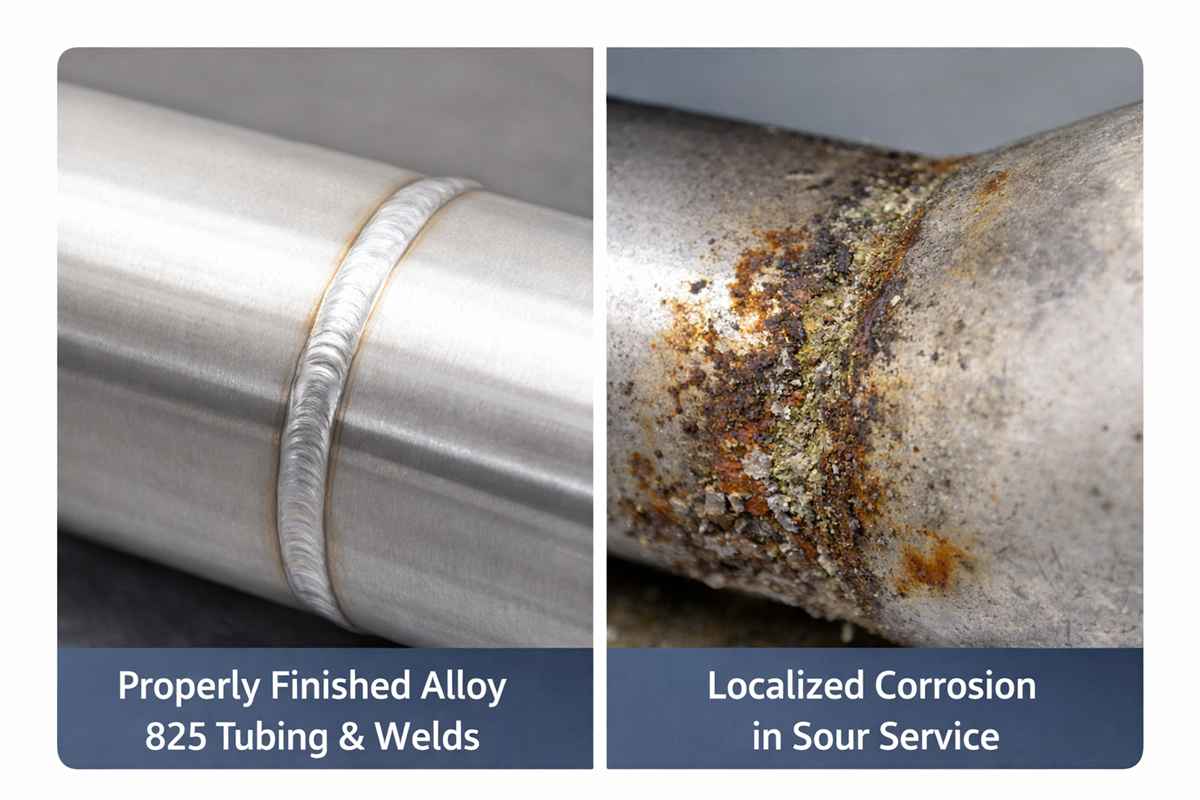
Welding deserves special attention. Alloy 825 generally welds well, but sour service performance still depends on procedure qualification, filler selection, dilution control, root profile, and post-weld surface condition. A technically correct alloy can lose field reliability if the weld root is rough, oxidized, or contaminated with embedded carbon steel particles. In real plants, that kind of fabrication defect is often what initiates localized corrosion.
You should also be careful with mixed-material assemblies. If Incoloy 825 is coupled with lower-alloy bolting, carbon steel supports, or stagnant crevice designs, the assembly can fail even when the base alloy is sound. That is why experienced buyers ask for more than a price. They ask for application review.
From a cost-performance standpoint, the best answer to how to choose Incoloy 825 for sour gas service is often this: choose it when you need a credible corrosion upgrade over stainless steel, strong resistance to wet sour and chloride-bearing service, and dependable fabrication availability. Do not choose it blindly when the environment suggests severe localized corrosion, sulfur-rich upset chemistry, or a nickel alloy upgrade is clearly warranted.
Schlussfolgerung
For engineers and buyers, how to choose Incoloy 825 for sour gas service should never be reduced to “Is 825 NACE compliant?” The right question is whether the full service envelope, fabrication route, and upset chemistry support 825 with enough corrosion margin. When that review is done carefully, Incoloy 825 can be a very effective solution for many wet sour gas applications. If your team is evaluating tubing, pipe, fittings, Flansche, oder benutzerdefinierte forged parts, 28Nickel can help review the service conditions and align alloy selection with actual operating risk.
Verwandte Fragen und Antworten
1. Is Incoloy 825 always better than 316L in sour gas service?
Not automatically, but in wet sour gas with chlorides, Incoloy 825 usually provides a much safer corrosion margin than 316L, especially where chloride stress corrosion cracking or localized corrosion is a concern.
2. When should engineers upgrade from Incoloy 825 to a higher nickel alloy?
An upgrade should be considered when the service includes more severe chloride-temperature combinations, sulfur-rich upset conditions, aggressive crevice geometries, or when the consequence of failure justifies a larger corrosion margin.
3. What purchasing mistake is most common in sour gas alloy projects?
The most common mistake is buying by alloy name alone. Real sour service selection must include product form, heat treatment, welding quality, traceability, and the actual wetting or upset conditions of the system.