Oil and gas equipment fails in boring ways: a gasket face pits, a valve stem galls, a control line cracks after a few months of chloride‑rich water and pressure cycling. When those failures happen offshore or downhole, “minor” corrosion becomes a shutdown. That’s why engineers keep coming back to inconel alloy for oil and gas—especially for sour service, subsea hardware, and hot sections where stainless steels or low‑alloy steels run out of margin.
Why inconel alloy for oil and gas earns its place
“INCONEL®” is a trademark, but in project specifications the real language is usually UNS numbers, ASTM/ASME product standards, and heat‑treatment condition. In other words, you’re not buying a buzzword—you’re selecting a controlled nickel‑chromium alloy system designed to keep strength and corrosion resistance when temperatures, chlorides, CO₂, and H₂S show up together.
What typically justifies inconel alloy for oil and gas in a design review:
-
Resistance to localized corrosion: Subsea connectors and bolting live in tight gaps where oxygen differences and trapped chlorides accelerate pitting/crevice attack.
-
More margin in sour environments: When qualified to a project’s sour‑service limits, Nickellegierungen can reduce exposure to sulfide stress cracking compared with many high‑strength steels.
-
Strength retention at temperature: Useful for hot produced fluids, thermal cycling, and fire‑case assessments.
-
Better fatigue + corrosion behavior: Pressure cycling, vibration, and sand erosion punish materials; nickel alloys often widen the safe operating window.
Where inconel alloy for oil and gas is most valuable
Not every component needs a nickel alloy. The best use cases are parts that are hard to retrieve, hard to inspect, or where the failure mode is unpredictable.
Typical applications for inconel alloy for oil and gas:
-
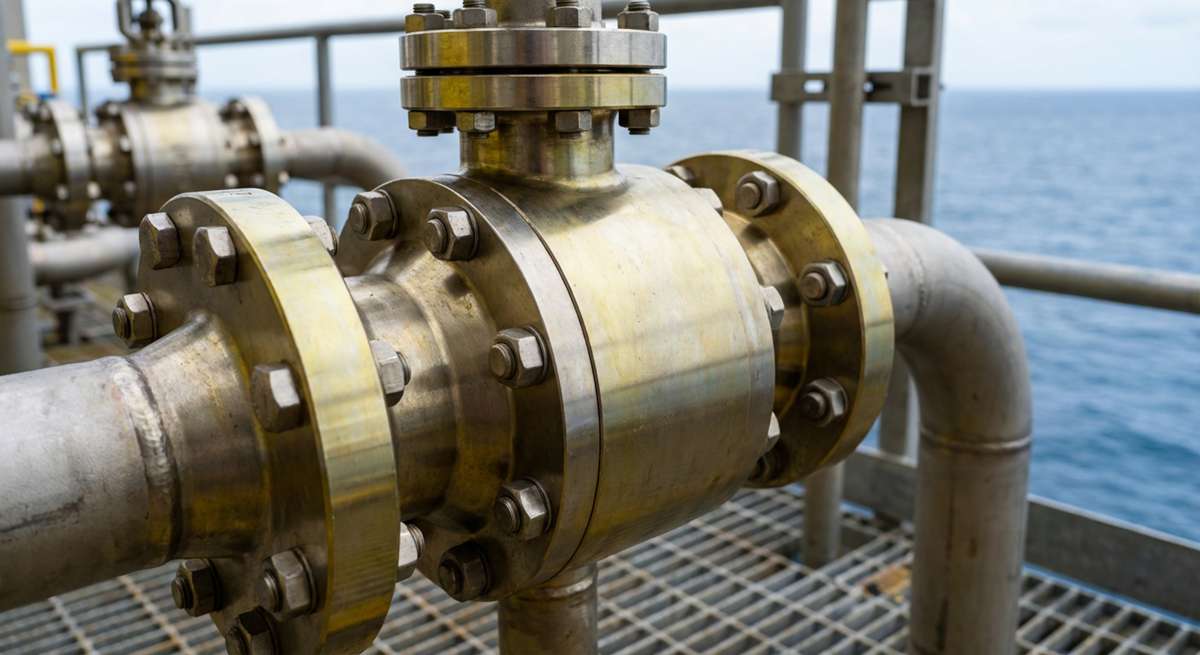
Subsea and topside fasteners (studs, nuts, bolts) where crevice corrosion and galvanic couples are routine.
-
Valve stems, seats, and trim exposed to erosion‑corrosion, sand, and frequent actuation.
-
Downhole tools and completion hardware (packers, seal assemblies, mandrels) where temperature plus H₂S pushes cracking risk.
-
Chemical injection and umbilical components (fittings, clamps, end terminations) exposed to seawater and aggressive chemicals.
-
Heat‑exchanger and condenser tubing in chloride‑bearing water where localized corrosion sets the lifetime.
Picking the grade: inconel alloy for oil and gas is not one-size-fits-all
Treating “625” as a universal answer is convenient, but selection is always a tradeoff among corrosion resistance, strength level, weldability, availability, and cost. A practical workflow is:
-
define environment and failure risks (pitting/crevice, SCC, erosion, sour cracking),
-
select candidate grades,
-
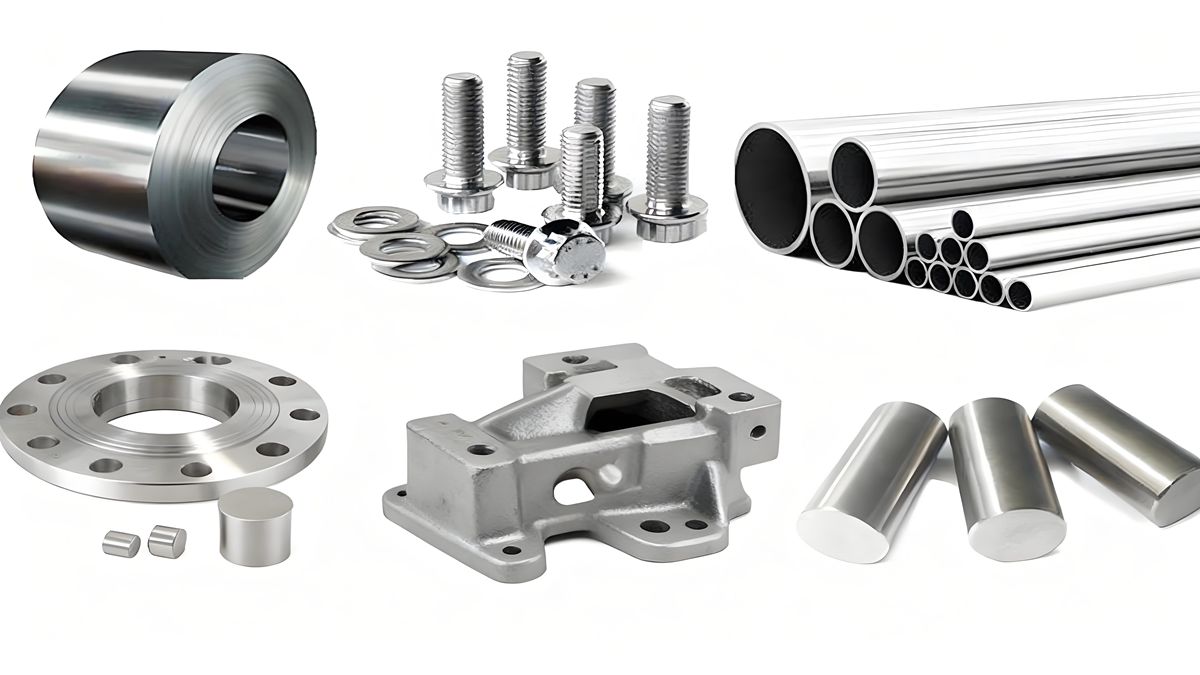
verify mechanical requirements and manufacturing route (bar vs forging, seamless vs welded),
-
lock in condition, testing, and documentation.
Common grades used as inconel alloy for oil and gas
The table below is intentionally selection‑oriented. Final suitability depends on temperature, chloride activity, pH, H₂S/CO₂ partial pressure, required yield strength, and project standards (often including NACE MR0175 / ISO 15156 for sour service).
| Inconel-Sorte (UNS) | Strength driver | Typical oil & gas uses | Corrosion notes | Common product forms | Useful specs to reference |
|---|---|---|---|---|---|
| 625 (N06625) | Solid-solution strengthened | Subsea clamps, piping spools, overlays/weld consumables, fasteners, instrumentation tubing | Excellent general corrosion; strong pitting/crevice resistance in seawater | Plate, bar, seamless tube, weld wire | ASTM B443/B446/B444; ASME; sour‑service qualification as required |
| 718 (N07718) | Precipitation hardened | High-strength bolts, springs, downhole components needing high yield | Good corrosion resistance; crevice/seawater selection needs careful review | Bar, forgings, fasteners | ASTM/AMS with defined heat treatment; verify sour‑service limits |
| 725 (N07725) | Precipitation hardened | Packers, hangers, safety valve parts, high-strength subsea fasteners | Often chosen when you need both high strength and better sour resistance | Bar, forgings, fasteners | ASTM/AMS; project sour‑service requirements |
| 690 (N06690) | Solid-solution strengthened | High-temperature tubing, furnace/flare components | Strong oxidation and high‑temp corrosion resistance | Tube, plate | ASTM B163/B168; ASME |
Solid CRA vs cladding: a real-world decision for inconel alloy for oil and gas
A common question is whether to build the whole part from a nickel alloy, or to use carbon steel with a corrosion‑resistant layer.
-
Solid CRA (solid 625/725/718 components) gives the simplest corrosion story and avoids dilution issues—but material cost and machining time are higher.
-
625 cladding/overlay can be a smart compromise for large bodies (valve bodies, spools) where the substrate carries load and the overlay sees the fluid. The catch is that overlay performance depends on dilution control, procedure qualification, and inspection. “625 on paper” is not the same as a verified deposit chemistry in the field.
If your project is price-sensitive but failure‑averse, this is often where inconel alloy for oil and gas delivers the biggest lifecycle win.
Processing details that make or break performance
With inconel alloy for oil and gas, chemistry is only half the story. Processing and finish frequently determine whether the part survives crevices, stress, and cycling.
-
Heat treatment and condition: For 718/725, aging schedules control strength and crack resistance. Specify condition (solution treated, aged, etc.), not just grade.
-
Surface condition: Pickling/passivation, cleanliness, and roughness matter. A rough turned surface traps chlorides; a smoother finish reduces initiation sites.
-
Welding and overlays: 625 overlays are widely used to protect carbon‑steel bodies. Procedure qualification, dilution control, and any post‑weld strategy determine whether the overlay performs as intended.
-
Galvanic design: Nickel alloys are relatively noble. In seawater, the less noble material may corrode faster if area ratios are unfavorable. Insulating washers, sleeves, and smart area ratios are inexpensive risk reducers.
A buyer’s checklist for inconel alloy for oil and gas procurement
If you source globally, the fastest path to problems is an under‑specified purchase order. For inconel alloy for oil and gas, include:
-
Full designation: grade + UNS + product form + condition/heat treatment.
-
Required mechanicals: minimum yield/tensile, hardness limits, impact requirements if applicable.
-
Sour service expectations: reference NACE MR0175 / ISO 15156 (or customer-specific sour qualification) and define any test evidence required.
-
Traceability: heat number, MTRs, EN 10204 3.1 or 3.2 level, and manufacturing route (melt practice if required).
-
NDE and dimensional tolerances: especially for seamless tube, forged bars, and critical fasteners.
For trade suppliers like 28Nickel, the value isn’t only inventory; it’s preventing mismatches between “what was ordered” and “what the field actually needs.”
Cost and lifecycle: the real case for inconel alloy for oil and gas
Nickel alloys are expensive on day one. In subsea or downhole service, the relevant metric is usually cost per operating hour, not cost per kilogram. If a 625 clamp avoids a retrieval campaign, or a 725 fastener avoids an unplanned shutdown, the material premium becomes small compared to intervention logistics.
A sensible way to justify inconel alloy for oil and gas is to compare:
-
expected corrosion allowance or replacement cycle for stainless/low‑alloy alternatives,
-
downtime cost,
-
intervention logistics (vessels, rig time),
-
and failure consequence (safety, environmental, contractual).
Verwandte Fragen und Antworten
Q1: Is 625 always the best inconel alloy for oil and gas in seawater?
Not always. 625 is excellent for many seawater exposures, but tight crevices, higher temperatures, or high-strength requirements may push you toward 725 or a different CRA family. Geometry and required strength often decide.
Q2: Can 718 be used as inconel alloy for oil and gas in sour service?
It can be, but only with controlled heat treatment, hardness limits, and evidence against the project’s sour‑service criteria. Don’t assume “718 = sour qualified” without documentation.
Q3: What documents should I request from a supplier?
At minimum: MTRs with chemistry and mechanicals, heat-treatment records (for 718/725), dimensional reports, and the EN 10204 certification level required by the project. For critical parts, add PMI, UT/ET results, and full traceability.