




Nel mondo delle leghe di nichel-cromo-molibdeno ad alte prestazioni, due nomi dominano il dibattito: Hastelloy C276 e Hastelloy C22. Per gli ingegneri e gli addetti agli acquisti nel settore della lavorazione chimica, distinguere tra queste due leghe di “tipo C” è fondamentale. Pur condividendo la stessa origine, le loro composizioni chimiche distinte determinano il loro comportamento in condizioni di forte stress corrosivo.
Questa guida illustra le sfumature tecniche, aiutandovi a ottimizzare la scelta del materiale per garantire longevità e sicurezza.
Differenze tra C276 e C22
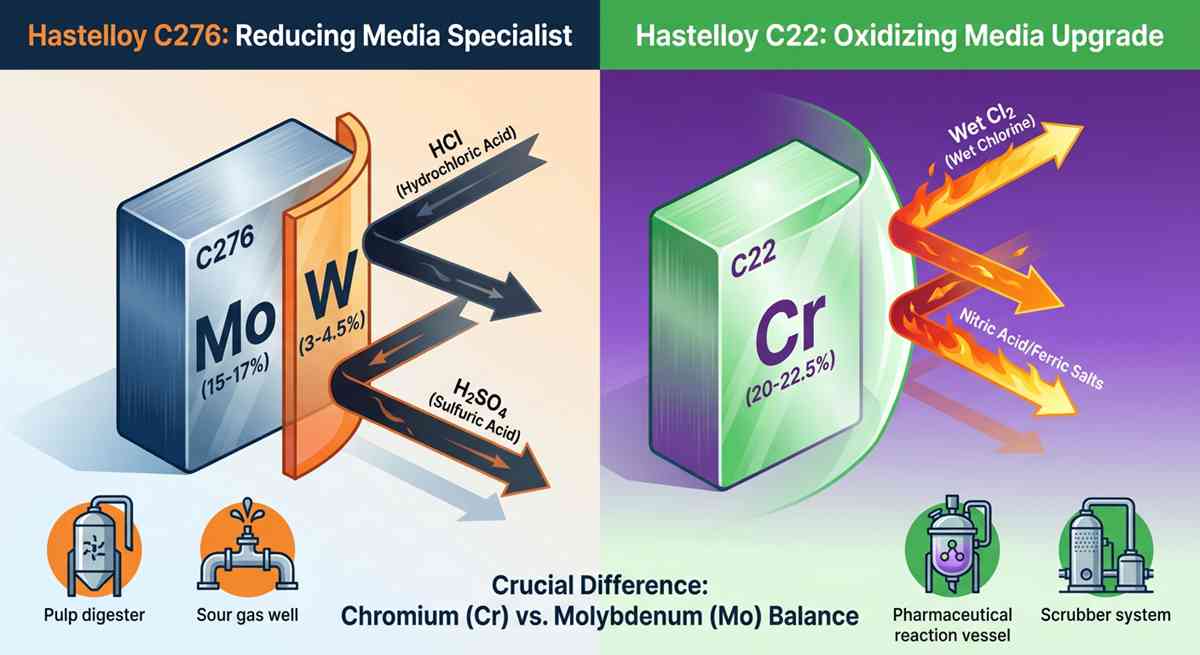
Le differenze fondamentali tra C276 e C22 risiedono nelle loro “ricette” elementari. Sebbene entrambe siano superleghe Ni-Cr-Mo progettate per resistere alla corrosione aggressiva, il bilanciamento del cromo (Cr) e del molibdeno (Mo) le distingue.
L'Hastelloy C276 (UNS N10276) è considerato il “cavallo di battaglia” del settore. Si basa su un elevato contenuto di molibdeno (15-17%) e tungsteno (3-4,5%) per fornire un'eccezionale resistenza agli ambienti riducenti (come l'acido cloridrico). Il contenuto di cromo è invece inferiore (circa 14,5-16,5%).
L'Hastelloy C22 (UNS N06022), spesso considerato come un upgrade, regola questo equilibrio. Aumenta il cromo a circa 20-22,5% e riduce leggermente il molibdeno (12,5-14,5%).
Perché è importante?
-
Resistenza all'ossidazione: Il cromo più elevato nel C22 gli conferisce una resistenza nettamente superiore ai mezzi ossidanti (come cloro umido, miscele di acido nitrico o sali ferrici) rispetto al C276.
-
Saldabilità: Entrambi possiedono un'eccellente saldabilità, ma il C22 presenta una migliore resistenza alla precipitazione dei bordi del grano nella zona termicamente alterata (ZTA) della saldatura, rendendolo leggermente più robusto in condizioni as-welded per gli impianti multiprocesso.
Per quantificare questo aspetto, si considera il Pitting Resistance Equivalent Number (PREN).
In generale, il C22 presenta un PREN più elevato, che indica una migliore resistenza alla corrosione localizzata per vaiolatura e interstiziale in ambienti stagnanti ad alto tenore di cloruro.
C276 vs C22 applicazioni di lavorazione chimica
Quando si definiscono le applicazioni di lavorazione chimica del C276 rispetto al C22, la decisione si basa solitamente sul flusso di acido specifico e sulla presenza di ossidanti.
Hastelloy C276 è lo standard per:
-
Acidi riducenti puri: ha prestazioni eccezionali in ambienti con acido cloridrico e solforico in cui non sono presenti agenti ossidanti.
-
Pasta e carta: I digestori e gli impianti di sbiancamento utilizzano spesso il C276.
-
Pozzi di gas acido: Ambienti in foro ricchi di (solfuro di idrogeno) e .
Hastelloy C22 è la scelta preferita per:
-
Produzione farmaceutica: Poiché è meno probabile che il C22 si corroda e contamini i lotti sensibili, è lo standard per i recipienti di reazione API (Active Pharmaceutical Ingredient).
-
Prodotti agrochimici e pesticidi: Le linee di produzione che passano da fasi ossidanti a fasi riducenti (processi “swing”) richiedono la versatilità del C22.
-
Scrubber e desolforazione: Nei sistemi di desolforazione dei gas di scarico (FGD), dove i liquidi di lavaggio possono diventare altamente acidi e ossidanti a causa delle ceneri volanti, il C22 supera il C276.
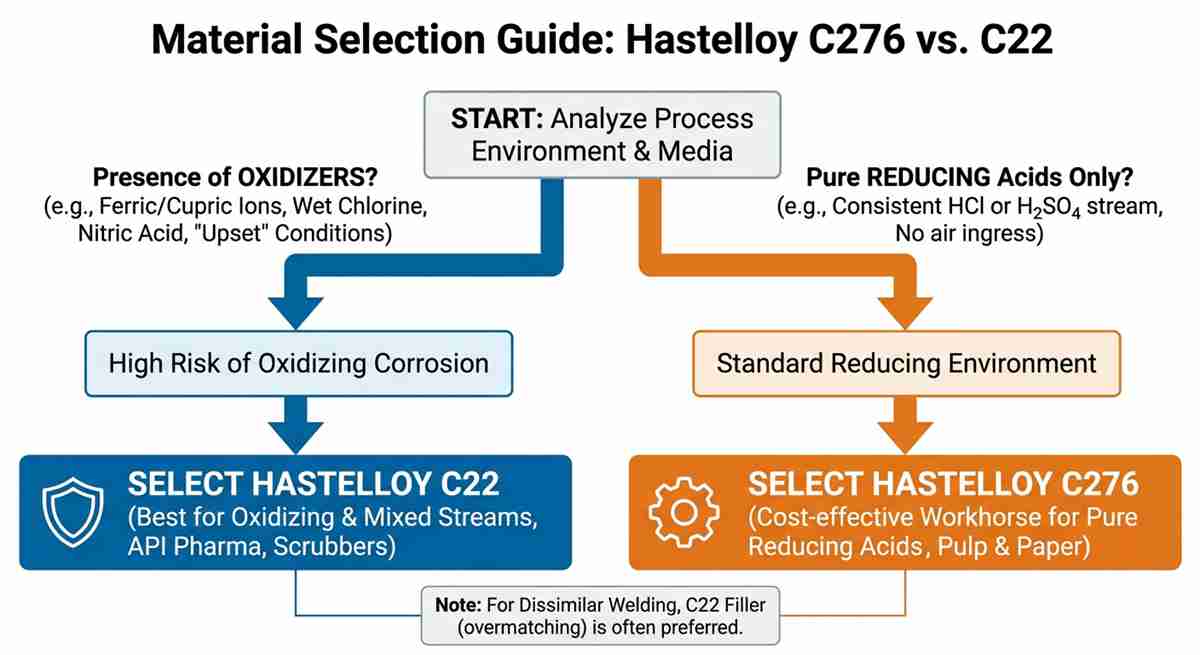
C276 vs C22: come scegliere
La scelta tra C276 e C22 richiede un'analisi specifica dei mezzi di processo. Non si tratta sempre di acquistare la lega “migliore”, ma quella “giusta”.
-
Analizzare gli ossidanti: Se il flusso contiene ioni ferrici (), ioni rameici (), cloro libero o acido nitrico, scegliere il C22. In queste condizioni, il C276 può subire guasti prematuri a causa del suo minore contenuto di cromo.
-
Valutare le condizioni di “innalzamento”: Se il vostro impianto ha un flusso costante di acido riducente, il C276 è sufficiente e conveniente. Tuttavia, se il vostro processo è soggetto a “sconvolgimenti” (ingresso accidentale di aria o picchi di temperatura che creano condizioni di ossidazione), il C22 funge da polizza assicurativa.
-
Costo e disponibilità: storicamente, il C276 era molto più economico. Oggi il divario di prezzo si è ridotto, ma il C276 rimane più disponibile in magazzino (lastre, barre, flange). Se avete bisogno di una riparazione rapida per una linea di riduzione standard, il C276 è spesso il vincitore logistico.
Domande e risposte correlate
Q1: Posso saldare Hastelloy C22 a C276?
R: Sì, la saldatura dissimile è comune. In genere è necessario utilizzare il metallo d'apporto con il contenuto di lega più elevato (overmatching). In questo caso, utilizzare il metallo d'apporto C22 (ERNiCrMo-10) per garantire che il cordone di saldatura abbia una resistenza alla corrosione pari o superiore al metallo base C276.
D2: L'Hastelloy C22 è sempre migliore del C276?
R: No. In ambienti di acido cloridrico puramente riducente a concentrazioni e temperature specifiche, il contenuto di molibdeno più elevato nel C276 può effettivamente offrire tassi di corrosione leggermente migliori rispetto al C22. Il C22 è “migliore” specificamente per flussi misti o ossidanti.
D3: Come posso distinguerli visivamente?
R: Non è possibile distinguerli a occhio nudo; entrambi sono metalli brillanti, di colore grigio-argento. È necessario utilizzare un'apparecchiatura di identificazione positiva del materiale (PMI) (analizzatore portatile XRF) per verificare il rapporto cromo/molibdeno o cercare il numero di calore e il rapporto di prova del mulino (MTR).