




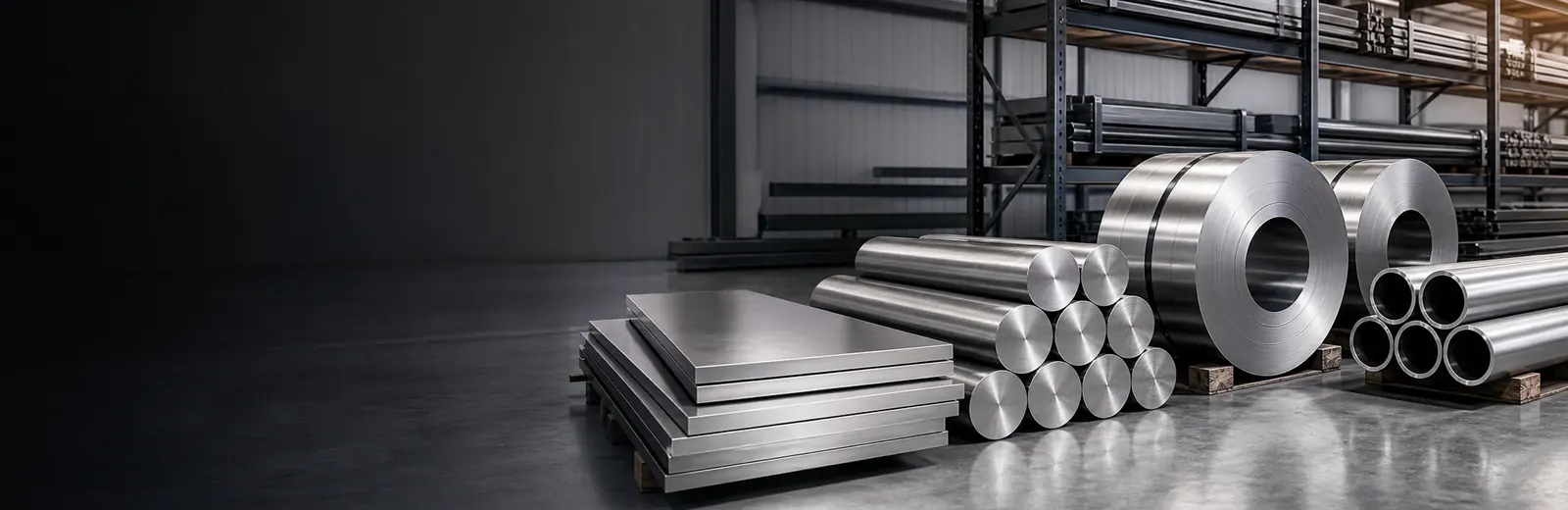
Nell'esigente panorama della lavorazione chimica e dell'ingegneria navale, il cedimento dei materiali è raramente un'opzione. Sebbene gli acciai inossidabili austenitici servano un'ampia gamma di applicazioni, spesso incontrano il loro limite negli acidi non ossidanti e nell'acqua di mare ad alta velocità. È qui che Resistenza alla corrosione del monel diventa il fattore decisivo per le specifiche tecniche. Come lega di nichel-rame a soluzione solida, il Monel (in particolare la Lega 400 e la K-500) offre un profilo elettrochimico unico che rimane nobile in ambienti in cui le leghe a base di cromo soffrono di una rapida depassivazione.
La sinergia elettrochimica di nichel e rame
Il motivo fondamentale che sta alla base della superiorità Resistenza alla corrosione del monel La sua caratteristica è la composizione binaria. Legando circa 63% di nichel con 28-34% di rame, il materiale beneficia delle caratteristiche nobili di entrambi gli elementi. A differenza degli acciai inossidabili, che si basano su un fragile strato “passivo” di ossido di cromo che può essere rimosso da cloruri o agenti riducenti, il Monel è intrinsecamente resistente a molte condizioni non ossidanti.
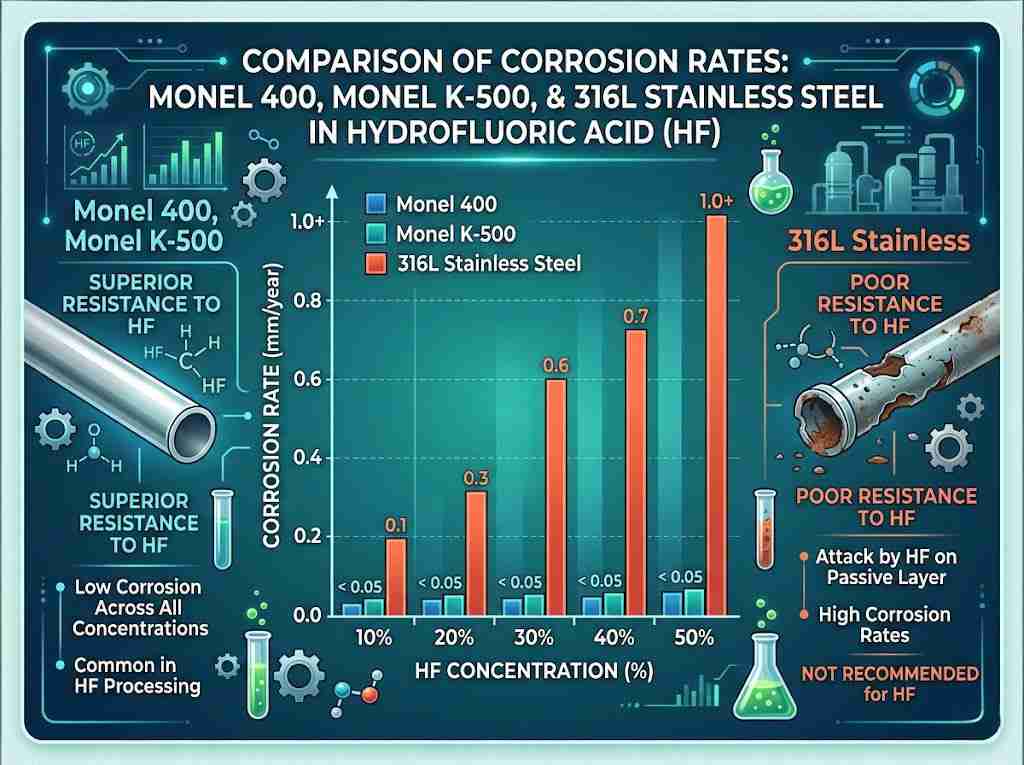
Nelle unità di alchilazione dell'acido fluoridrico (HF), uno degli ambienti più aggressivi della raffinazione, il colonnello 400 è lo standard industriale. Mantiene un basso tasso di corrosione in tutte le concentrazioni fino al punto di ebollizione, a condizione che l'acido non sia altamente aerato.
Prestazioni a confronto: Monel 400 vs. leghe comuni
La tabella seguente evidenzia le metriche di prestazione del Monel rispetto ad altre leghe industriali in specifici mezzi corrosivi.
| Ambiente | Monel 400 | Inossidabile 316L | C276 Hastelloy |
| Bollitura 70% Acido HF | Eccellente | Fallimento rapido | Buono |
| Acqua marina stagnante | Soggetto a vaiolatura | Pitting moderato | Superiore |
| Acqua di mare in movimento (>3m/s) | Eccezionale | Erosione/Corrosione | Eccezionale |
| Riduzione dell'acido solforico | Buono (fino a 80%) | Povero | Eccellente |
Attenuazione della cricca da corrosione da stress (SCC)
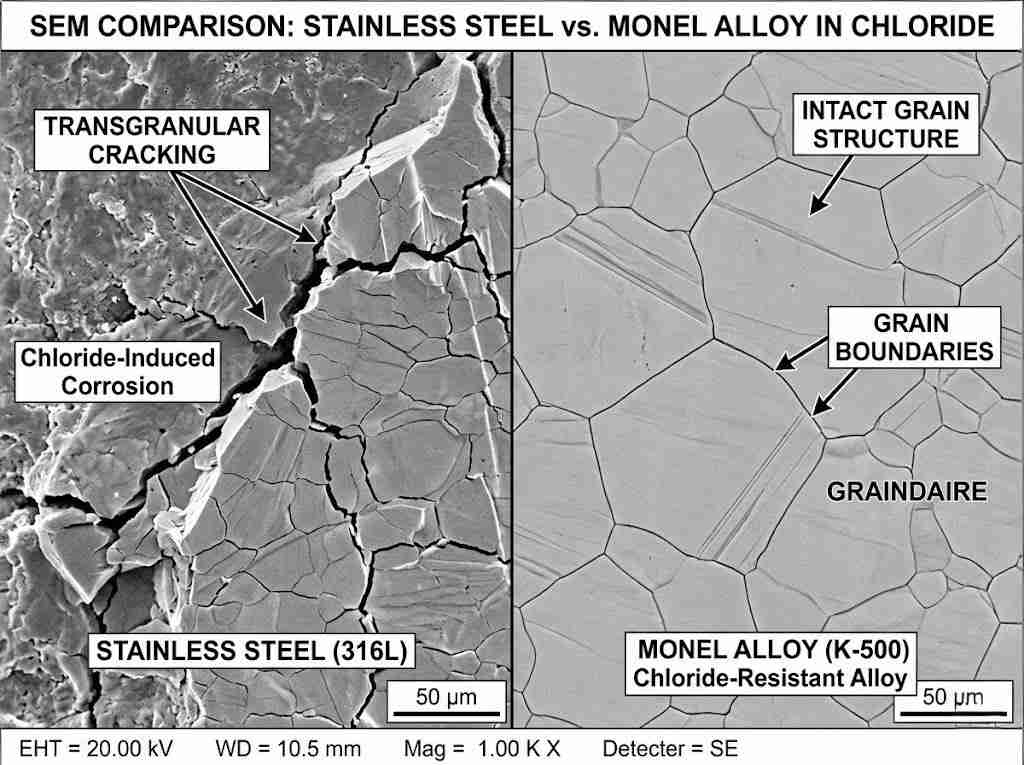
Uno dei vantaggi più significativi della serie Monel è la sua virtuale immunità alla cricca da stress corrosion indotta dagli ioni cloruro (SCC). Nei componenti marini ad alta pressione, gli acciai inossidabili della serie 300 spesso si guastano in modo catastrofico a causa di microfissure che si propagano in presenza di cloruri.
Monel K-500, che aggiunge alluminio e titanio per l'indurimento per precipitazione, mantiene l'elevata Resistenza alla corrosione del monel della qualità 400, fornendo al contempo un carico di snervamento ($\sigma_y$) paragonabile a quello di molti acciai legati. Tuttavia, gli ingegneri devono prestare attenzione all'infragilimento da idrogeno del K-500 quando viene utilizzato in acciai “acidi” ($H_2S$) in ambienti sottoposti a carichi elevati.
Resistenza alla cavitazione e all'erosione nella ferramenta marina
Nel settore marittimo, la corrosione è spesso aggravata dall'usura meccanica. Le giranti delle pompe e gli alberi delle eliche devono affrontare flussi ad alta velocità che causano “erosione da cavitazione”. Il rame contenuto nel Monel offre una naturale resistenza al bio-fouling, impedendo l'attacco di organismi marini che portano alla corrosione localizzata delle fessure. Inoltre, la sua elevata duttilità fa sì che il materiale assorba l'energia delle bolle di cavitazione senza la vaiolatura superficiale tipica dei metalli più fragili.
Domande e risposte correlate:
D1: In che modo l'aerazione influisce sulla velocità di corrosione del Monel 400 in ambienti acidi?
A1: Il Monel è una lega “ad ambiente ridotto”. In acidi come quello fluoridrico o solforico, la presenza di ossigeno disciolto (aerazione) aumenta significativamente la velocità di corrosione. L'ossigeno agisce come depolarizzatore, facilitando la reazione catodica e spogliando il film protettivo. Per gli scenari ad alta aerazione, può essere necessario un materiale più altamente legato come l'Hastelloy C276.
Q2: Il Monel K-500 può essere utilizzato in gas acidi ($H_2S$) secondo gli standard NACE?
A2: Sì, ma con delle limitazioni. Sebbene il K-500 abbia un'eccellente resistenza generale, può essere suscettibile alla cricca da stress indotta dall'idrogeno (HISC) se la durezza supera determinati livelli (in genere 35 HRC) o se viene accoppiato ad acciaio galvanizzato/protetto catodicamente che genera idrogeno nascente.
D3: Perché il Monel è preferito al Titanio per alcuni sistemi di tubazioni per l'acqua di mare?
A3: Mentre il titanio offre una resistenza alla corrosione quasi perfetta, il Monel è spesso preferito per gli scambiatori di calore e le tubazioni grazie alla sua superiore conducibilità termica e alle sue naturali proprietà antivegetative. Gli ioni di rame rilasciati in superficie inibiscono la crescita di cirripedi e alghe, mantenendo un'elevata efficienza di flusso senza biocidi chimici.