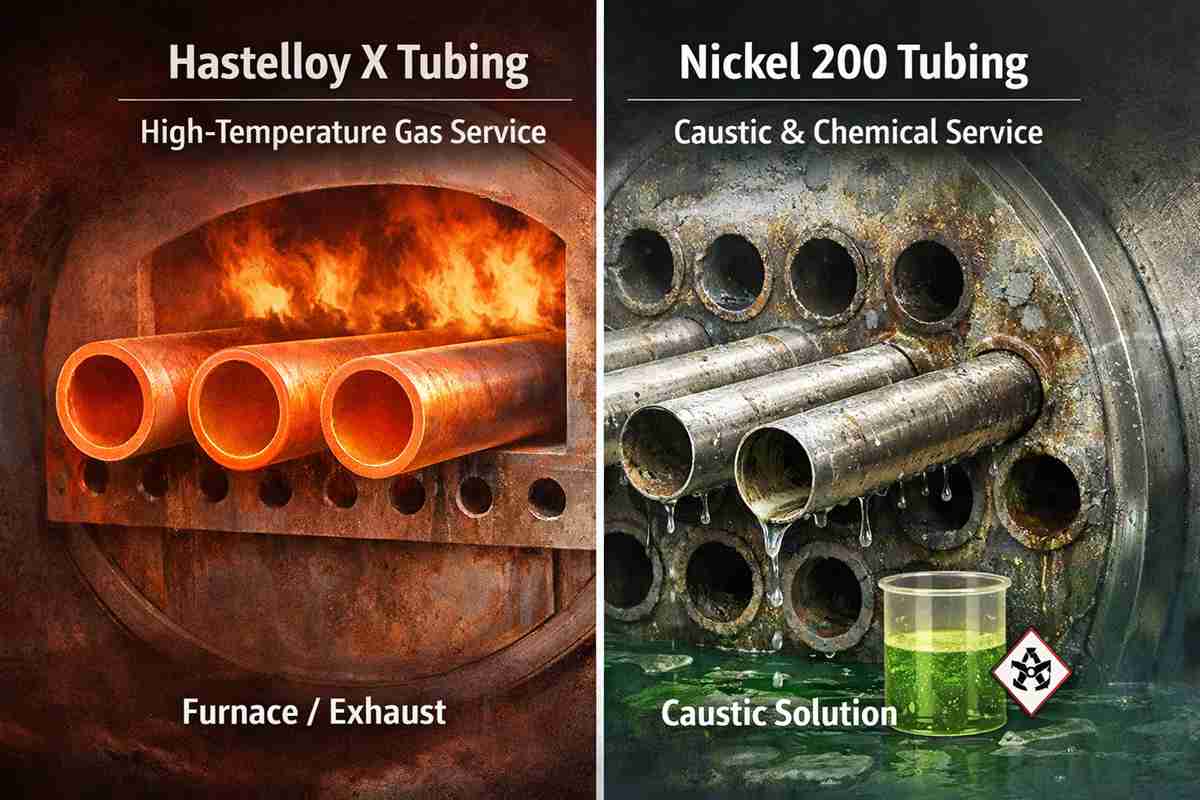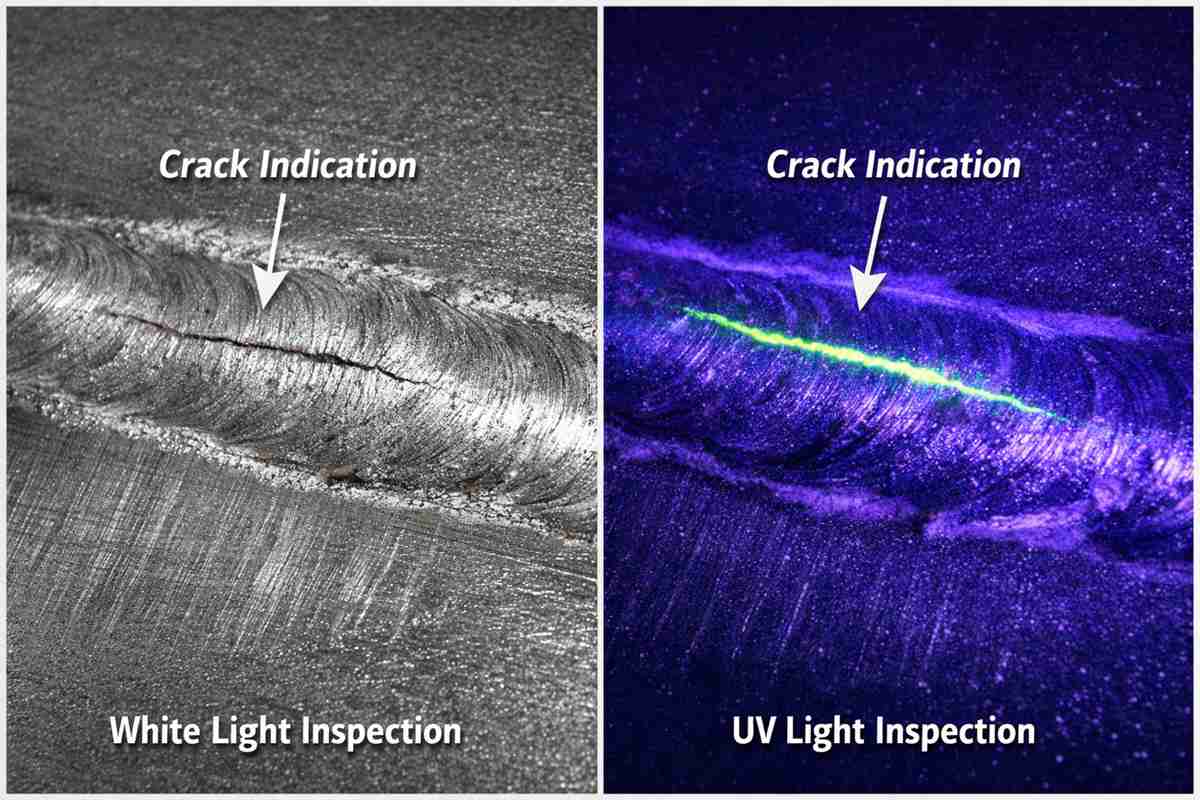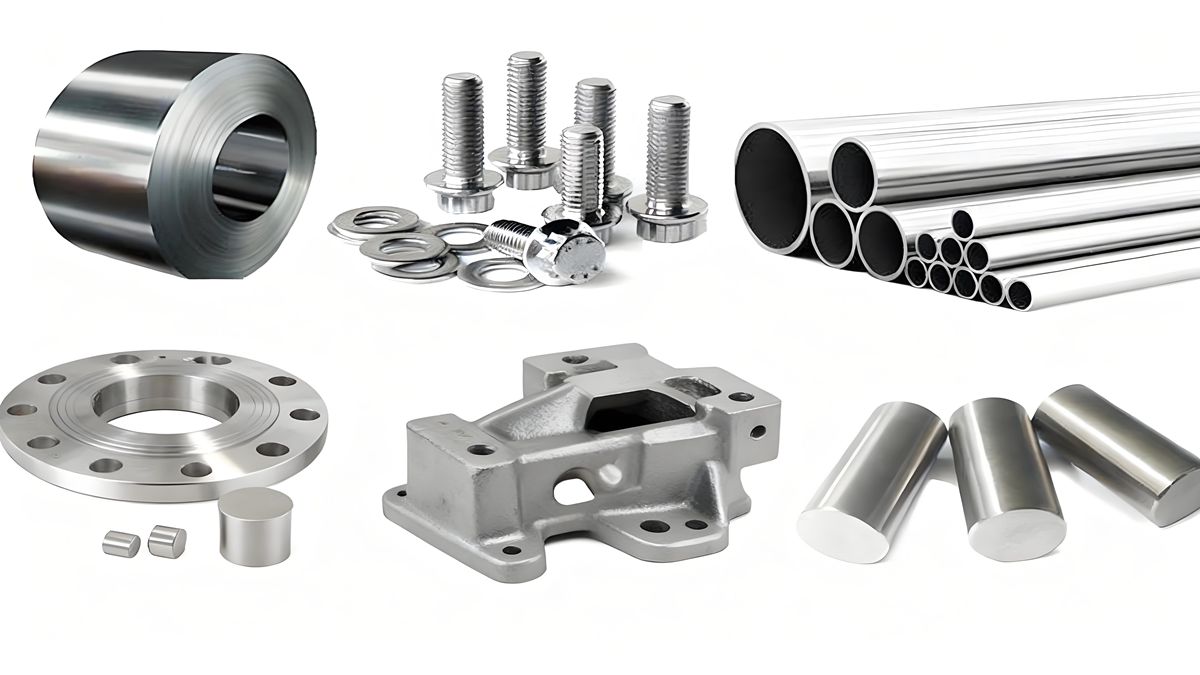
La scelta della giusta superlega a base di nichel è fondamentale per il settore aerospaziale, la produzione di energia e la lavorazione chimica. Due dei principali contendenti sono Hastelloy X e Inconel 718. Entrambi offrono prestazioni eccezionali, ma hanno ruoli meccanici e termici molto diversi.
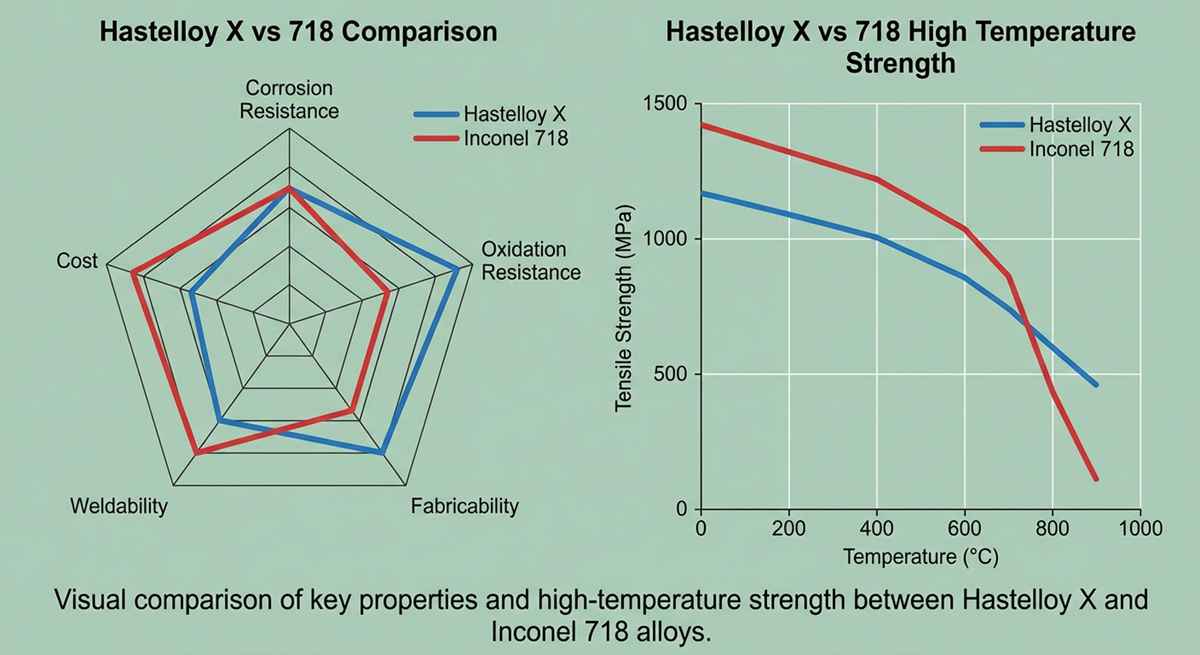
Hastelloy X vs 718 a confronto
A livello molecolare, la differenza fondamentale tra Hastelloy X e Inconel 718 Il loro meccanismo di rinforzo è il seguente. L'Hastelloy X è un solido-soluzione rafforzato (prevalentemente Nichel-Cromo-Ferro-Molibdeno), mentre l'Inconel 718 è una lega di indurente per precipitazione (indurito dall'età).
L'Inconel 718 contiene quantità significative di niobio () e titanio (), che formano i primi gamma () e gamma double-prime () precipita. Ciò lo rende significativamente più duro e più forte dell'Hastelloy X a temperature ambiente e moderate. D'altra parte, l'Hastelloy X si concentra su resistenza all'ossidazione e fabbricabilità, Il suo utilizzo è un “cavallo di battaglia” per i componenti che devono resistere al calore estremo senza necessariamente sopportare carichi strutturali pesanti.
| Proprietà | Hastelloy X (UNS N06002) | Inconel 718 (UNS N07718) |
| Meccanismo di forza primaria | Soluzione solida | Indurimento per precipitazione |
| Densità ($g/cm^3$) | 8.22 | 8.19 |
| Intervallo di fusione | 2300-2470°F (1260-1355°C) | 2300-2437°F (1260-1336°C) |
| Resistenza allo snervamento (a 1200°F) | ~35.000 psi (240 MPa) | ~150.000 psi (1030 MPa) |
| Limite massimo di ossidazione | 2200°F (1200°C) | 1300°F (704°C) |
Hastelloy X vs 718 Resistenza alle alte temperature
Quando si analizza Hastelloy X vs 718 resistenza alle alte temperature, È necessario distinguere tra “resistenza al carico” e “sopravvivenza ambientale”.”
-
Inconel 718 è il re dell'integrità strutturale fino a 1300°F (700°C). Mantiene incredibili proprietà di resistenza allo scorrimento e alla trazione. Tuttavia, una volta che le temperature superano questa soglia, i precipitati che conferiscono al 718 la sua resistenza iniziano a coagularsi (overage) e il materiale perde rapidamente il suo vantaggio strutturale.
-
Hastelloy X non ha lo stesso picco di snervamento del 718, ma offre una stabilità superiore a temperature molto più elevate. Offre un'eccezionale resistenza all'ossidazione fino a 2200°F (1200°C). Resiste alla carburazione e alla nitrurazione, che sono modalità di guasto comuni nelle zone di combustione delle turbine a gas.
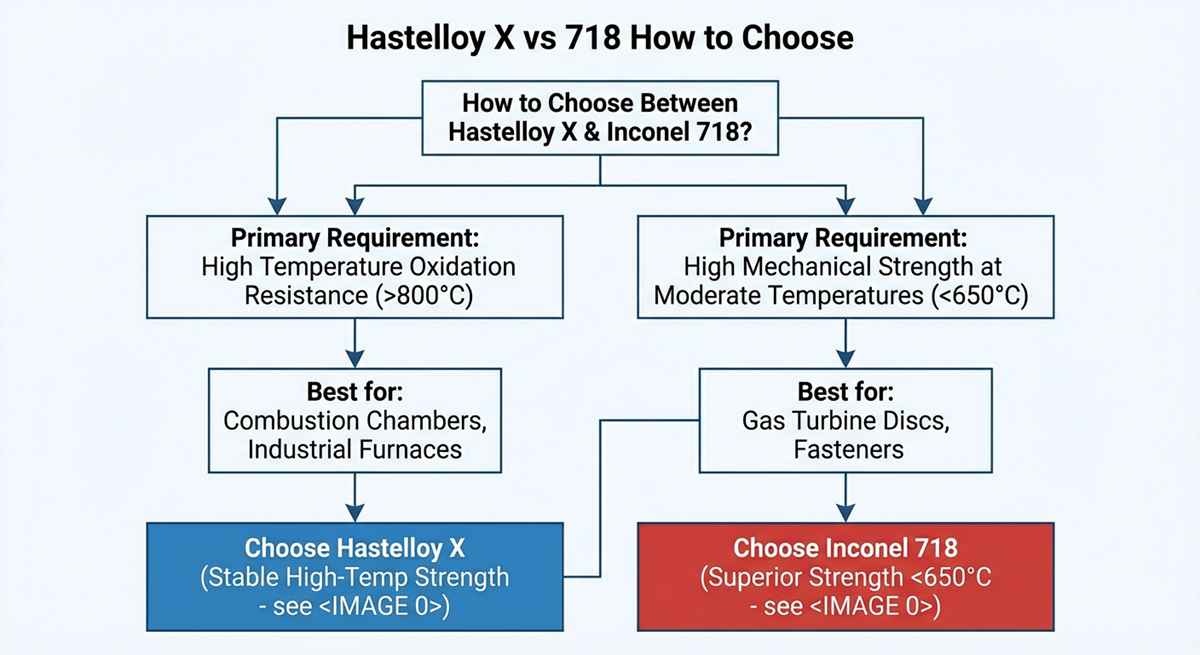
Hastelloy X vs 718 Come scegliere
La decisione su Hastelloy X vs 718 come scegliere di solito dipende dalla temperatura di esercizio e dai requisiti strutturali del pezzo.
-
Selezionare Inconel 718 se: Progettate componenti ad alta sollecitazione come dischi di turbine, elementi di fissaggio o serbatoi criogenici, dove la resistenza allo snervamento e alla fatica sono le priorità principali al di sotto dei 1300°F.
-
Selezionare Hastelloy X se: State progettando componenti “a sezione calda” come rivestimenti per la combustione, postcombustori o storte per forni. Se il componente deve sopravvivere in un ambiente ossidante a temperature superiori a 1500°F, Hastelloy X è la scelta più sicura e duratura.
-
Esigenze di fabbricazione: L'Hastelloy X è generalmente più facile da saldare e formare. L'Inconel 718, pur essendo saldabile, è più suscettibile alle cricche da deformazione e richiede un rigoroso trattamento termico post-saldatura (PWHT) per raggiungere la sua piena resistenza.
Domande e risposte correlate
Q1: L'Inconel 718 può essere utilizzato per le muffole dei forni? In generale, no. Sebbene il 718 sia resistente, non è ottimizzato per l'ossidazione costante ad alta temperatura che si verifica nei forni. Hastelloy X o Inconel 600 sono più adatti ad ambienti di forno non strutturali.
D2: Hastelloy X è più costoso di Inconel 718? I prezzi fluttuano in base ai mercati del molibdeno e del nichel, ma l'Hastelloy X ha spesso un sovrapprezzo a causa del suo contenuto di molibdeno specializzato e del volume di produzione inferiore rispetto all'Inconel 718, ampiamente utilizzato.
D3: Quale lega è migliore per le applicazioni criogeniche? L'Inconel 718 è eccezionalmente adatto alle temperature criogeniche, in quanto mantiene un'elevata tenacità e resistenza senza diventare fragile, il che lo rende uno standard per i sistemi a propellente liquido per razzi.