





Quando gli ingegneri chiedono informazioni su Resistenza alla corrosione dell'Inconel 718 in acido solforico, La mia prima reazione è sempre la stessa: non rispondere troppo in fretta. La lega 718 è una lega di nichel-cromo molto valida, ma l'acido solforico è uno di quegli ambienti in cui la mentalità casuale “lega di nichel = sicura” mette nei guai. Special Metals indica la 718 come una lega Ni-Cr indurente per precipitazione con circa 50-55% di nichel, 17-21% di cromo e 2,8-3,3% di molibdeno e la descrive come una lega con un'eccellente resistenza alla corrosione in molti ambienti. Questa affermazione generale è vera, ma non è la stessa cosa che dire che il 718 è una lega dedicata all'acido solforico.
La vera risposta ingegneristica è che Resistenza alla corrosione dell'Inconel 718 in acido solforico dipende fortemente da quattro variabili: la concentrazione di acido, la temperatura, i contaminanti ossidanti o riducenti e la resistenza alla corrosione o la resistenza meccanica. Haynes osserva che il comportamento dell'acido solforico dipende fortemente dalla concentrazione e dalla temperatura, che il molibdeno è molto vantaggioso nell'acido solforico puro, che anche il rame è vantaggioso e che è consigliabile effettuare prove sul campo perché la chimica dell'impianto raramente si comporta come l'acido pulito di laboratorio.
Quest'ultimo punto è importante. Negli impianti reali, l'acido solforico può trasportare ioni ferrici, cloruri, solfati, sostanze organiche di processo o specie ossidanti dalle operazioni a monte. In questo caso, la stabilità del film passivo e la velocità di corrosione uniforme possono cambiare rapidamente. Quindi, se la domanda è se Resistenza alla corrosione dell'Inconel 718 in acido solforico è “buona”, la risposta non è sì o no. È: sufficientemente buono per quale chimica esatta, quale temperatura esatta e quale modalità di guasto esatta?
Da cosa dipende la resistenza alla corrosione dell'Inconel 718 in acido solforico?
Da un punto di vista metallurgico, il 718 è stato progettato per bilanciare alta resistenza, saldabilità e resistenza alla corrosione generale. La sua resistenza alla corrosione deriva principalmente dal nichel e dal cromo, mentre il livello di molibdeno è modesto. Special Metals afferma che il nichel favorisce la resistenza in molti mezzi inorganici e organici, il cromo aiuta a contrastare i mezzi ossidanti e i composti dello zolfo, mentre il molibdeno contribuisce alla resistenza alla vaiolatura. Si tratta di una base solida, ma è comunque diversa dalle leghe deliberatamente ottimizzate per l'impiego in acido solforico.
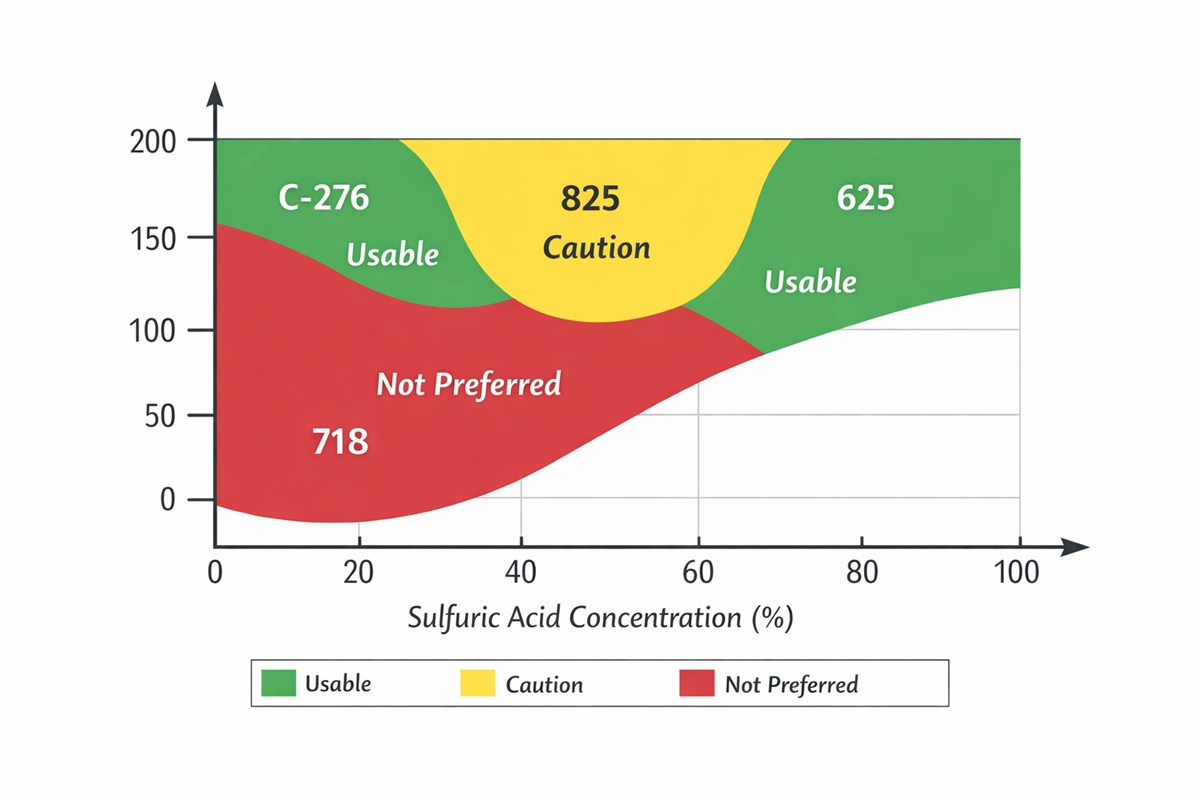
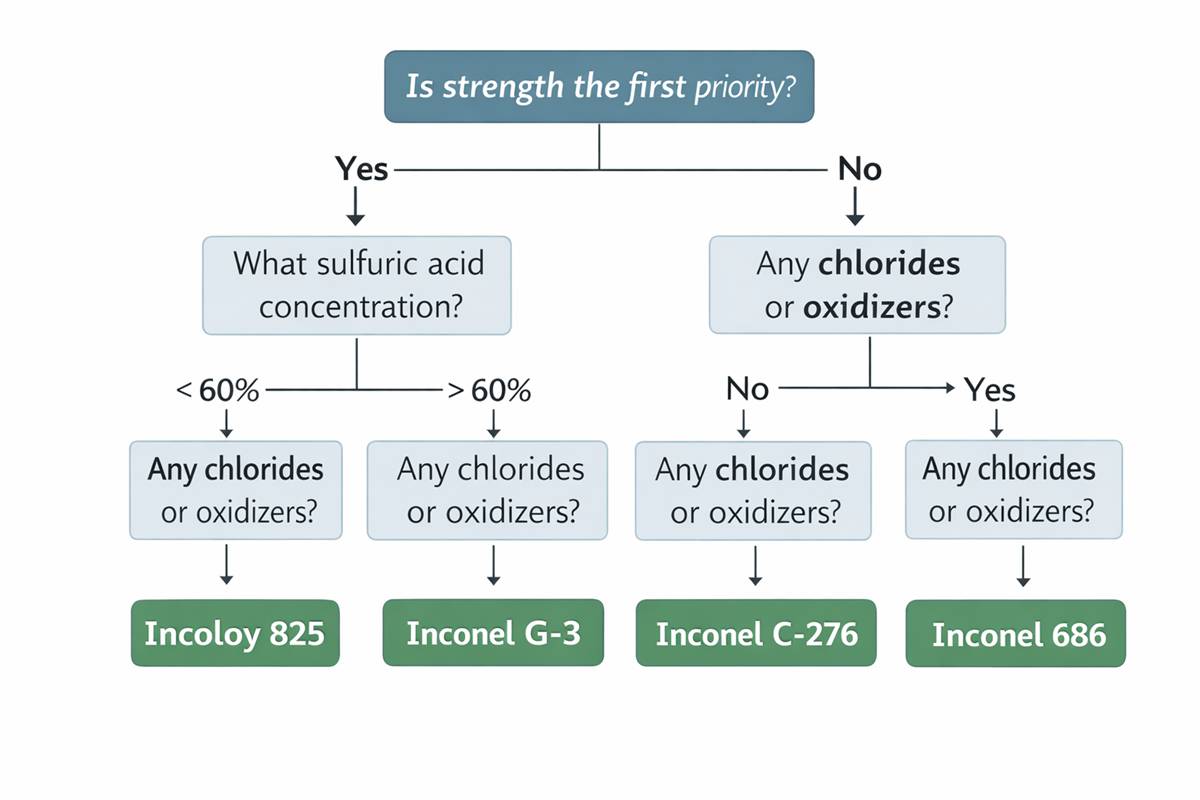
Ecco perché gli ingegneri esperti in corrosione solitamente confrontano il 718 con i materiali specifici per l’acido solforico prima di dare l’approvazione. Nelle stesse pubblicazioni di Special Metals, l’INCOLOY 825 è descritto come dotato di eccellente resistenza agli acidi solforico e fosforico; l’INCONEL G-3 è esplicitamente indicato per la manipolazione dell’acido solforico; il C-276 è indicato per ambienti riducenti e leggermente ossidanti; mentre il 686 è descritto come dotato di eccellente resistenza agli acidi ossidanti, riducenti e misti. Queste descrizioni non sono semplici curiosità di marketing. Esse riflettono l’intento progettuale della lega. Il 718, al contrario, viene presentato principalmente come una lega ad alta resistenza induribile per invecchiamento con resistenza alla corrosione, non come un materiale di prima linea per l’acido solforico.
I dati relativi alla classifica dell’acido solforico riportati nel manuale sulla corrosione in ambiente acquoso di Special Metals confermano tale affermazione. Per l’acido solforico non disaerato, il manuale classifica le leghe 825, 686 e G-3 tra quelle con le migliori prestazioni in presenza di acido diluito, mentre le leghe 686 e C-276 sono in testa in presenza di acido concentrato; la lega 718 non compare in quella classifica relativa all’acido solforico. Ciò non dimostra che il 718 sia inutilizzabile. Dimostra però che, quando l’acido solforico è la principale variabile corrosiva, l’industria di norma prende in considerazione innanzitutto altre leghe di nichel.
Tabella di selezione delle leghe per acido solforico
| Lega | Posizionamento pratico dell'acido solforico | Perché gli ingegneri lo scelgono |
|---|---|---|
| Inconel 718 | Usare con cautela quando l'esposizione all'acido solforico è secondaria e l'alta resistenza è obbligatoria. | Forte lega indurente per età per elementi di fissaggio, alberi, molle e parti del settore petrolifero in cui la resistenza può superare la pura ottimizzazione della corrosione. |
| Incoloy 825 | Parametro di riferimento comune per il servizio intermedio di acido solforico | Il design Ni-Fe-Cr-Mo-Cu è specificamente posizionato per la resistenza all'acido solforico |
| Inconel G-3 | Forte candidato per i sistemi di acido solforico e fosforico | Mo più elevato più Cu, ed esplicitamente associato alla manipolazione dell'acido solforico. |
| Inconel 625 | Scelta migliore per la corrosione generale rispetto al 718 quando è ancora necessaria la resistenza | Molibdeno più elevato e reputazione più solida nei mezzi corrosivi più severi |
| Inconel C-276 | Scelta standard per ambienti acidi da riducenti a leggermente ossidanti | La chimica ad alto tenore di Mo gli conferisce una credibilità molto più ampia nel servizio acido. |
| Inconel 686 | Opzione premium per servizi aggressivi con acidi misti e cloruri contaminati | Eccellente resistenza agli acidi ossidanti, riducenti e misti |
Nota sulla tabella: il posizionamento delle leghe sopra riportato riassume la chimica e le indicazioni applicative di Special Metals e Haynes per 718, 825, G-3, 625, C-276 e 686.
Quando il 718 ha ancora un senso ingegneristico
Quindi, dove Resistenza alla corrosione dell'Inconel 718 in acido solforico ha davvero senso? A mio parere, la 718 diventa ragionevole quando il componente è meccanicamente impegnativo e l'esposizione all'acido è limitata, intermittente, diluita o strettamente controllata. Si pensi alla bulloneria ad alta resistenza, alle molle, alla ferramenta per le trivellazioni, agli steli delle valvole o alle parti strutturali che non possono semplicemente passare a una lega anticorrosione più morbida senza riprogettare il percorso del carico. Special Metals fa inoltre notare che la 718 viene prodotta per applicazioni in campo petrolifero in base alle condizioni di servizio NACE MR0175/ISO 15156, il che avvalora l'idea che la 718 entra spesso in servizio corrosivo per il suo pacchetto di resistenza, non perché sia la migliore lega acido-solforica in commercio.
Sarei molto più prudente per l'acido solforico in circolazione a caldo, i circuiti di decapaggio, gli evaporatori, i circuiti di recupero dell'acido e le geometrie di interstizi stagnanti. Anche in acqua di mare, dove il 718 mostra un'eccellente resistenza alla corrosione-fatica, Special Metals rileva che è meno resistente alla corrosione interstiziale rispetto a 625, 625LCF e 725. Non si tratta di dati relativi all'acido solforico, ma è un utile promemoria per ricordare che il 718 si colloca al di sotto del livello superiore delle leghe di nichel per corrosione quando il margine di corrosione localizzata diventa critico.
Una seconda cautela riguarda gli acidi contaminati. Special Metals riporta che i sali ossidanti possono influenzare in modo significativo il comportamento dell'acido solforico e che il servizio sommerso contaminato da cloruri può richiedere leghe di polibdeno più elevate come C-276, 622, 625 o 686. Haynes fa lo stesso ragionamento più ampio: il servizio in acido solforico nel “mondo reale” spesso si discosta dal comportamento in laboratorio dell'acido puro, quindi la convalida sul campo è una buona tecnica, non un'esagerazione.
Per i team di approvvigionamento, questo ha un'implicazione pratica. Non chiedete solo il nome della lega. Chiedete anche l'intervallo di concentrazione dell'acido, la temperatura massima e quella massima, lo stato di aerazione, la contaminazione ferrica/cuprica, il livello di cloruro, la velocità del flusso e se il pezzo presenta fessure o depositi. Senza di ciò, qualsiasi affermazione su Resistenza alla corrosione dell'Inconel 718 in acido solforico è incompleto.
Il risultato finale dell'ingegneria
La mia conclusione è semplice. Resistenza alla corrosione dell'Inconel 718 in acido solforico non è scadente per definizione, ma di solito la 718 non è la lega che utilizzerei quando l'acido solforico è la principale sfida alla corrosione. La considererei un compromesso ingegneristico basato sulla resistenza: accettabile in ambienti solforici selezionati, a volte molto utile, ma non la risposta predefinita per il servizio acido caldo o chimicamente complesso. Se l'acido solforico è fondamentale, leghe come la 825, la G-3, la 625, la C-276 o la 686 meritano di essere esaminate per prime, perché la loro chimica e il posizionamento pubblicato si allineano più direttamente alle prestazioni con l'acido solforico.
Per 28Nickel, il modo più rapido per prendere una decisione corretta è esaminare l'intero pacchetto di servizio, non solo il grado della lega. Se state valutando un albero, un elemento di fissaggio, una tubazione o un interno di un recipiente, inviate la concentrazione di acido solforico, la temperatura di esercizio e di intervento, il profilo delle impurità, il livello di resistenza richiesto e il percorso di fabbricazione. Questo è sufficiente per valutare se la 718 è difendibile o se una lega orientata all'acido solforico vi darà un margine di corrosione più sicuro.
Domande e risposte correlate
1. L'Inconel 718 è adatto al servizio di acido solforico a caldo?
Di solito non è la prima scelta quando l'acido solforico è il principale mezzo corrosivo. Le linee guida sull'acido solforico pubblicate dai produttori di leghe di nichel indicano più spesso ai tecnici l'825, il G-3, il C-276, il 625 o il 686, soprattutto quando la temperatura e la concentrazione aumentano.
2. Perché l'825 è spesso preferito al 718 nell'acido solforico?
Perché l'825 è specificamente progettato per il servizio con acido solforico e include aggiunte di leghe, tra cui molibdeno e rame, che sono vantaggiose in ambienti con acido solforico. Special Metals fornisce anche una guida all'isocorrosione da acido solforico per l'825.
3. Quali dati devo raccogliere prima di scegliere il 718 per l'impiego nell'acido solforico?
Come minimo: concentrazione di acidi, temperatura normale e di esercizio, contaminanti ossidanti, cloruri, condizioni di flusso, rischio di interstizio, tolleranza alla corrosione e requisiti minimi di proprietà meccanica. Queste variabili determinano se la 718 è un compromesso praticabile o una lega completamente sbagliata.