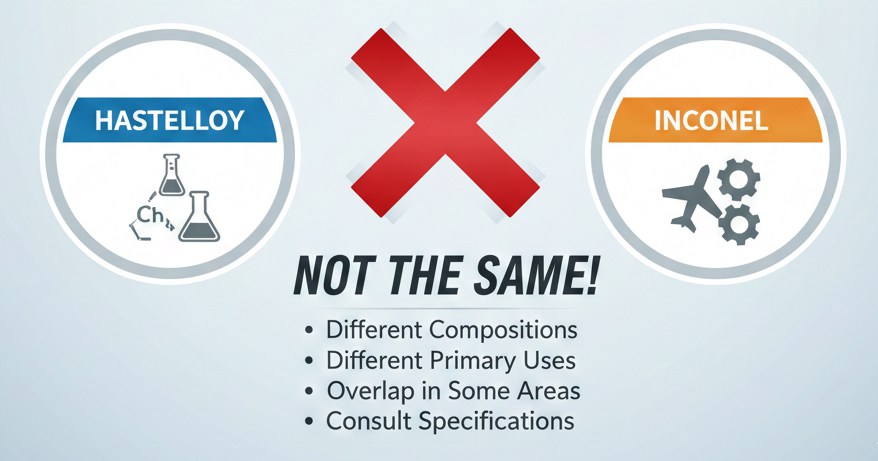
La risposta breve è no. Entrambi sono ad alte prestazioni leghe di nichel utilizzati in ambienti estremi, sono materiali distinti con composizioni chimiche, caratteristiche prestazionali e proprietari di marchi diversi. La comprensione di queste differenze è fondamentale per evitare guasti catastrofici nei settori aerospaziale, chimico e marino.
1. La distinzione del marchio: I marchi sono importanti
Prima di analizzare la chimica, è importante chiarire la nomenclatura. Questi nomi rappresentano famiglie specifiche di leghe sviluppate da diverse aziende:
-
INCONEL®: Un marchio di fabbrica del Special Metals Corporation. Si tratta in generale di una famiglia di superleghe austenitiche a base di nichel-cromo.
-
HASTELLOY®: Un marchio di fabbrica di Haynes International. In genere si tratta di leghe di nichel-molibdeno o nichel-cromo-molibdeno.
Sebbene siano spesso usati in modo colloquiale per descrivere gradi di lega generici, le specifiche rigorose richiedono il rispetto della composizione chimica corretta, indipendentemente dal nome del marchio.
2. Composizione chimica: La differenza fondamentale
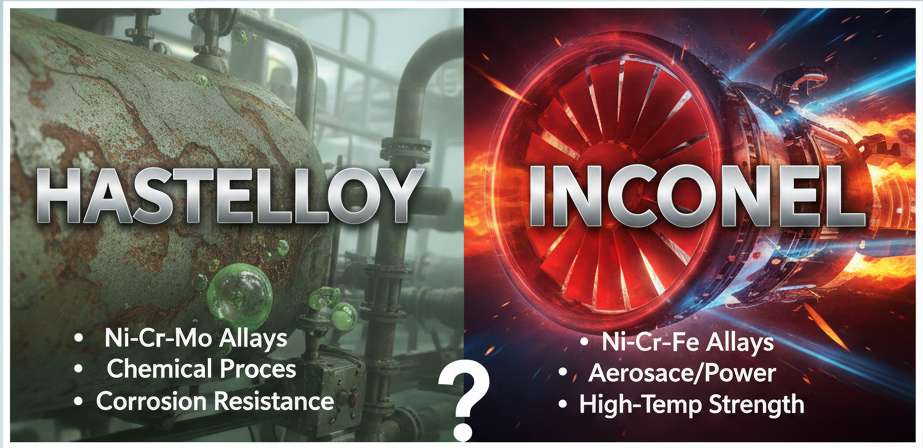
Alla domanda “L'Hastelloy è uguale all'INCONEL?”, la risposta sta nel bilanciamento degli elementi. Entrambi sono a base di nichel, ma gli elementi secondari ne definiscono le capacità.
- INCONEL (lo scudo termico): le leghe di Inconel si basano in genere su una matrice di nichel-cromo. L'elevato contenuto di cromo consente la formazione di uno strato di ossido passivante quando viene riscaldato. Ciò rende l'Inconel eccezionalmente resistente all'ossidazione e alla corrosione ad alta temperatura.
-
Grado comune: Inconel 625, Inconel 718.
-
- HASTELLOY (Lo scudo chimico): i gradi Hastelloy spesso danno priorità al molibdeno insieme al nichel. Il molibdeno è l'ingrediente chiave che garantisce una resistenza superiore agli acidi riducenti (come l'acido cloridrico) e agli attacchi localizzati (corrosione per vaiolatura e interstiziale).
-
Grado comune: Hastelloy C-276, Hastelloy B-3.
-
3. Ripartizione delle prestazioni: Calore vs. Corrosione
Per decidere tra i due, è necessario analizzare l'ambiente in cui il materiale si troverà ad operare.
Ossidazione e temperatura (vantaggio: INCONEL)
L'Inconel è lo standard industriale per le applicazioni ad alta temperatura. Mantiene la resistenza meccanica a temperature in cui l'acciaio cederebbe al creep (deformazione).
-
Utilizzo ottimale: Sistemi di scarico di motori a reazione, pale di turbine a gas e tubi di scambiatori di calore.
-
Perché: La barriera di ossido di cromo impedisce al metallo di degradarsi bruciando o fondendo in condizioni di calore estremo.
Grave corrosione chimica (vantaggio: HASTELLOY)
Se la minaccia principale è l'attacco chimico piuttosto che il calore puro, l'Hastelloy è spesso la scelta migliore. È stato progettato per sopravvivere negli ambienti di lavorazione chimica più difficili.
-
Utilizzo ottimale: Reattori chimici, controllo dell'inquinamento (desolforazione dei gas di scarico) e contenimento dei gas acidi.
-
Perché: L'Hastelloy C-276, ad esempio, è considerata una delle leghe più versatili e resistenti alla corrosione, in grado di sopportare il cloro umido e i cloruri ferrici.
4. Confronto tra i giganti: Inconel 625 vs. Hastelloy C-276
Un dilemma comune è la scelta tra Inconel 625 e Hastelloy C-276.
| Caratteristica | Inconel 625 | Hastelloy C-276 |
| Forza primaria | Resistenza all'ossidazione e resistenza alla trazione | Forte resistenza alla corrosione chimica |
| Elemento chiave | Nichel + cromo + niobio | Nichel + Molibdeno + Tungsteno |
| Resistenza agli acidi | Buono (acidi ossidanti) | Eccellente (acidi riducenti come l'HCl) |
| Applicazione tipica | Aerospaziale, scarico marino | Farmaceutico, lavorazione chimica |
Domande frequenti (FAQ)
Q1: Posso utilizzare Inconel al posto di Hastelloy?
In alcuni ambienti delicati possono essere intercambiabili, ma in condizioni severe la loro sostituzione è rischiosa. Ad esempio, l'utilizzo dell'Inconel in un ambiente ad alta concentrazione di acido cloridrico, dove è richiesto l'Hastelloy, potrebbe portare a una rapida vaiolatura e a guasti.
D2: Qual è il più costoso, Hastelloy o Inconel?
In generale, l'Hastelloy tende a essere leggermente più costoso dell'Inconel a causa del maggior contenuto di molibdeno e tungsteno, che sono materie prime costose, e della complessità della sua lavorazione. Tuttavia, i prezzi fluttuano in base ai prezzi di mercato del nichel e del molibdeno.
D3: L'Hastelloy è uguale all'INCONEL per quanto riguarda la saldabilità?
Entrambe le leghe sono considerate difficili da lavorare e saldare rispetto all'acciaio inossidabile a causa dell'indurimento da lavoro. Tuttavia, entrambe hanno gradi specifici progettati per una migliore saldabilità (ad esempio, l'Hastelloy C-276 impedisce la precipitazione dei bordi di grano durante la saldatura). Richiedono tecniche di saldatura e metalli d'apporto specifici.