La risposta breve è: Sì, per quanto riguarda le prestazioni in ambienti estremi. Tuttavia, se si considera l'efficienza dei costi per le applicazioni generali, la risposta diventa complicata. Per prendere la decisione giusta, dobbiamo analizzare le differenze chimiche e fisiche tra questi due giganti metallici.
Definizione delle leghe
Per capire se l'Inconel 600 è migliore dell'SS 304, dobbiamo innanzitutto capire cosa sono.
-
Acciaio inox 304 (UNS S30400): È il “cavallo di battaglia” dell'industria siderurgica. È un acciaio inossidabile austenitico contenente circa 18% di cromo e 8% di nichel. È onnipresente, si trova in tutti i settori, dai lavelli da cucina alle tubature industriali, e offre una solida resistenza alla corrosione e formabilità a un prezzo ragionevole.
-
Inconel 600 (UNS N06600): È una superlega di nichel e cromo. A differenza dell'acciaio, la sua base principale è il nichel (>72%), supportato da cromo (14-17%) e ferro (6-10%). È progettata specificamente per le condizioni estreme in cui gli acciai standard fallirebbero.
1. Prestazioni ad alta temperatura
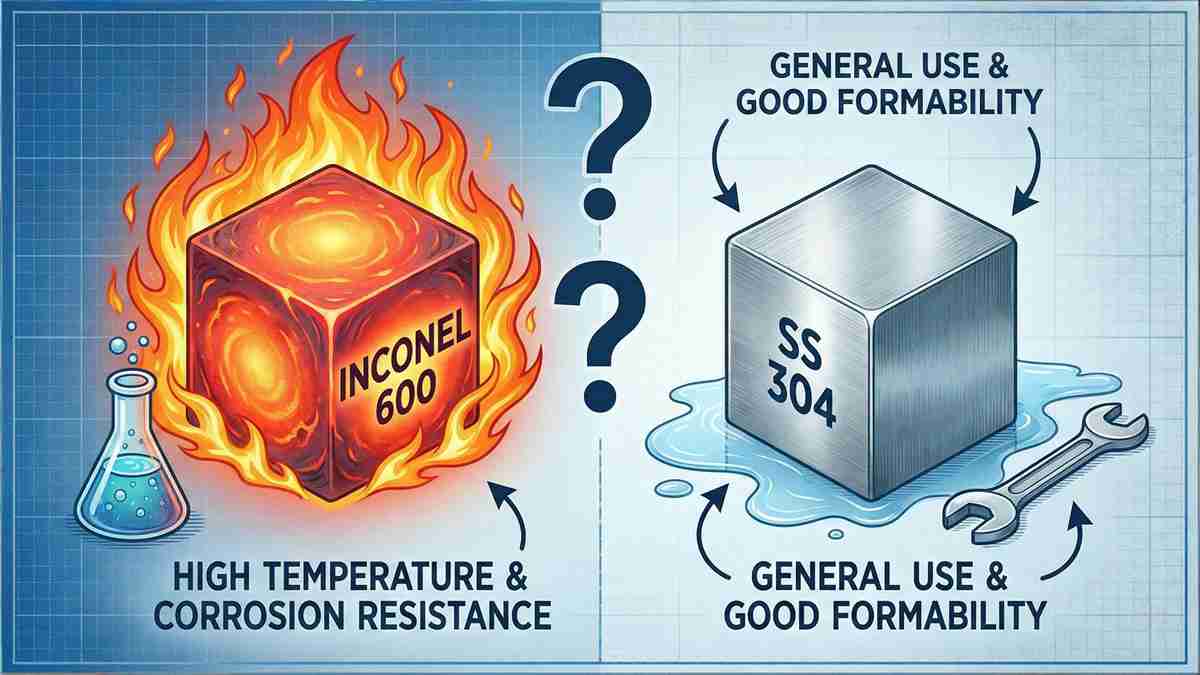
Alla domanda “L'Inconel 600 è migliore dell'SS 304 per le applicazioni termiche?”, la risposta è un deciso sì.
SS 304 ha una temperatura massima di servizio di circa 870°C (1598°F) per il servizio intermittente. Tuttavia, se spinto a questi limiti, soffre di una bassa resistenza allo scorrimento e all'ossidazione.
Inconel 600, è invece una bestia al caldo. Mantiene l'integrità strutturale e resiste all'ossidazione a temperature fino a 1093°C (2000°F). Grazie all'elevato contenuto di nichel, non soffre degli stessi problemi di dilatazione termica dell'acciaio inossidabile e rappresenta quindi la scelta migliore per la lavorazione:
-
Componenti del forno per il trattamento termico.
-
Parti di motori a reazione.
-
Contenitori per reattori chimici.
2. Resistenza alla corrosione
Il punto debole più significativo di SS 304 è Cricca da stress da cloruro (CSCC). Se si colloca l'acciaio inox 304 in un ambiente con acqua salata o in un processo che coinvolge i cloruri, la tensione di trazione può causare un cedimento improvviso e catastrofico.
L'Inconel 600 è migliore dell'SS 304 in questi ambienti corrosivi? Assolutamente sì.
L'elevato contenuto di nichel nell'Inconel 600 lo rende praticamente immune alle cricche da tensocorrosione da cloruri. Inoltre, offre una resistenza superiore a:
-
Alcali caustici (ad alte temperature).
-
Ambienti con acqua di elevata purezza (essenziale nei reattori nucleari).
-
Acidi organici e inorganici.
Mentre l'SS 304 è adeguato per gli ambienti a ossidazione lieve (come l'acido nitrico), l'Inconel 600 è l'upgrade necessario quando l'ambiente diventa aggressivo.
3. La realtà economica
È qui che si sposta l'argomento. Se l'Inconel 600 è meccanicamente superiore, perché non viene utilizzato ovunque? L'ostacolo è il costo.
L'Inconel 600 contiene oltre 70% di nichel. Il nichel è molto più costoso del ferro (la base dell'SS 304). Di conseguenza, L'Inconel 600 può costare da 5 a 10 volte di più rispetto all'SS 304.
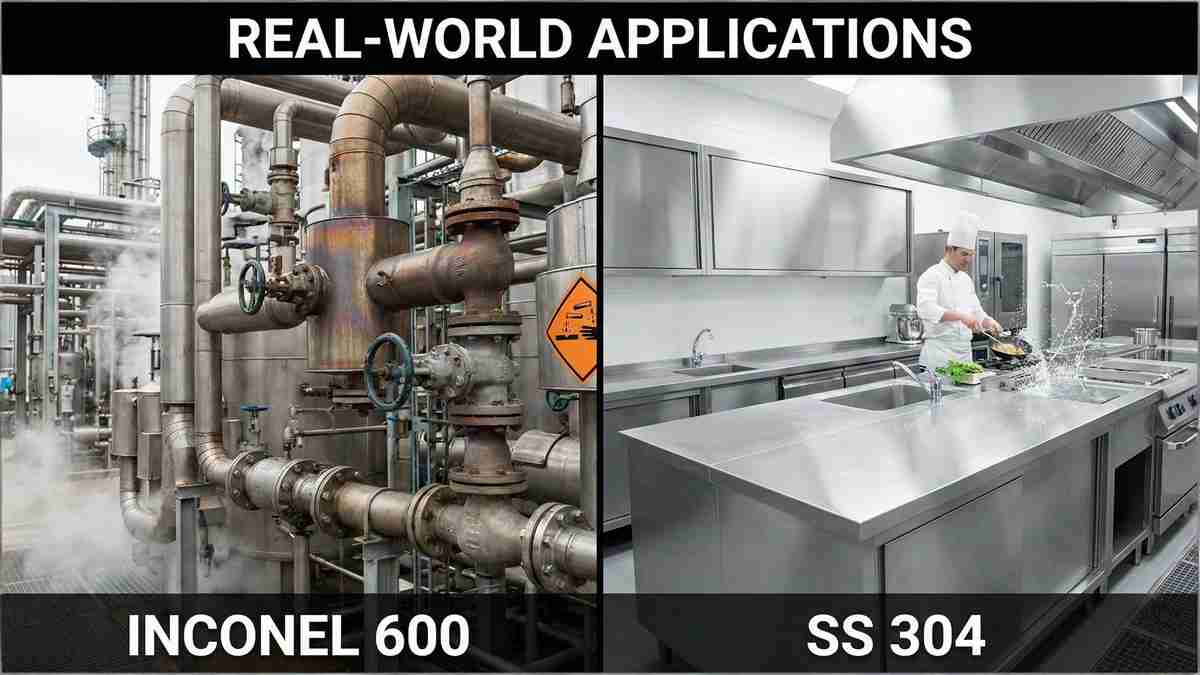
Pertanto, l'Inconel 600 è migliore dell'SS 304 per un normale tubo dell'acqua o per un convogliatore di alimenti? No. L'uso dell'Inconel in queste applicazioni è fiscalmente irresponsabile. L'SS 304 offre l'igiene e la durata necessarie senza il prezzo astronomico.
Il confronto in sintesi
| Caratteristica | Acciaio inox 304 | Inconel 600 | Vincitore |
| Elemento base | Ferro (Fe) | Nichel (Ni) | N/D |
| Temperatura massima | ~870°C | ~1093°C | Inconel 600 |
| Resistenza al cloruro | Scarso (suscettibile di fessurazione) | Eccellente (Immune) | Inconel 600 |
| Costo | Basso / Moderato | Molto alto | SS 304 |
| Lavorabilità | Buono | Difficile (il lavoro si indurisce) | SS 304 |
Quindi, Inconel 600 è migliore di SS 304?
-
Scegliere Inconel 600 se: Le applicazioni prevedono temperature superiori a 800°C, elevate sollecitazioni meccaniche sotto calore o esposizione a cloruri e alcali caustici.
-
Scegliere SS 304 se: Avete bisogno di un materiale economico e durevole per la manipolazione di prodotti chimici in generale, per la lavorazione degli alimenti o per strutture architettoniche in cui il calore estremo non è un fattore determinante.
Domande frequenti (FAQ)
Q1: Posso saldare Inconel 600 a SS 304?
Sì, la saldatura di metalli dissimili è possibile. Tuttavia, è necessario utilizzare il metallo d'apporto corretto per prevenire le cricche e mantenere la resistenza alla corrosione. In genere, per unire l'Inconel 600 all'acciaio inox 304 si consiglia un metallo d'apporto a base di nichel, come l'Inconel 82 (ERNiCr-3).
D2: L'Inconel 600 è magnetico rispetto all'SS 304?
Entrambe le leghe sono generalmente amagnetiche. L'SS 304 è amagnetico allo stato ricotto, ma può diventare leggermente magnetico dopo la lavorazione a freddo. L'Inconel 600 rimane amagnetico anche a temperature molto basse, caratteristica auspicabile per le applicazioni elettroniche sensibili.
Q3: L'Inconel 600 è più difficile da lavorare rispetto all'SS 304?
Sì. L'Inconel 600 ha un'elevata resistenza e si indurisce rapidamente durante la lavorazione. È molto più difficile da tagliare e modellare rispetto all'SS 304 e richiede utensili per impieghi gravosi, velocità più basse e avanzamenti più aggressivi per ridurre al minimo l'incrudimento.