








耐食インコネル:テクニカルガイド

In the demanding world of high-performance metallurgy, few materials command as much respect as Inconel. For engineers and procurement specialists at firms like 28Nickel, selecting the right material for extreme environments is critical. Corrosion resistant inconel has become the industry standard for applications where stainless steel and other alloys simply fail. This family of nickel-chromium-based superalloys is specifically engineered to maintain structural integrity and resist degradation in some of the most chemically aggressive and thermally volatile environments on Earth.

耐食インコネル:テクニカルガイド

The Science Behind Corrosion Resistant Inconel

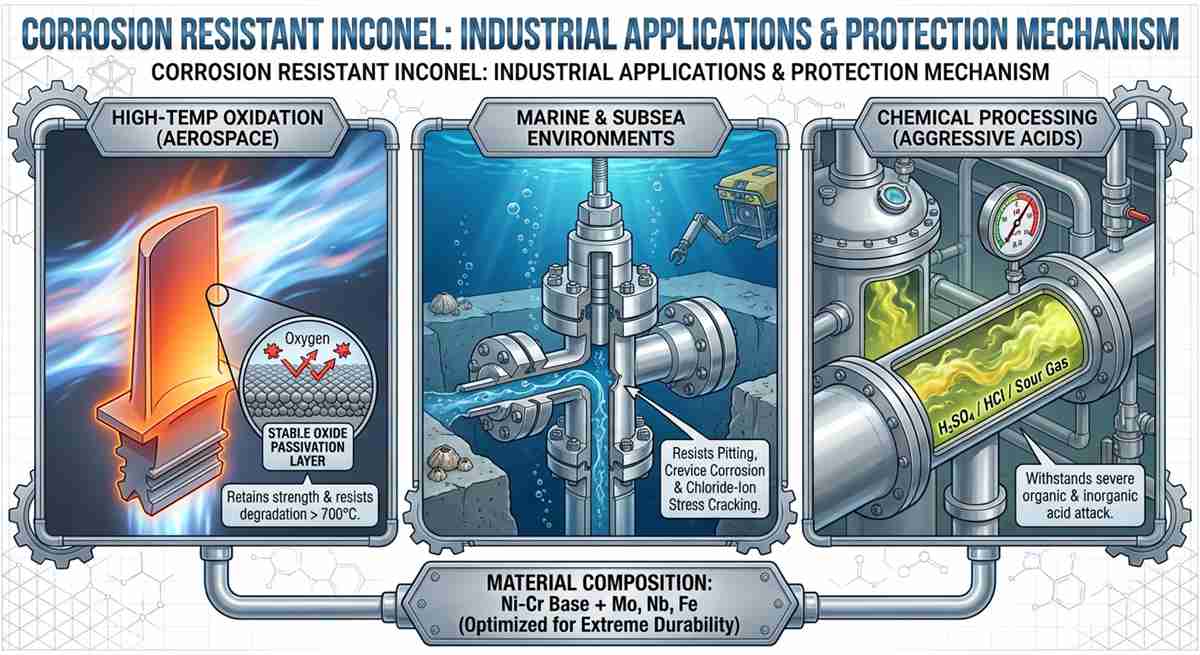
The secret to the success of corrosion resistant inconel lies in its unique chemical composition. Primarily composed of nickel and chromium, these alloys often incorporate molybdenum, niobium, and iron to enhance specific properties. When exposed to heat, Inconel forms a thick, stable, and passivating oxide layer that protects the internal structure from further attack. Unlike many metals that weaken at high temperatures, Inconel retains its strength, making it indispensable for heat exchangers and chemical reactors.

At 28Nickel, we understand that “corrosion” isn’t a single threat but a variety of challenges, including pitting, crevice corrosion, and stress-corrosion cracking. Corrosion resistant inconel grades like 625 and 718 are specifically designed to combat these localized attacks, ensuring long-term reliability in offshore drilling and marine engineering.

Key Grades of Corrosion Resistant Inconel

Not all Inconel alloys are created equal. Depending on the specific environmental stressors—whether it be sulfuric acid, seawater, or high-pressure steam—the choice of grade is paramount.

  1. インコネル625: Known for its high strength and excellent aqueous corrosion resistance. The addition of molybdenum and niobium to the nickel-chromium matrix strengthens the alloy without the need for heat treatment.

  2. インコネル718: A precipitation-hardenable alloy that combines corrosion resistant inconel properties with exceptionally high yield strength even at temperatures up to .

  3. インコネル 600: Primarily used for its resistance to chloride-ion stress corrosion cracking and caustic corrosion.

Comparative Analysis of Inconel Grades

合金グレード Key Elements 最適 Corrosion Resistance Level
インコネル 600 Ni、Cr、Fe Furnace components, Chemical processing High (Oxidation)
インコネル625 Ni、Cr、Mo、Nb Marine, Aerospace, Nuclear Exceptional (Pitting/Crevice)
インコネル718 Ni、Cr、Fe、Mo、Nb Gas turbines, Rocket motors High (High-temp Strength)
Inconel C-276 Ni、Mo、Cr Flue gas desulfurization Maximum (Severe Acids)

Industrial Applications of Corrosion Resistant Inconel

The versatility of corrosion resistant inconel allows it to bridge the gap between heavy industry and cutting-edge technology. In the oil and gas sector, these alloys are used for downhole tools and wellhead components where sour gas (H2S) and CO2 would rapidly deteriorate standard metals.

In the aerospace sector, engines operate at temperatures where most metals would oxidize or melt. Corrosion resistant inconel provides the necessary oxidation resistance for turbine blades and exhaust systems. Furthermore, in the chemical processing industry, the ability of Inconel to withstand organic and inorganic acids—even at elevated temperatures—makes it the preferred choice for piping systems and storage tanks.

Why Quality Sourcing Matters

Choosing the right supplier for corrosion resistant inconel is as important as choosing the alloy itself. At 28Nickel, we prioritize traceability and material integrity. Poorly manufactured alloys can have micro-segregations or impurities that lead to premature failure in the field. Professional sourcing ensures that the nickel-to-chromium ratio is precise, maximizing the lifespan of your components and reducing maintenance costs in the long run.

Optimizing Performance with Corrosion Resistant Inconel

To get the most out of corrosion resistant inconel, engineers must consider the fabrication process. While Inconel is notoriously difficult to machine due to its rapid work-hardening, using the correct tooling and cooling techniques is vital. Welding Inconel also requires specific expertise to avoid “hot cracking.” When handled correctly, the resulting structures provide unparalleled durability.

Investing in corrosion resistant inconel is not just about buying metal; it is about buying insurance against downtime and environmental hazards. As industries push the boundaries of depth, speed, and temperature, Inconel remains the backbone of modern industrial resilience.


関連Q&A

Q1: Why is Inconel better than stainless steel for marine environments?

While high-grade stainless steels offer some protection, corrosion resistant inconel (specifically Alloy 625) provides superior resistance to pitting and crevice corrosion in stagnant seawater, where chlorides would typically cause stainless steel to fail rapidly.

Q2: Can corrosion resistant inconel be used in high-temperature oxidation environments?

Yes, Inconel alloys are specifically designed to form a stable protective oxide layer at high temperatures, which prevents further material loss, unlike many other alloys that scale and degrade.

Q3: Is corrosion resistant inconel difficult to weld?

Inconel is weldable, but it requires clean surfaces and precise heat control. Using matching filler metals, such as Inconel 625 filler for 625 base metal, ensures the weld zone maintains the same corrosion resistant inconel properties as the rest of the component.

この記事を共有する

関連記事

この見出しは訪問者の注意を引く

あなたのビジネスとサービスを訪問者に紹介する短い説明文。.
スオルエットゥ
上部へスクロール