/ ニッケル
ニッケル合金は、化学処理用容器や海洋石油・ガス関連部品から航空宇宙用タービンエンジンに至るまで、重要な産業用途の基盤となっています。これらの分野では、極端な温度、腐食、機械的応力にさらされるため、素材には妥協のない性能が求められます。 設計エンジニアやプロジェクトの仕様策定担当者にとって、ニッケル合金材料の価格を決定づける技術的要因を理解することは、性能要件と予算の制約の両方に合致した材料選定を行う上で不可欠です。.
ニッケル合金の基本コストは、合金元素の種類と濃 度が原料投入コストを直接左右するため、その化学的 配合から始まります。純ニッケル(Alloy 200)がベースラインとなり、価格はLMEのニッケルスポット価格と密接に連動しています。しかし、ほとんどの工業用ニッケル合金は、 特定の特性を高めるために高価な合金元素を組み 込んでいる。例えば、クロムは高温耐酸化性、モリブ デンとタングステンは塩化物が多い環境での耐孔食 性と耐隙間腐食性、ニオブとチタンは結晶粒の安定 化と析出硬化性、コバルトは高温強度を高める。.
モリブデン、ニオブ、タンタルは通常、一次ニッケル のキログラム当たりのコストの2~5倍を要求されます。例えば、モリブデンの含有量が 1wt%増加すると、ニッケル合金の原材料費 は3~5%上昇し、Alloy 400 (65% Ni, 31% Cu, 0% Mo)のような汎用合金と、 Alloy C276 (57% Ni, 16% Mo, 16% Cr)のような高性能耐食合金の価格差は、このような 動きによって説明される。.
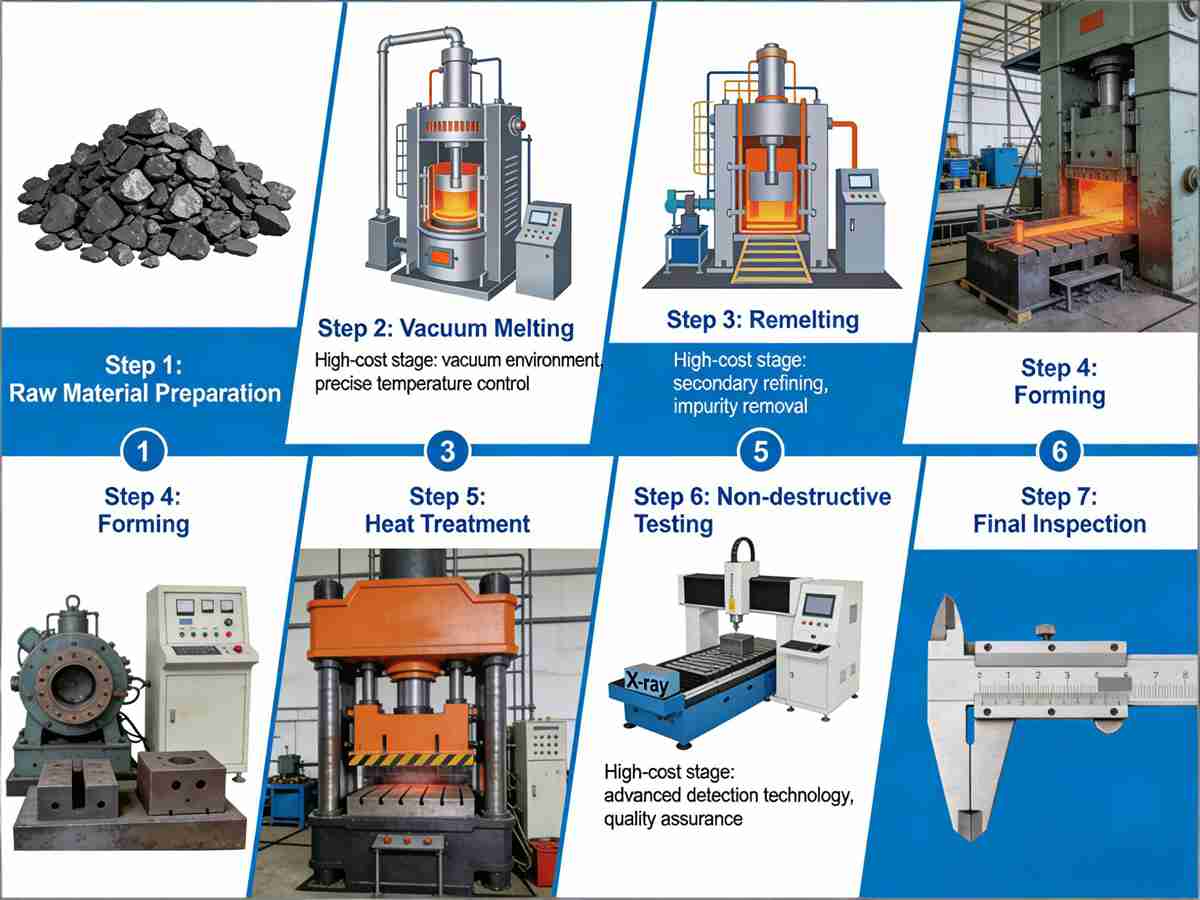
原材料の投入だけでなく、業界の仕様を満たすために必要な製造ワークフローも、ニッケル合金の材料価格の主な決定要因です。重要な用途のニッケル合金は、標準的な空気溶解では製造できません。ガス汚染(酸素、窒素、水素)を最小限に抑え、チタンやアルミニウムのような反応性の合金元素の酸化を避けるために、真空誘導溶解(VIM)が必要です。.
航空宇宙や原子力部品など、より要求の厳しい用途では、二次溶融プロセスが必須である。すなわち、粒組織を微細化し偏析を低減するエレクトロスラグ再溶解(ESR)、および超低包有物レベルと均一な機械的特性を達成する真空アーク再溶解(VAR)である。トリプル溶融(VIM+ESR+VAR)プロセスは、単一のVIM溶融と比較して生産歩留まりを15-20%減少させることができる一方、製造コストに30-40%を上乗せし、最終価格の上昇に直結する。.
熱間・冷間加工、精密圧延、厳しい寸法公差への絞り加工などの追加的な加工工程は、さらにコストに影響します。例えば、肉厚公差±5% のシームレス・ニッケル合金チューブは、複数回の冷間引抜き加工と中間焼鈍を必要とし、標準的な公差±10% のチューブに比べ、製造時間とコストが25-30%増加します。.
| 合金グレード |
主要合金元素 (wt%) |
主なパフォーマンス属性 |
ニッケル合金材料価格への相対的影響 |
| アロイ200 |
最小99.0% Ni、最大0.15% Cu |
苛性環境における一般的な耐食性 |
1.0倍(ベースライン) |
| アロイ400 |
63.0-70.0%ニッケル、20.0-34.0%銅 |
優れた耐海水腐食性 |
1.1-1.3x |
| アロイ600 |
72.0%ニッケル(最低)、14.0~17.0%クロム |
高温耐酸化性 |
1.4-1.6x |
| アロイ625 |
58.0% Ni min, 20.0-23.0% Cr, 8.0-10.0% Mo |
優れた耐孔食性/耐クレバス腐食性 |
2.2-2.5x |
| 合金718 |
50.0-55.0% Ni, 17.0-21.0% Cr, 4.75-5.50% Nb |
高温強度と耐疲労性 |
2.0-2.3x |
| 合金C276 |
57.0% Ni min, 14.5-16.5% Cr, 15.0-17.0% Mo |
過酷な化学環境における普遍的な耐食性 |
2.6-3.0x |
特定の用途に指定された性能とコンプライアン ス要件も、ニッケル合金材料の価格を左右する重要な 要因です。すべてのニッケル合金は、ASTM、ASME、APIな どの組織が定めた業界規格を満たす必要がありま すが、用途に特化した要件がさらに厳しくなると、 追加の試験や品質管理によって大きなコストがか かります。.
例えば、サワーオイル・ガス環境 (NACE MR0175/ISO 15156)で使用されるニッケル合金は、ASTM G39およびASTM G193規格に従って、硫化物応力割れ(SSC)および水素誘起割れ(HIC)の試験が義務付けられています。これらの試験には、特殊な実験装置、長期の試験期間(HIC試験では最大30日間)、および結果の厳密な文書化が必要なため、材料コストに15-25%が加算される可能性があります。.
同様に、極低温用途の材料は、破壊靭性を検証するために-196℃の低温でシャルピーVノッチ衝撃試験を必要とし、航空宇宙部品は、表面下の介在物や欠陥を検出するために超音波探傷試験(UT)、液体浸透探傷試験(PT)、X線透視試験(RT)などの非破壊検査(NDT)を必要とします。AMS仕様に基づく100%のNDTカバレッジは、生産歩留まりを10-15%低下させ、最終材料価格に20-30%を上乗せする可能性があります。.
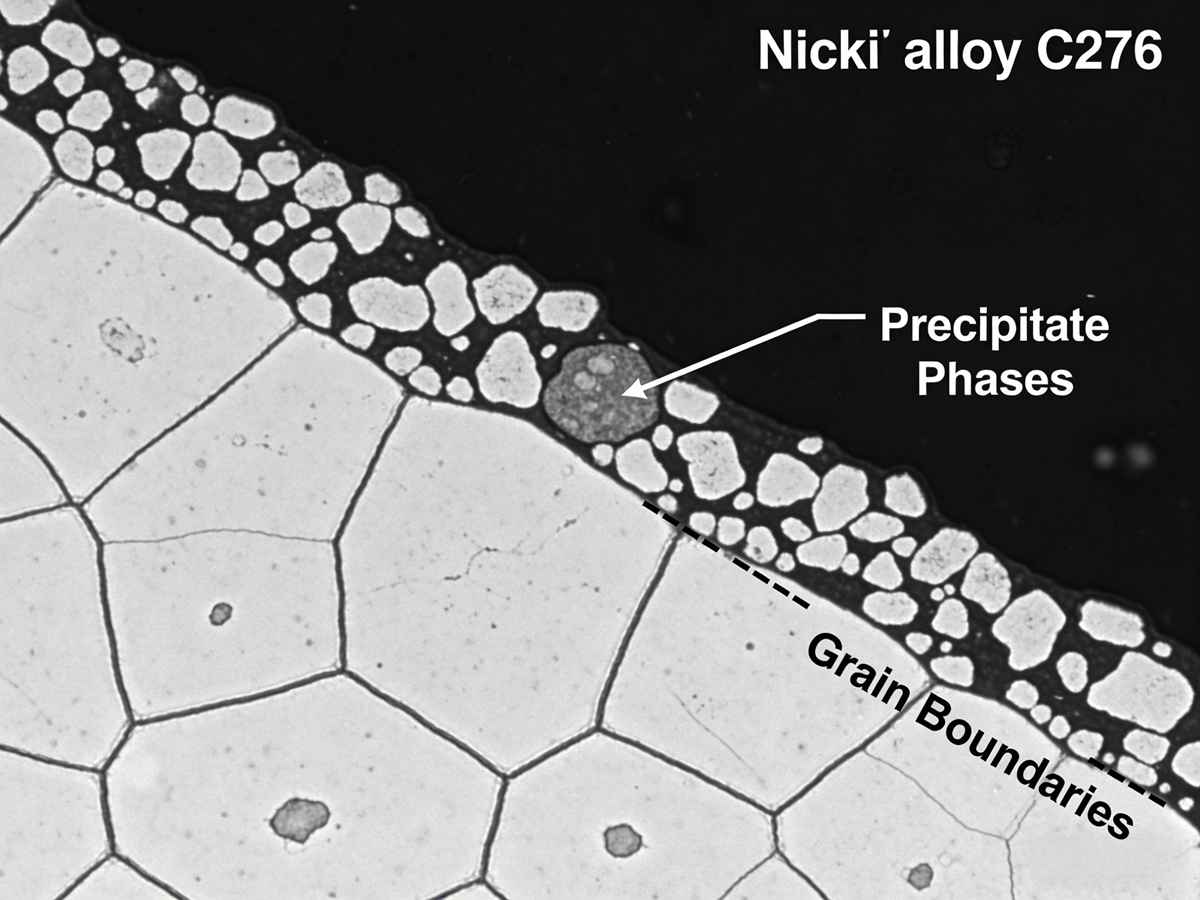
表面レベルの価格比較で見落とされがちなのが、高性能ニッケル合 金に要求される組織制御のレベルです。例えば、高い疲労強度や均一な機械的特性を 必要とする用途では、結晶粒径の制御が非常に重 要です。細粒ニッケル合金(ASTM粒度5以上)は、制御された熱間加工や再結晶焼鈍を含む精密な熱機械加工を必要とし、標準的な粗粒材と比較して加工コストが10-20%増加します。.
Alloy718やAlloy725のような析出硬化型(PH)ニッケル合金の場合、強化析出相(γ ”相とγ’ 相)の制御には、950~1050℃の溶体化焼鈍、急冷、中間温度での二重または三重時効硬化を含む多段階の熱処理サイクルを厳守する必要があります。熱処理温度が10℃でもずれると、析出が不完全になり、機械的特性の要求を満たせなくなるため、スクラップ率が高くなり、製造コストが上昇し、最終的なニッケル合金材料の価格に反映される。.
航空宇宙、原子力、製薬などの規制産業向けの材料認定もまた、多大なコストを追加する。これらの業界では、溶融物から最終製品までの完全な材料トレーサビリティが要求されるほか、航空宇宙用のAS9100のような規格に準拠した製造施設や製造工程の適格性も要求されます。この資格認定に関連する管理および品質管理のオーバーヘッドは、これらの用途の材料の価格に組み込まれています。.
設計エンジニア、材料指定担当者、プロジェクトマネジャー など、大きなリスクを伴う産業環境に携わる者にとって、ニッケル合 金材料価格の背景にある技術的な要因を理解することは、材料 の性能、長期的な信頼性、プロジェクトの予算制約のバランスを 考慮した上で、十分な情報に基づいた決定を行う上で非常に重要 です。表面的なキログラムあたりの価格は、しばしば最初の比較ポイントになりますが、ニッケル合金の根本的な化学的特性、製造特性、性能特性は、最終的に特定の用途における真の価値を決定します。20年以上の業界経験を持つ当社のニッケル合金材料エンジニアチームは、お客様の材料選択を最適化するために、カスタマイズされた材料分析、性能検証、およびアプリケーション固有の仕様サポートを提供することができます。.
Q1: モリブデンの含有量はニッケル合金の価格にどのような影響を与えますか?
A1: モリブデンは高コストの合金元素であり、塩化物を多く含む還元性の化学環境において、卓越した耐孔食性と耐隙間腐食性を発揮する。モリブデンの含有量が1wt%増えるごとに、原料投入コストが3~5%上昇する。これは、モリブデンのキログラム当たりの価格が、一次ニッケルに比べて通常2~4倍高いためである。さらに、高モリブデン合金は、元素の偏析や二次相の形成を避けるために、より厳格な真空溶解プロセスを必要とし、製造コストをさらに上昇させる。これが、C276 (15-17% Mo)のような合金が、Alloy 600のようなモリブデンを含まない合金よりも60-70%高い価格である理由です。.
Q2: なぜ航空宇宙グレードのニッケル合金は、商業グレードの同等品よりも価格が高いのですか?
A2: 航空宇宙グレードのニッケル合金は、商用グレードの材料よりもはるかに厳しい製造要件と試験要件が要求されるため、コスト上昇に直結します。ほとんどの航空宇宙仕様では、超低ガス含有量(酸素<20ppm)、最小限の非金属介在物、均一な結晶粒構造を達成するために、トリプル溶解(VIM+ESR+VAR)が義務付けられています。このプロセスは、製造歩留まりを15-20%低下させる一方、製造コストを30-40%増加させる。さらに、航空宇宙グレードの材料は、AMS規格に従った100%の非破壊検査、完全なバッチトレーサビリティ、AS9100品質管理システムへの準拠を必要とし、これらすべてが諸経費を上乗せし、最終価格に反映されます。.
Q3: 熱処理仕様はニッケル合金の価格にどのように影響しますか?
A3:熱処理は、ニッケル合金の機械的特性や微細組織を決定づける極めて重要な工程であり、特注の、あるいは厳格な熱処理仕様は、材料価格を直接押し上げる要因となります。 耐食性合金の標準的な溶体化焼鈍では、1回の高温保持と急冷が行われますが、Alloy 718のような析出硬化型合金では、精密な温度制御(±5°C)と長い保持時間を伴う多段階の時効硬化サイクルが必要となります。 2回の時効硬化サイクルでは、エネルギー消費量の増加、炉の占有時間の延長、および温度偏差によるスクラップリスクの増加により、標準的な溶体化焼鈍と比較して、加工コストが25~35%増加する可能性があります。耐摩耗性を高めるための極低温処理では、加工コストにさらに15~20%が追加される可能性があります。