











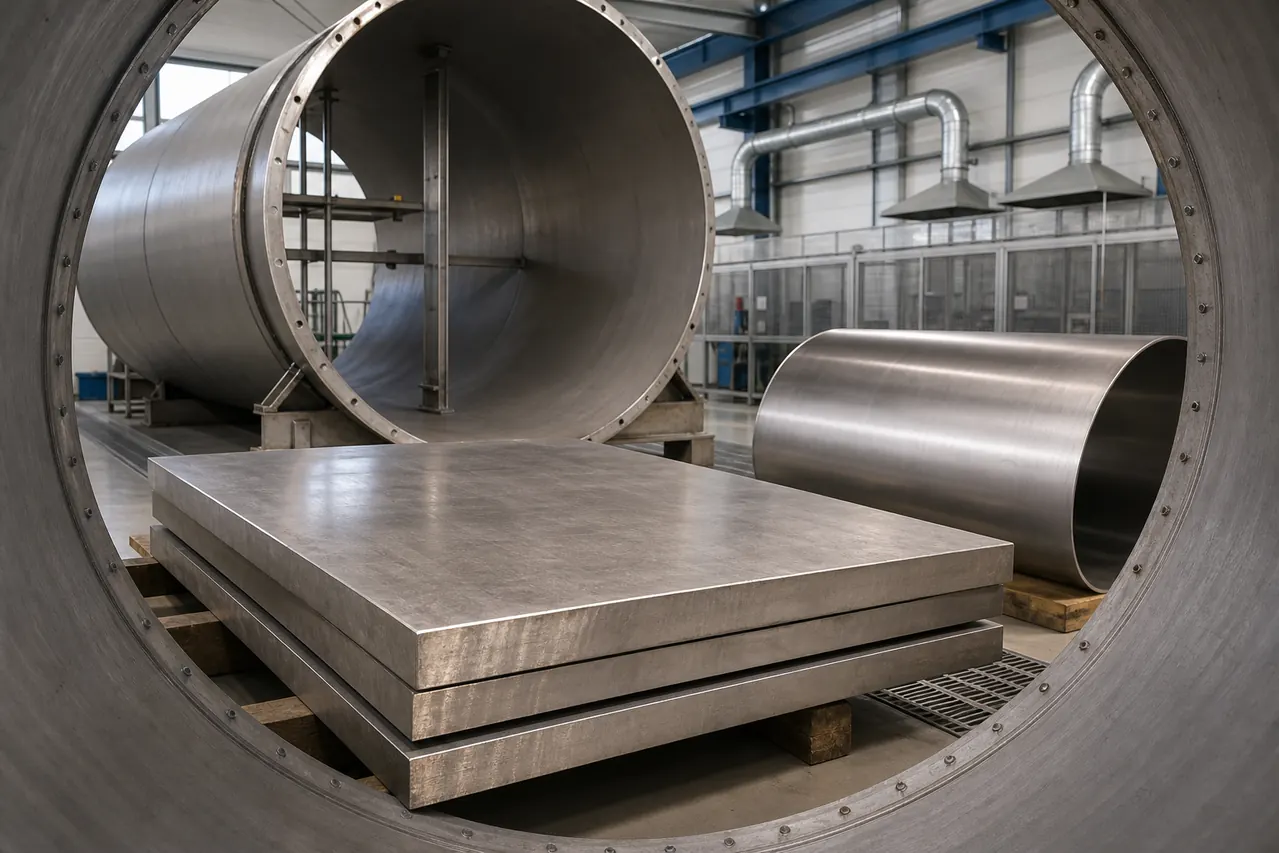
フッ化水素酸貯蔵タンク用モネル400鋼板 購入者がそのグレードを、実際の動作範囲、管理された製品状態、および測定可能な受入基準と結びつけるまでは、その仕様は有用なものとはなりません。フッ化水素酸貯蔵タンクの場合、重要なのは、モネル400が定評があるかどうかではありません。 重要なのは、納入された鋼板、製造工程、および全サービスサイクルが、同じ技術的結論を裏付けているかどうかである。.
このケースにおけるサービスは、フッ化水素酸の濃度、温度、通気、含水率、酸化性汚染物質、蒸気空間での凝縮、および停止時の洗浄を総合的に考慮したものです。モネル400プレートは、適切に管理されたフッ化水素酸環境において長い実績があります。これは、そのニッケル・銅の化学組成が、多くの不動態化合金が耐えられないような環境においても、有用な耐性を発揮できるためです。 この記述は選定の根拠であり、耐性を保証するものではありません。酸化性汚染物質、通気、不適合な洗浄薬品、あるいは未確認のガルバニック接触がシステムに侵入した場合、その有効性は低下します。また、フッ化水素酸を扱う作業では、材料の選定に加え、プロジェクトごとに安全対策および封じ込め対策の検討も必要です。.
フッ化水素酸貯蔵タンク用のモネル400鋼板を購入する場合、発注した長方形の寸法に、成形用トリム、溶接準備、ネスティングによるロスの分、あるいは輸送上の制限が考慮されていないため、鋼板プロジェクトが商業的に失敗することがよくあります。 したがって、見積依頼には、厚さ、幅、長さ、平坦度、エッジの状態、圧延余裕、および最終切断計画に加え、注文条件、証明書の範囲、試験要件、納期、および配送先を明記する必要があります。これらの項目のいずれか一つでも不明確なままにしておくと、サプライヤーは一見似たような仕様で、実質的に異なる製品を見積もる可能性があります。.
本ガイドは、エンジニア、製造業者、保守チーム、および産業用資材の購買担当者向けに作成されています。ここでは、モネル400がどのような場面で適しているか、その選定範囲はどこにあるか、ASTM B127に準拠して鋼板を指定する方法、そして製造証明書と使用適性証明を混同することなく見積書を確認する方法について解説しています。.
プロジェクトの見積もりについては、28Nickelまでお問い合わせください グレード、形状、寸法、数量、使用条件、検査範囲、仕向地、および指定の納期を明記してください。.
想定される故障メカニズムとその初期兆候
有益な材料に関する記事では、購入品がどのように破損する可能性があるかを述べるべきです。フッ化水素酸の貯蔵タンクにおいて、損傷が完全に均一に分布することはめったにありません。損傷は、化学物質が集中する場所、応力が高まる場所、流れが変化する場所、表面が湿ったままの場所、温度が最高に達する場所、あるいは点検へのアクセスが最も困難な場所から発生します。以下のメカニズムにより、合金に関する議論は、図面や点検計画に盛り込むことができる具体的な箇所や管理策へと具体化されます。.
| 故障メカニズム | 典型的なフィールド信号 | エンジニアリングまたは調達管理 |
|---|---|---|
| 曝気補助型攻撃 | 酸素が流入する箇所で予期せぬ局所的な損失が発生 | 侵入を制御し、選定に現実的な酸素条件を反映させる |
| 蒸気空間腐食 | 通常の液面より上での攻撃 | 結露の化学的メカニズムと屋根の温度について確認する |
| ガルバニック腐食 | 異種金属接合部付近の局所的な損失 | 材料の組み合わせ、面積比、および電気的連続性を制御する |
| 隙間濃度 | 支柱への攻撃、周回詳細、または預け入れ | 排水可能な形状を採用し、検査不可能な滞留隙間を避ける |
フッ化水素酸貯蔵タンクにおいて特定されたメカニズムは、相互に作用し合う可能性があります。局所腐食により断面が減少して応力が増大したり、振動によって表面が損傷したり、堆積物によって温度や化学的性質が変化したり、製造時の汚染によって最初の活性部位が生じたりする可能性があります。したがって、モネル400鋼板の採用判断は、形状、プロセス管理、洗浄、および保守管理と併せて行う必要があります。.
検査は、便宜上均等に配分するのではなく、リスクに基づいて実施すべきである。 本記事で特に重視すべき点は、材料の識別、プレートのトレーサビリティ、表面状態、寸法記録、および溶接記録をタンク内の位置情報と関連付けることである。検査計画では、液体ゾーン、界面ゾーン、蒸気ゾーン、底部ゾーン、および排水ゾーンを区別すべきである。こうした重点事項は、稼働前のベースライン記録に明記しておくべきであり、そうすることで、後の測定値を同じ物理的な位置および測定方法と比較することが可能となる。.
見積依頼書に記載すべきサービス条件
フッ化水素酸貯蔵タンク用のモネル400プレートの材料選定においては、単一の通常運転条件ではなく、時間軸に基づいて行うべきである。 起動、安定運転、プロセス異常、洗浄、および停止の各段階では、それぞれ異なる腐食電位、温度、機械的負荷、あるいは濡れ状態が生じ得る。公称の化学組成のみを記録したプロセス記録では、耐用年数を決定づける短期間の段階を見逃してしまう可能性がある。.
| 工程段階 | 重大な懸念事項 | 設計レビューに関する質問 |
|---|---|---|
| 充填 | 水分含有量、温度、および通気状態は、通常の保管条件とは異なる場合があります。. | 流入する酸の品質および移送条件を定義する。. |
| ストレージ | 液体、気体、および界面領域では、被ばく状況が異なります。. | 底面、壁面、天井、および界面について、それぞれ個別に腐食評価を行う。. |
| 引き出し | 空気の混入や液面の変化により、露出面が変化します。. | 通気状況を確認し、表面が酸の膜で濡れた状態が続く時間を確認する。. |
| 掃除 | 残留酸はすすぎ水と反応し、低所に残留することがあります。. | 立ち入り前に、排水、中和、および確認の手順を明記すること。. |
| アイドルサービス | 結露や酸素の侵入が、腐食の主な原因となる場合があります。. | 「ドライ・レイアップ」または「管理された保管方法」を定義してください。. |
この表は、実用的な見積依頼(RFQ)ツールとしても役立ちます。サプライヤーには機密のプロセスノウハウは必要ありませんが、材料審査を行う上では、通常の暴露条件と、想定し得る最悪の組み合わせとを区別するのに十分な情報が必要です。 フッ化水素酸の貯蔵タンクの場合、これは「サービス概要」に記載された各項目の背景となる範囲、すなわちフッ化水素酸の濃度、温度、通気状況、水分含有量、酸化性汚染物質、蒸気空間での凝縮、および停止時の洗浄について、文書化することを意味します。.
フッ化水素酸貯蔵タンクについては、流体の温度とモネル400金属の実際の温度を区別してください。 熱伝達、断熱、堆積物、流動不良、直接加熱、および周囲環境による冷却により、金属の温度は流体の温度より高くなったり低くなったりする可能性があります。また、平均的な化学組成と、対象となるプレート周辺の局所的な化学組成を区別してください。低流速領域、蒸気境界、堆積物、および乾燥した表面では、希薄な成分が濃縮される可能性があります。.
最も信頼性の高いモネル400に関する推奨事項には、使用中止基準が含まれています。通気や酸化性汚染物質は重要な要素です。 化学名こそ似ていても、酸素、塩分、流速、堆積物、またはガルバニック接触が変化すると、その挙動は異なる場合があります。酸化性汚染物質、通気、不適合な洗浄薬品、または未検証のガルバニック接触がシステムに侵入すると、その根拠は弱まります。 フッ化水素酸を扱う作業では、材料の選定に加え、プロジェクト固有の安全性および封じ込め対策の検討も必要となる。フッ化水素酸貯蔵タンクに関する入手可能なデータだけではこれらの疑問が解消されない場合、設計責任者は、最終承認の前に、プラントの運用実績、腐食専門家、または実証試験を活用すべきである。.
この評価の技術的根拠
フッ化水素酸貯蔵タンク用のモネル400鋼板の選定は、単一の代表的な特性というよりは、いくつかの異なる要因に基づいています。モネル400鋼板は、適切に管理されたフッ化水素酸環境において長い実用実績を有しています。これは、そのニッケル・銅の化学組成が、多くの不動態化合金では耐食性に課題を抱えるような状況においても、有用な耐食性を発揮できるためです。 以下の点では、この合金の金属学的特性が、前述の使用条件とどのように関連しているかを説明します。.
さまざまな海水および塩水環境に対する耐性
モネル400は、さまざまな海水や塩水環境に対して耐性を示します。フッ化水素酸貯蔵タンクにおいて、この特性は、フッ化水素酸濃度、温度、通気、含水率、酸化性汚染物質、蒸気空間での凝縮、および停止時の洗浄といった複合的な曝露条件の一部に対処することで、設計を支えています。 その実用的な価値は、一般的な物性表ではなく、最も過酷な局所領域において発揮されます。プロジェクトでは、この特性が必要とされる正確な場所と、その仮定を無効にする条件を特定する必要があります。.
適切に管理されたフッ化水素酸の取り扱いにおける望ましい行動
モネル400は、適切に管理されたフッ化水素酸環境下において、有用な特性を発揮します。フッ化水素酸貯蔵タンクにおいて、この材料は、フッ化水素酸濃度、温度、通気、含水率、酸化性汚染物質、蒸気空間での凝縮、および停止時の洗浄といった複合的な曝露要因の一部に対処することで、設計を裏付けます。 この利点は、プロセスおよび製造上の前提条件が有効である場合にのみ適用されます。プロジェクトでは、この特性が必要とされる正確な箇所と、その前提条件を無効にする条件を特定する必要があります。.
幅広い温度範囲にわたって優れた靭性を発揮する
モネル400は、幅広い温度範囲にわたって優れた靭性を発揮します。フッ化水素酸貯蔵タンクにおいて、この特性は、フッ化水素酸濃度、温度、通気、含水率、酸化性汚染物質、蒸気空間での凝縮、および停止時の洗浄といった複合的な暴露要因の一部に対処することで、設計を支えます。 設計図面では、この利点を形状、状態、および検査要件に反映させる必要があります。また、本プロジェクトでは、この特性が必要とされる正確な箇所と、その仮定を無効にする条件を特定する必要があります。.
ニッケル・銅の混入管理基準を遵守すれば、製造は容易である
モネル400は、ニッケル・銅の汚染管理が適切に行われている場合、加工が容易です。フッ化水素酸貯蔵タンクにおいて、この材料は、フッ化水素酸濃度、温度、通気、含水率、酸化性汚染物質、蒸気空間での凝縮、および停止時の洗浄といった複合的な曝露要因の一部に対処することで、設計を裏付けます。 グレードの特定および注文条件を確認しない限り、見積書においてこの利点を謳ってはなりません。プロジェクトでは、この特性が必要とされる正確な箇所と、その仮定を無効にする条件を特定する必要があります。.
選定の基準も同様に重要です。通気や酸化性汚染物質が重要な要素となります。化学名こそ似ていても、酸素、塩分、流速、堆積物、あるいはガルバニック接触の状況が異なれば、その挙動も異なる場合があります。 酸化性汚染物質、通気、不適合な洗浄薬品、あるいは未確認のガルバニック接触がシステムに侵入すると、その有効性は低下します。また、フッ化水素酸を用いた作業では、材料の選定に加え、プロジェクトごとに安全対策や封じ込め措置の検討も必要となります。だからこそ、責任ある技術文書作成においては、正当な根拠に基づく候補と、普遍的な推奨事項とを明確に区別する必要があるのです。.
室温での引張強度値やハンドブックに記載された腐食に関する概要は、モネル400の選定において有用ですが、採用の可否を判断する際には、ASTM B127、プロジェクトの設計値、および当該ロット固有の証明書を参照する必要があります。 フッ化水素酸貯蔵タンクについては、代表的な濃度、温度、不純物、通気状態、流速、堆積物、および応力条件下で腐食挙動を評価する必要があります。.
調達識別情報:グレード、UNS、および適用規格
モネル400はUNS N04400として指定されており、海水や特定の酸性環境において優れた耐性を示す固溶体ニッケル・銅合金です。本記事において、調達規格はASTM B127であり、発注形態は板材です。 商業用グレード名、UNS指定、およびASTM形状規格はそれぞれ異なる目的を果たすため、発注書にはこれら3つの識別項目をすべて記載する必要があります。.
ASTM規格への準拠は、当該規格の範囲内における製品要件を規定するものです。それ自体では、フッ化水素酸貯蔵タンクへのモネル400の使用を承認したり、腐食余裕量を算出したり、溶接手順を認定したり、残存寿命を証明したりするものではありません。これらの責任は、プロジェクトの仕様書および設計責任者に帰属します。 納入状態は、適用される仕様書で要求される場合、溶体化焼鈍状態として明記し、注文時の表面処理および鋼板識別情報を保持する必要があります。.
名目上の化学の復習
| エレメント | 公称仕様範囲 | 工学的な意義 |
|---|---|---|
| ニッケルとコバルト | 63.0%分 | 耐食性を高めるニッケルを豊富に含む母材を提供します |
| 銅 | 28.0-34.0% | ニッケル・銅合金ファミリーを定義し、海水および酸に対する耐性を確保する |
| 鉄 | 最大2.5% | 管理された残留合金含有量 |
| マンガン | 最大2.0% | 製品の品質および加工工程について管理されている |
| カーボン | 0.30%(最大) | 合金の化学組成範囲内で規定されている |
これらの範囲は、モネル400に関する調達目的の概要であり、ASTM B127の最新版に代わるものではありません。受入検査にあたっては、発注書および実際の製造証明書に記載された値を使用しなければなりません。 購入者は、ロット番号、グレード、UNS、化学成分、寸法、状態、および試験結果がすべて、納入された同一の鋼板に関するものであることを確認する必要があります。.
モネル400の挙動については化学的性質によって説明できますが、その化学的性質がフッ化水素酸貯蔵タンクにおいてどのように現れるかは、微細組織や状態によって決まります。熱処理、冷間加工、結晶粒構造、表面状態、断面寸法などは、材料の挙動や製造工程に影響を与える可能性があります。この鋼板については、発注後に状態が未定のままとなるような提案は受けないでください。.
設計検討のための同一形状合金比較
フッ化水素酸貯蔵タンクに関する信頼性の高い仕様書には、同じ供給形態の代替材料よりもモネル400鋼板が優先される理由が説明されています。その目的は、合金を安価なものから高価なものへと順位付けすることではなく、判断基準を変える環境的または機械的条件を特定することにあります。.
| 同じ形式の代替案 | 実現可能な場合 | なぜモネル400が依然として選ばれるのか |
|---|---|---|
| ニッケル200メッキ板 | 多くの苛性環境および特定の還元環境において有用です | フッ化水素酸の使用履歴やプロジェクトの条件によっては、モネル400が適している可能性がある |
| ハステロイB2鋼板 | 塩酸などの酸を中和する効果に優れている | 酸化剤に対する感受性およびHFに関する具体的な経験については、別途審査が必要である |
| ハステロイ C276 プレート | 幅広い過酷な使用条件における耐食性 | 合金コストの上昇は、管理されたHF貯蔵において、それに比例した価値をもたらさない可能性がある |
| 裏打ち付き炭素鋼板 | 初期の合金コストを削減できる | 完全性の監視と局所的な損傷リスクが、異なるライフサイクルモデルを生み出す |
モネル400鋼板とこれらの代替材を比較する際は、同一のプロセス範囲、設計寿命、腐食余裕、製造方法、検査計画、および納入条件を前提としてください。ある見積もりが他より安く見える場合、それは異なる条件、より緩い公差、試験項目の削減、有効寸法の短縮、あるいは使用範囲の狭さを前提としている可能性があります。.
フッ化水素酸貯蔵タンクに関する最も明確な決定基準は、条件付きのものとなっています。すなわち、文書化された使用条件および設計において、モネル400の特性の組み合わせが要求される場合はモネル400を選定し、プラントの実績や代表的なデータにより十分な余裕が確認できる場合は低合金材を使用し、プロセスが上記の範囲外となる場合は、より特殊な合金を使用するものとします。.
製造および設置における寸法管理
製品仕様書では、設計図面を測定可能な納入条件に落とし込む必要があります。モネル400鋼板の場合、これには厚さ、幅、長さ、平坦度、エッジの状態、圧延余裕、および最終切断計画が含まれます。タンク用鋼板の発注にあたっては、シェルコースの幅、底部のレイアウト、屋根の形状、腐食余裕、圧延トリム、および最大出荷可能寸法を調整する必要があります。 低点部の詳細については、厚さおよび検査計画を明確に定める必要があります。.
| 次元 | 記載すべき事項 | なぜそれが重要なのか |
|---|---|---|
| 厚さ | 公称値、許容差、最小設計基準 | 厚さは、圧力、荷重、成形、および腐食余裕に影響を与えます |
| 幅と長さ | 正確な寸法または最小使用可能寸法 | ネスティング、溶接配置、圧延、および輸送の管理 |
| 平坦度 | 標準公差、またはそれより厳しいプロジェクト値 | 組み付け、成形、および製造の所要時間に影響を与える |
| エッジ | ミル加工または切断状態および仕上げ代 | 溶接準備と有効面積を管理する |
| オリエンテーション | 巻き方向や設置場所に関する要件 | 成形およびプロジェクトのトレーサビリティに関わる可能性あり |
モネル400板の公差は、その機能に応じて設定する必要があります。すべての寸法を厳しく設定すると、信頼性の向上につながらないままコストやリードタイムが増加する一方、重要な寸法を緩く設定すると、製造工程にリスクが転嫁されてしまいます。フッ化水素酸貯蔵タンクに関するお問い合わせを送る前に、どの寸法が「嵌合」「成形」「機械加工」「接合」、あるいは「ラインのセットアップ」に決定的な影響を与えるかを確認してください。.
寸法検査報告書は、材料が加工前に国境を越える場合に特に有用です。これにより、買い手は、モネル400プレートが作業が繁忙な工場や遠隔地に到着する前に不一致を解決することができ、そうした場所では交換にかかる時間や取り扱いコストがはるかに高くなるからです。.
検査、試験、およびトレーサビリティ
フッ化水素酸貯蔵タンク用のモネル400鋼板に対する品質管理では、以下の4つの質問にそれぞれ答える必要があります。その材料は発注した合金か?発注した鋼板であり、指定された状態か?規定の寸法および試験基準を満たしているか?納入されたすべての品目が、証拠書類一式まで遡って追跡可能か?ある項目で合格したからといって、別の項目での不備を補うことはできません。.
| 証拠品 | 確認すべき事項 | その内容 |
|---|---|---|
| 製粉証明書 | 熱番号、グレード、UNS、規格、化学成分、機械的特性、状態および寸法 | 文書化された製品の適合性を確認する |
| PMI | 合意された頻度および場所での成績確認 | 材料の混入リスクを低減しますが、証明書に代わるものではありません |
| 寸法レポート | 厚さマッピング、幅および長さの検査、平坦度の確認、表面検査、熱伝達、および指定された超音波検査 | 製造前に使用可能な形状であることを確認する |
| 表面検査 | 順序付き受入基準と欠陥の処理 | 化学分析の結果では明らかにならない損傷を発見する |
| 非破壊検査 | 指定されている場合は、方法、適用範囲、校正および受入基準 | 内部または表面の不連続性によるリスクに対処する |
| トレーサビリティマップ | 熱源やアイテムのマークから、切断位置または設置位置へのリンク | 処理後も証拠を保全する |
| 梱包記録 | 状態、保護措置、梱包の痕跡、および写真 | 輸送および受入管理に対応しています |
製鋼所証明書は材料に関する中心的な記録ですが、フッ化水素酸貯蔵タンクに対する腐食試験の結果を示すものではありません。これは、そのロットが注文された製品の要件を満たしていることを示すものです。使用上の適合性は、材料選定の根拠、設計計算、製造品質、および運転条件によって決まります。.
PMIは、特に加工後や異種材料が混在する作業現場において、モネル400の識別管理に有用な手法です。ただし、PMIによって、管理対象のすべての元素、熱処理条件、機械的特性、あるいは耐食性が証明されるわけではありません。このプレートに関する手順では、測定機器の性能、校正、表面処理、測定頻度、および各測定値の確実な識別について規定する必要があります。.
寸法および表面検査については、製品ごとの優先順位は次のとおりである。材質の特定、プレートのトレーサビリティ、表面状態、寸法記録、および溶接に関する文書は、タンク内の位置と関連付けられるべきである。 検査計画では、液体ゾーン、界面ゾーン、蒸気ゾーン、底部ゾーン、および排水ゾーンを区別する必要があります。さらに、鋼板の一般的な検査範囲には、厚さマッピング、幅および長さの確認、平坦度の確認、表面検査、熱番号の転記、および指定された超音波検査が含まれます。検査開始前に、修理や特例措置を承認できる責任者を含め、合格基準を文書化しておく必要があります。.
モネル400鋼板の第三者検査は、発注書に検査項目が明記されている場合に最も効果的です。フッ化水素酸貯蔵タンクの場合、検査項目としては、証明書の確認、材質の確認、寸法、必要に応じた試験の立会い、表面状態、刻印、梱包、および最終文書の承認などが挙げられます。検査依頼が遅れると、作業の完了状況が改善されないまま、出荷が遅れる可能性があります。.
フッ化水素酸貯蔵タンク用のモネル400鋼板を出荷する前に、見積書、発注書、証明書、実物上の刻印、および検査報告書を照合してください。材質がまだ識別可能かつ交換可能なうちに、グレードの接尾辞、ASTM B127の版、寸法、熱処理、試験の例外事項、および数量について確認・調整を行ってください。.
圧延製品から完成機器まで
モネル400は、通常の工場在庫材としてではなく、腐食に極めて敏感なニッケル合金として取り扱わなければなりません。関連する加工工程には、切削、エッジ処理、成形、圧延、溶接、寸法復元、および最終洗浄が含まれます。ニッケル・銅合金の加工においては、鉄による汚染や、適合しないマーキング剤から保護する必要があります。 認定された溶接手順、接合部のアクセス性、排水形状、および最終的な清浄度は、単なる外観上の付加要素ではなく、腐食対策の一部である。.
清潔さと分別
フッ化水素酸貯蔵タンク用のモネル400プレートには、遊離鉄が混入せず、硫黄、鉛、亜鉛、相容れない銅による汚染、塩化物、または原因不明の残留物を付着させない、清潔な作業台および工具を使用してください。マーキング剤、潤滑剤、洗浄剤、媒体、および一時的な取り付け部品は、この合金および使用条件に対して承認されたものを使用してください。.
フォーム固有の処理
フッ化水素酸貯蔵タンク用のモネル400鋼板の製造においては、最終形状に合わせて、切断、成形、エッジ加工、フィッティング、接合の順で工程を進める必要がある。成形ひずみ、曲げ半径、該当する場合は圧延方向、およびトリム代については、ネスティングを行う前に決定しておくべきである。.
フッ化水素酸貯蔵タンク内の大型モネル400鋼板については、歪みの抑制が必要です。バランスが取れた接合順序、取り外しを想定した仮固定、現実的な隙間設定、および再現性のある寸法基準を設定する方が、位置合わせが不十分な鋼板を無理に押し込むよりも信頼性が高くなります。.
接合と熱入力
フッ化水素酸貯蔵タンクにおけるモネル400の溶接手順については、製造業者が、断面、継手設計、位置、消耗材、シールド、入熱量、パス間管理、および必要な検査について適格性を確認しなければならない。各パスは規定に従って清掃し、承認された手順外のアーカスストライクや一時的な付着を防止すること。.
外観上問題のない接合部であっても、耐食性や耐熱性が維持されているとは限らない。フッ化水素酸貯蔵タンクの場合、接合部の形状、残留応力、表面状態、希釈、熱変色、隙間、および最終洗浄のためのアクセス性は、強度と同様に重要となる。プロジェクト仕様書には、接合後の洗浄および検収基準を明記すべきである。.
最終的な表面仕上げおよび寸法に関するリリース
モネル400プレートから、研磨剤の残留や制御不能な表面粗さを生じさせない、承認された方法を用いて、汚染物質および許容範囲外の変色を除去すること。フッ化水素酸貯蔵タンクにとって重要な寸法については、最終的な熱処理および機械加工工程終了後に確認すること。初期の測定では、その後の変形が反映されないためである。.
発注書発行前の6つの意思決定ポイント
以下の手順により、モネル400プレートの決定が機器と密接に結びついた状態を維持し、技術的検討と商業的検討が乖離することを防ぎます。各ゲートでは、次の決定を行う前に、簡潔な記録を作成する必要があります。.
- サービスエンベロープを固定する:フッ化水素酸貯蔵タンクについて、通常時、最大負荷時、異常時、洗浄時、および停止時の各条件(化学組成、温度、圧力、負荷、流速、堆積物、および継続時間など)を記録する。.
- 材料選定の根拠を承認する:モネル400およびUNS N04400が選定された理由、検討された代替案、およびどのような状況で再選定が行われるかを確認する。.
- 図面を翻訳する:厚さ、幅、長さ、平坦度、エッジの状態、圧延余裕、最終切断計画、数量、余裕、表面、状態、製造工程、および納入単位を定義する。.
- 証拠書類一式を準備する:ASTM B127規格、証明書、寸法報告書、PMI、検査結果、トレーサビリティ、マーキング、および必要に応じて第三者による保留項目を記載すること。.
- 同等の見積依頼書(RFQ)を発行する:すべてのサプライヤーに対して同一の技術的および商業的条件を提示し、条件からの逸脱がある場合は書面による明示を求める。.
- 出荷・受入:製造前に書類と実物のマークを照合し、出荷状態を検査し、不一致品を隔離し、最終的な機器に至るまでのトレーサビリティを確保する。.
リピート注文の際は、実際の製造歩留まり、検査結果、使用履歴、および物流実績に基づいて仕様を更新してください。2回目のモネル400プレートの購入は、単に以前の発注書をコピーするのではなく、初回よりもより正確なものにする必要があります。.
キログラムあたりの価格を超えた商業的評価
モネル400板の価格は、合金成分、溶解・加工工程、サイズ、状態、公差、発注数量、試験範囲、現在の在庫状況、歩留まり、梱包、運賃、および支払条件によって決まります。買い手は、ある見積もりを「安い」と判断する前に、これらの変数を標準化しておく必要があります。.
製品ごとの商業的観点:キログラムあたりの価格だけでなく、ライフサイクル全体における漏洩リスクを比較してください。 プレートの歩留まり、シェルシームの数、検査範囲、輸出用梱包、および将来のタンク停止に伴うコストは、わずかな材料価格の差を上回る場合が少なくありません。また、比較には、精査費用、検査費用、製造歩留まり、スケジュールへの影響、および納品後に不適合が発見された場合の交換費用も含める必要があります。.
| コスト要因 | 変更点 | 商業的効果 |
|---|---|---|
| 合金および状態 | 化学成分、熱処理および機械的要件 | 中核となる生産ルートを定義する |
| 寸法 | サイズ、公差、および使用可能長さまたは面積の要件 | ミル歩留まりおよび加工歩留まりの変化 |
| 数量 | 総重量、品目数、およびリピート注文の可能性 | キャンペーンの収益性および最低注文数量に影響します |
| 検査 | 試験、立会い、書類および特別検収 | 直接コストとスケジュールのホールドポイントを追加します |
| 処理 | 切断、またはその他合意された下処理 | 購入側の設定作業を軽減できるが、供給側の作業が増える |
| 物流 | 梱包サイズ、保護措置、配送ルート、および配達条件 | 変更の取り扱い、運賃および損害リスク |
モネル400鋼板のリードタイムは、材料の入手、製造、試験、検査・出荷承認、書類承認、梱包、および仕向地への輸送の各工程に分けられるべきです。どの日程が確定しており、どの日程が見込みであるかを確認してください。製造期間の約束が短く、出荷段階が不明確な場合、フッ化水素酸貯蔵タンクのスケジュールが守られない可能性があります。.
梱包と輸送
フッ化水素酸貯蔵タンク用のモネル400鋼板の梱包コンセプトは、鋼板の表面間に乾燥分離材を配置すること、縁部および角部の保護、堅牢なパレットによる支持、耐候性バリア、および開梱せずに確認できるマーキングです。梱包は、ロット番号とサイズを識別可能に保ち、汚染物質との接触を防止し、仕向地で利用可能な設備を用いて安全に荷下ろしができるようにする必要があります。.
このモネル400プレートの輸出にあたっては、発送前に、梱包寸法、総重量および正味重量、吊り上げ箇所、防湿対策、仕向地での取り扱い、およびマーキング形式について合意しておくこと。材料および梱包済みの荷物の写真を撮影すること。受入記録においては、輸送中の損傷と、フッ化水素酸貯蔵タンクに必要な製造状態とを区別して記載すること。.
フッ化水素酸貯蔵タンクに関しては、ライフサイクルコストの方がより有用な最終的な評価指標となります。これには、購入費、製造費、検査費、設置費、稼働停止時間、保守作業のためのアクセス、監視、交換周期、および故障による影響が含まれます。モネル400の採用は、文書化された使用条件下において、このコスト計算式を改善できる場合にのみ正当化されます。.
確認事項を減らす発注書の入力方法
モネル400鋼板に関する簡潔かつ網羅的な見積依頼書(RFQ)は、関連性のない仕様を寄せ集めて作成した長文の問い合わせよりも、比較しやすい見積もりを得ることができます。以下のリストは、フッ化水素酸貯蔵タンクの図面に添付し、プロジェクトの規格や発注者の要件に合わせて調整することができます。.
- 材質:モネル400 / UNS N04400
- 製品の形状:プレート
- 規格:ASTM B127、およびプロジェクトや建築基準による要件
- 寸法および公差:厚さ、幅、長さ、平坦度、エッジの状態、圧延余裕、および最終切断計画
- 数量:個数またはコイル数、推定重量、生産余裕分、および必要な予備部品
- 状態および表面:適用される規格で要求される場合は溶体化焼鈍状態とし、整列した表面および板の識別記号は保持されている
- 用途:フッ化水素酸貯蔵タンク
- 適用範囲:フッ化水素酸濃度、温度、通気、含水率、酸化性汚染物質、蒸気空間での凝縮、および停止時の洗浄
- 製造工程:切断、端面処理、成形、圧延、溶接、寸法復元、および最終洗浄
- 検査:証明書、PMI、寸法、表面、非破壊検査、および必要に応じた立会い
- トレーサビリティとマーキング:熱処理、品目、切断位置、および最終文書の連携
- 梱包:プレート表面間に乾燥用仕切り材、縁および角の保護、堅牢なパレット支持材、防湿材、および開梱せずに確認できるマーキング
- 商取引に関する情報:納期、仕向地、希望到着日、見積有効期間、および支払条件
- 逸脱ルール:サプライヤーは、注文を受諾する前にすべての例外事項を明記しなければならない
製品固有の注意事項を直接追加する:寸法に関する重点事項――タンクプレートの発注にあたっては、シェルコースの幅、底部のレイアウト、屋根の形状、腐食余裕、圧延トリム、および最大輸送可能寸法を調整する必要がある。低点部の詳細については、厚みと検査計画を明確に定める必要がある。製造に関する重点事項――ニッケル・銅製の部材は、鉄分の混入や不適合なマーキング剤から保護しなければならない。 認定された溶接手順、接合部のアクセス性、排水形状、および最終的な清浄度は、単なる外観上の付加要素ではなく、腐食対策の一部である。検査上の重点事項 – 材料の識別、鋼板のトレーサビリティ、表面状態、寸法記録、および溶接文書は、タンク内の位置と関連付ける必要がある。検査計画では、液体ゾーン、界面ゾーン、蒸気ゾーン、底面ゾーン、および排水ゾーンを区別すべきである。.
サプライヤーに対し、まず要求されたモネル400を基準に見積もりを依頼し、代替品については別行に記載するよう依頼してください。また、鋼板の重量が理論値か実測値か、寸法が正確か概算か、そして納入が工場出荷時点かプロジェクトの目的地への到着時点かを明確に確認してください。.
グレード、状態、供給状況に関する詳細な質問
モネル400は、フッ化水素酸の貯蔵タンクに自動的に適しているのでしょうか?
いいえ。モネル400プレートは、ニッケル・銅の化学組成により、多くの不動態化合金が耐えられない環境でも有用な耐性を発揮できるため、適切に管理されたフッ化水素酸環境において長い実用実績があり、妥当な候補と言えます。 最終承認には、依然として完全な使用条件範囲、設計基準、製造計画、およびプロジェクト責任者による審査が必要です。酸化性汚染物質、通気、不適合な洗浄薬品、あるいは審査されていないガルバニック接触がシステムに侵入した場合、その妥当性は弱まります。また、フッ化水素酸を扱う作業では、材料の選定に加え、プロジェクト固有の安全性および封じ込め対策に関する審査も必要となります。.
このプレートには、どのASTM規格が適用されますか?
本調達ガイドでは、モネル400鋼板についてASTM B127を採用しています。発注書において、最新版、ASME規格または発注者側の要件、および製品の正確な状態を確認してください。.
製粉証明書には何を記載すべきですか?
フッ化水素酸貯蔵タンク用のモネル400鋼板については、熱番号、UNS N04400、ASTM B127、化学成分、注文で要求される機械的試験結果、状態、寸法、数量、およびトレーサビリティのある識別情報を確認してください。プロジェクト固有の試験結果は、明確に索引付けする必要があります。.
PMIは製粉証明書に代わるものですか?
いいえ。フッ化水素酸貯蔵タンクに使用されるモネル400鋼板の場合、PMIは当該方法および機器の能力の範囲内で行われる材質確認に過ぎません。これは、熱処理に特有の化学分析、熱処理記録、機械的試験、寸法、あるいは完全なトレーサビリティに代わるものではありません。PMIと証明書を併せて使用してください。.
プレートにとって、どの寸法が不可欠ですか?
フッ化水素酸貯蔵タンクに使用されるモネル400については、厚さ、幅、長さ、平坦度、エッジの状態、圧延余裕、および最終切断計画を示してください。どの公差がASTM B127に準拠し、どの公差がそれよりも厳格であるか、測定方法を明記し、またどの程度の加工余裕が含まれているかを定義してください。.
どの製造上の問題に最も注意を払うべきでしょうか?
本用途において:ニッケル・銅の加工品は、鉄による汚染や、相容れないマーキング剤から保護する必要があります。 認定された溶接手順、接合部のアクセス性、排水形状、および最終的な清浄度は、単なる外観上の付加要素ではなく、腐食防止対策の一部です。より一般的には、ニッケル合金の表面を保護し、ひずみと入熱を制御し、認定された手順を使用し、すべての熱処理および機械加工工程終了後に最終的な形状を確認してください。.
ベースライン検査はどの部分に重点を置くべきか?
等間隔配置ではなく、サービス損傷マップを使用してください。材料の識別情報、プレートのトレーサビリティ、表面状態、寸法記録、および溶接に関する文書は、タンク内の位置情報と関連付ける必要があります。検査計画では、液体ゾーン、界面ゾーン、蒸気ゾーン、底部ゾーン、および排水ゾーンを区別する必要があります。将来の測定値と比較できるよう、位置情報の参照情報を恒久的に保存しておいてください。.
なぜ同じグレードの商品でも、見積もりがこれほど大きく異なるのでしょうか?
見積もりには、サイズ、公差、状態、数量、試験、有効歩留まり、製造工程、梱包、納期などが異なる場合があります。キログラムあたりの価格だけでなく、ライフサイクル全体における漏洩リスクを比較してください。 プレートの歩留まり、シェルの継ぎ目数、検査範囲、輸出用梱包、および将来のタンク停止に伴うコストは、わずかな材料価格の差を上回る場合が少なくありません。単価を比較する前に、これらの前提条件を標準化してください。.
フッ化水素酸貯蔵タンク用のモネル400プレートの注文依頼には、どのような情報を添付すべきですか?
フッ化水素酸貯蔵タンク用のモネル400鋼板については、モネル400、UNS N04400、ASTM B127、鋼板の完全な寸法、数量、状態、使用条件、製造工程、検査および書類の要件、仕向地、納期、および希望到着日を明記してください。 許容誤差を文章で説明することが困難な場合は、図面を添付してください。.
モネル400鋼板に関する最終調達方針
フッ化水素酸貯蔵タンク用のモネル400プレートは、注文内容にUNS N04400、ASTM B127、全使用サイクル、測定可能な寸法、適切な状態、管理された製造、対象を絞った検査、およびトレーサビリティが明記されている場合、信頼できる仕様となります。 この技術的根拠は、合金が選定された理由と、どのような状況下でその決定の見直しが必要となるかを明記している場合に、最も説得力を持つ。.
フッ化水素酸貯蔵タンクについては、在庫リストではなく、プロセスおよび故障マップから検討を開始してください。その後、図面と製造計画を用いて、正確な鋼板を定義します。サプライヤーを比較する際は、キログラムあたりの価格だけでなく、規格に準拠した使用可能な材料、証明資料、納期、梱包、およびライフサイクル全体への影響といった観点から評価してください。.
フッ化水素酸貯蔵タンク用のモネル400鋼板について、28Nickel社は、国際的な産業プロジェクト向けにニッケル合金製の鋼板、パイプ、棒材、コイルを供給しています。技術的および商業的な検討を行うため、材料仕様、寸法、数量、用途データ、検査範囲、納品先、および納期をお送りください。.