
극한의 야금학 영역에서, 인코넬 625 그리고 인코넬 718 은 니켈 기반 초합금의 업계 표준으로 자리 잡고 있습니다. 니켈과 크롬의 기본 구성은 공유하지만, 미세 구조 강화 메커니즘이 다르기 때문에 적용 분야는 매우 다양합니다.
엔지니어와 금속 공학자에게 이 두 등급 사이의 선택은 “더 좋다” 또는 “나쁘다”가 아니라 다음을 최적화하기 위한 것입니다. 내식성 (625) 대 기계적 강도 (718). 이 가이드에서는 야금, 열 안정성 및 기계 가공성에서 중요한 차이점을 분석합니다.
인코넬 625와 718 비교
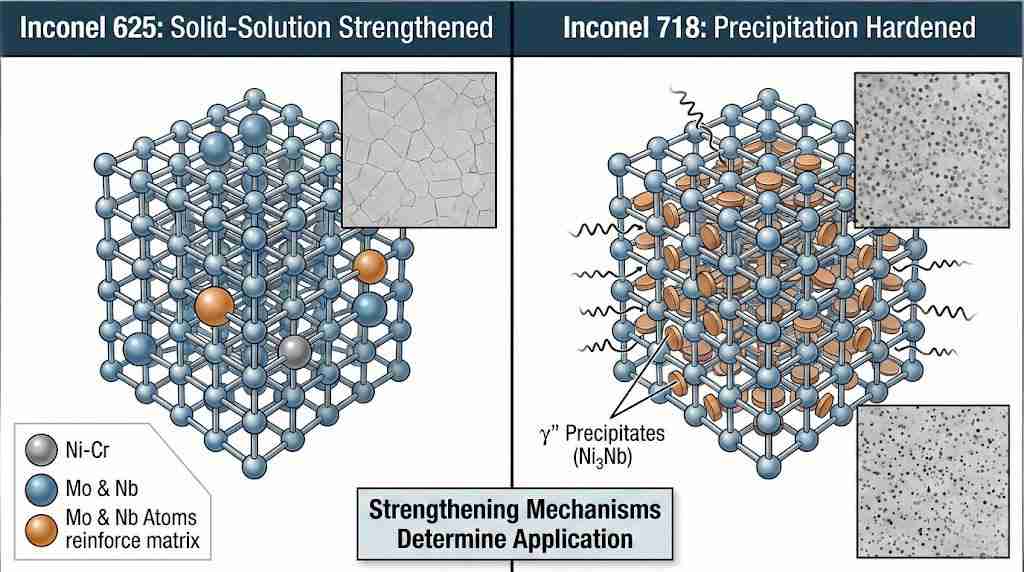
근본적인 차이점은 이러한 합금이 강도를 얻는 방식에 있습니다.
-
인코넬 625(UNS N06625) 는 주로 견고한 솔루션 강화 합금입니다. 니켈-크롬 매트릭스에서 몰리브덴(Mo)과 니오븀(Nb)의 강화 효과에서 강도를 얻습니다. 이러한 특성을 얻기 위해 시효 경화 열처리가 필요하지 않으며 우수한 연성과 용접성을 유지합니다.
-
인코넬 718(UNS N07718) 는 강수량 강화 (노화 경화) 합금입니다. 니오븀과 함께 티타늄(Ti) 및 알루미늄(Al)을 추가하면 감마 더블 프라임() 침전물() 열처리 중입니다. 이 미세 구조는 매우 높은 수율 강도를 제공합니다.
화학 성분의 차이
| 요소 | 인코넬 625(무게 %) | 인코넬 718(무게 %) | 성능에 미치는 영향 |
| 니켈(Ni) | ~58%(최소) | ~50 - 55% | 625는 Ni가 높아 내식성이 우수합니다. |
| 크롬(Cr) | 20 - 23% | 17 - 21% | 둘 다 뛰어난 내산화성을 제공합니다. |
| 몰리브덴(Mo) | 8 - 10% | 2.8 - 3.3% | 주요 차이점: 625의 높은 Mo는 우수한 내공성을 제공합니다. |
| 니오븀(Nb) | 3.15 - 4.15% | 4.75 - 5.5% | 718에서 Nb가 높을수록 강수량 경화 반응이 빨라집니다. |
| 티타늄/알루미늄 | < 0.4% | Ti: 0.65-1.15% / Al: 0.2-0.8% | 718의 노화 경화 과정에 필수적입니다. |
기계적 특성(일반 실온)
| 속성 | 인코넬 625(어닐링) | 인코넬 718(솔루션 + 에이징) |
| 항복 강도(0.2% 오프셋) | 414 - 650 MPa | 1034 - 1100 MPa |
| 인장 강도 | 827 - 1000 MPa | 1240 - 1350 MPa |
| 경도(로크웰) | 145 - 220 HB | 331 - 444시간(36-44시간) |
| 신장 | 30 - 60%(고연성) | 12 - 21% |
평결: 극한 하중에서 구조적 강성이 필요한 경우, 인코넬 718은 625보다 거의 2배 높은 항복 강도를 제공합니다.
인코넬 625 대 718 고온 성능
이러한 합금 중 하나를 선택할 때 “고온'을 정의하는 것은 성능 곡선이 과거를 지나면서 크게 달라지기 때문에 매우 중요합니다. 650°C(1200°F).
1. 크리프 파열 및 강도 안정성
인코넬 718은 최대 다음과 같은 고응력 애플리케이션에 가장 적합한 선택입니다. 700°C(1300°F). 이 범위 내에서 침전물은 전위 이동을 효과적으로 차단하여 크리프를 방지합니다. 그러나 700°C 이상에서는 이러한 침전물이 불안정해지고 거칠어져 기계적 강도가 급격히 떨어집니다.
2. 산화 및 열 안정성
인코넬 625는 초고온에서 뛰어난 안정성을 발휘합니다(최대 982°C / 1800°F). 침전물이 아닌 고체 용액 강화에 의존하기 때문에 718과 같은 거칠어짐 문제가 발생하지 않습니다. 배기 덕트나 플레어 스택과 같이 극심한 열에 노출되는 무부하 또는 저응력 부품의 경우 625가 더 안전한 옵션입니다.
3. 극저온 성능
두 합금 모두 극저온 용도에 탁월하지만, 인코넬 718은 절대 영도에 가까운 온도에서도 취성을 띠지 않으면서 높은 인장 강도를 유지하기 때문에 극저온용 볼트 및 패스너에 주로 선호됩니다.
인코넬 625 대 718 선택 방법
구매 결정을 간소화하려면 다음 세 가지 제약 조건을 평가하세요:
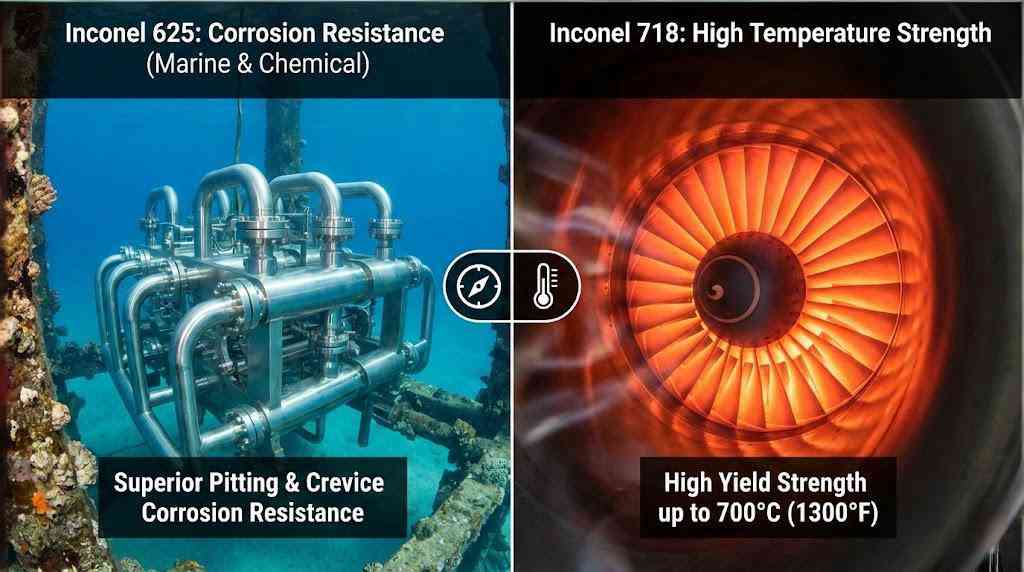
시나리오 A: 극한 부식(해양 및 화학)
인코넬 625를 선택합니다. 높은 몰리브덴 함량(9%)으로 인해 625는 718보다 훨씬 높은 내공극 저항성 등가수(PREN)를 제공합니다. 염화물 이온 응력 부식 균열에 거의 영향을 받지 않습니다.
-
일반적인 애플리케이션: 해저 배관, 산성 처리의 열교환기, 해군 배기 시스템.
시나리오 B: 높은 정적/주기적 부하(항공우주 및 에너지)
인코넬 718을 선택합니다. 부품이 변형 없이 높은 RPM이나 압력을 견뎌야 하는 경우 718의 항복 강도는 타협할 수 없는 수준입니다.
-
일반적인 애플리케이션: 가스터빈 블레이드, 터보차저 로터, 고압 밸브, 로켓 엔진 추진 챔버.
시나리오 C: 제작 및 용접성
인코넬 625를 선택합니다. 인코넬 718은 정밀하게 취급하지 않으면 용접 후 열처리 중에 “변형 노화 균열”이 발생하기 쉽습니다. 반면, 인코넬 625는 용접성이 가장 뛰어난 초합금 중 하나로 입계 균열에 강하고 내식성을 회복하기 위해 용접 후 노화가 필요하지 않습니다.
관련 Q&A
1. 인코넬 625와 718 중 어떤 합금이 더 가공하기 어려운가요? 인코넬 718은 일반적으로 가공하기가 더 어렵습니다. 침전 경화 기능으로 인해 절삭 중에 빠르게 경화되어 어닐링된 인코넬 625에 비해 절삭력이 높고 공구 수명이 짧습니다.
2. 인코넬 625를 인코넬 718 용접용 필러 금속으로 사용할 수 있습니까? 예. 인코넬 625 용가재(ERNiCrMo-3)는 인코넬 718 부품 용접에 자주 사용되며, 특히 열 영향 구역(HAZ)에서 균열을 방지하기 위해 높은 연성과 내식성이 필요한 경우 용접에 사용됩니다.
3. 인코넬 718은 자성이 있나요? 아니요, 인코넬 625와 718은 모두 비자성입니다. 그러나 심한 냉간 가공이나 특정 열처리로 인해 아주 약간의 자기 투과성이 유발될 수 있지만 대부분의 엔지니어링 목적에서는 비자성으로 간주됩니다.