Operating gas turbine engines at temperatures exceeding 900°C pushes metallurgical limits to the brink. For design engineers, specifying the correct superalloy is not merely a matter of meeting baseline tensile requirements; it is an exercise in mitigating high-temperature creep, oxidation, and thermomechanical fatigue. Precision in nickel alloy selection for aerospace dictates the operational lifespan of critical hot-section components like combustors, exhaust nozzles, and turbine blades. Navigating the microstructural realities of solid-solution strengthened versus precipitation-hardened grades determines whether a component survives thousands of flight cycles or catastrophically fails mid-operation. Let us examine the exact thermodynamic parameters and microstructural behaviors driving these highly critical metallurgical decisions.
Evaluating Creep Rupture Strength in Superalloys
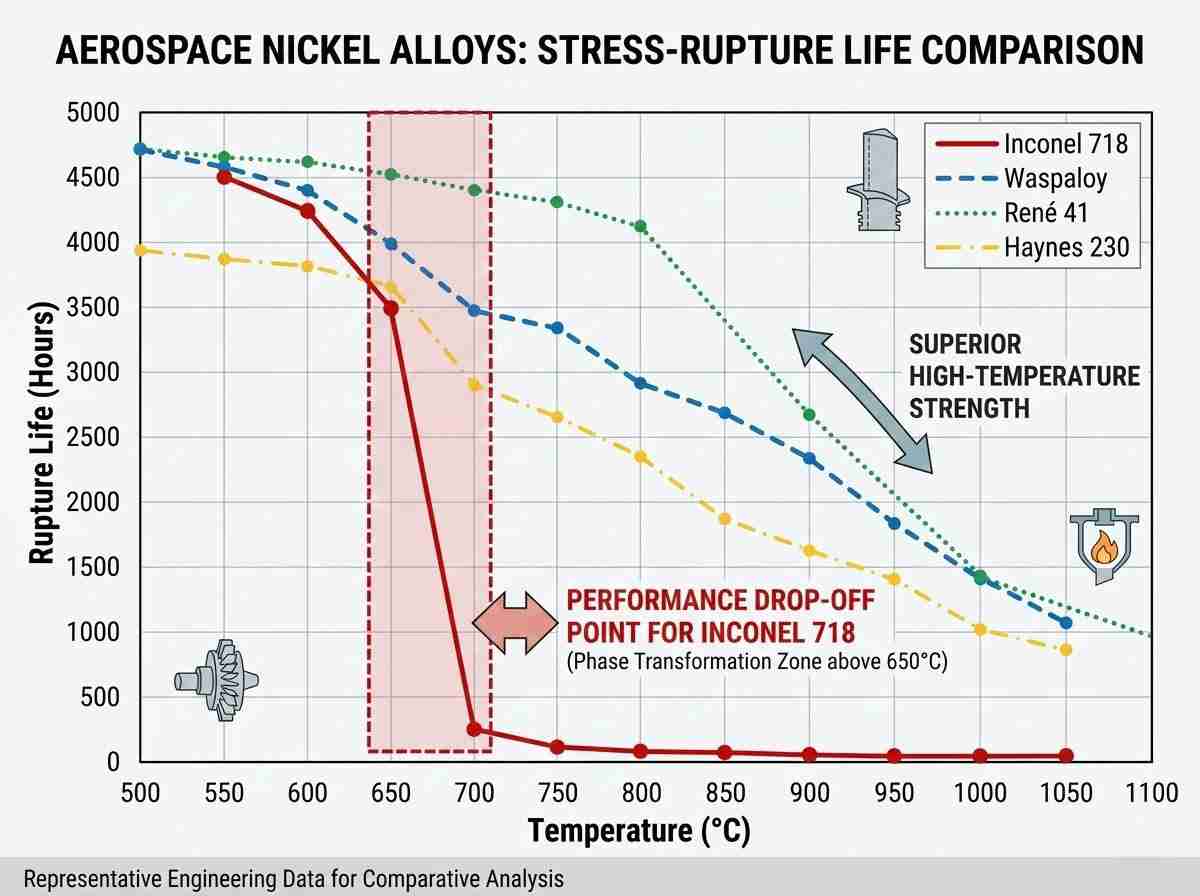
When operating near the homologous temperature of the material, creep deformation—driven by vacancy diffusion and dislocation climb—becomes the primary failure mechanism. Aerospace superalloys derive their structural integrity from solid-solution strengthening elements like molybdenum, tungsten, and cobalt, combined with the controlled precipitation of intermetallic phases. For instance, Inconel 718 relies heavily on niobium and titanium to form the body-centered tetragonal gamma-double-prime (γ”) phase, providing exceptional yield strength up to 650°C.
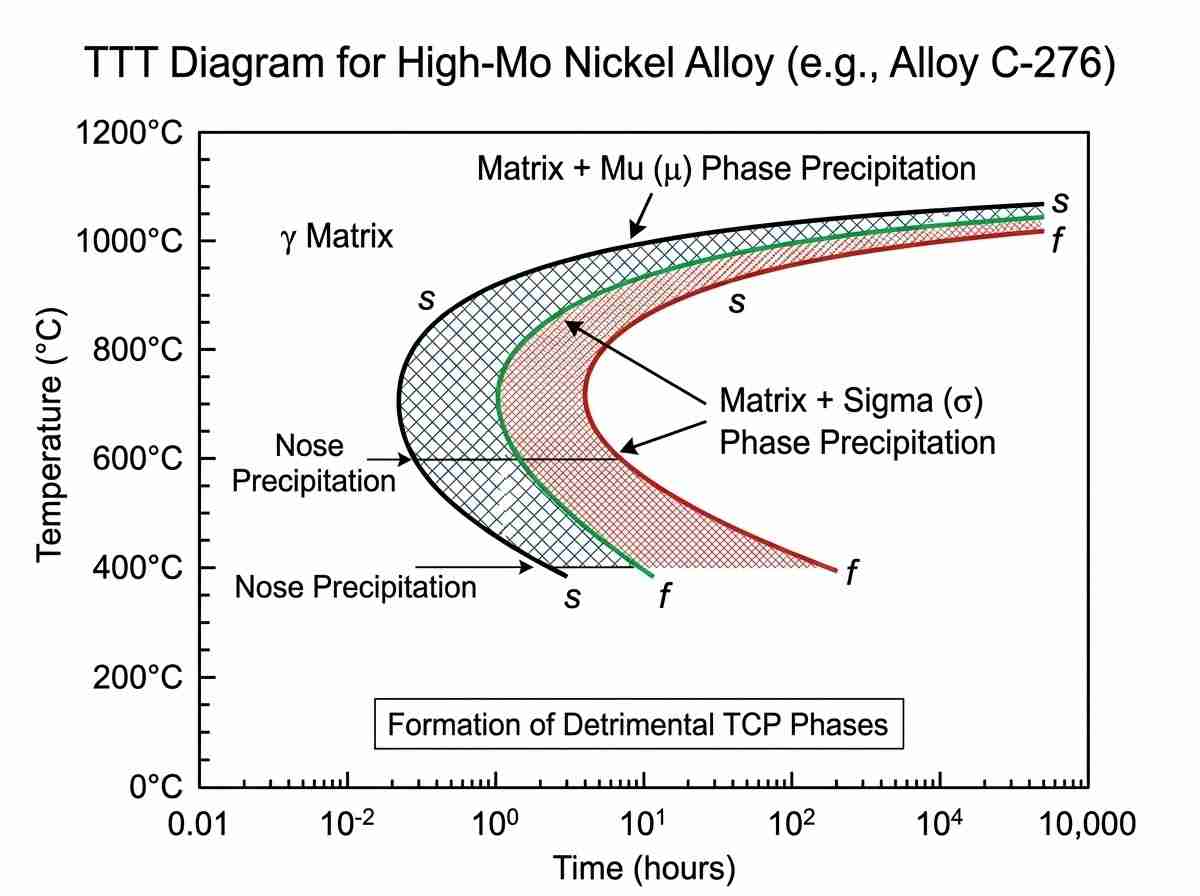
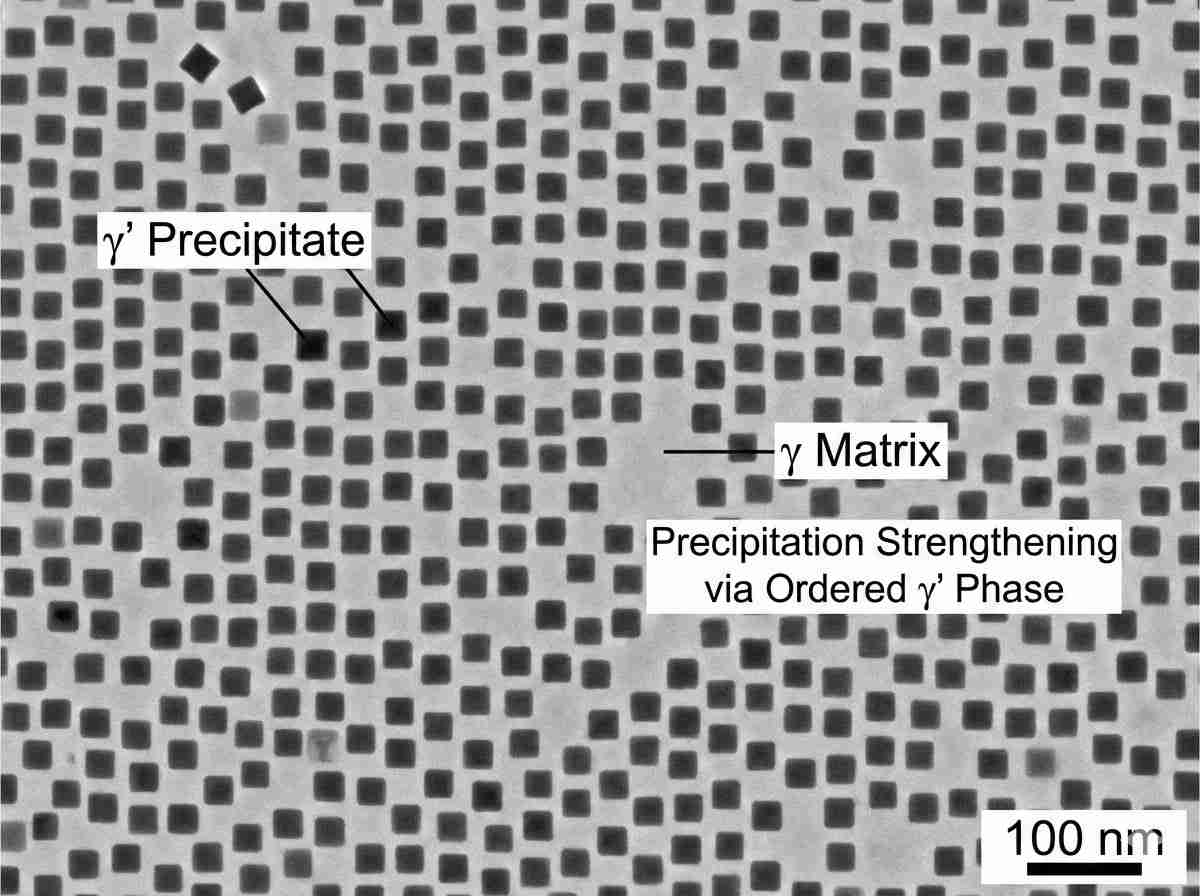
However, as turbine inlet temperatures escalate beyond 700°C, the metastable γ” phase rapidly coarsens and transforms into the thermodynamically stable, but structurally weaker, delta (δ) phase. In such aggressive thermal regimes, alloys like Waspaloy or Udimet 720, which precipitate the face-centered cubic gamma-prime (γ’) phase (Ni3(Al,Ti)), become mandatory. The volume fraction, morphology, and thermal stability of these γ’ precipitates dictate the alloy’s resistance to dislocation glide under sustained centrifugal stresses. Furthermore, trace additions of boron and zirconium are critical; they segregate to grain boundaries, reducing grain boundary sliding and significantly improving creep ductility at elevated temperatures.
| 합금 등급 | Primary Hardening Mechanism | 최대 작동 온도(°C) | Yield Strength at 650°C (MPa) | Key Alloying Elements (Wt %) |
| 인코넬 718 | Precipitation (γ”) | 650 | ~1030 | Ni (50-55), Cr (17-21), Nb (4.7-5.5) |
| 와스팔로이 | Precipitation (γ’) | 870 | ~760 | Ni (Base), Cr (18-21), Co (12-15) |
| 르네 41 | Precipitation (γ’) | 900 | ~950 | Ni (Base), Cr (18-20), Co (10-12) |
| 하스텔로이 X | 견고한 솔루션 | 1200 (Oxidation Limit) | ~280 | Ni (Base), Cr (20.5-23), Fe (17-20) |
Oxidation and High-Temperature Corrosion Resistance
Mechanical strength becomes irrelevant if the base material cannot survive the aggressive oxidation and hot corrosion environments present in turbine exhaust streams. The presence of sulfur impurities in aviation fuel, combined with sodium ingested from marine environments, induces sulfidation—a catastrophic and rapid form of hot corrosion. Type I hot corrosion typically occurs around 850°C to 950°C, while Type II manifests at lower temperatures between 650°C and 750°C.
To combat these aggressive localized attacks, aerospace-grade alloys require a carefully balanced chromium and aluminum mass fraction. Chromium rapidly forms a self-repairing, continuous Cr2O3 (chromia) scale at lower intermediate temperatures, protecting the underlying base metal from sulfur diffusion. However, at extreme temperatures exceeding 1000°C, chromia oxidizes further into volatile CrO3. In these peak temperature zones, optimizing your nickel alloy selection for aerospace combustion systems requires transitioning to aluminum-rich grades. These form an alpha-Al2O3 (alumina) scale, which exhibits superior thermodynamic stability and drastically slower growth kinetics under extreme heat. Consequently, solid-solution strengthened grades like Hastelloy X or 헤인즈 188 are frequently specified for static combustor components, prioritizing long-term environmental resistance over peak tensile strength to prevent material recession during prolonged flight hours.
Specifying the correct material for aviation engines requires a rigorous, data-driven analysis of the exact thermal and mechanical loading profiles the component will experience in service. Balancing creep resistance, thermal fatigue life, and microstructural stability over thousands of operating hours demands deep metallurgical expertise. The extreme nuances of phase transformations at elevated temperatures mean that even a slight miscalculation in material specification can lead to catastrophic failure and premature component retirement. Our engineering team at 28Nickel continuously evaluates these high-temperature properties and degradation mechanisms to solve complex metallurgical challenges for turbine applications. If you are analyzing material trade-offs, stress-rupture data, or oxidation kinetics for your next engine component design, connect directly with our technical engineers to discuss detailed test data and microstructural behavior tailored to your specific operational environment.
관련 Q&A
Q: Why does Inconel 718 lose mechanical strength above 650°C? A: At temperatures exceeding 650°C, the metastable gamma-double-prime (γ”) precipitates in Inconel 718 begin to rapidly coarsen and transform into the thermodynamically stable, needle-like delta (δ) phase. This phase transformation depletes the matrix of its primary strengthening elements, significantly reducing the alloy’s creep rupture strength and yield properties under thermal load.
Q: How does the addition of cobalt affect nickel superalloys in aerospace applications? A: Cobalt reduces the stacking fault energy of the nickel matrix, which impedes dislocation mobility and thereby enhances long-term creep resistance. It also increases the solvus temperature of the gamma-prime (γ’) phase, allowing the alloy to maintain structural integrity and high yield strength at more elevated operating temperatures compared to cobalt-free grades.
Q: What is the primary functional difference between solid-solution strengthened and precipitation-hardened 니켈 합금 in gas turbines? A: Precipitation-hardened alloys (e.g., Waspaloy, René 41) rely on intermetallic precipitates (γ’ or γ”) to block dislocation movement, providing exceptional high-temperature mechanical strength essential for rotating parts like turbine blades. Solid-solution alloys (e.g., Hastelloy X) rely on heavy elements like molybdenum or tungsten dissolved directly into the matrix; they offer lower overall strength but deliver superior weldability, formability, and oxidation resistance, making them ideal for high-heat static components like combustion liners.