










A resposta curta é: Sim, relativamente ao desempenho em ambientes extremos. No entanto, se tivermos em conta a relação custo-eficácia para aplicações gerais, a resposta torna-se complicada. Para tomar a decisão correta, temos de dissecar as diferenças químicas e físicas entre estes dois gigantes metálicos.
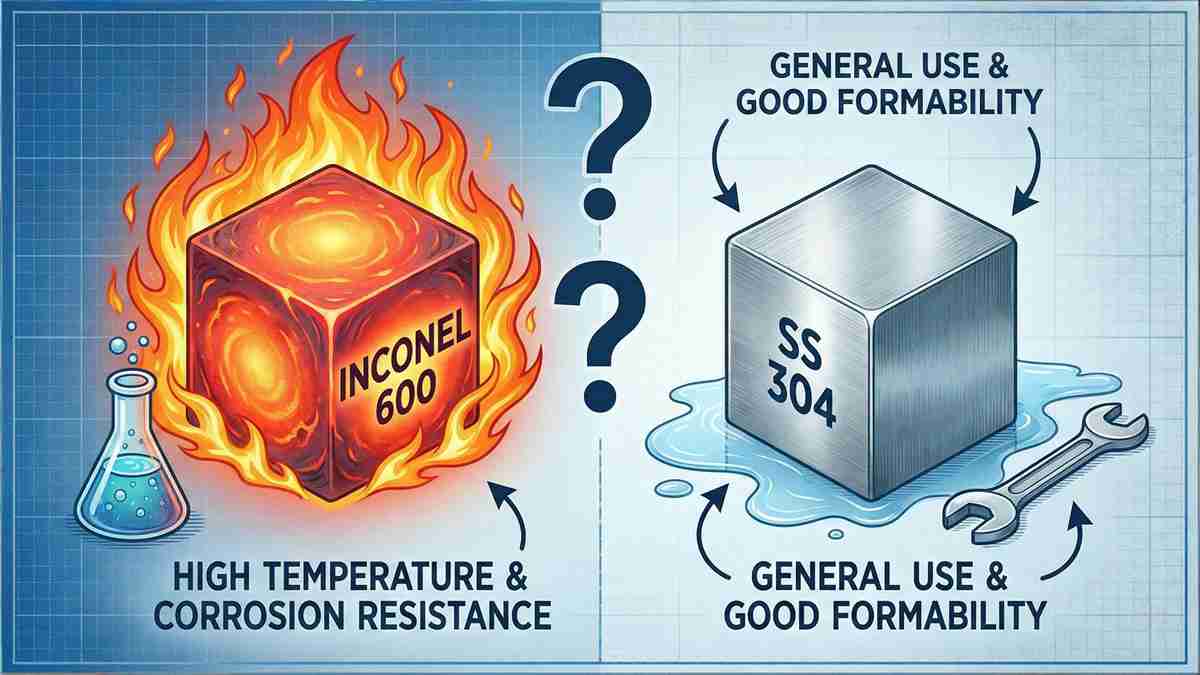
Definição das ligas
Para compreender se o Inconel 600 é melhor do que o SS 304, precisamos primeiro de compreender o que são.
-
Aço inoxidável 304 (UNS S30400): Este é o “cavalo de batalha” da indústria siderúrgica. É um aço inoxidável austenítico que contém cerca de 18% de crómio e 8% de níquel. É omnipresente, encontrado em tudo, desde lava-loiças de cozinha a tubagens industriais, oferecendo uma sólida resistência à corrosão e maleabilidade a um preço razoável.
-
Inconel 600 (UNS N06600): Trata-se de uma superliga de níquel-crómio. Ao contrário do aço, a sua base principal é o níquel (>72%), apoiado pelo crómio (14-17%) e pelo ferro (6-10%). Foi concebida especificamente para condições extremas em que os aços normais falhariam.
1. Desempenho a altas temperaturas
Quando se pergunta: “O Inconel 600 é melhor do que o SS 304 para aplicações de calor?”, a resposta é um enfático sim.
SS 304 tem uma temperatura máxima de serviço de cerca de 870°C (1598°F) para serviço intermitente. No entanto, levado a estes limites, sofre de baixa resistência à fluência e à oxidação.
Inconel 600, O óleo de palma, por outro lado, é uma fera no calor. Mantém a integridade estrutural e resiste à oxidação a temperaturas até 1093°C (2000°F). Devido ao seu elevado teor de níquel, não sofre dos mesmos problemas de expansão térmica que o aço inoxidável, o que o torna a escolha superior para..:
-
Componentes de fornos de tratamento térmico.
-
Peças para motores a jato.
-
Recipientes de reactores químicos.
2. Resistência à corrosão
O ponto fraco mais significativo do SS 304 é Fratura por corrosão sob tensão por cloreto (CSCC). Se colocar o aço inoxidável 304 num ambiente de água salgada ou num processo que envolva cloretos, a tensão de tração pode causar uma falha súbita e catastrófica.
O Inconel 600 é melhor do que o SS 304 nestes ambientes corrosivos? Sem dúvida.
O elevado teor de níquel no Inconel 600 torna-o praticamente imune à fissuração por corrosão sob tensão por cloreto. Para além disso, oferece uma resistência superior a:
-
Álcalis cáusticos (a altas temperaturas).
-
Ambientes com água de elevada pureza (essencial em reactores nucleares).
-
Ácidos orgânicos e inorgânicos.
Enquanto o SS 304 é adequado para ambientes oxidantes suaves (como o ácido nítrico), o Inconel 600 é a atualização necessária quando o ambiente se torna agressivo.
3. A realidade económica
É aqui que a discussão muda. Se o Inconel 600 é mecanicamente superior, porque é que não é utilizado em todo o lado? A barreira é o custo.
O Inconel 600 contém mais de 70% de níquel. O níquel é significativamente mais caro do que o ferro (a base do SS 304). Por conseguinte, O Inconel 600 pode custar 5 a 10 vezes mais do que o SS 304.
Por conseguinte, o Inconel 600 é melhor do que o SS 304 para um tubo de água normal ou para um transportador de processamento de alimentos? Não. A utilização de Inconel nestas aplicações é irresponsável do ponto de vista fiscal. O SS 304 fornece a higiene e a durabilidade necessárias sem o preço astronómico.
Comparação num relance
| Caraterística | Aço inoxidável 304 | Inconel 600 | Vencedor |
| Elemento de base | Ferro (Fe) | Níquel (Ni) | N/A |
| Temperatura máxima | ~870°C | ~1093°C | Inconel 600 |
| Resistência aos cloretos | Mau (suscetível de fissurar) | Excelente (Imune) | Inconel 600 |
| Custo | Baixa / Moderada | Muito elevado | SS 304 |
| Maquinabilidade | Bom | Difícil (o trabalho endurece) | SS 304 |
Então, O Inconel 600 é melhor do que o SS 304?
-
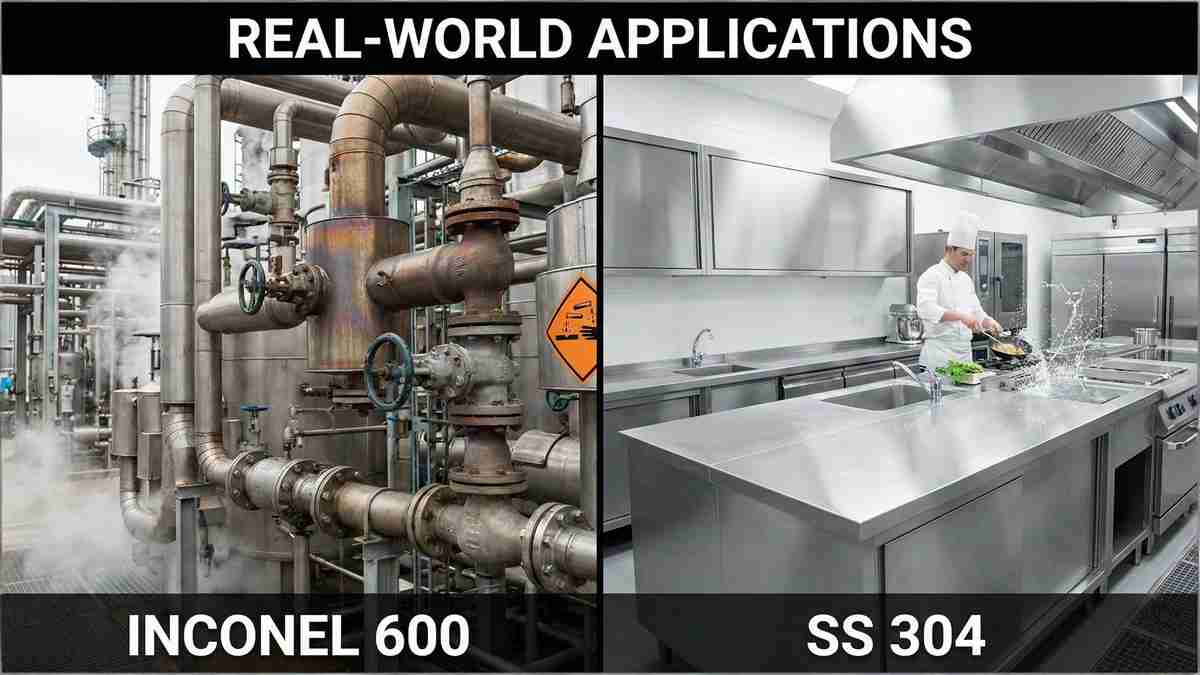
Escolha o Inconel 600 se: A sua aplicação envolve temperaturas superiores a 800°C, elevadas tensões mecânicas sob calor ou exposição a cloretos e álcalis cáusticos.
-
Escolha SS 304 se: Necessita de um material económico e duradouro para o manuseamento geral de produtos químicos, processamento de alimentos ou estruturas arquitectónicas onde o calor extremo não é um fator.
Perguntas frequentes (FAQs)
Q1: Posso soldar Inconel 600 a SS 304?
Sim, a soldadura de metais dissimilares é possível. No entanto, é necessário utilizar o metal de adição correto para evitar fissuras e manter a resistência à corrosão. Normalmente, recomenda-se a utilização de um metal de adição à base de níquel, como o Inconel 82 (ERNiCr-3), para unir o Inconel 600 ao aço inoxidável 304.
Q2: O Inconel 600 é magnético em comparação com o SS 304?
Ambas as ligas são geralmente não magnéticas. O SS 304 não é magnético no seu estado recozido, mas pode tornar-se ligeiramente magnético após o trabalho a frio. O Inconel 600 permanece não magnético mesmo a temperaturas muito baixas, o que é uma caraterística desejável para aplicações electrónicas sensíveis.
Q3: O Inconel 600 é mais difícil de maquinar do que o SS 304?
Sim. O Inconel 600 tem uma elevada resistência e endurece rapidamente durante a maquinagem. É significativamente mais difícil de cortar e moldar do que o SS 304, exigindo ferramentas pesadas, velocidades mais lentas e taxas de avanço mais agressivas para minimizar o endurecimento por trabalho.