



Para os engenheiros e as equipas de aprovisionamento que adquirem as ligas Alloy 625, Alloy 825, C-276, Monel 400 ou 800H/HT, o verdadeiro risco raramente reside na própria cotação. Reside sim na capacidade do fornecedor, que fica por trás da cotação. Por outras palavras, como avaliar um fornecedor mundial de ligas de níquel não é uma formalidade de aquisição; é uma decisão de engenharia de materiais com consequências diretas para a resistência à corrosão, soldabilidade, conformidade com os códigos e tempo de funcionamento da fábrica.
Um fornecedor pode oferecer um prazo de entrega aliciante e um preço competitivo, mas mesmo assim falhar no que realmente importa: lotes misturados, rastreabilidade incompleta, acabamento subcontratado com controlo de processo deficiente ou documentação que parece aceitável até ser comparada com as condições reais de serviço. As ligas de níquel são implacáveis a este respeito. Em meios que contêm cloretos, serviços corrosivos, atmosferas de carbonização a alta temperatura ou sistemas de ácidos mistos, um pequeno desvio na composição química, no tratamento térmico, na estrutura granular ou no estado da superfície pode fazer com que um produto passe de fiável a marginal.
Porque é que a qualificação geral do fornecedor não é suficiente para as ligas de níquel
Muitos sistemas de aquisição qualificam os fornecedores utilizando apenas indicadores comerciais: historial de exportações, condições de pagamento, qualidade da embalagem e certificações gerais, como a ISO 9001. Esses indicadores são úteis, mas não são suficientes para as ligas de níquel. Ao avaliar um fornecedor de chapas UNS N06625, acessórios para tubos UNS N10276 ou tubos UNS N08810, a questão fundamental é se o fornecedor compreende a relação entre a forma do produto, a rota de fabrico e o desempenho do serviço final.
Um fornecedor fiável de ligas de níquel deve ser capaz de explicar, sem hesitação, se atua na qualidade de fábrica, de transformador aprovado ou de armazenista. Essa distinção é importante. Um armazenista com um stock robusto pode ainda assim ser um bom parceiro, mas apenas se controlar a segregação de lotes, a rastreabilidade das transferências, o estado de trabalho a frio, a disciplina de remarcação e o processamento subcontratado. Um transformador pode cortar, maquinar, forjar ou submeter o material a tratamento térmico; nesse caso, é necessário saber exatamente quais as operações que são realizadas internamente e quais as que são subcontratadas.
Também é necessário comprovar que o fornecedor conhece as normas subjacentes ao material e não apenas a designação comercial. Os engenheiros não compram produtos “tipo Inconel” ou “tipo Hastelloy”. Compram com base na designação UNS, na especificação ASTM/ASME, na norma dimensional, na condição de entrega e, por vezes, em cláusulas adicionais do projeto. Se uma equipa de vendas não conseguir alinhar rapidamente a UNS N06625 com a ASTM B443/B446/B444 ou distinguir 800H de 800HT em termos de química controlada e aplicação a temperaturas elevadas, isso é um sinal de alerta precoce.
Um método prático para avaliar um fornecedor global de ligas de níquel
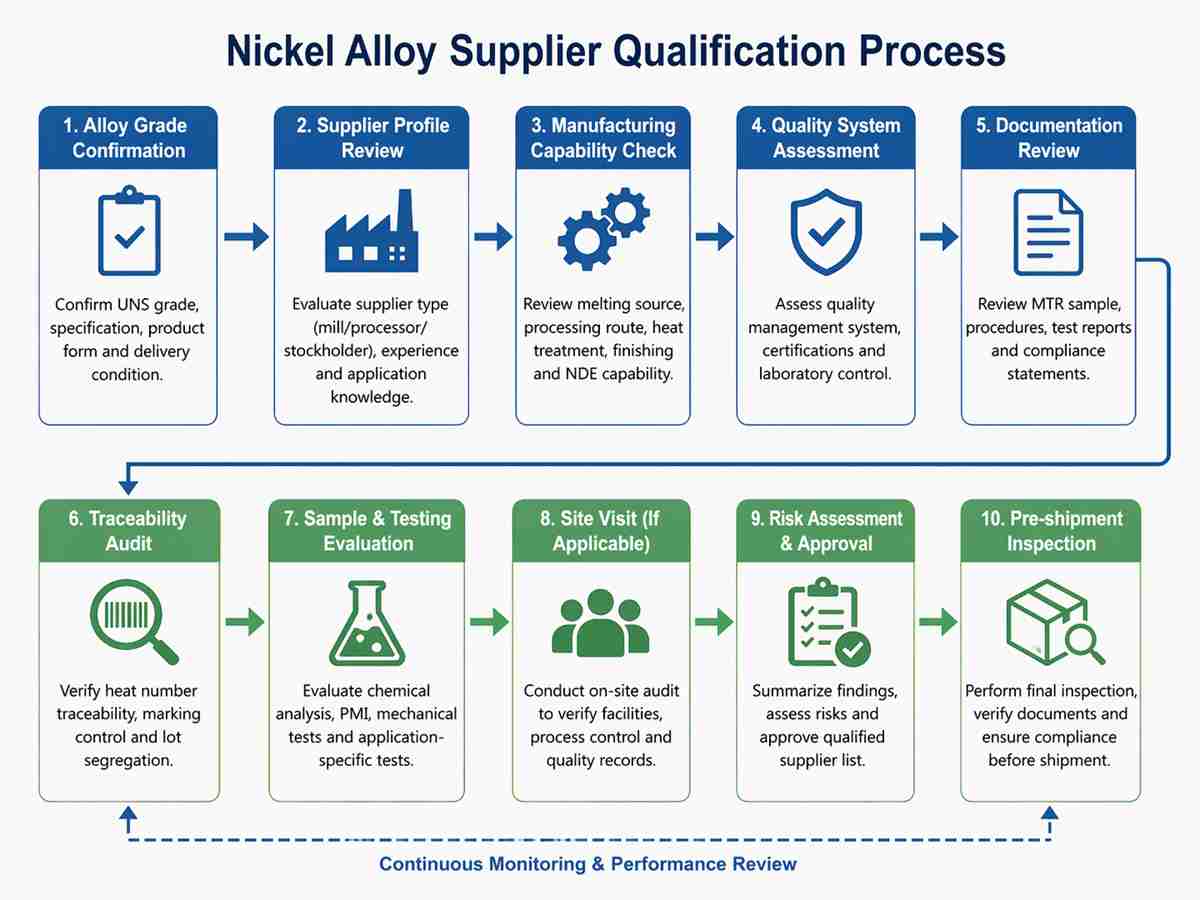
Quando os engenheiros discutem como avaliar um fornecedor mundial de ligas de níquel, O método mais eficaz é trabalhar do risco metalúrgico para fora e não do preço para dentro. Comece pela aplicação. O material destina-se a água do mar, dessulfuração de gases de combustão, ácido fosfórico, serviço cáustico, atmosferas contendo hidrogénio ou equipamento de pressão a alta temperatura? A resposta determina as provas de que necessita do fornecedor.
Em primeiro lugar, verificar a identidade da liga ao nível da química e da especificação. Um fornecedor sério deve fornecer relatórios de testes de moagem representativos, confirmar as normas aplicáveis e explicar quaisquer alegações de dupla certificação ou de especificação equivalente. Em segundo lugar, analise a capacidade de processamento. O fornecedor consegue controlar o trabalho a quente, o recozimento em solução, a decapagem, o endireitamento, a maquinagem e a NDE de forma a preservar as propriedades pretendidas? Em terceiro lugar, verifique a robustez da rastreabilidade. Cada feixe, placa, acessório ou peça forjada deve permanecer ligado ao número de calor, à forma do produto, ao tamanho e ao registo de teste através da receção, armazenamento, corte e expedição.
A camada seguinte é a disciplina de ensaio. Para aplicações críticas, não se limite à análise química e de tração. Pergunte qual o método de identificação positiva do material utilizado, se a dureza é verificada por rotina após a conformação, se é possível organizar a corrosão intergranular ou outros testes específicos do projeto e se o laboratório é controlado internamente ou acreditado externamente. Como avaliar um fornecedor global de ligas de níquel Na prática, muitas vezes o que está em causa é se o fornecedor consegue apresentar provas claras e coerentes sob pressão de auditoria.
| Área de avaliação | O que deve verificar | Bandeira vermelha típica | Porque é que é importante |
|---|---|---|---|
| Identificação da liga | Grau UNS, especificação ASTM/ASME, forma do produto, condição de entrega | O fornecedor cita apenas nomes comerciais | Uma liga incorrecta ou um estado incorreto podem invalidar o desempenho da corrosão |
| Transparência das fontes de moagem | Moinho original, transformador, papel de acionista, mapa de subcontratação | Respostas vagas sobre a origem | A subcontratação oculta quebra frequentemente a rastreabilidade |
| Controlo do tratamento térmico | Janela de recozimento da solução, registos do forno, prática de arrefecimento, se for caso disso | Sem registo do forno ou declarações genéricas | As propriedades mecânicas e de corrosão dependem do historial térmico |
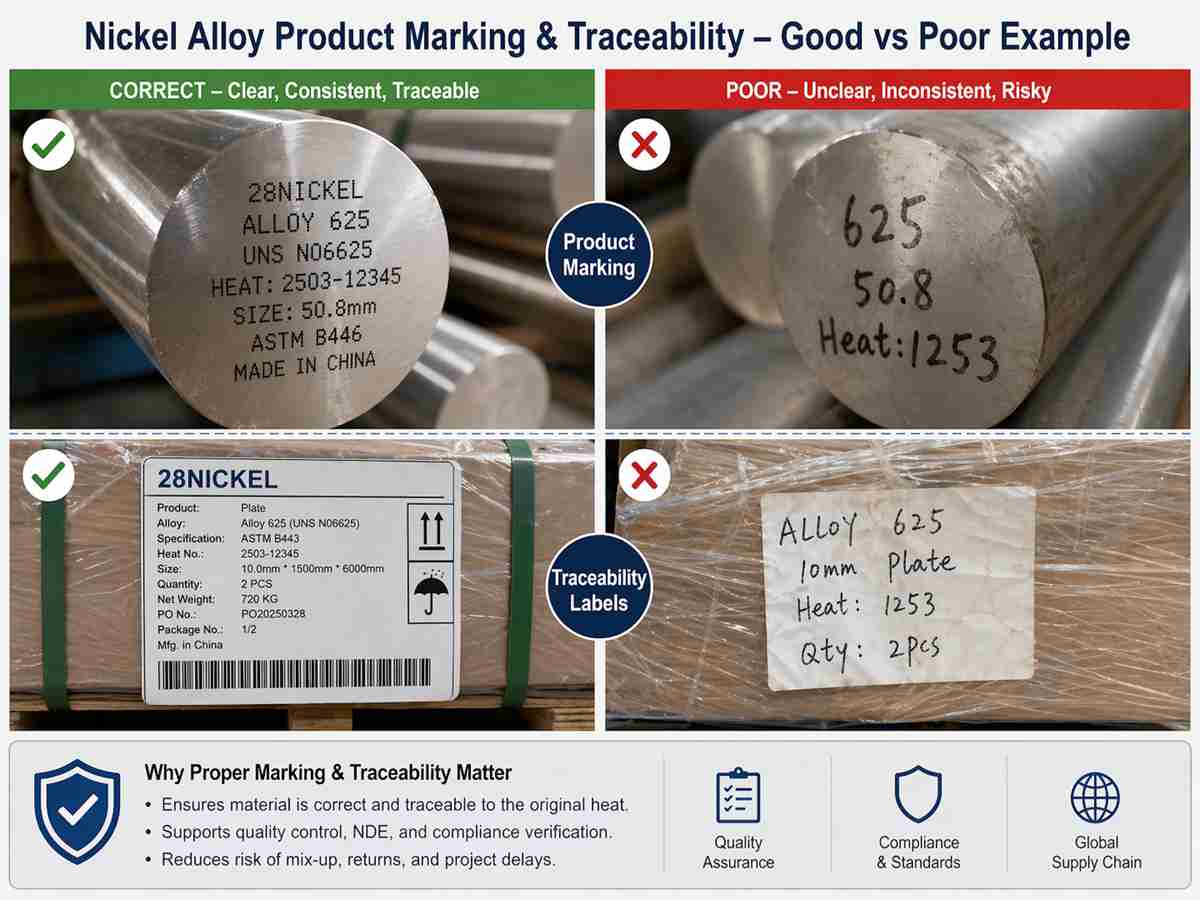
| Rastreabilidade | Transferência do número de calor, procedimento de remarcação, segregação de lotes | Marcações mistas ou substituições manuscritas | A mistura de materiais é um dos maiores riscos no terreno |
| Capacidade de inspeção | PMI, UT/PT quando necessário, inspeção dimensional, verificações do estado da superfície | Apenas é oferecida uma inspeção visual | As ligas de níquel são caras; os defeitos devem ser detectados antes da expedição |
| Qualidade da documentação | MTRs, lista de embalagem, relatórios de inspeção, declarações de conformidade | Documentos emitidos tardiamente ou incoerentes | Uma documentação deficiente atrasa a libertação e enfraquece a defesa do sinistro |
| Conhecimentos de aplicação | Capacidade para discutir soldadura, fabrico e limites de serviço | Respostas puramente comerciais | Os bons fornecedores ajudam a evitar a utilização indevida antes do início do fabrico |
Sinais comerciais que os engenheiros não devem ignorar
Existe também uma vertente comercial como avaliar um fornecedor mundial de ligas de níquel, mas deve ser interpretado de forma técnica. Prazos de entrega extremamente curtos para tamanhos invulgares podem indicar que o fornecedor não está a manter um stock real e que irá reabastecer após a encomenda. Preços anormalmente baixos podem refletir uma origem desvalorizada, um processamento secundário não controlado ou uma pressão de substituição algures na cadeia. Grandes quantidades mínimas de encomenda podem indicar uma fraca estrutura de stocks ou pouca flexibilidade no processamento.
Pedir um pacote de documentos de amostra redigido antes de efetuar a primeira encomenda. Peça um MTR recente, uma lista de embalagem, um relatório de inspeção e um conjunto de fotografias que mostre as marcações no produto e na embalagem. Em seguida, compare-os para verificar a consistência. O formato do número de calor, a designação padrão, as dimensões, as quantidades e a posição da marcação devem estar todos alinhados. Isto parece básico, mas é uma das formas mais rápidas de avaliar se um fornecedor funciona com disciplina.
Outro passo eficaz é uma chamada de revisão técnica antes da libertação do pedido. Um fornecedor capaz pode discutir os limites de conformação, as preocupações com a soldabilidade e as restrições pós-processamento em termos práticos. Por exemplo, se estiver a comprar acessórios para tubos soldados em liga 625, eles podem explicar a compatibilidade do metal de enchimento, a sensibilidade ao calor e as expectativas de limpeza pós-fabrico? Se estiver a adquirir 800H/HT, eles compreendem porque é que o tamanho do grão e a química controlada são importantes para o serviço de fluência? É frequentemente aqui que como avaliar um fornecedor mundial de ligas de níquel torna-se óbvio: a verdadeira capacidade soa específica, não promocional.
Conclusão
Se ainda está a perguntar como avaliar um fornecedor mundial de ligas de níquel, Se o fornecedor for um bom fornecedor, utilize uma regra: avalie o fornecedor pelo controlo metalúrgico, pela disciplina de rastreabilidade e pela compreensão da aplicação antes de o avaliar pelo preço. Um bom fornecedor global faz mais do que enviar material. Ele reduz a incerteza da engenharia. Ajuda-o a confirmar a adequação das especificações, a antecipar os riscos de fabrico e a defender as decisões de qualidade com registos auditáveis.
Para projectos críticos de ligas de níquel, o melhor primeiro passo não é “envie o seu melhor preço”. É “enviar a sua lógica de rastreabilidade, MTRs representativos e rota de processamento”. Essa única mudança de abordagem filtrará rapidamente os fornecedores fracos. Na 28Nickel, é exatamente assim que preferimos iniciar conversas técnicas com engenheiros e equipas de aquisição.
Perguntas e respostas relacionadas
1. Que documentos devo solicitar antes de aprovar um fornecedor de ligas de níquel?
Solicite MTRs representativos, um relatório de inspeção de amostra, lista de embalagem, procedimento de rastreabilidade e uma descrição do processamento interno versus terceirizado. Para encomendas críticas, solicite também a capacidade PMI e qualquer âmbito NDE relevante.
2. Um acionista é menos fiável do que um moinho para produtos de ligas de níquel?
Não necessariamente. Um acionista pode ser altamente fiável se mantiver uma segregação térmica rigorosa, um controlo de marcação e um aprovisionamento transparente. O risco não é o modelo de negócio em si, mas a fraca rastreabilidade e a subcontratação não controlada.
3. Como posso verificar se um fornecedor compreende efetivamente a minha aplicação?
Utilize uma revisão técnica de pré-encomenda. Pergunte sobre o mecanismo de corrosão, limites de fabrico, implicações de soldadura e adequação da especificação às suas condições de serviço. Os fornecedores com capacidade real respondem com detalhes de engenharia específicos, não com linguagem de vendas genérica.