Quando os engenheiros discutem Inconel 625 resistência à corrosão em ácido sulfúrico, the conversation usually starts with a simple question and ends with several uncomfortable qualifiers. Alloy 625 is widely respected for its strength, fabrication flexibility, and excellent resistance to many aggressive media. Yet sulfuric acid is not a one-variable environment. Concentration, temperature, aeration, contamination, velocity, and acid regeneration conditions can move the alloy from reliable service into accelerated attack far faster than many procurement teams expect. That is why material selection for sulfuric acid service should never be based on a generic “nickel alloy = safe” assumption.
In practical terms, Inconel 625 performs best when the engineer understands not only the nominal chemistry of the alloy, but also the electrochemical behavior of sulfate-containing systems. The alloy derives its corrosion resistance from a nickel-chromium-molybdenum-niobium matrix. Chromium supports passivation in oxidizing environments, while molybdenum improves resistance to localized corrosion and reducing media. The problem is that sulfuric acid can range from mildly oxidizing to strongly reducing depending on plant conditions. In some cases, the passive film remains stable. In others, it becomes unstable, and metal loss rises sharply.
Why Inconel 625 Corrosion Resistance in Sulfuric Acid Is Not a Simple Yes-or-No
A frequent sourcing mistake is to treat sulfuric acid as a single service category. It is not. Dilute sulfuric acid at ambient temperature is very different from hot concentrated acid, and both are completely different from mixed-acid streams contaminated with chlorides, ferric ions, or process solids. This is where Inconel 625 corrosion resistance in sulfuric acid must be judged with engineering discipline rather than brochure language.
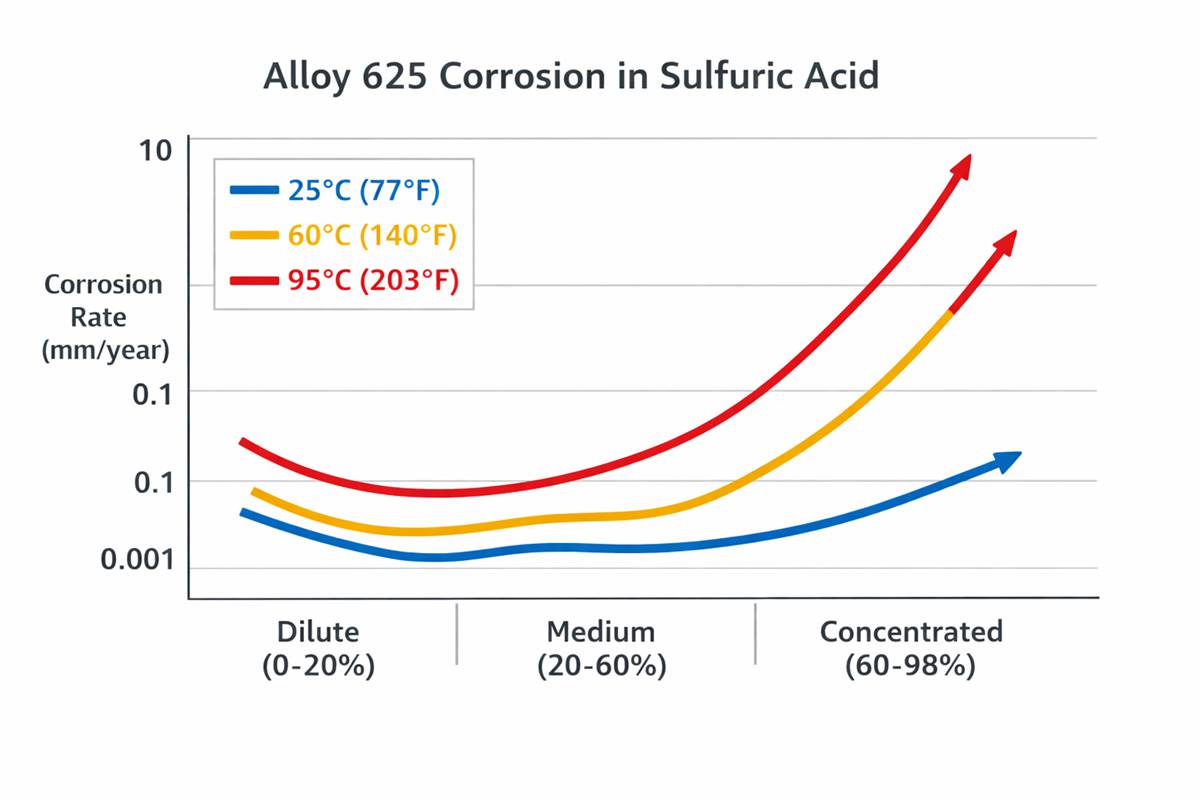
Alloy 625 generally shows useful resistance in selected sulfuric acid conditions, especially where temperature is controlled and the process does not push the alloy deep into an active corrosion regime. However, it is not the universal first choice for all sulfuric acid duties. In highly reducing sulfuric acid environments, especially at elevated temperature, corrosion rates can increase to levels that are no longer acceptable for long design life. In such cases, higher-molybdenum ligas de níquel or more specialized acid-resistant materials may outperform it.
Another point deserves emphasis. The corrosion behavior of Alloy 625 is often more stable in real systems that contain some oxidizing species, because these species can help maintain passivity. But that apparent benefit can disappear if the process chemistry fluctuates. Start-up, shutdown, water washing, acid dilution, and stagnant pockets are common moments when corrosion risk increases. Engineers who only review steady-state chemistry often miss these transient conditions.
Metallurgical Basis of Alloy 625 in Sulfuric Acid Service
To understand Inconel 625 corrosion resistance in sulfuric acid, we need to look at its alloy design. Typical chemistry includes high Ni, around 20–23% Cr, 8–10% Mo, and Nb as a strengthening addition. Unlike precipitation-hardened grades that depend heavily on age-hardening phases, Alloy 625 is primarily solid-solution strengthened. That matters because it retains good toughness, weldability, and resistance to sensitization during fabrication.
From a corrosion standpoint, three mechanisms are especially relevant:
1. General Corrosion
Sulfuric acid can drive uniform wall loss when the passive film is unstable. This risk rises with temperature and with certain concentration ranges that are particularly aggressive to nickel-based alloys.
2. Localized Corrosion
Although sulfuric acid itself is often discussed in terms of general corrosion, real industrial acid frequently contains chlorides. When chlorides are present, pitting and crevice corrosion become more important. Molybdenum in 625 helps, but poor gasket design or dead zones can still trigger attack.
3. Weld Zone Performance
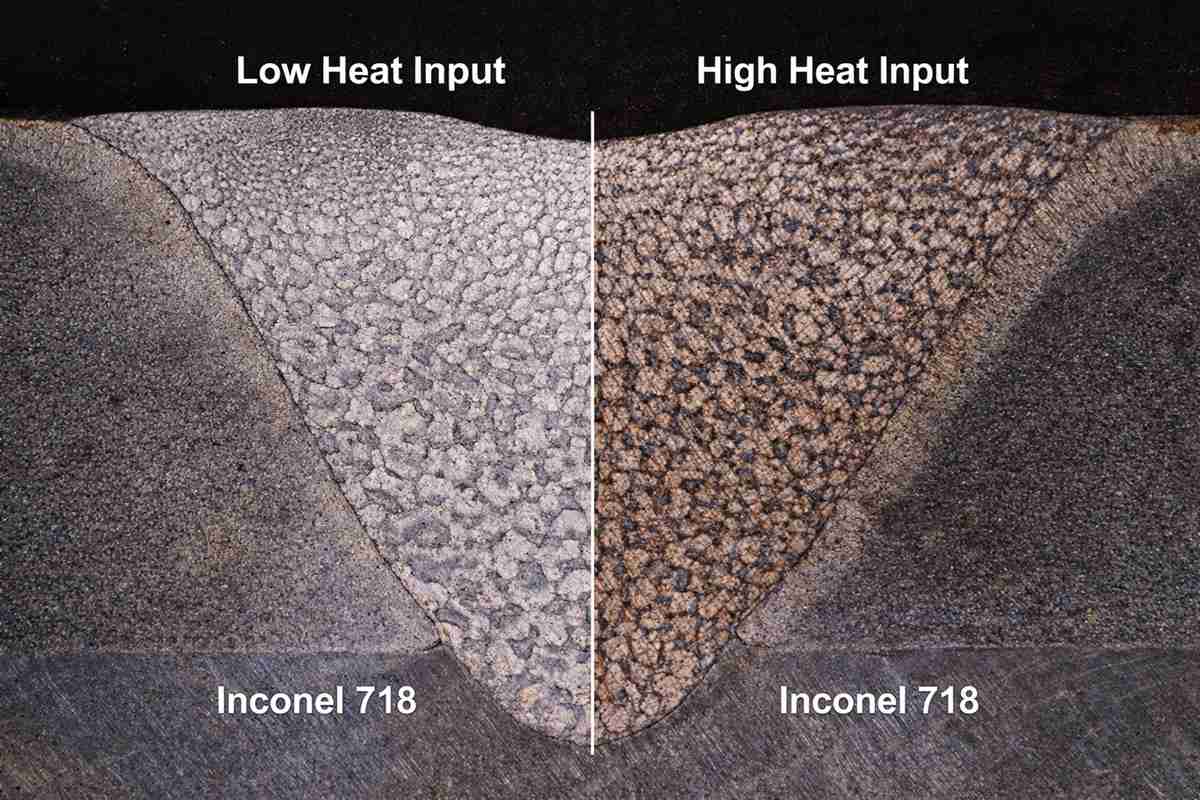
A well-made GTAW or GMAW weld in Alloy 625 usually retains strong corrosion performance. Still, poor heat input control, contamination, or unsuitable filler handling can create localized weaknesses. For acid service, weld quality is not a secondary issue; it is part of the corrosion design.
Typical Factors Affecting Inconel 625 Corrosion Resistance in Sulfuric Acid
The table below summarizes the main variables that engineers should evaluate before approving Alloy 625 for sulfuric acid duty.
| Factor | Effect on Alloy 625 Performance | Comentário de engenharia |
|---|---|---|
| Acid concentration | Can improve or worsen corrosion depending on range | Corrosion is often non-linear; never extrapolate from one concentration point |
| Temperatura | Usually increases corrosion rate | Small temperature rises can cause disproportionate metal loss |
| Oxidizing contaminants | May stabilize passivity in some cases | Helpful in some systems, but unreliable if process chemistry fluctuates |
| Reducing conditions | Can accelerate general corrosion | Important in spent acid, pickling, or regeneration-related streams |
| Chloride contamination | Increases localized corrosion risk | Pay attention to crevices, deposits, and flange details |
| Flow velocity | Can reduce deposits but may increase erosion-corrosion in solids-bearing streams | Evaluate turbulence, flashing, and entrained particles |
| Welding quality | Strongly affects local reliability | Use qualified procedures and proper post-fabrication cleaning |
| Intermittent operation | Can worsen corrosion during transitions | Start-up, shutdown, dilution, and wash cycles need separate review |
Where Alloy 625 Works Well—and Where It Needs Caution
In many plants, Inconel 625 corrosion resistance in sulfuric acid is good enough for auxiliary equipment, cladding, transition sections, heat exchanger parts, and components exposed to mixed chemical environments rather than pure hot sulfuric acid. It is particularly attractive when the component also needs high mechanical strength, oxidation resistance, and good weldability. That combination is why Alloy 625 remains popular even when another alloy may offer slightly better acid resistance in a narrow corrosion chart.
That said, caution is necessary in hot, moderately concentrated to concentrated sulfuric acid under reducing conditions. Those are exactly the services where generic material substitutions become expensive mistakes. If the plant is handling acid at elevated temperature, or if the stream composition varies during operation, requesting laboratory corrosion data, published isocorrosion references, or field exposure history is not optional. It is basic engineering hygiene.
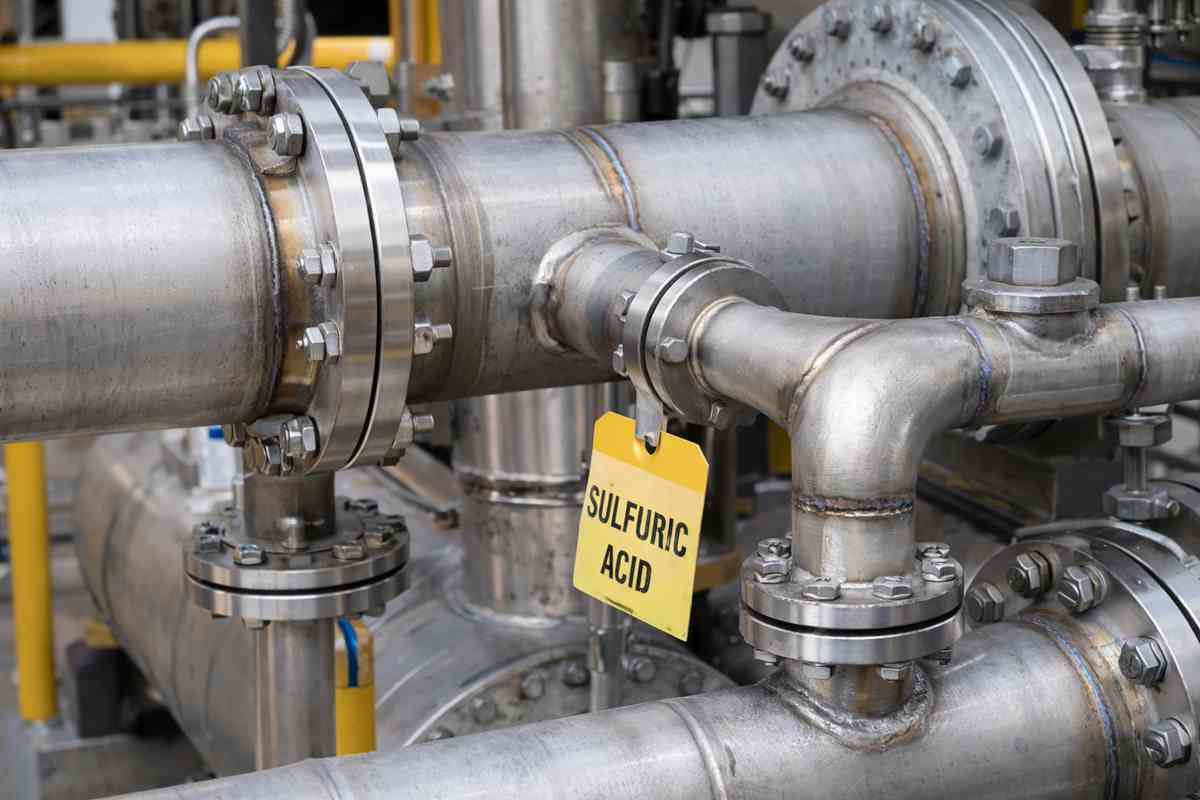
A good material review should also ask whether the part is seeing full immersion, splash zone exposure, condensation, or under-deposit attack. Many failures blamed on “bad alloy” are actually design-condition mismatches. The base alloy may be acceptable, but the flange geometry, gasket compression, or stagnant zone creates a crevice environment far more severe than the bulk acid.
Selection Advice for Engineers and Buyers
If you are evaluating Inconel 625 corrosion resistance in sulfuric acid for a project, the right approach is to narrow the service window before issuing a purchase specification. Ask for exact acid concentration, maximum and upset temperature, impurity profile, chloride level, flow condition, and operating cycle. Then compare those conditions with corrosion data, not with general alloy reputation.
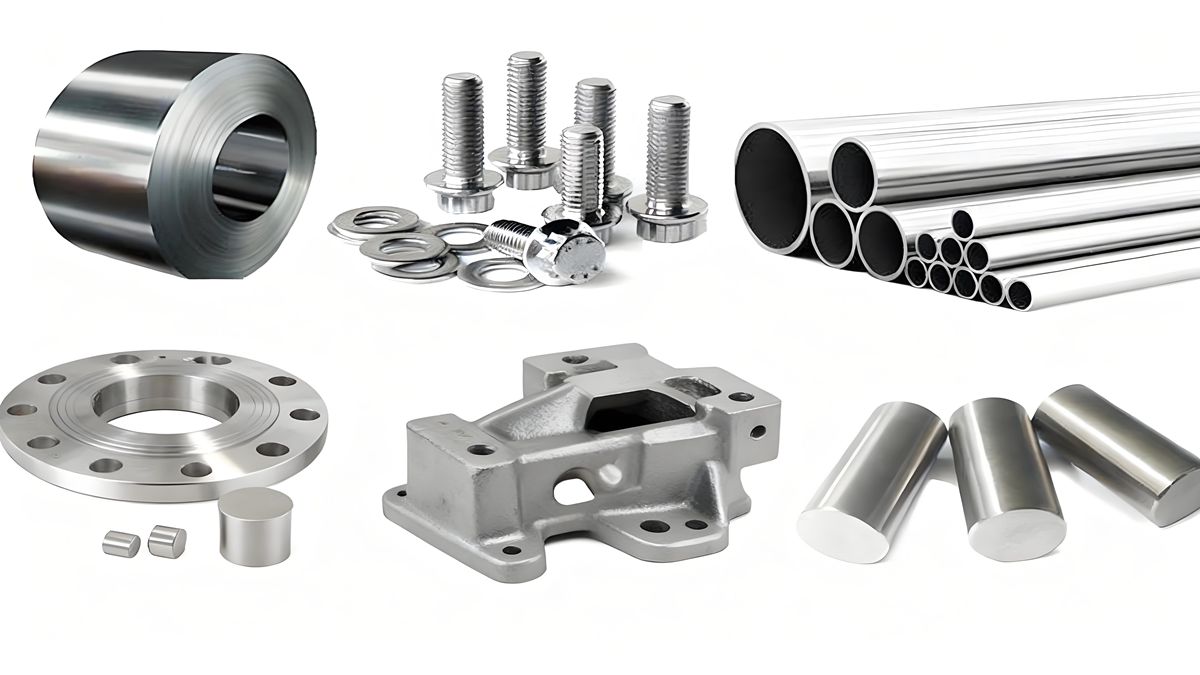
For buyers, one more point matters. Material name alone is not enough. Product form, heat treatment state, welding procedure, surface condition, and fabrication cleanliness all influence service performance. A technically sound supplier should be able to discuss not only UNS N06625 chemistry, but also weldability, pickling/cleaning practices, inspection routes, and application boundaries. That level of discussion is often what separates a quotation from real engineering support.
If your sulfuric acid duty is critical, the best next step is usually a condition-by-condition technical review rather than a quick alloy substitution. That is where experienced support becomes valuable.
Conclusão
So, how good is Inconel 625 corrosion resistance in sulfuric acid? The honest engineering answer is this: it can be very effective in selected sulfuric acid environments, but it is not universally resistant across all concentrations and temperatures. Alloy 625 offers an excellent balance of strength, weldability, and broad corrosion resistance, yet sulfuric acid service demands closer scrutiny than many other media. For serious equipment decisions, the alloy should be selected based on actual process chemistry, thermal profile, and fabrication details—not on a simplified material label.
If you are comparing Alloy 625 with other nickel alloys for sulfuric acid service, it is worth reviewing the full operating envelope before final selection. That is often the difference between long service life and premature replacement.
Perguntas e respostas relacionadas
1. Is Inconel 625 suitable for concentrated sulfuric acid?
It can be suitable in some concentrated sulfuric acid conditions, but not in all. Temperature, oxidizing potential, and impurities are decisive. Hot reducing acid environments often require more cautious alloy selection.
2. What is the biggest risk for Alloy 625 in sulfuric acid systems?
The biggest risk is assuming uniform corrosion data applies to the entire process. In reality, upset conditions, dilution cycles, contamination, and crevices often control failure.
3. How should buyers evaluate Alloy 625 for sulfuric acid equipment?
They should review acid concentration, operating and upset temperatures, contaminants, flow regime, weld details, and expected corrosion allowance before placing an order.