










В сфере высокоэффективных никелевых сплавов выбор между Hastelloy B2 (UNS N10665) и Hastelloy C276 (UNS N10276) может означать разницу между десятилетием эксплуатации и катастрофическим выходом оборудования из строя. Хотя оба материала относятся к семейству Hastelloy, их химический состав обусловливает совершенно разные реакции на коррозионные среды. В данном руководстве подробно рассмотрены технические нюансы, которые помогут инженерам принять обоснованное решение.
Сравнение B2 и C276
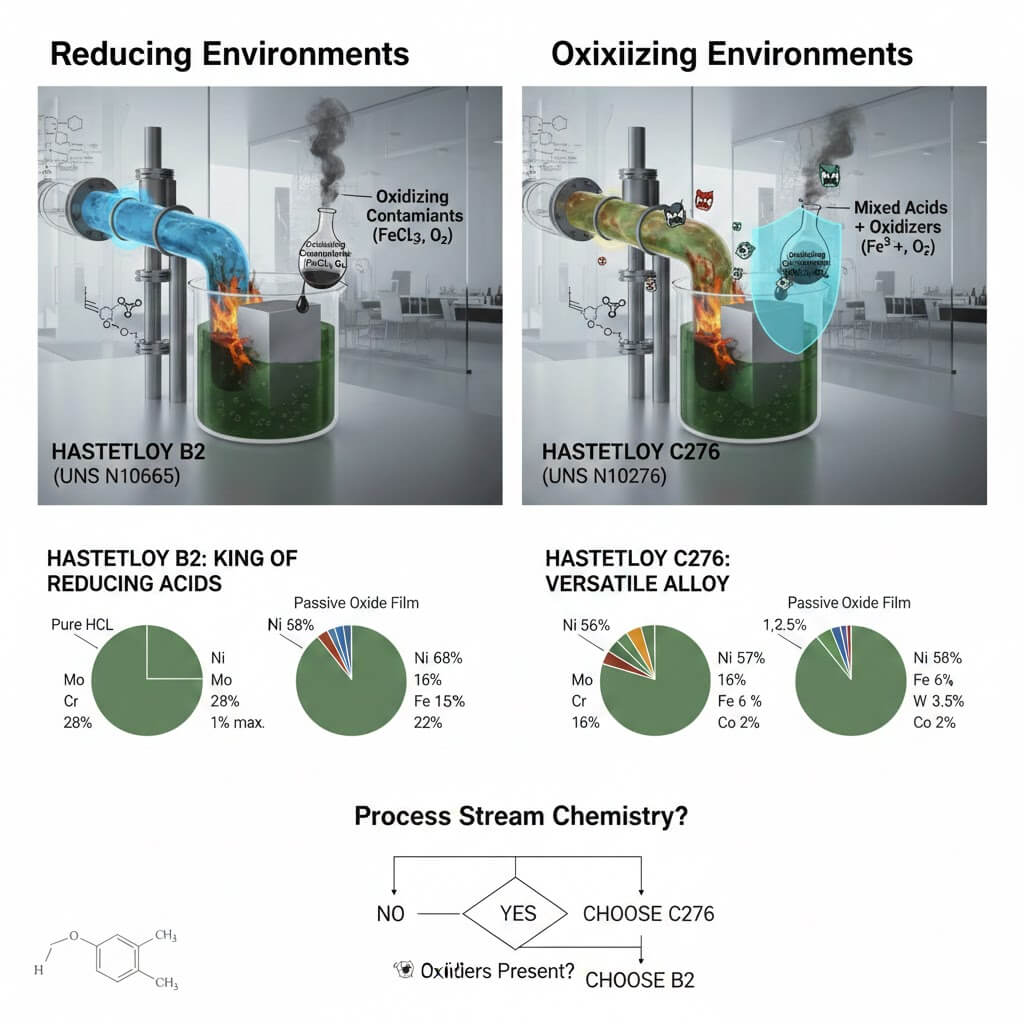
Фундаментальное различие между этими двумя сплавами заключается в их Хром (Cr) содержание. Хастеллой B2 - это, по сути, никель-молибденовый сплав почти без хрома, тогда как C276 - никель-молибденово-хромовый сплав с добавлением вольфрама.
| Элемент | Хастеллой B2 (типичный %) | Хастеллой C276 (типичный %) |
| Никель (Ni) | Баланс (ок. 68%) | Баланс (ок. 57%) |
| Молибден (Mo) | 26.0 - 30.0 | 15.0 - 17.0 |
| Хром (Cr) | 1.0 макс. | 14.5 - 16.5 |
| Железо (Fe) | 2.0 макс. | 4.0 - 7.0 |
| Вольфрам (W) | – | 3.0 - 4.5 |
| Кобальт (Co) | 1.0 макс. | 2,5 макс. |
Хастеллой B2 разработан для экстремальной устойчивости к соляной кислоте. Высокое содержание молибдена обеспечивает структурную целостность в высокотемпературных восстановительных средах. Однако отсутствие хрома делает его уязвимым даже для следовых количеств окисляющих загрязнений.
Хастеллой C276 широко считается “универсальным” сплавом. Содержание хрома в 16% создает пассивную оксидную пленку, защищающую металл от воздействия окисляющих солей и газов, а молибден и вольфрам обеспечивают исключительную стойкость к точечной и щелевой коррозии в средах, богатых хлоридами.
Хастеллой B2 в сравнении с C276 в восстановительных и окислительных средах
При сравнении B2 и C276 очень важно понимать химический состав технологического потока.
-
Уменьшение окружающей среды: Хастеллой B2 является здесь бесспорным королем, особенно во всех концентрациях Соляная кислота (HCl) при температурах до точки кипения. Он также исключительно хорошо работает в чистой серной и фосфорной кислоте в восстановительных условиях. Поскольку в нем отсутствует хром, он не образует окислительного защитного слоя, что позволяет молибдену работать непосредственно против восстанавливающих ионов кислоты.
-
Окислительные среды: Именно здесь Hastelloy B2 не справляется со своей задачей, а C276 сияет. Если ваша система содержит Ионы железа, ионы меди или растворенный кислород, B2 подвергается быстрой, катастрофической коррозии. Хастеллой C276, благодаря содержанию хрома, может работать со “смешанными” кислотами - потоками, которые являются преимущественно восстановительными, но содержат окислительные примеси. Это оптимальный материал для сероочистки дымовых газов (FGD) и сложной химической обработки, где условия окружающей среды могут меняться.
B2 против C276, как выбрать
Выбор правильного сорта требует глубокого изучения специфических загрязнений вашей среды. Следуйте этим трем инженерным правилам:
-
Проверьте наличие окислителей: Если есть вероятность попадания кислорода, хлорного газа или окисляющих солей (таких как ) присутствуют, выберите C276. B2 - строго для чистых восстановительных кислот.
-
Определите концентрацию HCl: Для высококонцентрированной и высокотемпературной чистой HCl, где C276 может показать умеренную скорость коррозии, B2 является лучшим техническим выбором.
-
Коррозионное растрескивание под напряжением (SCC) и питтинг: Если в процессе эксплуатации возникают застойные “мертвые зоны”, в которых могут концентрироваться хлориды, молибден и вольфрам в составе C276 обеспечивают лучшую защиту от локального питтинга, чем B2.
Связанные вопросы и ответы
Q1: Можно ли использовать Hastelloy B2 в азотной кислоте?
Нет. Азотная кислота является сильным окислителем. Хастеллой B2 не содержит хрома, необходимого для образования защитной пассивной пленки, и будет корродировать почти мгновенно. Хастеллой C276 или даже C22 был бы гораздо более подходящим.
Вопрос 2: Почему хастеллой B3 часто упоминается наряду с B2?
Хастеллой B3 является современным преемником B2. Он обладает той же коррозионной стойкостью, но улучшенной термической стабильностью, что делает его более простым в изготовлении и менее склонным к охрупчиванию при сварке или термообработке.
Вопрос 3: Какой сплав лучше подходит для работы в среде “кислого газа” (H2S)?
Хастеллой C276 является промышленным стандартом для использования в нефтегазовом секторе. Его стойкость к сульфидному растрескиванию под напряжением (SSC) и питтингу в присутствии хлоридов и делает его лучше B2 для этих сложных, часто слегка окисляющихся сред.