










Когда инженеры обсуждают Hastelloy B-2 против Monel K-500 для труб теплообменников, Неправильное сравнение часто начинается с общей таблицы коррозии. Это ошибка. При эксплуатации теплообменников трубки выходят из строя не на бумаге; они выходят из строя на пересечении химического состава, скорости потока, способа изготовления и остаточного напряжения. Трубка, которая выглядит превосходно в статическом погружении, может стать плохим выбором, когда в дело вступают окислительные загрязнения, сварка между трубками или эрозия, вызванная скоростью потока. Поэтому вопрос не в том, какой сплав “лучше” в абстрактном смысле. Реальный вопрос заключается в том, какой сплав более стабилен в вашем конкретном технологическом окне.
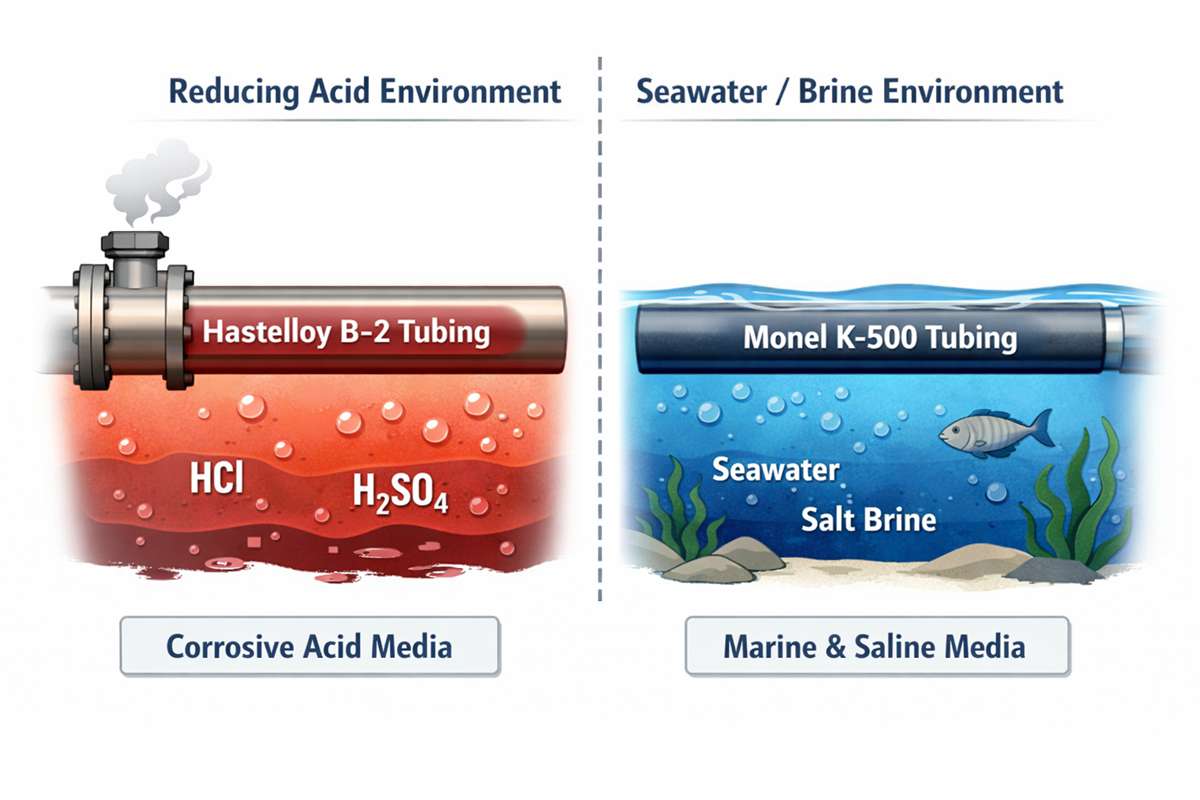
Hastelloy B-2 и Monel K-500 относятся к совершенно разным металлургическим группам. Hastelloy B-2 — это никель-молибденовый сплав, разработанный для сильно восстановительных сред, в особенности для кислотных систем, где важна стойкость к воздействию соляной кислоты. Monel K-500, напротив, представляет собой никель-медный сплав, упрочненный осаждением, который ценится за высокую прочность, стойкость к воздействию морской воды, а также хорошую устойчивость к эрозии и кавитации. На чертеже теплообменника оба материала могут быть обозначены как никелевые сплавы премиум-класса. Однако в эксплуатации они решают разные задачи.
Hastelloy B-2 против Monel K-500 для трубок теплообменников: начните с режима отказа
Первым фильтром является химический состав процесса. Если со стороны трубы или оболочки присутствуют сильные восстановительные кислоты, особенно соляно-кислотные потоки с низким содержанием окислителей, то хастеллой B-2 сразу же выходит на первый план. Его никель-молибденовая матрица особенно известна своей стойкостью в восстановительных средах, где многие нержавеющие стали и даже некоторые другие никелевые сплавы очень быстро теряют маржу. Именно здесь B-2 заслужил свою репутацию.
Но у этой прочности есть предел. Хастеллой В-2 не является универсальным коррозионным сплавом. Он заметно менее пригоден там, где присутствуют окислители или где загрязнения железом и меди могут изменить потенциал коррозии. В заводских условиях это имеет большее значение, чем указано во многих технических описаниях. Номинально восстановительный поток может смешиваться, расстраиваться или периодически загрязняться во время очистки, запуска или перехода на новый процесс. Как только это произойдет, логика выбора быстро изменится.
Монель К-500 создан по другой философии. Ее выбирают не потому, что она превосходит B-2 в горячих восстановительных кислотах; обычно это не так. Его выбирают, когда трубки теплообменника должны нести значительную механическую нагрузку, выдерживая при этом воздействие морской воды, хлоридных рассолов, высокоскоростных сред или условий импинджмента, когда более мягкий сплав может потерять стенки в результате эрозии. Структура, упрочненная осаждением, придает ему гораздо более высокую прочность, чем не упрочненным сортам Monel, что может быть ценным при использовании в компактных теплообменниках, вибрирующих пучках или в системах со значительными перепадами давления.
Так что в Hastelloy B-2 против Monel K-500 для труб теплообменников, Первую половину ответа решает химия, а вторую - механика.
| Фактор выбора | Хастеллой B-2 | Монель К-500 | Инженерное значение для труб |
|---|---|---|---|
| Металлургический тип | Коррозионный сплав Ni-Mo | Упрочненный сплав Ni-Cu | Они предназначены для различных приоритетов в обслуживании |
| Самое известное преимущество | Сильная устойчивость к восстановительным кислотам | Высокая прочность и устойчивость к морской воде/рассолу | Сравните химический состав процесса, прежде чем сравнивать цену |
| Слабая сторона | Чувствительность к окислительным средам | Не рекомендуется использовать в качестве сильной восстановительной кислоты | Неправильное предположение о жидкости приводит к раннему отказу |
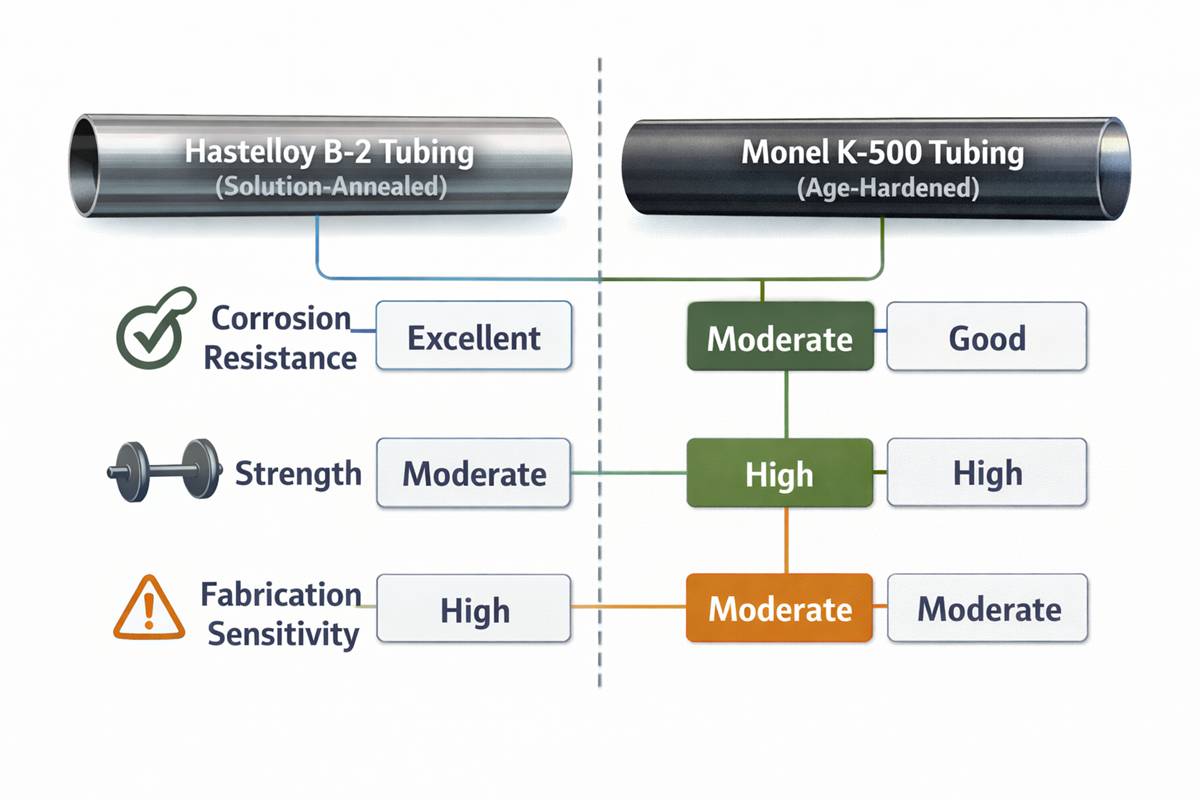
| Уровень прочности | Умеренный | Высокий | K-500 может обеспечить лучшую устойчивость к вибрации или деформации под действием давления |
| Морская вода / морские среды | Зависимость от сервиса - не главная причина для выбора. | Очень сильный кандидат | K-500 часто более логичен при охлаждении морских судов. |
| Соляно-кислотный сервис | Основная сильная сторона при контроле окислительного загрязнения | В целом плохой выбор | B-2 является более надежным вариантом для уменьшения кислотообменников |
| Умение работать на производстве | Контроль коррозии во время сварки и очистки имеет решающее значение | Условия термической обработки и стратегия сварки имеют значение | Практика в магазине может быть не менее важна, чем химия сплава |
| Типичный риск выбора | Предполагая, что все условия для подъема остаются понижающими | Выбирая силу, недооценивайте тяжесть кислоты | Неудачи обычно происходят из-за неправильного составления схемы обслуживания, а не из-за качества сырого сплава |
При сравнении Hastelloy B-2 и Monel K-500 для труб теплообменников изготовление не является побочным вопросом
Инженеры иногда сводят выбор сплава к коррозионной стойкости и прочности на разрыв. Для труб это неполно. Маршрут изготовления - основная составляющая эксплуатационных характеристик.
Хастеллой B-2 требует дисциплинированного контроля в цехе. Загрязнение поверхности, неправильное термическое воздействие или небрежная очистка после изготовления могут поставить под угрозу коррозионную стойкость, о которой вы думали. В теплообменных пучках, где задействованы тонкостенные трубки, расширение, сварка и местный нагрев, качество изготовления неотделимо от характеристик сплава. B-2 часто является правильным решением при работе в условиях пониженной кислотности, но только в том случае, если последовательность изготовления соответствует требованиям сплава.
Монель K-500 вызывает другой набор вопросов. Поскольку его высокая прочность достигается за счет возрастной закалки, инженер должен подумать о состоянии поставки, способе соединения и о том, не нарушит ли маршрут изготовления окончательный баланс свойств. При изготовлении прямых труб это может сделать K-500 менее простым, чем ожидается. Это отличный сплав, когда одновременно важны прочность, стойкость к морской воде и эрозионные свойства. Тем не менее, если конструкция теплообменника в значительной степени зависит от сварки или сложных операций после изготовления, практический маршрут производства должен быть рассмотрен на ранней стадии, а не после закупки.
Именно поэтому Hastelloy B-2 против Monel K-500 для труб теплообменников не может быть сведена к простому рейтингу коррозии. Маршрут трубопрокатного стана, конечный отпуск или состояние термообработки, метод соединения и даже химия очистки, используемая при вводе в эксплуатацию, - все это влияет на реальный результат.
Другим важным отличием является надежность эксплуатации при смешанных переменных. Если в теплообменнике постоянно используется восстановительная кислота и химический состав жестко контролируется, то Hastelloy B-2 обычно является более технически оправданным выбором. Если теплообменник работает с морской водой, рассолом или богатыми хлоридами коммунальными средами с высокой скоростью и значительными механическими нагрузками, выбор Monel K-500 становится гораздо более привлекательным. Если в теплообменнике используются кислые среды или среды, требующие применения высокопрочных никель-медных сплавов, то K-500 заслуживает дополнительного рассмотрения на предмет риска растрескивания, а не быстрого одобрения.
Какой сплав выбрать покупателям и инженерам?
Для покупателей, сравнивающих Hastelloy B-2 против Monel K-500 для труб теплообменников, Решающим вопросом является не стоимость одного килограмма. Это стоимость одного года стабильной работы. Более дешевый выбор, который требует повторной установки трубок после смещения химического состава, эрозии или повреждения, связанного с изготовлением, редко бывает экономичным.
Выбирайте Hastelloy B-2, если в теплообменнике преобладает коррозия, вызванная восстановительными кислотами, а окислительные загрязнения можно жестко контролировать. Выбирайте Monel K-500, если трубки должны выдерживать эксплуатацию в морской воде или рассоле, выдерживая при этом повышенные механические нагрузки, сопротивляясь эрозии и сохраняя стабильность размеров. Если технологический процесс включает в себя как сильную коррозию, так и высокие механические нагрузки, перестаньте искать короткие пути; необходимо провести более глубокий анализ химических свойств, производственных ограничений и истории отказов.
В компании 28Nickel наиболее полезные технические обсуждения обычно начинаются с четырех данных: полного состава процесса, нормальной и аварийной температуры, режима течения и метода соединения. Без этих данных любая рекомендация по сплаву является лишь половинчатой. Если ваша команда находится между двумя никелевыми сплавами и граница не очевидна, это именно тот момент, когда нужно попросить провести анализ материала для конкретной трубы перед размещением заказа.
Связанные вопросы и ответы
1. Является ли Monel K-500 лучше, чем Hastelloy B-2 для трубок теплообменника морской воды?
Во многих областях применения морской воды и рассола - да. Монель K-500 обычно имеет больше смысла, когда в работе важны устойчивость к морской воде, высокая скорость потока, эрозионная стойкость и механическая прочность. Хастеллой B-2 обычно выбирается для снижения кислотостойкости, а не в качестве сплава первого выбора для морских труб.
2. Почему хастеллой B-2 предпочтительнее использовать в соляно-кислотных теплообменниках?
Хастеллой B-2 был разработан для работы в сильно восстановительных средах и имеет никель-молибденовый химический состав, который очень хорошо работает в соляно-кислотных системах, когда окисляющие загрязнения находятся под контролем. Это ключевое условие; если среда становится окислительной, преимущество может быстро сократиться.
3. В чем заключается самая большая ошибка при выборе трубок для теплообменника между Hastelloy B-2 и Monel K-500?
Самая большая ошибка - сравнивать только номинальную коррозионную стойкость и игнорировать условия изготовления и эксплуатации. В реальных проектах разрушение сплава часто происходит из-за смешанного химического состава, последствий сварки, загрязнений при очистке или повреждений, связанных со скоростью, а не только из-за данных, указанных в техническом паспорте сплава.