В таких сложных сферах, как судостроение и химическая обработка, отказ материала - не вариант. Инженеры часто сталкиваются с дилеммой выбора между двумя титанами мира цветных металлов: Монель 400 (UNS N04400) и Медь-Никель 70/30 (C71500). Несмотря на то, что в обоих случаях для борьбы с коррозией используется синергия меди и никеля, их различные составы создают совершенно разные характеристики.
В этом руководстве приводится техническая схема решения проблемы Монель 400 против медно-никелевого сплава 70/30 дебатов, помогая вам оптимизировать стоимость, долговечность и механическую целостность.
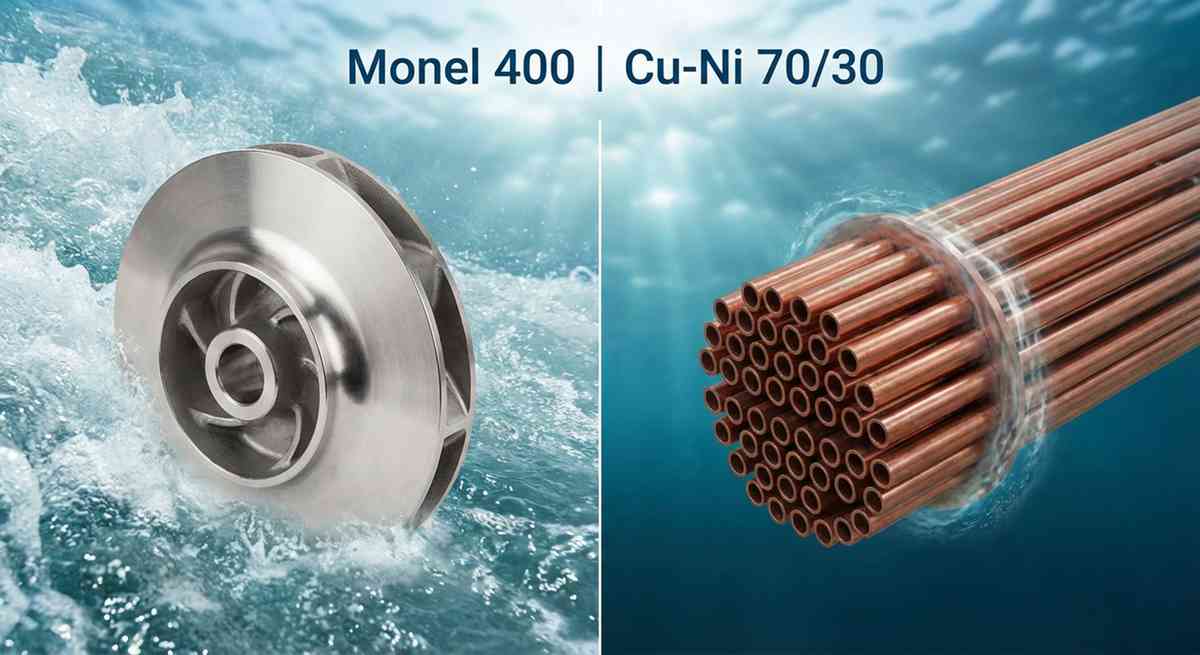
Сравнение Monel 400 и Cu-Ni 70/30
Принципиальное различие заключается в “базовом” металле. Монель 400 сплав на основе никеля (около 63-70% никеля, 30% меди), в то время как Медь-Никель 70/30 на основе меди (медь 70%, никель 30%). Такая инверсия соотношений диктует пределы их механических возможностей.
Механическая прочность и долговечность
Monel 400 - несомненный победитель по прочности. Будучи бинарным сплавом на основе твердого раствора, он может похвастаться пределом прочности при растяжении в диапазоне 70-120 кси (480-830 МПа), что почти вдвое выше, чем у Cu-Ni 70/30, который обычно составляет 50-60 кси. Если в вашем производстве используются штоки клапанов высокого давления или валы насосов, подверженные крутящему моменту, Monel 400 обеспечит необходимый предел текучести, который не может обеспечить Cu-Ni.
Тепловые свойства
Однако сила - это еще не все. Cu-Ni 70/30 сохраняет превосходную теплопроводность (около 29 Вт/м-К), что делает его лучшим выбором для теплообмена, например, для конденсаторных трубок и кожухотрубных теплообменников. Monel 400, несмотря на термическую стабильность, обладает меньшей теплопроводностью и часто используется для изготовления конструктивных элементов, а не поверхностей теплообмена.
| Характеристика | Монель 400 (UNS N04400) | Медь-никель 70/30 (C71500) |
| Основной металл | Никель (~67%) | Медь (~70%) |
| Прочность на разрыв | Высокая (80 000 фунтов на кв. дюйм в среднем) | Умеренный (55 000 фунтов на кв. дюйм в среднем) |
| Твердость | Высокий (Роквелл B 60-80) | Умеренная (Rockwell B 40-50) |
| Стоимость | Высокий (сплав премиум-класса) | Умеренный (экономически эффективный) |
Monel 400 против Cu-Ni 70/30, как выбрать
Выбор между этими двумя сплавами часто сводится к балансированию бюджетные ограничения против интенсивность окружающей среды.
1. Анализ затрат и выгод
Monel 400 значительно дороже, чем Cu-Ni 70/30, из-за высокой рыночной цены на никель. Для крупных трубопроводных сетей протяженностью в километры, Cu-Ni 70/30 является стандартным экономичным выбором. Он обеспечивает “достаточно хороший” срок службы для общих трубопроводов морской воды без непомерно высокой стоимости Monel. Используйте Monel 400 выборочно для критических точек отказа - клапанов, приборов и крепежа, где замена затруднена.
2.Производство и изготовление
Если ваш проект требует обширной сварки и формовки, Cu-Ni 70/30 как правило, более щадящий и простой в изготовлении. Монель 400 допускает сварку, но требует строгой чистоты, чтобы избежать охрупчивания, и специальных присадочных металлов (например, Монель 60), чтобы соответствовать его прочности.
Матрица принятия решений:
- Выбирайте Monel 400, если: Вам нужна высокая прочность, устойчивость к высокоскоростной эрозии или воздействию агрессивных химических веществ, таких как плавиковая кислота.
- Выбирайте Cu-Ni 70/30, если: Вы проектируете теплообменники, вам нужна естественная устойчивость к биообрастанию или требуется экономичное решение для статических линий морской воды.
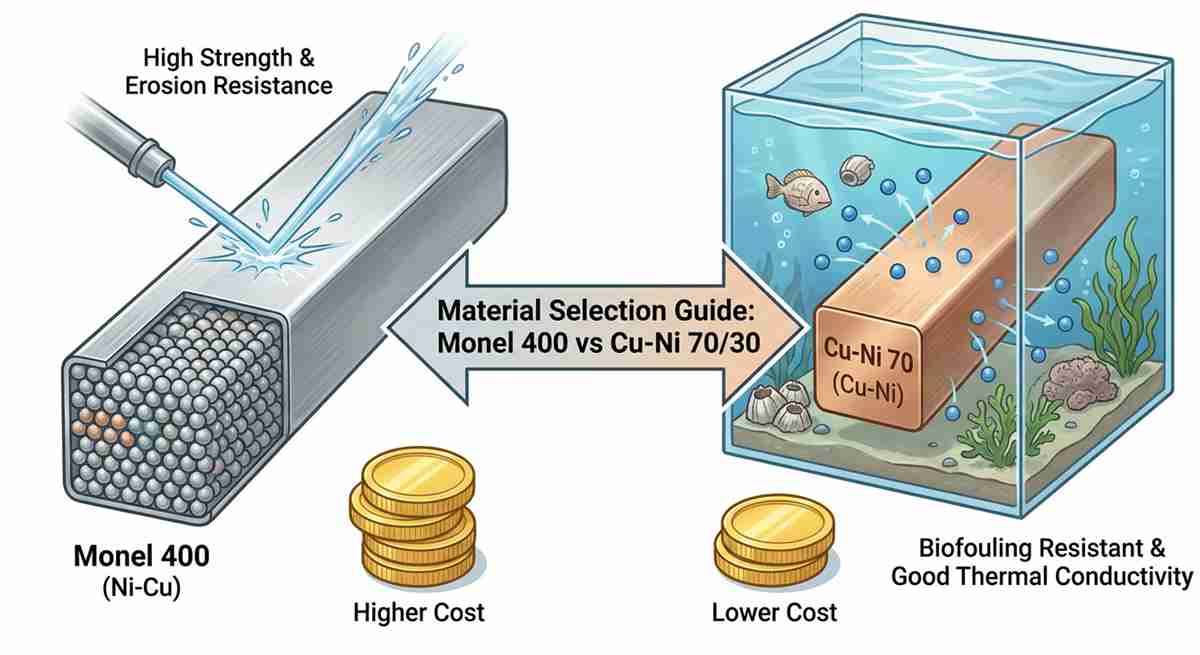
Monel 400 в сравнении с Cu-Ni для коррозии в морской воде
Это важнейшее поле битвы. Несмотря на то, что оба продукта относятся к “морскому классу”, они по-разному взаимодействуют с морской водой.
Скорость и эрозия
Монель 400 это король высокоскоростных сред. Он процветает в быстро текущей морской воде (в некоторых случаях до 45 м/с), не подвергаясь эрозии и коррозии. Это делает его идеальным для рабочие колеса насосов, Гребные винты и носовые подруливающие устройства.
И наоборот, Cu-Ni 70/30 имеет ограничение по турбулентности. Хотя он лучше справляется с потоком, чем более дешевый сорт 90/10, он все равно может пострадать от набегающего потока, если скорость воды превышает 3-4 м/с.
Устойчивость к биообрастанию
Вот, Медь-Никель 70/30 обладает уникальным преимуществом. Высокое содержание меди высвобождает свободные ионы меди в пограничный слой воды, что естественным образом препятствует росту балянусов и водорослей (биообрастание).
Монель 400, Монель, в составе которого преобладает никель, не обладает этим противообрастающим свойством. Морские организмы будут расти на поверхностях Monel. Несмотря на то, что поверхность Monel под ними не корродирует, скопления могут вызвать закупорку потока или щелевую коррозию, если их не очистить.
Состояние застойной воды
В застойной или медленно движущейся воде Monel 400 может быть восприимчив к точечная коррозия, особенно если биообрастание создает щели. Cu-Ni 70/30, как правило, более устойчив к точечной коррозии в спокойных водах, что делает его более безопасным для систем с прерывистым потоком.
Часто задаваемые вопросы (FAQ)
1. Может ли Monel 400 заменить Cu-Ni 70/30 в теплообменниках?
В то время как Монель 400 можно физически заменяет Cu-Ni, но часто не рекомендуется. Монель имеет более низкую теплопроводность, что снижает эффективность теплопередачи, а его значительно более высокая стоимость делает его нерентабельным для труб, если только не присутствует экстремальное давление или химические загрязнения (например, HF-кислота).
2.Какой сплав лучше использовать для гребных валов?
Монель 400 (или ее упрочненная версия, Монель К-500) намного лучше подходит для валов. Высокие крутящие нагрузки на гребной вал требуют высокой прочности на разрыв от Монеля. Cu-Ni 70/30 слишком мягкая для таких высоконагруженных структурных применений, как валы.
3. Ржавеет ли Monel 400 в соленой воде?
Монель 400 практически не подвержен общему “ржавлению” (образованию оксида железа) и хлоридному стресс-коррозионному растрескиванию в морской воде. Однако со временем он может потускнеть или позеленеть (патина). В застойной воде он может подвергаться локальному точечному разрушению, поэтому его лучше использовать в проточных системах.