











Choosing an inconel alloy manufacturer is less about chasing the lowest unit price and more about controlling melting practice, cleanliness, and heat treatment—the factors that decide whether a component survives at 650°C (1200°F) or fails early. Nickel‑based superalloys live in a narrow processing window: segregation, the wrong solution/age cycle, or poor surface conditioning can quietly erase corrosion resistance and creep strength. The checkpoints below are written for buyers and engineers who want repeatable performance, traceable paperwork, and fewer surprises after incoming inspection.
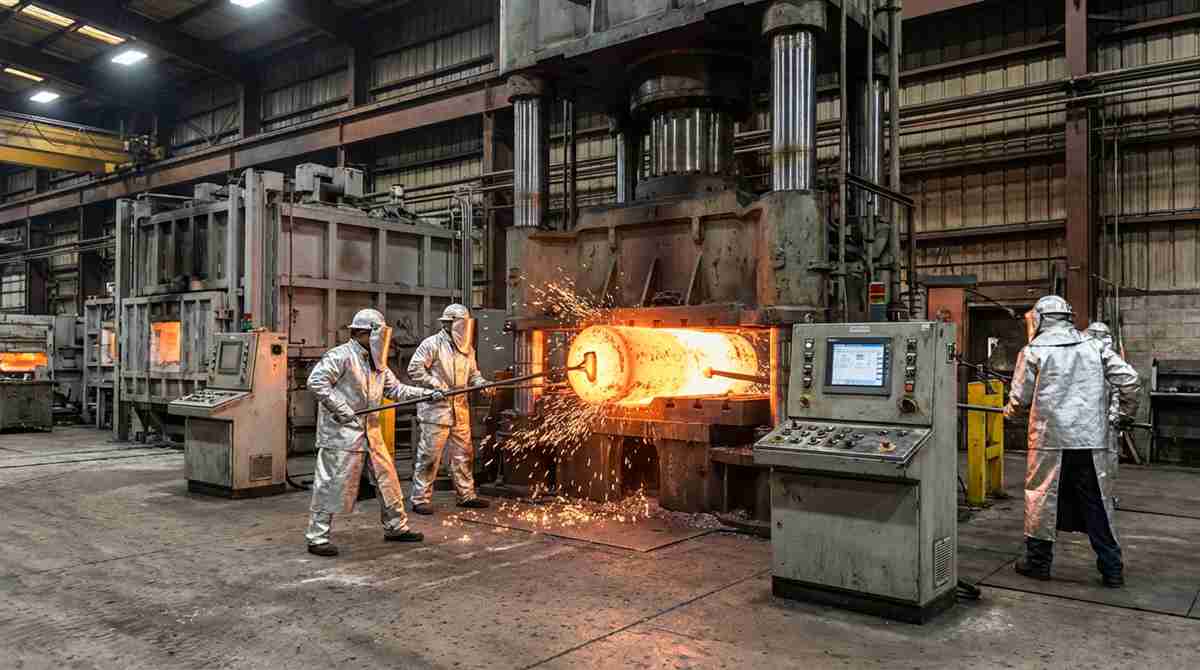
What a credible inconel alloy manufacturer really controls
A data sheet tells you nominal chemistry. A serious inconel alloy manufacturer controls what happens between the melt and your final, certified condition:
-
Melting route and cleanliness. Vacuum induction melting (VIM) reduces dissolved gases and helps limit non‑metallic inclusions. Secondary remelting (VAR or ESR) improves cleanliness and chemistry uniformity—often critical for fatigue, pressure equipment, or thick sections.
-
Hot‑working discipline. Rolling/forging reductions, reheating practice, and finishing temperatures drive grain size, texture, and phase distribution.
-
Heat treatment execution. Furnaces must hold uniformity, record charts, and follow grade‑specific solution/anneal/age cycles.
-
Surface integrity. Pickling, grinding, and blasting can remove defects, but rushed processing can introduce laps, pits, or embedded media.
If your service involves chloride corrosion, cyclic thermal loads, tight fatigue margins, or weld‑critical joints, these controls matter more than small differences between quotes.
How an inconel alloy manufacturer makes “the same grade” behave differently
Two heats can meet the same ASTM/ASME chemistry limits and still behave differently in service. When end users see scatter in fatigue life, unexpected hardness, or inconsistent weldability, process variation is usually hiding behind a compliant MTR.
Melting and remelting: VIM, VAR, ESR
Many high‑integrity orders prefer an inconel alloy manufacturer that can offer VIM + VAR (or VIM + ESR). The goal is not marketing; it’s cleaner metal with reduced segregation bands and fewer inclusion clusters. That typically translates into more stable mechanical properties across thick plate or large forgings, and less rework during machining or inspection.
Hot working and grain control
Inconel 718 is a classic example: forging temperature windows influence delta phase precipitation and grain growth, which affects notch sensitivity and creep behavior. A disciplined inconel alloy manufacturer documents reductions, reheats, and finish temperatures—not just the final dimensions.
Heat treatment: “annealed” is not one condition
Words like “annealed” or “solution treated” can hide meaningful differences in hardness and microstructure. Ask for the exact cycle, cooling method, and target property window. For age‑hardenable grades (718, X‑750, 725), the age schedule is the product.
Capability checklist for an inconel alloy manufacturer
When you screen suppliers, move from “Do you have ISO?” to “Can you execute my risk profile?” A practical checklist:
-
Product coverage: plate/sheet/strip, bar, wire, pipe/tube, forgings/rings, fittings, flanges, fasteners.
-
Size limits and tolerances: max thickness, max OD, straightness, ovality, surface finish targets.
-
Cut‑to‑size options: saw cutting, waterjet; if thermal cutting is used, confirm the plan to control heat‑affected zones and remove recast layers.
-
NDT scope: UT, ET, RT, PT/MT where applicable; written procedures and acceptance criteria.
-
Traceability: heat‑number mapping, segregation of mixed lots, positive material identification (PMI) on incoming and outgoing.
-
Documentation: EN 10204 3.1/3.2 options, heat treatment charts, NDT reports, dimensional reports.
-
Export packaging: end caps for tube/pipe, moisture barriers, clear, durable marking.
A capable inconel alloy manufacturer answers these quickly because EPC contractors and QA departments ask the same questions every day.
Common grades and what to ask your inconel alloy manufacturer
Note: “Inconel®” is a trademark of Special Metals. In industry it’s often used as a generic label for specific nickel‑based alloys; always specify the exact grade/UNS.
| Inconel grade (UNS) | Why it’s chosen | Typical forms | Typical service range (rule‑of‑thumb) | Buyer checkpoints |
|---|---|---|---|---|
| 600 (N06600) | Solid general corrosion + high‑temp strength | tube, pipe, plate, bar | up to ~1100°C in some oxidizing service | grain size consistency, tube surface quality |
| 601 (N06601) | Strong oxidation resistance (Al improves scale) | plate, tube, bar | up to ~1200°C for oxidation‑limited parts | confirm Al range, oxidation service intent |
| 625 (N06625) | Excellent pitting/crevice + chloride resistance; strong at temp | plate, bar, pipe/tube, fittings | often used to ~980°C (design‑dependent) | Mo/Nb control, NDT on thick sections, condition clarity |
| 718 (N07718) | High strength via precipitation hardening; good fatigue | bar, forging, fasteners | typically to ~650°C for strength‑critical duty | melting route (VIM/VAR), exact solution+age cycle |
| X‑750 (N07750) | Spring/fastener strength at elevated temp | bar, wire, spring wire | ~700°C range (application‑dependent) | age condition, hardness window, temper control |
| 725 (N07725) | High strength + corrosion resistance for harsh O&G | bar, forgings | depends on condition and sour rules | strength class, SSC/NACE considerations, test frequency |
Those temperature notes are conversation starters, not final design limits; your code, stress level, and environment control the real number.
Quality evidence that separates a real inconel alloy manufacturer from a broker
Distribution can be valuable, but you should know who is accountable for process control. Ask for evidence that connects the finished product to a controlled melt and processing route:
-
Mill Test Report (MTR) completeness. Full chemistry, mechanicals, heat treatment condition, and product standard (e.g., ASTM B443/B446/B444, ASTM B564, ASTM B637 where applicable).
-
PMI records. Handheld XRF is common; for critical parts, consider OES PMI for better light‑element sensitivity.
-
Heat treatment charts. Time/temperature records and furnace uniformity evidence (many plants follow AMS 2750‑style practices even outside aerospace).
-
NDT reporting. UT maps for thick plate, ET for tubing, PT for machined surfaces, plus written procedures.
-
Dimensional and surface inspection. Especially for thin‑wall tube, tight‑tolerance bar, and forged rings.
If the supplier cannot produce these quickly, you may be buying repackaged inventory with partial traceability—fine for some jobs, risky for others.
Lead time, MOQ, and supply risk: what buyers don’t see
Inconel supply is constrained by melt schedules and downstream capacity. Planning improves when you understand the bottlenecks:
-
Remelt slots are often the choke point for high‑integrity orders; an inconel alloy manufacturer may quote long lead times simply because VAR capacity is booked.
-
Forging and heat treatment capacity can dominate the timeline for rings, flanges, and large bars.
-
Small orders feel expensive because inspection, paperwork, and cutting effort do not scale down.
-
Mixed‑lot risk is real. “Equivalent to 625” without a clear standard and condition can mean inconsistent hardness and weldability across deliveries.
Where 28Nickel fits in an inconel alloy manufacturer supply chain
28Nickel works with qualified mills and processors and focuses on the part buyers struggle with most: consistent documentation, lot segregation, and cut‑to‑size delivery without losing traceability. In practice, you get the responsiveness of a specialist supplier while still receiving the technical evidence you expect from an inconel alloy manufacturer network—especially useful when one project needs multiple forms (plate + bar + tube) on a tight schedule.
A purchase order template your inconel alloy manufacturer can execute
When the PO is vague, you pay for it later in claims, delays, or re‑inspection. Include:
-
Grade/UNS, product form, and standard (ASTM/ASME)
-
Quantity, size, tolerances, straightness/ovality, surface finish
-
Condition (annealed/solution treated/aged) and the exact heat treatment cycle if required
-
NDT requirements and acceptance criteria
-
Documentation package (MTR, EN 10204 3.1/3.2, NDT reports, heat charts)
-
Marking, packaging, and third‑party inspection hold points
A well‑written PO turns a vendor into a controlled supplier.
Related Q&A
Q1: Is Inconel 625 always “better” than 718?
A: Not automatically. 625 is a go‑to for corrosion resistance and weldability; 718 is chosen for high strength (when correctly aged) up to roughly 650°C. Match the grade to the failure mode you’re preventing.
Q2: What documents should an inconel alloy manufacturer provide for pressure equipment?
A: At minimum, an MTR with full chemistry/mechanical results and the delivered heat treatment condition. Many projects also require NDT reports, PMI records, and EN 10204 3.1 or 3.2 certification.
Q3: How can I reduce the risk of counterfeit or mixed material?
A: Require heat‑number traceability, perform incoming PMI, and buy from sources that can show the full chain of custody from melt to finished product.