









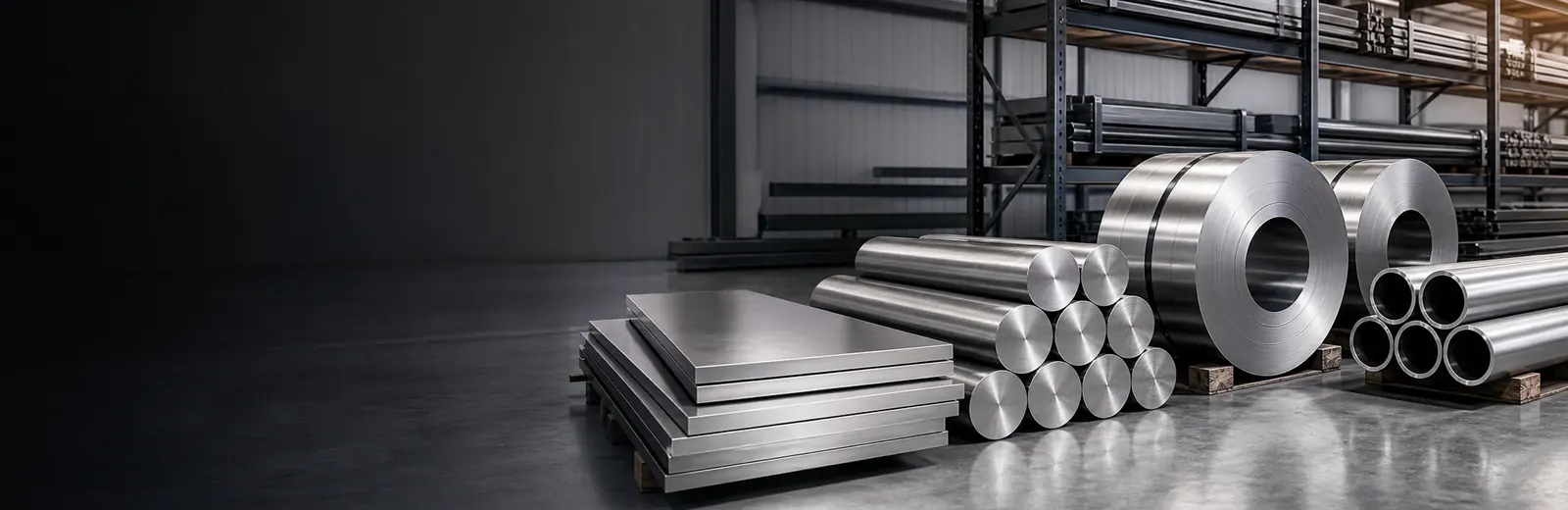
Welcome to 28Nickel’s comprehensive overview of high-performance nickel alloys. When engineering equipment for severely corrosive environments, understanding the precise hastelloy alloy material specification is absolutely crucial for long-term operational success. Hastelloy, a premier family of nickel-molybdenum-chromium superalloys, provides unmatched resistance to localized corrosion, stress corrosion cracking, and both oxidizing and reducing media. In this in-depth guide, we explore the chemical compositions, mechanical properties, and industrial standards that govern these vital industrial materials, ensuring you select the perfect grade for your next critical project.
Why the Right Hastelloy Alloy Material Specification Matters
Choosing the correct alloy grade is not just about matching numbers on a datasheet; it is about ensuring long-term structural integrity and safety. When engineers review a hastelloy alloy material specification, they are looking for specific elemental balances designed to combat unique environmental threats. For instance, higher molybdenum content significantly enhances resistance to pitting and crevice corrosion, while added chromium improves oxidation resistance. At 28Nickel, we understand that deviating from the required hastelloy alloy material specification can lead to catastrophic equipment failure, which is why we ensure every batch we export meets rigorous global metallurgical standards.
Key Standards in Hastelloy Alloy Material Specification
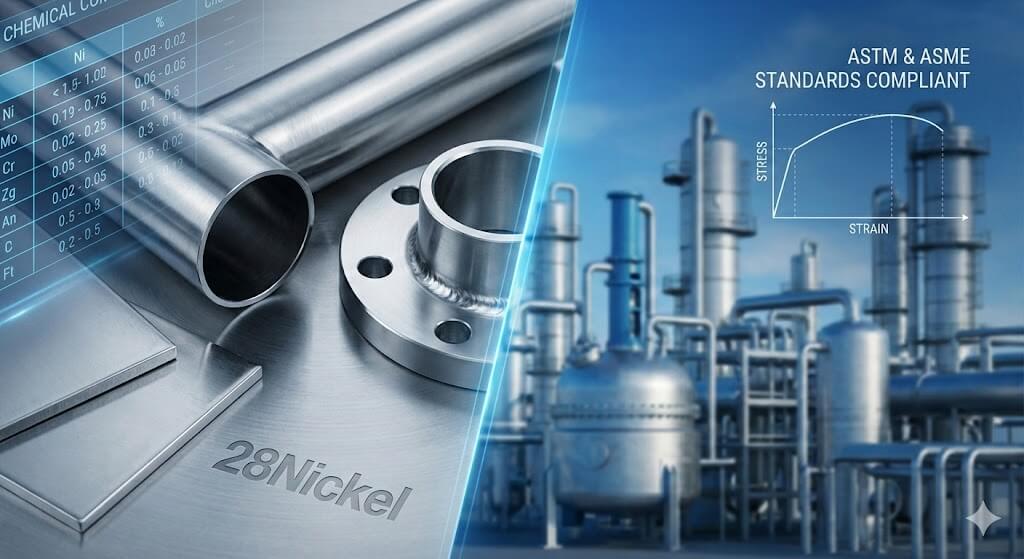
Global manufacturing relies on strictly standardized parameters to maintain quality and safety. A typical hastelloy alloy material specification aligns with international standards such as ASTM (American Society for Testing and Materials), ASME (American Society of Mechanical Engineers), and DIN. Whether you are dealing with Hastelloy C-276, C-22, or B-3, these documented standards dictate the acceptable tolerance ranges for chemical makeup and physical dimensions. By adhering to a recognized hastelloy alloy material specification, buyers can confidently procure seamless pipes, welded tubes, plates, and flanges knowing they will perform predictably under extreme chemical stress.
Chemical Composition Limits
The foundation of any good hastelloy alloy material specification is its chemical composition. Below is a comparative table showing the elemental limits for two of the most popular grades we supply at 28Nickel: C-276 and C-22.
| Element | Hastelloy C-276 (UNS N10276) | Hastelloy C-22 (UNS N06022) |
| Nickel (Ni) | Balance | Balance |
| Molybdenum (Mo) | 15.0 – 17.0% | 12.5 – 14.5% |
| Chromium (Cr) | 14.5 – 16.5% | 20.0 – 22.5% |
| Iron (Fe) | 4.0 – 7.0% | 2.0 – 6.0% |
| Tungsten (W) | 3.0 – 4.5% | 2.5 – 3.5% |
Mechanical Properties in the Hastelloy Alloy Material Specification
Beyond chemistry, the mechanical data embedded within a hastelloy alloy material specification dictates how the metal behaves under pressure, tension, and elevated temperatures. These superalloys maintain exceptional structural stability, making them indispensable in chemical processing, aerospace engineering, and pollution control industries. Let’s examine the baseline mechanical requirements. Typically, standard grades require a minimum tensile strength of 690 MPa (100 ksi) and a yield strength of 283 MPa (41 ksi). When sourcing your raw materials from 28Nickel, verifying the hastelloy alloy material specification guarantees you receive metal capable of withstanding your specific project’s operational load.
Industrial Applications and Hastelloy Alloy Material Specification
The remarkable versatility of these nickel alloys means they are highly sought after across diverse industrial sectors. By adhering strictly to the relevant hastelloy alloy material specification, manufacturers can confidently deploy these materials in pharmaceutical reactors, flue gas desulfurization (FGD) systems, and offshore petrochemical pipelines. Understanding the distinct nuances of your required hastelloy alloy material specification helps engineers avoid costly premature maintenance. For example, C-22 is often preferred over C-276 in environments with highly oxidizing aqueous media due to its higher chromium content.
Sourcing with 28Nickel
As a trusted global supplier, 28Nickel knows that your manufacturing success hinges entirely on material reliability. We provide full traceability and Mill Test Certificates (MTC) to prove our exported metals meet your exact hastelloy alloy material specification. Our team works closely with international clients to deliver custom dimensions, forms, and grades that align perfectly with their engineering requirements.
Related Q&A
Q1: How do I choose the right grade based on my hastelloy alloy material specification?
A: You must evaluate your maximum operating temperature and the specific corrosive media (e.g., sulfuric acid versus wet chlorine gas) to match the chemical limits outlined in the hastelloy alloy material specification. Our engineers at 28Nickel can assist you in comparing grades.
Q2: Does 28Nickel provide documentation to prove the metal’s quality?
A: Yes. We provide comprehensive EN 10204 3.1 Mill Test Certificates with every shipment, ensuring strict compliance with the required hastelloy alloy material specification regarding both chemistry and mechanical properties.
Q3: Can these alloys be welded without losing their corrosion resistance?
A: Absolutely. However, specific low-heat-input welding techniques are required to prevent precipitation in the heat-affected zone, as detailed in the welding guidelines of the hastelloy alloy material specification.