






When engineering components for aggressive, high-temperature environments, selecting the wrong superalloy doesn’t just reduce efficiency—it triggers catastrophic metallurgical failure. A frequent debate in our 28Nickel materials lab centers on the precise boundary conditions governing the incoloy vs inconel selection process. While both are members of the austenitic nickel-chromium superalloy family, their distinct phase stabilities, base metal proportions, and precipitation hardening mechanisms drastically alter their operational limits under thermal cycling and corrosive attack.
The Chemical Root of the Incoloy vs Inconel Distinction
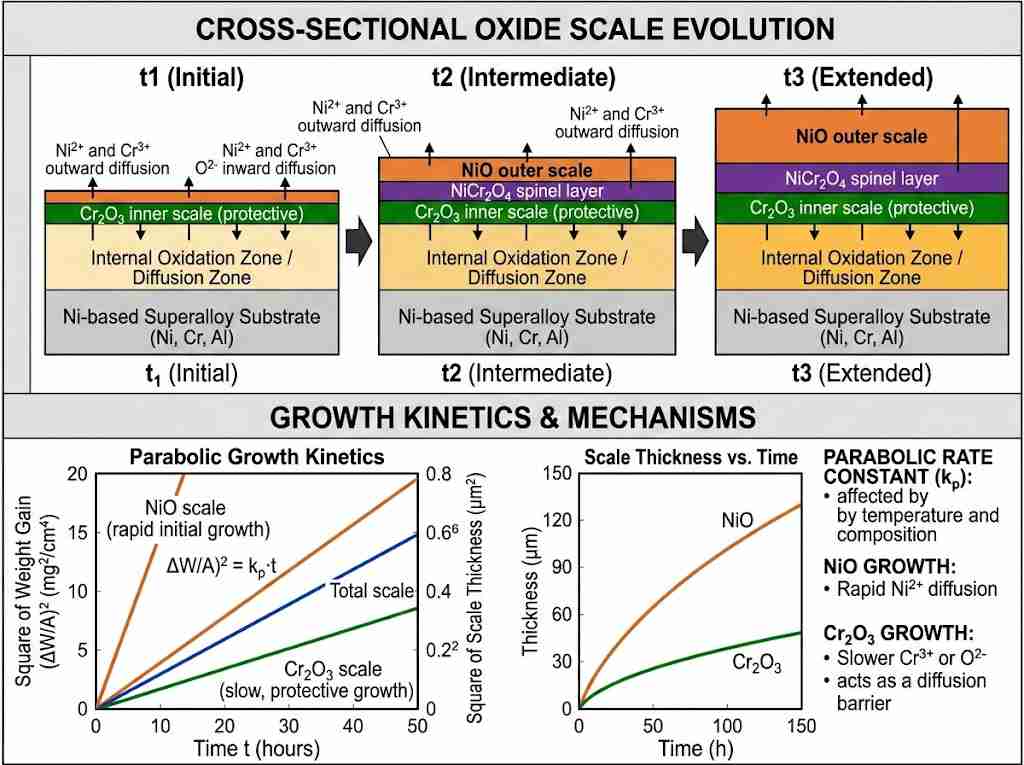
The fundamental divergence between these two superalloy groups lies in their matrix composition and elemental ratios. Inconel is strictly a nickel-chromium based alloy, typically containing a minimum of 50% nickel. This exceptionally high nickel concentration provides outstanding thermodynamic stability, enabling the formation of a tightly adhering, passivating oxide layer at macroscopic temperatures up to 1000°C.
Conversely, Incoloy is a nickel-iron-chromium alloy. It intentionally limits nickel content (usually remaining between 30% and 45%) and substitutes the balance with iron. This chemical shift makes Incoloy leaner in nickel but highly resistant to carburization and sulfidation in specific atmospheric conditions. When materials engineers evaluate the incoloy vs inconel trade-off, they are essentially balancing the ultimate high-temperature tensile strength and creep resistance of a pure nickel matrix against the economical, oxidation-resistant iron-nickel lattice.
Another critical factor in the incoloy vs inconel analysis is the coefficient of thermal expansion (CTE). Certain Incoloy grades, particularly Incoloy 909, are engineered to maintain a low and constant CTE. This is vital for maintaining tight clearances in gas turbine seals and casing components. Inconel alloys typically possess a higher CTE, which requires rigorous tolerance calculations to prevent thermal binding and low-cycle fatigue during rapid heating operations.
Tabulating the Metallurgical Differences
To accurately quantify these structural differences, let us examine two benchmark grades frequently specified in petrochemical piping and high-pressure reactor vessels: Inconel 625 and Incoloy 825.
| Alloy Grade | Matrix Base | Nominal Ni (%) | Nominal Fe (%) | PREN | Yield Strength (MPa) | Primary Strengthening Mechanism |
| Inconel 625 | Ni-Cr-Mo | 58.0 min | 5.0 max | ~45 | 414 | Solid Solution (Mo, Nb) |
| Incoloy 825 | Ni-Fe-Cr | 38.0 – 46.0 | 22.0 min | ~31 | 240 | Solid Solution (Cr, Mo) |
Resolving the Incoloy vs Inconel Dilemma for Sour Gas
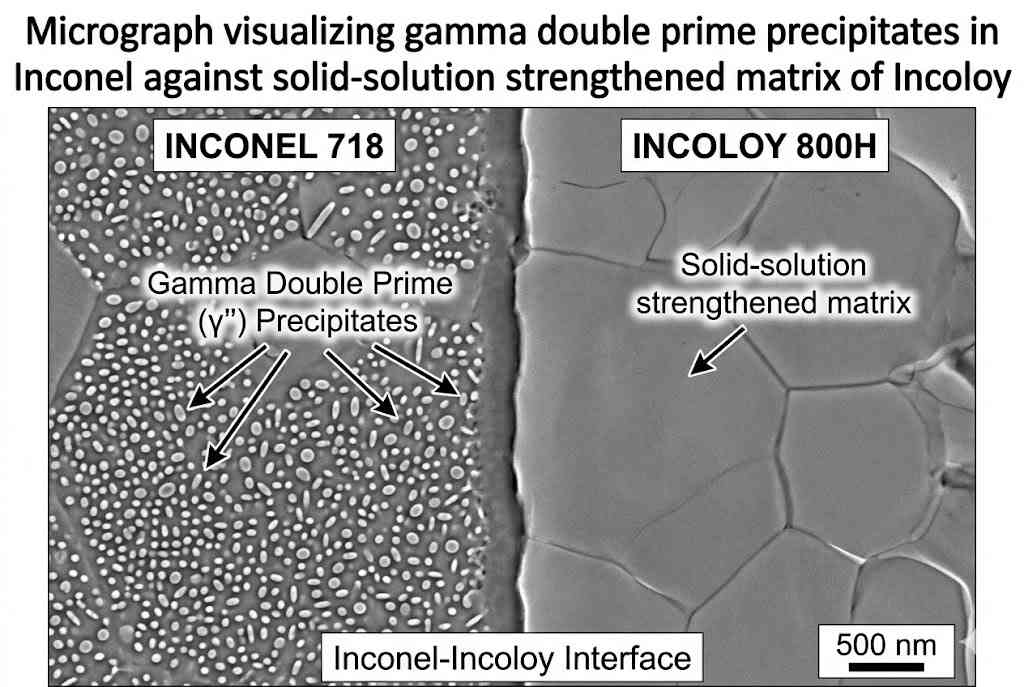
As evident in the tabulated data, the mechanical robustness differs significantly. Inconel alloys generally exhibit superior creep-rupture strength at severely elevated temperatures. The presence of niobium and molybdenum in grades like 625 creates intense solid-solution stiffening in the nickel matrix. In age-hardenable variations such as Inconel 718, the precipitation of body-centered tetragonal (Ni$_3$Nb) phases provides extreme yield strength that resists plastic deformation under heavy loads.
However, Incoloy shines when temperatures are moderately high (up to 800°C) and the environment is rich in sulfur or requires resistance to severe aqueous corrosion. For example, Incoloy 825 contains added copper and molybdenum, making it fiercely resistant to sulfuric and phosphoric acids. In sour gas wells containing elevated H$_2$S and chlorides, an ongoing incoloy vs inconel debate often concludes in favor of Incoloy. The higher iron content in Incoloy delays the kinetic diffusion of sulfur, mitigating the risk of rapid intergranular sulfidation attack while offering excellent resistance to chloride stress corrosion cracking (CSCC).
Machinability and Work Hardening Realities
Beyond operational environments, the practical incoloy vs inconel discussion must factor in fabrication mechanics. Both alloys are notorious for rapid work hardening during machining, which causes severe tool wear and localized plastic deformation. However, Inconel’s dense nickel matrix and high shear strength generate significantly higher cutting forces. As the tool cuts, the metal yields and immediately strain-hardens, deflecting subsequent cutting passes and requiring extremely rigid tooling.
Incoloy, due to its higher iron composition, is generally more forgiving during standard machining, welding, and forming operations, although it still mandates low cutting speeds and positive feeds. For engineers designing complex heat exchanger tube sheets or intricate internal valve geometries, this differential in machinability can shift the project’s overall metallurgical feasibility.
Finalizing the Incoloy vs Inconel Specification
Ultimately, the definitive incoloy vs inconel verdict depends on the precise intersection of thermal stress, localized chloride concentration, and applied mechanical load. If your application pushes past 900°C with severe dynamic loading, the and precipitate networks of an Inconel matrix are non-negotiable. Conversely, if you are designing for a highly acidic, aqueous environment operating at 600°C, the iron-stabilized lattice of Incoloy provides maximum phase stability.
At 28Nickel, our materials engineering team constantly analyzes degradation mechanisms to prevent premature component failure. If you are struggling with a complex incoloy vs inconel material selection for your next high-pressure vessel or turbine component, our technical team is here to assist. Let us review your operating parameters, thermal cycles, and corrosion profiles to engineer a metallurgical solution that ensures maximum lifecycle reliability.