







Engineers routinely face the nightmare of premature material degradation in aggressive environments. When standard austenitic stainless steels succumb to oxidation and chloride-ion stress corrosion cracking, specifying the exact metallurgical solution is critical. This is where precise incoloy alloy applications become indispensable. By leveraging a balanced nickel-iron-chromium matrix, these superalloys bridge the critical performance gap between standard stainless steels and high-nickel Inconel grades, offering a highly stable microstructure under extreme thermodynamic stress.
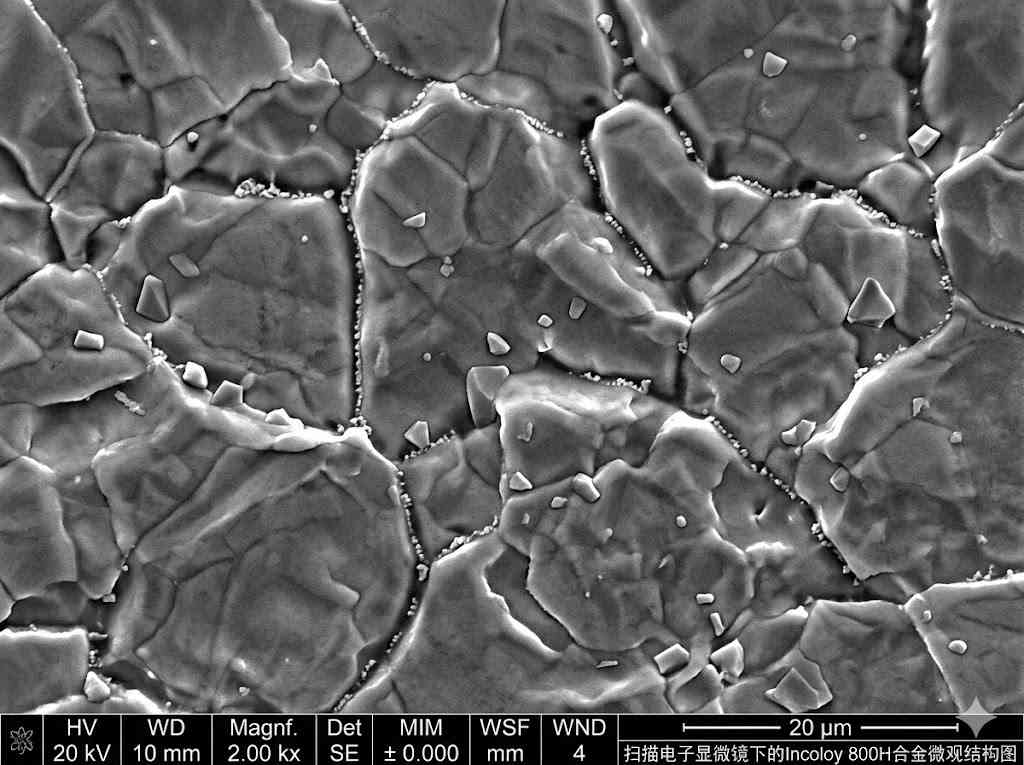
Analyzing Structural Incoloy Alloy Applications
The thermal stability of the 800 series makes it a cornerstone in ethylene pyrolysis and steam methane reforming. Specifically, Incoloy 800H and 800HT exhibit exceptional creep and rupture strength during prolonged exposure to temperatures up to 1100°C (2012°F). This resistance is achieved through restricted carbon limits (0.05-0.10%) combined with titanium and aluminum additions, which precipitate strengthening phases during heat treatment. Selecting the correct grade for high-temperature incoloy alloy applications requires analyzing the specific Larson-Miller parameter data for your operating stress to predict rupture life accurately.
| Alloy Grade | Ni (%) | Cr (%) | Fe (%) | Mo (%) | Yield Strength (MPa) | Key Metallurgical Feature |
| Incoloy 800H | 30-35 | 19-23 | ≥39.5 | – | ≥170 | High creep/rupture resistance |
| Incoloy 825 | 38-46 | 19-23 | ≥22.0 | 2.5-3.5 | ≥240 | Sulfuric/Phosphoric acid immunity |
| Incoloy 840 | 18-20 | 18-22 | Bal. | – | ≥205 | Superior oxidation resistance |
Managing Corrosive Incoloy Alloy Applications
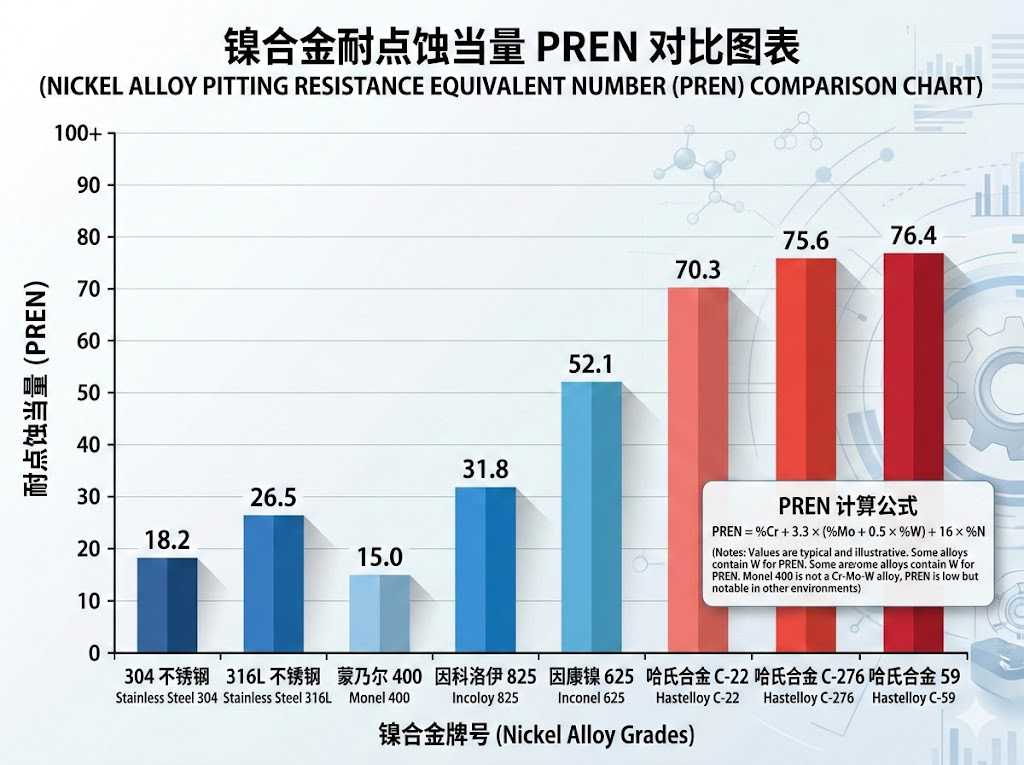
Beyond pure thermal stability, aqueous corrosion dictates material selection in sour gas and chemical processing. Incoloy 825, fortified with molybdenum and copper, provides unparalleled resistance to reducing environments. Furthermore, its titanium stabilization inhibits intergranular corrosion in the as-welded condition, preventing sensitization. For offshore oil and gas engineers, these specific incoloy alloy applications mitigate the catastrophic risks associated with sulfide stress cracking (SSC) and localized pitting in sour environments.
Navigating the metallurgical nuances of phase stability, welding metallurgy, and sigma-phase embrittlement is complex. A miscalculation in thermal expansion coefficients or prolonged exposure limits can lead to catastrophic, premature failure. At 28Nickel, our engineering team provides deep material science expertise to ensure your design life is met without over-specifying. If you are evaluating severe-service incoloy alloy applications, contact our technical department with your exact operating parameters and stress load data for a rigorous metallurgical review.
Related Q&A
Q1: How does carbon control impact high-temperature incoloy alloy applications?
A1: Tightly controlling carbon (typically 0.05-0.10% in 800H) optimizes grain size during solution annealing. A coarser grain size (ASTM 5 or coarser) significantly enhances creep and rupture strength above 600°C by restricting grain boundary sliding, preventing high-temperature deformation.
Q2: Can Incoloy 825 completely prevent chloride-ion stress corrosion cracking (SCC)?
A2: While not entirely immune like pure nickel, the ~42% nickel content in Incoloy 825 provides exceptionally high resistance to chloride SCC. It vastly outperforms 304/316L stainless steels, preventing transgranular cracking and making it ideal for aggressive brine and sour gas service.
Q3: What distinguishes Incoloy from Inconel in severe service design?
A3: The primary distinction lies in the matrix composition. Incoloy is predominantly nickel-iron-chromium (with iron often >20%), making it highly effective for moderate-to-severe corrosion and high heat. Inconel is nickel-chromium (predominantly nickel with very low iron), utilized where extreme, uncompromising high-temperature strength and oxidation resistance are mandatory.