










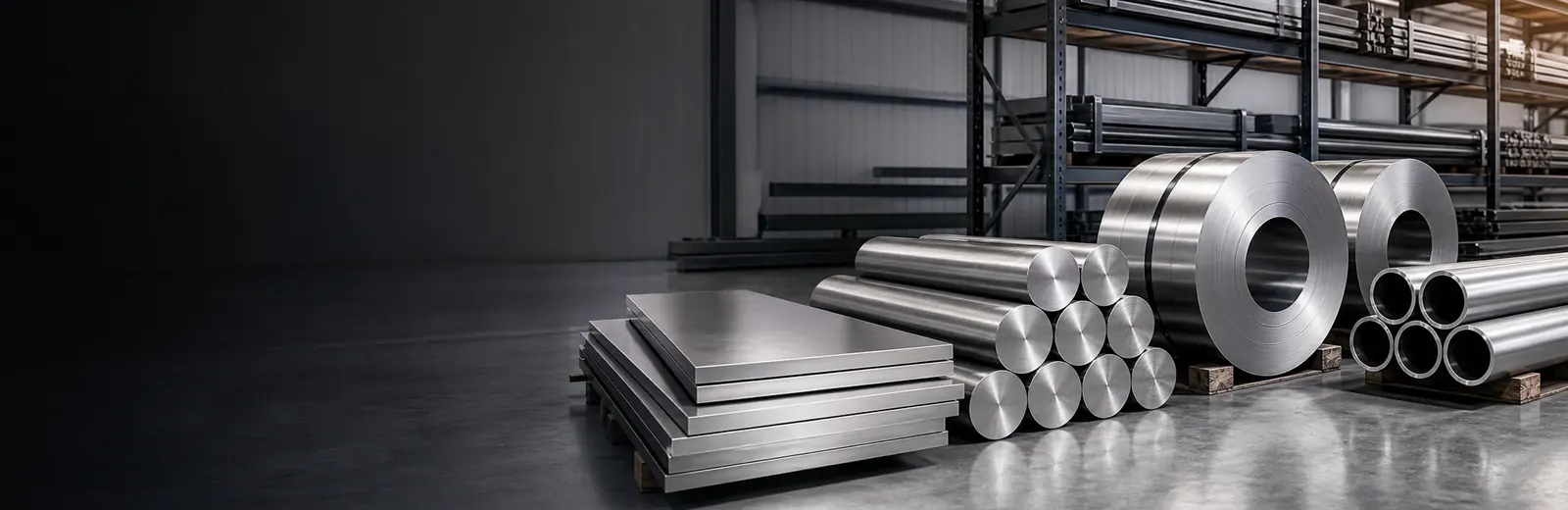
Operating in highly aggressive industrial environments—characterized by hydrogen sulfide (H$_2$S), high chloride concentrations, and elevated temperatures—presents severe material challenges. Selecting the precise high-performance metallurgy is critical to preventing Chloride Stress Corrosion Cracking (CSCC) and localized pitting. When evaluating global sourcing options, metallurgical engineers often question the microstructural consistency of international mills. Partnering with a technically advanced nickel alloy supplier China requires a rigorous assessment of their melting practices, phase stability control, and NACE compliance. Rather than simply supplying commodities, engineering-driven firms like 28Nickel focus strictly on the microstructural integrity and chemical precision of the superalloys delivered to the field.
Alloying Elements and PREN Benchmarks
To survive supercritical aqueous systems, a metal’s passive oxide layer must regenerate instantaneously after mechanical disruption. This localized corrosion resistance is commonly dictated by the Pitting Resistance Equivalent Number (PREN). A competent nickel alloy supplier China must strictly control not just the macro-elements like Chromium (Cr) and Molybdenum (Mo), but also trace impurities such as Sulfur (S) and Phosphorus (P), which severely promote hot cracking during autogenous welding.
By maintaining a tightly controlled chemical window within standard specifications, these materials exhibit highly predictable corrosion rates. Relying solely on the minimum required chemistry often leaves performance on the table; optimizing the high end of the Molybdenum and Tungsten range provides a critical safety buffer in highly reducing acids.
| Alloy Grade | UNS Number | Minimum Ni (%) | Cr (%) | Mo (%) | Typical PREN (Cr+3.3Mo+16N) |
| Inconel 625 | N06625 | 58.0 | 20.0 – 23.0 | 8.0 – 10.0 | 45.0 – 50.0 |
| Hastelloy C-276 | N10276 | Balance | 14.5 – 16.5 | 15.0 – 17.0 | 64.0 – 68.0 |
| Alloy 825 | N08825 | 38.0 – 46.0 | 19.5 – 23.5 | 2.5 – 3.5 | 28.0 – 35.0 |
Minor Additions in Grain Boundary Engineering
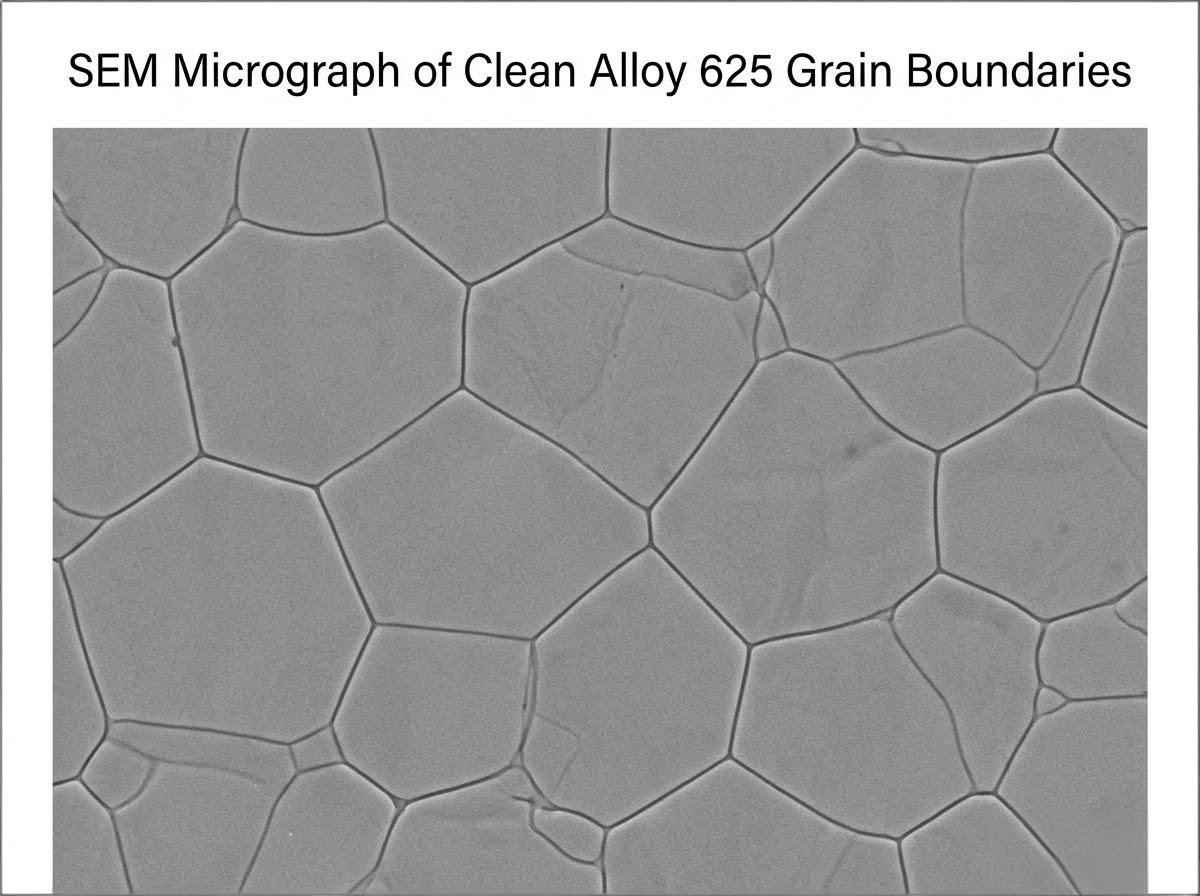
In highly aggressive environments, grain boundary precipitation plays a pivotal role in material survival. The strategic addition of trace elements like Boron and Zirconium by a proficient nickel alloy supplier China can significantly enhance high-temperature creep ductility by altering the morphology of grain boundary carbides. If these carbides form continuous networks due to slow cooling through the sensitization temperature range, the material becomes highly susceptible to intergranular corrosion.
This is precisely why validating the heat treatment capabilities of your nickel alloy supplier China is paramount. Rapid quenching from the solution annealing temperature is mandatory to keep carbon in solid solution. When analyzing mill test certificates, one must scrutinize the micro-cleanliness and verify the absence of deleterious Topologically Close-Packed (TCP) phases, such as sigma () or mu () phases, which deplete the surrounding matrix of corrosion-resistant elements.
Microstructural Control and Phase Stability
When specifying age-hardenable grades like Alloy 718 for downhole tooling, the precipitation of the body-centered tetragonal (Ni$_3$Nb) phase provides the primary strengthening mechanism. However, improper thermal treatment by an inexperienced nickel alloy supplier China can lead to the formation of the deleterious orthorhombic phase. This undesirable phase transformation drastically reduces both transverse ductility and impact toughness.
Secondary refining techniques like Vacuum Induction Melting (VIM) followed by Electroslag Remelting (ESR) or Vacuum Arc Remelting (VAR) are non-negotiable for critical subsea applications. The ability to guarantee a microscopically clean matrix separates a true technical nickel alloy supplier China from a standard stockist. At 28Nickel, our engineers continuously analyze thermal processing kinetics (TTT/CCT curves) to ensure complete phase equilibrium is achieved prior to final quenching.
Evaluating High-Temperature Mechanical Behavior
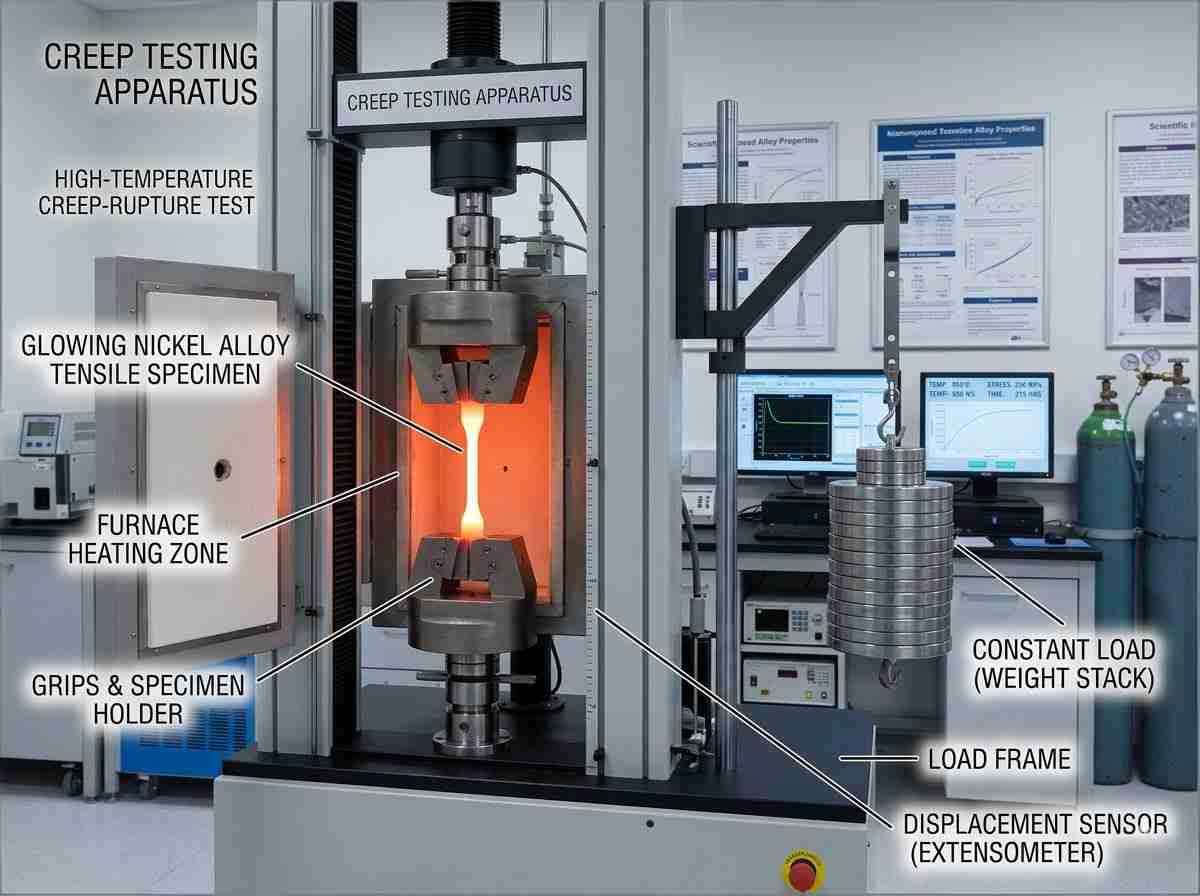
High-temperature tensile strength and creep-rupture life are highly sensitive to grain size control. During thermo-mechanical processing, an expert nickel alloy supplier China will optimize the reduction ratios and forging temperatures to achieve a uniform ASTM grain size. For example, in solid-solution strengthened alloys, a coarser grain structure might improve high-temperature creep resistance, but it simultaneously compromises low-cycle fatigue life.
Material engineers must collaborate closely with their chosen nickel alloy supplier China to tailor the heat treatment cycle—such as specific solution annealing temperatures and holding times—to the exact mechanical loading profile of the end-use component. This rigorous level of metallurgical customization ensures the final product effectively resists premature yielding under severe stress relaxation conditions.
Engineered Solutions for Harsh Environments
Specifying advanced metallurgical systems is fundamentally an exercise in operational risk mitigation. Engineers cannot afford to rely on superficial datasheet values or generalized standards. By rigorously vetting the chemical tolerances and thermomechanical history, you can successfully leverage the manufacturing capabilities of a top-tier nickel alloy supplier China.
At 28Nickel, our engineering team bridges the gap between complex metallurgical science and your specific operational challenges. We invite you to share your operating parameters, corrosive media profiles, and stress data with our team. Our materials experts will provide a comprehensive metallurgical evaluation to pinpoint the exact alloy grade and custom processing route your project demands.
Related Q&A
Q1: How does a nickel alloy supplier China ensure NACE MR0175 compliance for sour gas applications?
A1: Compliance demands strict control over maximum hardness (e.g., typically limited to 35 HRC for cold-worked solid-solution nickel alloys) and specific heat treatment conditions. A qualified supplier verifies compliance through rigorous metallurgical testing, ensuring the microstructure is completely free from sensitization that causes hydrogen embrittlement in H$_2$S environments.
Q2: Why is Vacuum Induction Melting (VIM) critical when selecting high-performance alloys?
A2: VIM drastically minimizes atmospheric contamination from oxygen and nitrogen during the initial melting phase. This process heavily reduces non-metallic inclusions, preventing fatigue initiation sites and ensuring highly consistent transverse mechanical properties—a critical baseline metric we evaluate when engineering alloys at 28Nickel.
Q3: Can a nickel alloy supplier China provide custom mechanical properties beyond standard ASTM specifications?
A3: Yes. By precisely manipulating cold-reduction percentages and optimizing solution annealing temperatures, experienced metallurgical engineers can tailor the yield strength, ultimate tensile strength, and ductility to match specific operating stresses without sacrificing localized corrosion resistance.