











When operating in severe industrial environments—whether in subsea sour gas extraction or high-temperature aerospace turbines—the margin for metallurgical error is exactly zero. Stress corrosion cracking (SCC), localized pitting, and high-temperature creep are constant threats that degrade structural integrity over time. Overcoming these fundamental degradation mechanisms does not begin at the fabrication or welding stage; it starts directly at the melt. Partnering with a technically rigorous nickel alloy material supplier is the foundational step in ensuring your pressure vessels and piping systems outlast their projected lifecycles. At 28Nickel, we routinely analyze how minute deviations in ingot metallurgy lead to catastrophic downstream failures. By examining precise elemental constraints and heat treatment protocols, engineers can accurately separate premium metallurgical sources from standard commercial-grade stock.
Chemical Baselines for a Nickel Alloy Material Supplier
The statement that a material “meets ASTM specifications” is merely a baseline, not a guarantee of field performance. A proficient metallurgical source understands that the true operational limits of high-performance grades like UNS N06625 (Alloy 625) or UNS N10276 (Alloy C-276) are dictated by how tightly trace elements are controlled during the initial melting process. For instance, while standard specifications allow for certain maximums of sulfur and phosphorus, aggressive chloride environments require these impurities to be kept to absolute trace levels to prevent hot cracking during autogenous welding operations.
Consider the passive oxide film formation. Chromium provides the primary passivation layer, but its stability in reducing acids requires a delicate balance of nickel and molybdenum. In advanced grades, the synergistic addition of tungsten alongside molybdenum actively shifts the anodic polarization curve, effectively stifling localized crevice attack in highly acidic, chloride-rich media. Furthermore, the Pitting Resistance Equivalent Number (PREN) must be carefully optimized. A reliable nickel alloy material supplier will provide raw melt data that demonstrates restricted carbon levels alongside optimized chromium ratios, preventing sensitization in the heat-affected zone (HAZ).
Below is a critical comparative data matrix that any competent alloy provider should be able to consistently maintain without relying on the extreme upper limits of allowable tolerances.
| UNS Designation | Common Grade | Ni (%) | Cr (%) | Mo (%) | PREN (Minimum) | Primary Degradation Resistance |
| N06625 | Alloy 625 | 58.0 min | 20.0-23.0 | 8.0-10.0 | 45 | Localized Pitting, Crevice Corrosion |
| N10276 | Alloy C-276 | Balance | 14.5-16.5 | 15.0-17.0 | 68 | Wet Chlorine gas, Severe Sour Gas |
| N08825 | Alloy 825 | 38.0-46.0 | 19.5-23.5 | 2.5-3.5 | 31 | Sulfuric Acid, Intergranular SCC |
| N06022 | Alloy 22 | Balance | 20.0-22.5 | 12.5-14.5 | 64 | Oxidizing and Mixed Reducing Acids |
Evaluating High-Temperature Creep and Phase Stability
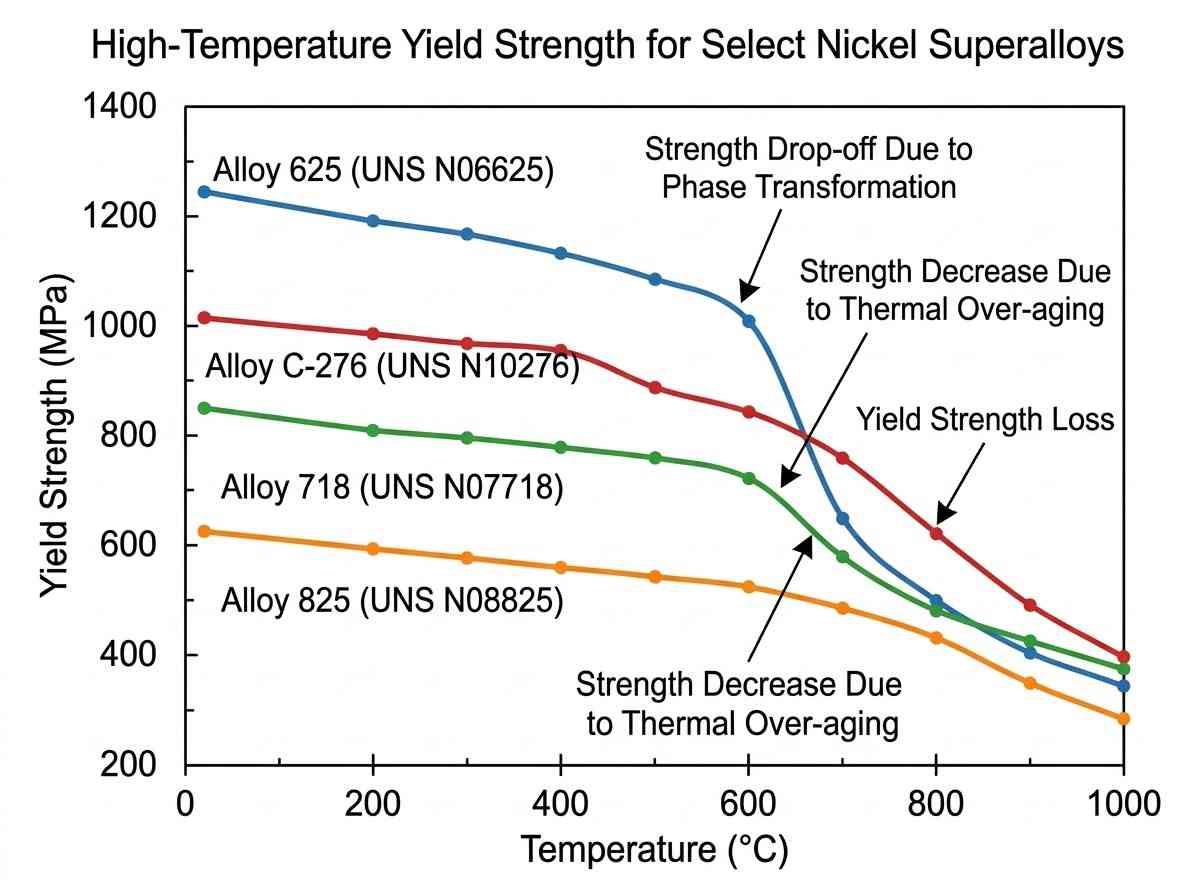
Beyond aqueous corrosion, thermal stability is a paramount concern for engineers designing high-pressure, high-temperature (HPHT) systems. Prolonged exposure to temperatures exceeding 600°C (1112°F) can induce detrimental topologically close-packed (TCP) phases, such as mu or sigma phases, particularly in highly alloyed superalloys. A high-tier nickel alloy material supplier actively controls the solution annealing temperatures and subsequent quench rates to permanently lock the solid solution matrix in place.
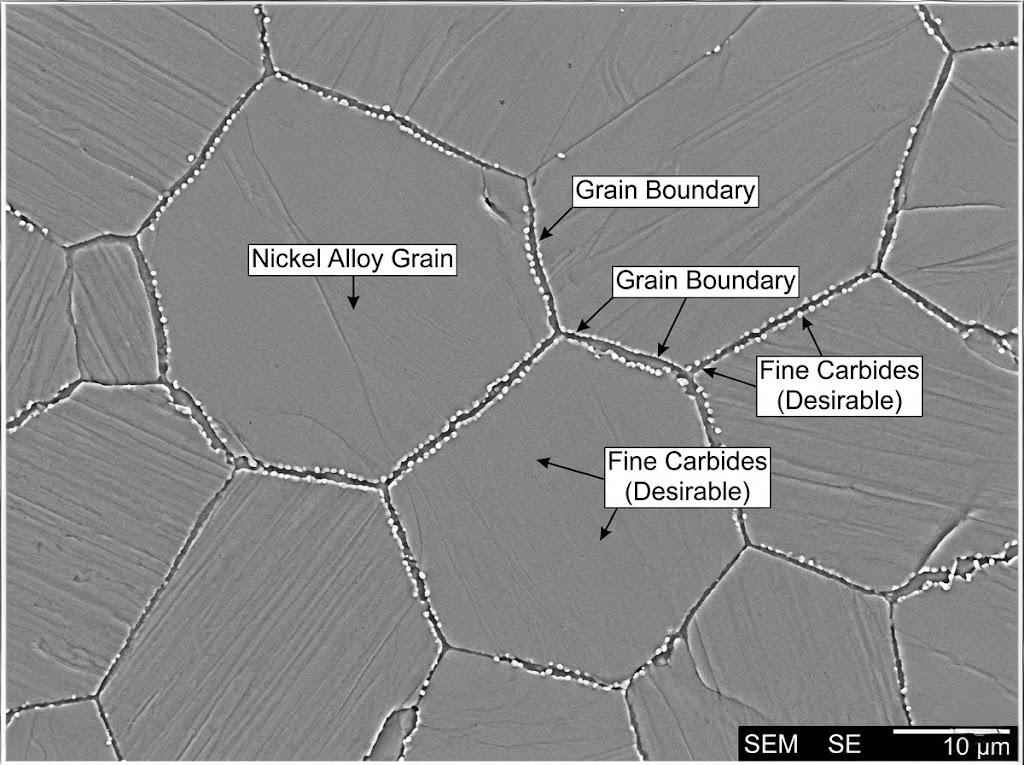
For instance, when evaluating Alloy 625 for service between 650°C and 850°C, engineers must account for the precipitation kinetics of the intermetallic gamma double prime phase. While this phase initially imparts precipitation hardening, prolonged thermal exposure eventually transforms it into the brittle orthorhombic delta phase. This microstructural evolution severely compromises impact toughness. When auditing an advanced material partner, demand access to time-temperature-transformation (TTT) diagrams specific to their proprietary melt chemistries. If the cooling rate from the annealing temperature is insufficient, chromium carbides will precipitate at the grain boundaries. The technical expertise of your nickel alloy material supplier is essentially written into the grain structure of the delivered material. Strict adherence to rapid quenching protocols is absolutely non-negotiable for components intended for extreme stress environments.
Sustaining Engineering Integrity with 28Nickel
Material specification is an ongoing technical dialogue, not a static event. Over-specifying an alloy wastes massive amounts of capital, while under-specifying guarantees catastrophic failure. Engaging early with a dedicated nickel alloy material supplier allows your engineering team to cross-reference theoretical corrosion rates with empirical metallurgical data. At 28Nickel, we prioritize deep metallurgical transparency, ensuring that every plate, bar, and pipe we discuss aligns perfectly with your exact environmental parameters. If you are grappling with a complex localized corrosion issue, or need to verify the high-temperature limits of a proposed alloy substitution, reach out to our engineering team. By sharing your specific application parameters, our material engineers can provide targeted data sets to validate your structural designs and prevent premature failure.
Related Q&A:
Q1: How does a top-tier nickel alloy material supplier prevent TCP phase formation in Alloy 625?
A1: A rigorous nickel alloy material supplier prevents TCP (Topologically Close-Packed) phases by strictly controlling the iron and niobium ratios during the melt. They also ensure the final solution annealing process is performed at the optimal temperature (typically above 1093°C for maximum creep resistance), followed immediately by a rapid water quench to lock the elemental matrix and prevent phase precipitation.
Q2: Why is the carbon content crucial when evaluating a nickel alloy material supplier?
A2: High carbon content inevitably leads to carbide precipitation at grain boundaries during autogenous welding or high-temperature service. A reliable nickel alloy material supplier provides low-carbon variations (often inherently low in grades like C-276) to maintain intergranular corrosion resistance in the as-welded condition, preventing the phenomenon known as sensitization.
Q3: What specific testing should I demand from my nickel alloy material supplier for sour gas applications?
A3: For aggressive sour gas (H2S) environments, you should strictly mandate that your nickel alloy material supplier provides empirical data in accordance with NACE MR0175/ISO 15156 limits. This includes specific Rockwell hardness maximums (e.g., maximum 35 HRC for Alloy 718) and potentially slow strain rate testing (SSRT) to thoroughly verify the material’s resistance to sulfide stress cracking.