










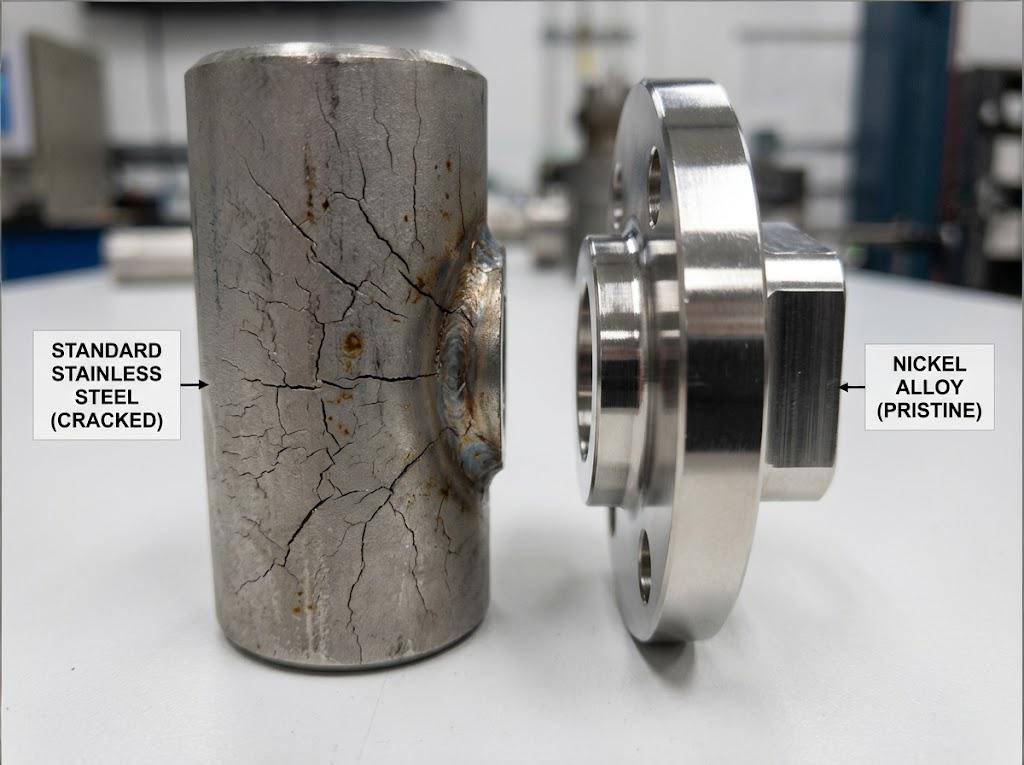
When operating in High-Pressure, High-Temperature (HPHT) environments with elevated hydrogen sulfide (H2S) and chloride levels, material selection is not just a preference; it is a critical safety parameter. As a specialized nickel alloy supplier for oil and gas, our team at 28Nickel frequently consults with engineering teams struggling with sulfide stress cracking (SSC) and chloride stress corrosion cracking (CSCC). Choosing the right metallurgical partner can bridge the gap between an unexpected catastrophic failure and a predictable, decades-long service life.
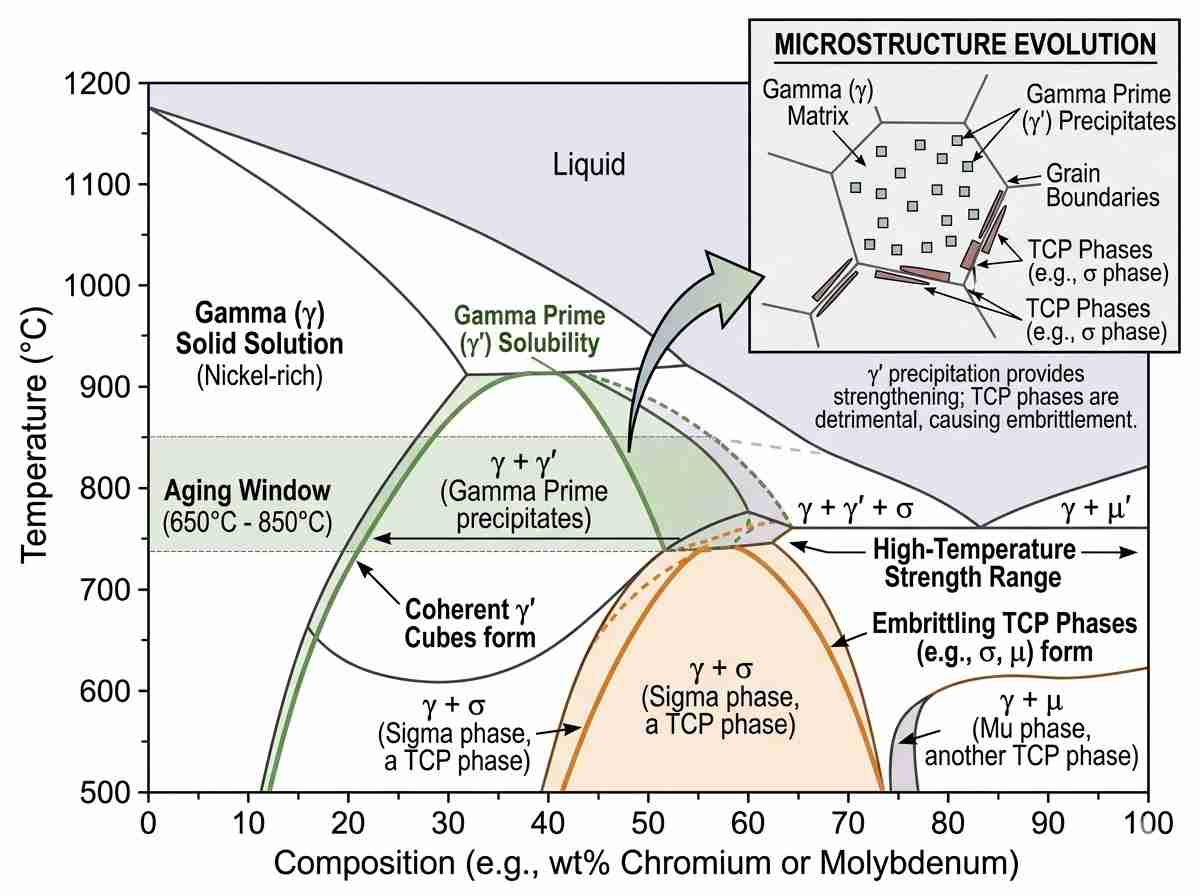
Engineers often approach us, their nickel alloy supplier for oil and gas, weighing the mechanical benefits of UNS N07718 (Alloy 718) against UNS N06625 (Alloy 625). Both are highly capable, yet their microstructural strengthening mechanisms dictate vastly different application profiles. Alloy 718 relies heavily on precipitation hardening via niobium and titanium additions, forming gamma double-prime () and gamma prime () phases. This intricate microstructure yields a minimum yield strength of 120 ksi, making it indispensable for subsurface safety valves, hangers, and high-stress downhole tooling. Conversely, Alloy 625 achieves its robust strength through solid-solution stiffening with molybdenum and niobium. While its baseline yield strength is lower than that of 718, its exceptional localized corrosion resistance—with a Pitting Resistance Equivalent Number (PREN) frequently exceeding 45—makes it fundamentally superior for flowlines and cladding exposed to extreme chloride concentrations.
Downhole Material Integrity and Phase Stability
Selecting a reputable nickel alloy supplier for oil and gas ensures that these specified PREN values and mechanical properties are strictly verified through rigorous, standardized testing. We do not just look at basic tensile strength; our evaluation includes ASTM G48 testing to precisely measure pitting and crevice corrosion resistance. Furthermore, we regularly analyze the long-term phase stability of these superalloys to prevent the precipitation of detrimental topologically close-packed (TCP) phases. The uncontrolled formation of sigma () and mu () phases during extended high-temperature downhole service severely degrades both impact toughness and corrosion resistance, leading to premature structural fatigue.
| Alloy Designation | UNS Number | Yield Strength (ksi) | PREN | Primary Strengthening Mechanism | Typical Downhole Application |
| Alloy 718 | N07718 | 120 – 150 | ≥ 40 | Precipitation Hardening | Subsurface safety valves, wellhead components |
| Alloy 625 | N06625 | 60 – 100 | ≥ 45 | Solid-Solution Stiffening | Cladding, heat exchangers, extreme flowlines |
| Alloy 825 | N08825 | 35 – 65 | ≥ 31 | Solid-Solution Stiffening | Standard tubing, surface gathering lines |
| Alloy 925 | N09925 | 105 – 120 | ≥ 32 | Precipitation Hardening | High-strength tool joints, completion equipment |
Thermomechanical History and OCTG Machining Dynamics
Beyond base chemistry, understanding the exact thermomechanical history of the material is paramount for downhole integrity. Many procurement teams fail to realize that extensive cold working, while excellent for increasing yield strength, can drastically alter a material’s susceptibility to hydrogen embrittlement (HE). As a specialized nickel alloy supplier for oil and gas, we actively monitor the grain structure and dislocation density of our raw materials. In sour service environments, the cathodic reaction produces atomic hydrogen, which diffuses into the metal lattice and accumulates at internal traps, such as grain boundaries or precipitate interfaces. If a high-strength material is over-cold-worked without proper subsequent stress-relief annealing, the residual internal stress acts as a direct catalyst for catastrophic hydrogen embrittlement.
Furthermore, the fabrication of these superalloys presents highly specific engineering challenges. Nickel-based materials exhibit severe strain-hardening rates and exceptionally poor thermal conductivity. A technically proficient nickel alloy supplier for oil and gas will not just provide the bulk material; they will also offer critical empirical data regarding optimal cutting speeds, feed rates, and specific coolant strategies to prevent surface glazing and micro-cracking during the machining phase. If micro-cracks propagate during the complex threading of Oil Country Tubular Goods (OCTG) connections, the mechanical integrity of the entire string is hopelessly compromised under intense downhole pressure.
We must also look beyond standard datasheets when analyzing extreme geological environments. As an experienced nickel alloy supplier for oil and gas, we recognize that downhole partial pressures of CO2 and H2S fluctuate unpredictably. High localized temperatures exponentially increase the kinetics of anodic dissolution. In aggressive environments where temperatures exceed 200°C coupled with elemental sulfur, relying purely on Alloy 825 is a severe metallurgical miscalculation due to its lower molybdenum content. Transitioning to a highly alloyed solid-solution grade like Alloy C-276 (UNS N10276), featuring 16% molybdenum and a PREN over 65, becomes mandatory. Partnering with a deeply technical nickel alloy supplier for oil and gas allows you to anticipate these absolute metallurgical limits long before field deployment.
Conclusion
Material specification for harsh upstream environments is an exercise in precise risk mitigation. The microstructure must be perfectly tuned to the specific environmental hazards of the reservoir. A knowledgeable nickel alloy supplier for oil and gas acts as a direct extension of your own engineering department, providing the necessary metallurgical data, phase analyses, and fatigue limits to comprehensively validate your designs. If your current wellhead or downhole designs are pushing the boundaries of your existing material specifications, our engineering team at 28Nickel is ready to review your environmental parameters and recommend an optimized metallurgical pathway. Reach out to our technical specialists for a deep-dive consultation on your next complex HPHT project.
Related Q&A
Q1: What is the minimum PREN required for sour gas environments according to NACE MR0175?
A1: While NACE MR0175/ISO 15156 does not stipulate a single universal minimum PREN for all sour environments, a PREN > 40 is generally required for high H2S and chloride concentrations to ensure adequate resistance to localized pitting and crevice corrosion.
Q2: How does the precipitation of the gamma double-prime phase affect Alloy 718’s corrosion resistance?
A2: The precipitation of (Ni3Nb) is essential for achieving the 120+ ksi yield strength of Alloy 718. However, excessive aging can deplete the surrounding matrix of critical elements like niobium, slightly reducing localized corrosion resistance compared to fully annealed solid-solution variants.
Q3: Why is Alloy C-276 preferred over Alloy 825 in high-temperature elemental sulfur environments?
A3: Elemental sulfur severely accelerates anodic dissolution at elevated temperatures (>200°C). Alloy C-276, with its ~16% molybdenum and ~4% tungsten content, provides a significantly more stable passive oxide layer than Alloy 825 (which contains only ~3% molybdenum), preventing rapid intergranular attack.