











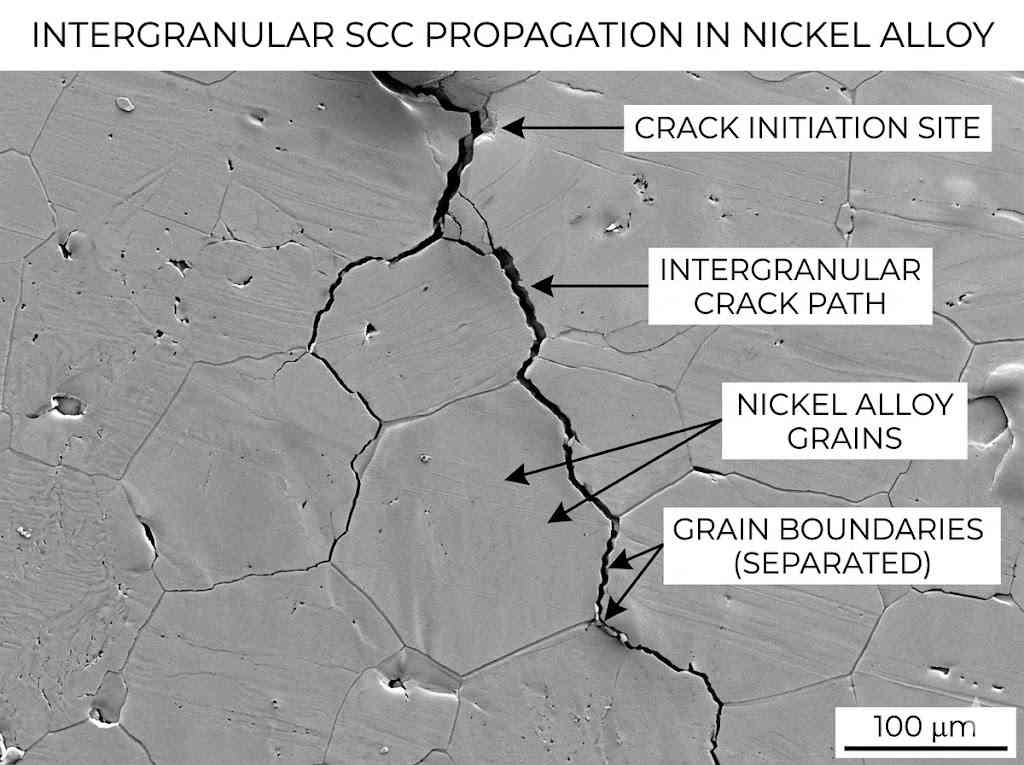
Chloride stress corrosion cracking (SCC) remains a primary failure mode in aggressive petrochemical environments. When subjected to elevated temperatures and high tensile stress, standard austenitic stainless steels undergo rapid transgranular cracking. Mitigating this catastrophic failure requires upgrading to high-nickel superalloys. However, simply specifying a grade is insufficient. The metallurgical integrity of the heat dictates long-term performance, which is exactly why partnering with a reliable nickel alloy supplier is the most critical engineering decision for your pressure vessels and heat exchangers. Trace element control during the vacuum induction melting (VIM) process dramatically impacts the final microstructural stability.
Calculating Pitting Resistance and Material Integrity
For localized corrosion—specifically pitting and crevice corrosion—engineers rely on the Pitting Resistance Equivalent Number (PREN). The theoretical equation, , heavily weighs molybdenum and nitrogen additions. When evaluating candidates for offshore platforms or sour gas () processing, materials like UNS N06625 (Alloy 625) and UNS N10276 (Alloy C-276) often surface as baseline solutions.
Yet, theoretical PREN calculations assume a perfectly homogenous solid solution. In reality, elemental segregation during solidification can create localized zones depleted of molybdenum, acting as initiation sites for galvanic cells. A dependable and reliable nickel alloy supplier must implement rigorous homogenization annealing practices to ensure uniform elemental distribution. If your current reliable nickel alloy supplier does not provide detailed micro-cleanliness data or energy-dispersive X-ray spectroscopy (EDS) mapping upon request, the structural integrity of your high-pressure components is at risk.
| Alloy Grade (UNS) | Nickel (%) | Chromium (%) | Molybdenum (%) | Iron (%) | Minimum PREN |
| Alloy 600 (N06600) | 72.0 min | 14.0 – 17.0 | – | 6.0 – 10.0 | ~15 |
| Alloy 825 (N08825) | 38.0 – 46.0 | 19.5 – 23.5 | 2.5 – 3.5 | 22.0 min | ~28 |
| Alloy 625 (N06625) | 58.0 min | 20.0 – 23.0 | 8.0 – 10.0 | 5.0 max | ~46 |
| Alloy C-276 (N10276) | Balance | 14.5 – 16.5 | 15.0 – 17.0 | 4.0 – 7.0 | ~64 |
Controlling Grain Boundary Precipitation
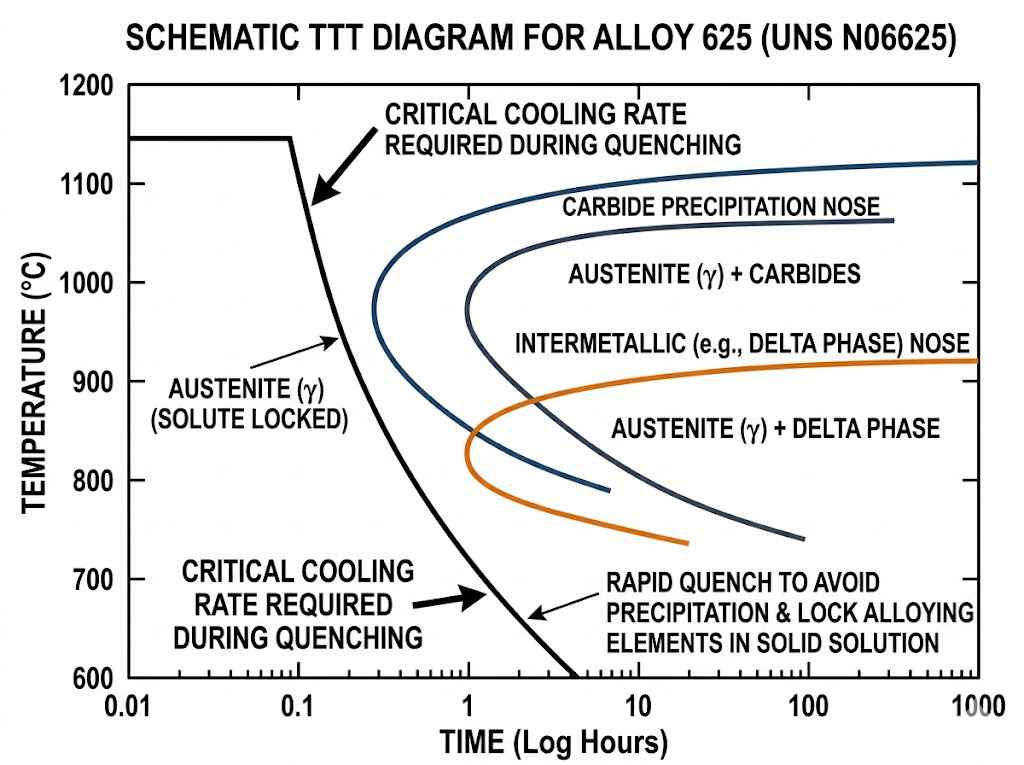
High-temperature phase stability is another arena where the expertise of a reliable nickel alloy supplier becomes evident. Exposure to temperatures between 650°C and 900°C can induce the precipitation of deleterious topologically close-packed (TCP) phases, such as Mu () or Sigma () phases, as well as complex metallic carbides () along the grain boundaries.
These precipitates consume vital alloying elements like chromium and molybdenum from the adjacent matrix. This depletion phenomenon, known as sensitization, leaves the grain boundary regions highly susceptible to intergranular attack (IGA) in oxidizing acid environments. Precise control of carbon content during the argon oxygen decarburization (AOD) refining phase is mandatory. Modern ultra-low carbon grades (e.g., C 0.010%) significantly delay carbide precipitation kinetics. Your chosen reliable nickel alloy supplier must have strict protocols for rapid quenching following solution annealing to “freeze” the microstructure and lock these alloying elements in solid solution.
Mechanical Behavior and Work Hardening
Beyond corrosion resistance, the mechanical demands placed on these materials require tight dimensional and property tolerances. Nickel alloys are notoriously prone to rapid work hardening during cold forming operations. The austenitic matrix possesses a high strain-hardening exponent, meaning the yield strength escalates sharply with plastic deformation.
If the grain size is not strictly controlled by your reliable nickel alloy supplier during the final mill processing, subsequent forming or welding by your fabrication team will result in localized stress concentrations and potential micro-fissuring. A coarse grain size reduces the total grain boundary area, thereby concentrating trace impurities like sulfur or phosphorus, which drastically lowers the hot ductility and leads to hot cracking during autogenous welding. As engineers at 28Nickel, we constantly emphasize that material procurement is not merely about meeting ASTM specifications; it is about engineering a microstructure optimized for the specific fabrication sequence and operational envelope.
Securing Your Infrastructure’s Future
Material selection in extreme environments leaves zero margin for error. The nuances of melt practice, thermomechanical processing, and phase control determine the lifespan of critical industrial assets. Selecting the right reliable nickel alloy supplier bridges the gap between theoretical material properties and real-world performance. Ensuring metallurgical stability requires deep engineering insight and rigorous quality assurance at the microstructural level.
If your engineering team is evaluating material upgrades to combat aggressive corrosion or high-temperature degradation, technical collaboration is essential. Our materials engineers at 28Nickel are available to analyze your specific operational parameters and recommend tailored metallurgical solutions. Reach out to discuss your specific operational environments and let us assist in optimizing your material specifications.
Related Q&A
Q1: How does a reliable nickel alloy supplier prevent sensitization in Alloy 825 during welding?
A: Sensitization is prevented by tightly controlling the carbon content during melting (keeping it below 0.05%) and adding stabilizing elements like titanium. A knowledgeable reliable nickel alloy supplier ensures the material undergoes a stabilizing anneal at approximately 940°C, which precipitates titanium carbides, thereby keeping the chromium in solid solution to maintain corrosion resistance during the thermal cycles of welding.
Q2: What is the significance of the PREN value when evaluating a reliable nickel alloy supplier for marine applications?
A: The PREN dictates a material’s resistance to localized pitting in chloride-rich environments like seawater. A competent reliable nickel alloy supplier won’t just quote a standard PREN; they will provide certified mill test reports (MTRs) proving tight control over Molybdenum and Nitrogen levels within the acceptable heat range to maximize that specific batch’s PREN.
Q3: Why should engineers demand strict grain size control from their reliable nickel alloy supplier?
A: Grain size directly impacts both mechanical properties and high-temperature creep resistance. A finer grain size (e.g., ASTM 5 or finer) enhances yield strength and fatigue life at ambient temperatures, while a coarser grain (ASTM 3 or coarser) is often specified for superior creep rupture strength above 600°C. Your reliable nickel alloy supplier must tailor the final annealing process to achieve the specific grain size your application dictates.