











A dependable incoloy 800 heat exchanger tube supplier does more than quote outside diameter, wall thickness, and lead time. Heat exchanger service usually combines temperature, pressure, and process-side chemistry in ways that punish weak material control very quickly. If tube condition, wall uniformity, or traceability slips, the consequences show up downstream as fabrication delay, bundle rejection, or customer questions during final documentation review. That is why engineers who buy exchanger tube for serious projects do not simply look for available stock. They look for an incoloy 800 heat exchanger tube supplier that can explain how the material was produced, how it is documented, and how identity is protected through handling.
The product itself also deserves that discipline. Incoloy 800 is selected for heat-resisting and oxidation-related service where stainless alternatives may not hold margin over time. In tube form, it often enters shell-and-tube equipment, heater components, or process thermal systems where every cut length must still be tied back to the original heat. Once a bundle has been split into multiple fabrication lots, a weak document route becomes expensive to rebuild. A capable incoloy 800 heat exchanger tube supplier therefore adds value by keeping chemistry, condition, and heat-number visibility connected from mill to shop floor.
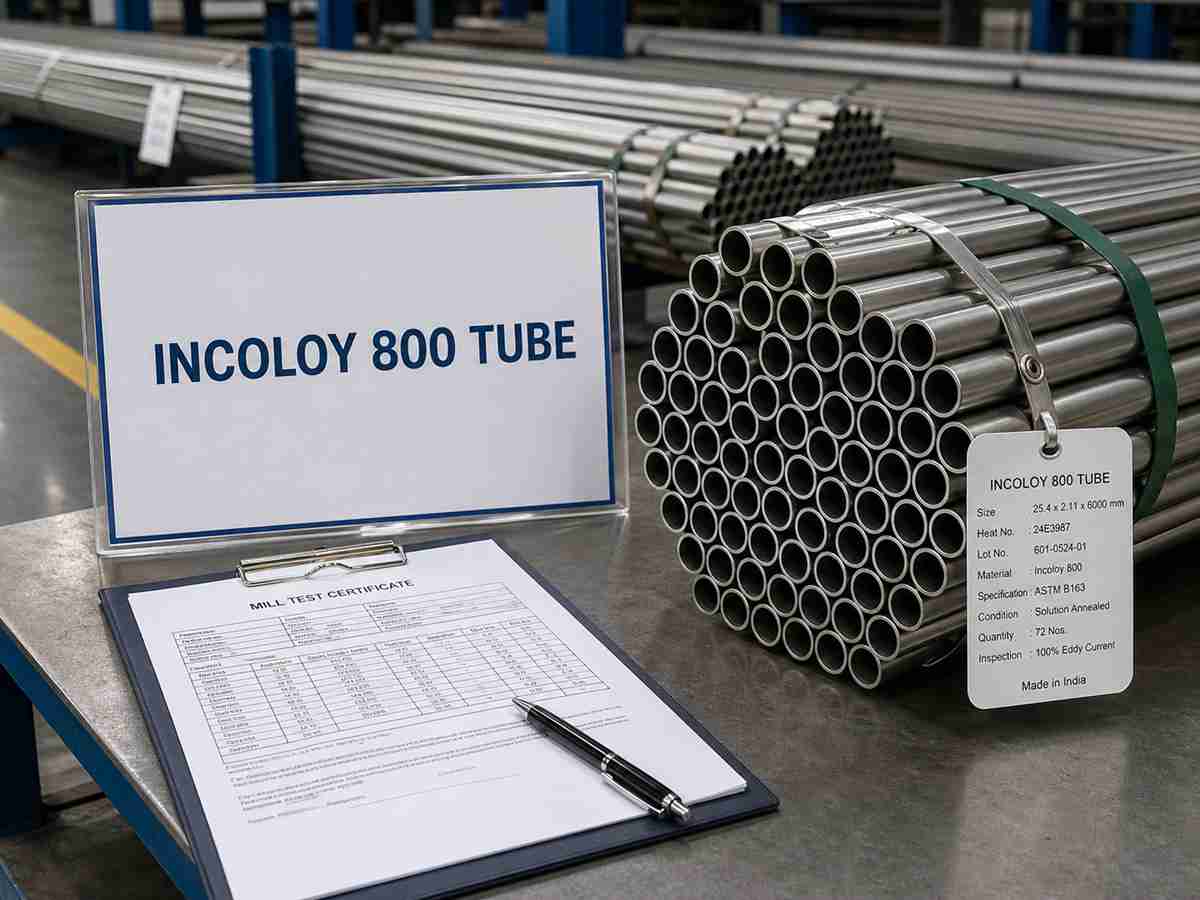
What Buyers Should Confirm Before Releasing Exchanger Tube
The first checkpoint is product-form accuracy. A reliable incoloy 800 heat exchanger tube supplier should identify the exact tube standard, delivered condition, dimensional tolerance, and inspection route tied to the project. That sounds basic, but exchanger jobs often suffer when tube is discussed generically and the buyer later discovers that the document set, testing route, or condition does not match the approved package. A strong supplier makes these points clear before shipment, not after a customer starts asking why the data looks incomplete.
The second checkpoint is handling discipline. A serious incoloy 800 heat exchanger tube supplier should be able to show how bundle tags are maintained, how short lengths remain traceable after cutting, and how mill certificates link to the actual packed material. Tube stock moves through receiving, pickling, cutting, bending, and fabrication much faster than plate or bar. When the supplier cannot describe how identity survives that movement, the buyer should assume more risk than the quote price suggests. In exchanger work, the control system is often as important as the tube itself.
| Buyer concern | Why it matters | What a strong supplier should show |
| Correct tube standard | Approval depends on exact product-form compliance | Clear standard and delivered condition |
| Heat traceability | Cut lengths lose identity quickly | Bundle tags, MTC linkage, and packing logic |
| Dimensional consistency | Wall and OD drive fabrication success | Inspection route and stock detail before shipment |
| Document readiness | Late questions disrupt exchanger schedules | Advance certificates and technical clarification support |
When Supplier Quality Matters More Than Tube Availability
There are many jobs where any available tube is not enough. An incoloy 800 heat exchanger tube supplier becomes especially important when the order is tied to owner review, export documentation, thermal equipment uptime, or shutdown-driven fabrication windows. In these cases, the real commercial risk appears after the material leaves the warehouse. A single mismatch in condition, testing route, or traceability can delay bundle fabrication far more than a slightly longer initial lead time would have cost.
At 28Nickel, we usually recommend screening the incoloy 800 heat exchanger tube supplier at inquiry stage. Ask for the applicable tube standard, mill certificate format, handling plan after bundle splitting, and whether PMI or third-party inspection can be supported if the project requires it. Those questions quickly show whether the supplier understands exchanger tube as a controlled engineering input rather than a generic warehouse item. When the answers are clear early, the project tends to move faster later.
Buyers should also ask how the supplier handles partial shipments and remnant identification. A disciplined incoloy 800 heat exchanger tube supplier should be able to explain how cut bundles, spare lengths, and repacked materials remain connected to the original certificate route. That point matters because exchanger shops often consume tube in phases rather than all at once. The better that control is defined before shipment, the easier it is to defend the final bundle file later.
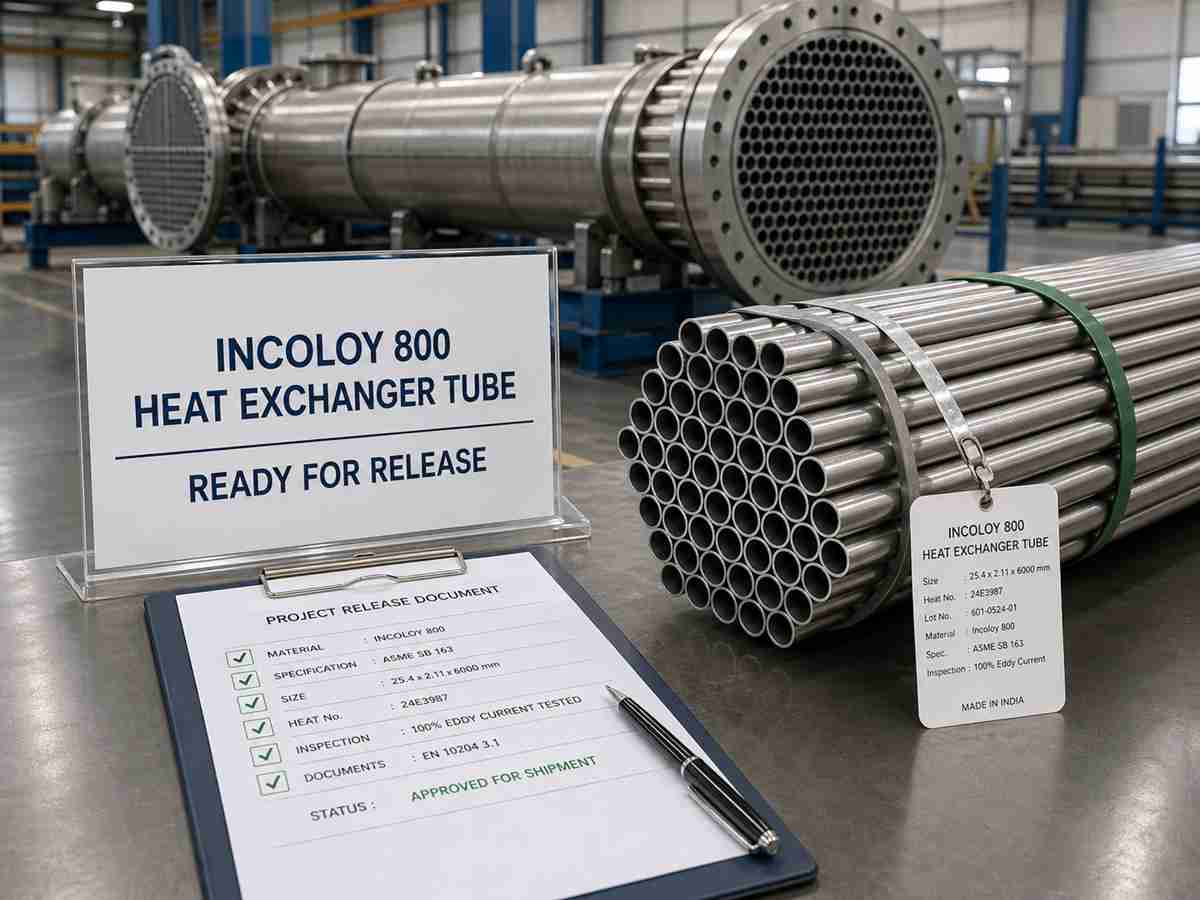
Conclusion
Heat exchanger tube only looks simple until fabrication begins. If you need help reviewing standards, certificates, or bundle traceability for an exchanger-tube order, 28Nickel can help check whether the proposed incoloy 800 heat exchanger tube supplier is technically strong enough before release.
Related Q&A
Q: Why does traceability matter so much on exchanger tube?
Because tube is frequently cut into many short lengths. A weak incoloy 800 heat exchanger tube supplier can lose heat identity long before the final bundle is complete.
Q: Should buyers request certificates before shipment?
Yes. That is one of the fastest ways to see whether the incoloy 800 heat exchanger tube supplier is aligned with the actual project requirement.
Q: Can PMI help on exchanger tube orders?
For higher-risk orders or mixed-grade stock routes, PMI can be a useful added control before fabrication starts.