











Best nickel alloy for sour gas service is not a question that should be answered by alloy name alone. In real projects, the same nickel alloy can perform well in one plant and disappoint in another because velocity, contamination, temperature, stress, fabrication route, and inspection discipline are different. That is why 28Nickel treats alloy selection as an engineering review, not a quick product match.
The commercial risk is simple: if best nickel alloy for sour gas service is selected from a simplified table, the buyer may receive material that looks correct on the certificate but is weak against the actual failure mode. Engineers and purchasers need a package that links service chemistry, component geometry, manufacturing route, testing, and documentation before the order reaches production.
How to Choose best nickel alloy for sour gas service
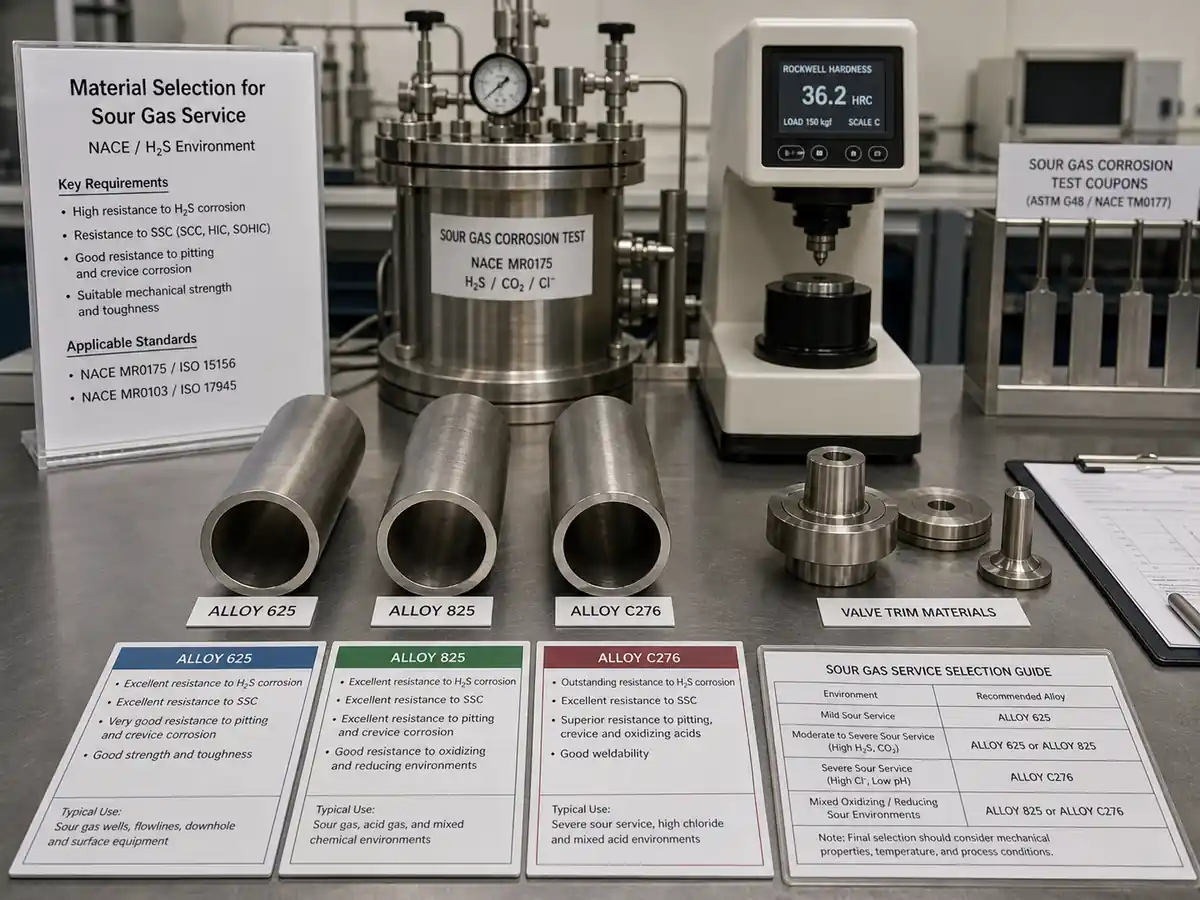
Sour gas service is not just a corrosion question. The best nickel alloy for sour gas service must be evaluated against hydrogen sulfide partial pressure, chloride content, pH, elemental sulfur, temperature, pressure, tensile stress, hardness, and the applicable NACE MR0175/ISO 15156 or project standard. Alloy 625 is widely used in sour oil and gas equipment, Alloy 825 can be suitable in some moderately severe environments, and C276 may be selected where sour service is combined with aggressive acid chloride contamination. The service envelope decides the candidate, not the alloy reputation alone.
Hardness and metallurgical condition are often the quiet gatekeepers. A material may have good corrosion resistance but still be rejected if heat treatment, cold work, or weld procedure creates an unacceptable hardness or susceptible microstructure. The best nickel alloy for sour gas service should be specified with delivery condition, hardness limit, welding route, and post-weld requirements visible before quotation. This is especially important for bars, forged blocks, flanges, weld overlays, and valve trim where machining and welding can change local properties.
Component form affects risk. Tubing, pipe, plate, forgings, castings, and fasteners each carry different stress states and inspection concerns. Small fasteners can be more vulnerable than large pipe because of high strength and thread stress concentration. Valve trims may see erosive particles, pressure drop, and H2S exposure at the same time. If the buyer asks only for ‘NACE nickel alloy,’ the supplier cannot know whether the key issue is cracking, pitting, sulfide stress cracking, hydrogen embrittlement, or general corrosion.
| Selection factor | Engineering reason | What 28Nickel should verify |
| Alloy 625 | Common high-resistance choice for sour oil and gas parts | NACE condition, hardness, weld route, and PMI |
| Alloy 825 | Candidate for selected moderate sour and acid environments | Chloride level, pH, temperature, and project limits |
| C276 | Useful when sour gas combines with aggressive acid chloride contamination | Oxidizing/reducing balance, cost, and fabrication route |
| Hardness control | High hardness can increase cracking susceptibility | Heat treatment, cold work, weld HAZ, and recorded hardness |
| Traceability | Owner review depends on heat-to-component evidence | MTC, heat marks, NACE statement, and inspection reports |
Inspection Evidence for sour gas nickel alloy
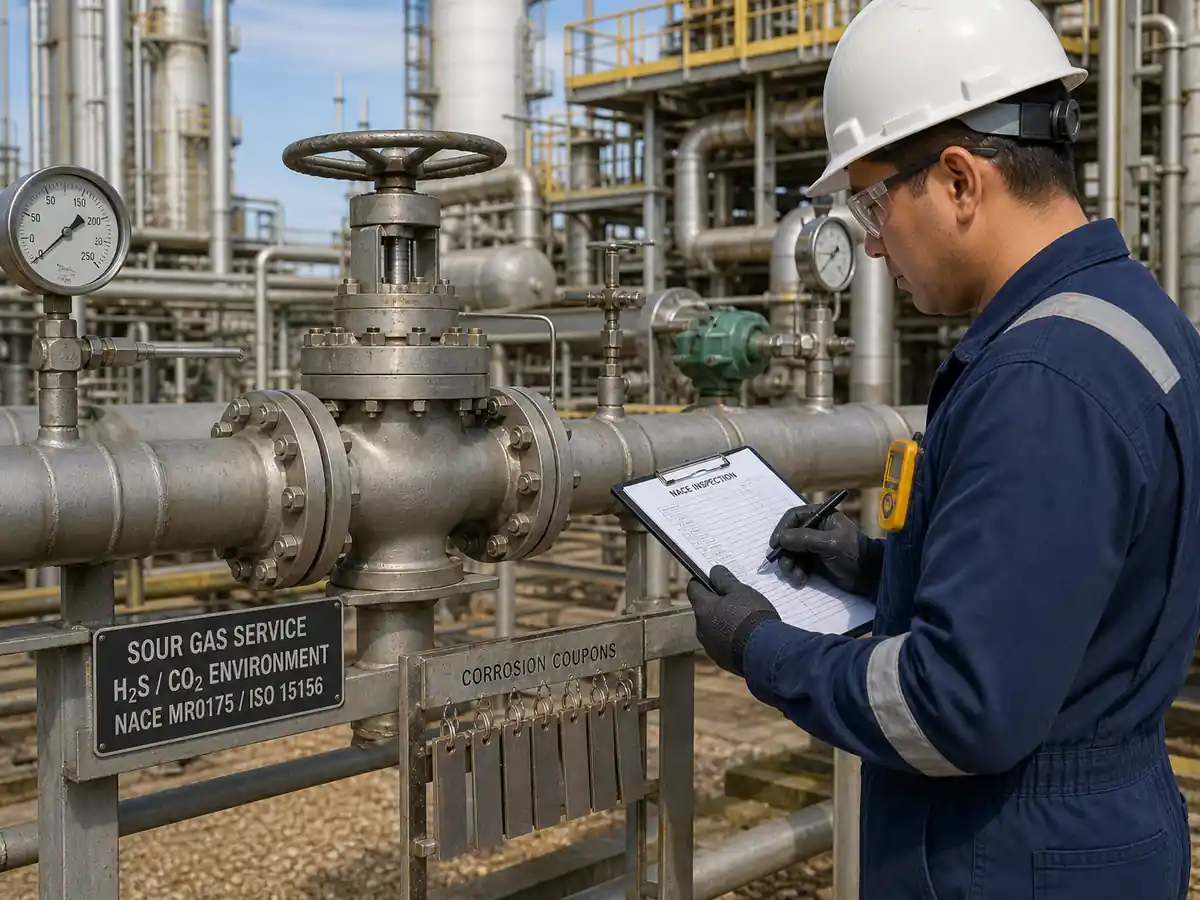
For best nickel alloy for sour gas service, inspection should start before the material is cut or packed. The reviewer needs to connect alloy grade, heat number, delivery condition, product form, and service note to the purchase order. A certificate alone is useful, but it does not prove that the chosen material fits the local corrosion mechanism.
The documentation package should include material certificates, chemical analysis, mechanical properties, heat treatment record, hardness readings, PMI where required, and a clear statement of compliance to the named sour service standard. The best nickel alloy for sour gas service also needs traceability from heat to component, especially when multiple sizes are cut from one heat or when weld overlay is applied to carbon steel substrates.
A serious supplier will pause when a sour gas inquiry lacks process data. The best nickel alloy for sour gas service can only be defended when the selection is tied to H2S, chloride, pH, temperature, stress, hardness, and fabrication route. 28Nickel can help engineering and procurement teams convert those service details into a material package that is inspectable, certifiable, and practical to manufacture.
Conclusion
The right answer to best nickel alloy for sour gas service is a controlled decision, not a slogan. Buyers should confirm chemistry, temperature, impurities, stress state, product form, welding or machining route, inspection scope, and certificate requirements together. When those details are clear, 28Nickel can help supply nickel alloy materials that are easier to approve, easier to inspect, and safer to install in demanding service.
Related Q&A
Q1: Is Alloy 625 always the safest sour gas choice?
No. Alloy 625 is widely used, but the best nickel alloy for sour gas service depends on the exact H2S, chloride, pH, temperature, stress, and standard requirements.
Q2: Why does hardness matter in sour service?
Hardness is linked to cracking susceptibility under sour conditions. Heat treatment, cold work, and welding must be controlled so the component remains within the required service limits.
Q3: What data should I provide for a sour gas quotation?
Provide H2S partial pressure, chloride level, pH, temperature, pressure, component type, standard required, hardness limit, welding route, and inspection scope.