











Nickel 200 corrosion resistance in sulfuric acid is not a question that should be answered by alloy name alone. In real projects, the same nickel alloy can perform well in one plant and disappoint in another because velocity, contamination, temperature, stress, fabrication route, and inspection discipline are different. That is why 28Nickel treats alloy selection as an engineering review, not a quick product match.
The commercial risk is simple: if nickel 200 corrosion resistance in sulfuric acid is selected from a simplified table, the buyer may receive material that looks correct on the certificate but is weak against the actual failure mode. Engineers and purchasers need a package that links service chemistry, component geometry, manufacturing route, testing, and documentation before the order reaches production.
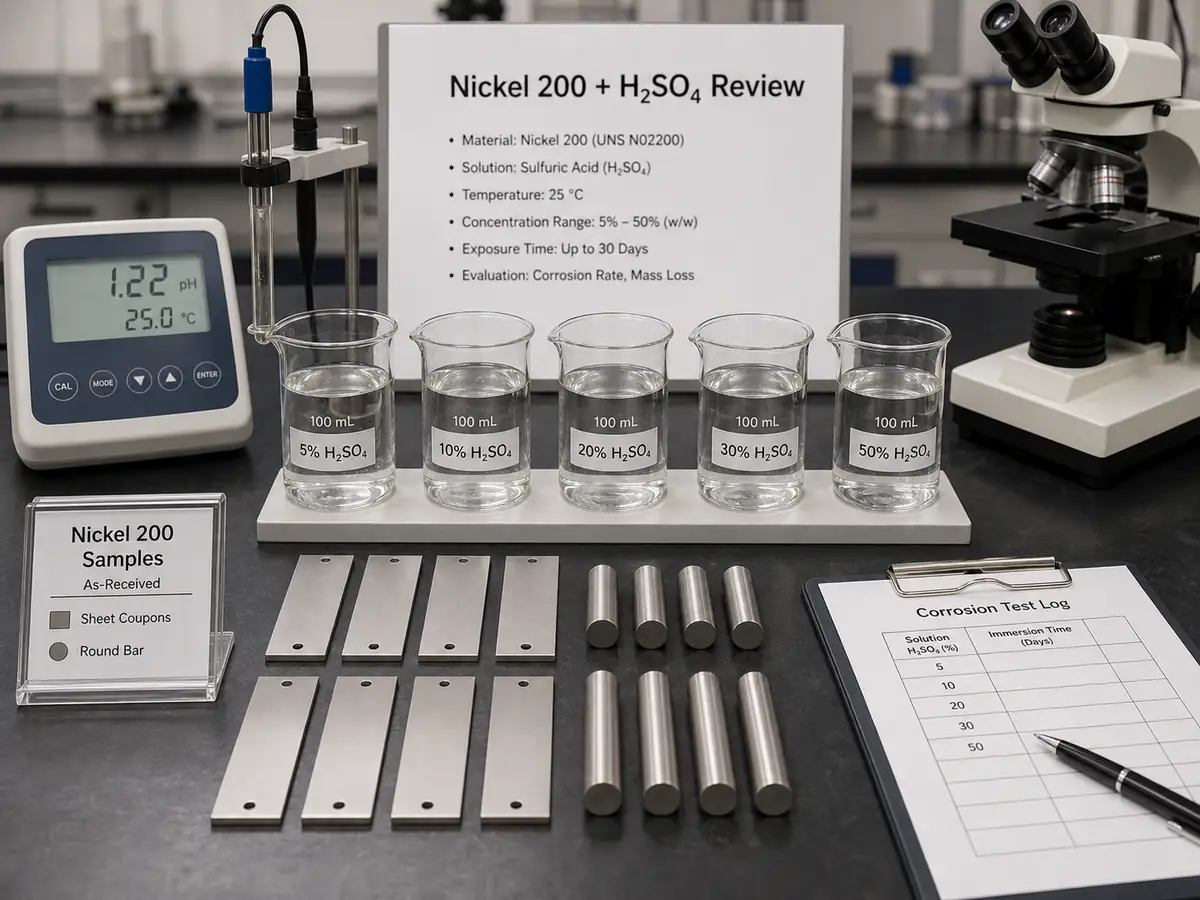
How to Choose nickel 200 corrosion resistance in sulfuric acid
Nickel 200 is often associated with strong resistance to caustic alkalis, but sulfuric acid is a different conversation. Nickel 200 corrosion resistance in sulfuric acid can be useful only under specific reducing, low-oxidizing conditions, and it can deteriorate quickly when oxygen, ferric ions, cupric ions, high temperature, aeration, or high velocity are present. This is why a serious material review never says ‘Nickel 200 is sulfuric-acid resistant’ without naming concentration, temperature, aeration state, and contaminants.
The corrosion mechanism is controlled by environment, not by nominal purity alone. Pure nickel may remain acceptable in certain dilute, deaerated sulfuric acid exposures, but the passive or protective behavior can break down in oxidizing acid. Nickel 200 corrosion resistance in sulfuric acid must therefore be checked against real plant conditions: startup oxygen, tank breathing, acid make-up, dilution water quality, iron contamination, and cleaning chemicals. Small oxidizing additions can change the decision completely.
Component geometry adds another layer. Tanks, sheets, heat exchanger parts, pipe spools, and fasteners see different flow and oxygen exposure. A stagnant zone under deposits may behave differently from a well-mixed vessel wall. Welds, crevices, scratched surfaces, and areas of high flow can create local corrosion rates that are not predicted by a simple handbook table. For procurement, Nickel 200 should be specified with surface condition, welding plan, inspection scope, and corrosion allowance clearly defined.
| Selection factor | Engineering reason | What 28Nickel should verify |
| Dilute deaerated acid | Nickel 200 may be considered in selected reducing conditions | Concentration, oxygen exclusion, temperature, and corrosion allowance |
| Aerated or oxidizing acid | Risk can rise sharply due to oxidizing species | Dissolved oxygen, ferric/cupric ions, and startup exposure |
| Temperature | Higher temperature generally accelerates acid attack | Operating and cleaning temperature ranges |
| Fabrication condition | Welds and crevices can change local corrosion behavior | WPS, surface finish, crevice design, and post-weld cleaning |
| Alternative alloys | More resistant alloys may be needed for contaminated sulfuric acid | Alloy 20, Alloy 825, C276, chloride content, and cost review |
Inspection Evidence for Nickel 200 sulfuric acid behavior
For nickel 200 corrosion resistance in sulfuric acid, inspection should start before the material is cut or packed. The reviewer needs to connect alloy grade, heat number, delivery condition, product form, and service note to the purchase order. A certificate alone is useful, but it does not prove that the chosen material fits the local corrosion mechanism.
The document package should include chemical analysis, carbon level, mechanical properties, delivery condition, PMI if Nickel 200 and Nickel 201 are both handled, and surface inspection photos. Nickel 200 corrosion resistance in sulfuric acid also deserves a written service note from the buyer or engineer, because the supplier cannot infer acid concentration and oxidizing species from the material name. If the service is uncertain, corrosion testing or a more resistant alloy should be considered before fabrication.
A responsible supplier will not oversell Nickel 200 into unknown sulfuric acid. Nickel 200 corrosion resistance in sulfuric acid is a conditional property, not a universal guarantee. 28Nickel can help compare Nickel 200 against Alloy 20, Alloy 825, C276, or other candidates when sulfuric acid contains chlorides, oxidizers, or high temperature. The safest purchase is the one where chemistry, temperature, and fabrication route are visible before material release.
Conclusion
The right answer to nickel 200 corrosion resistance in sulfuric acid is a controlled decision, not a slogan. Buyers should confirm chemistry, temperature, impurities, stress state, product form, welding or machining route, inspection scope, and certificate requirements together. When those details are clear, 28Nickel can help supply nickel alloy materials that are easier to approve, easier to inspect, and safer to install in demanding service.
Related Q&A
Q1: Is Nickel 200 good in sulfuric acid?
Only in selected conditions. Nickel 200 corrosion resistance in sulfuric acid depends strongly on concentration, temperature, aeration, and oxidizing contaminants.
Q2: Why is oxygen so important?
Oxygen and oxidizing ions can shift the acid environment and increase corrosion risk for pure nickel. Tank breathing, startup, and contaminated acid should be reviewed.
Q3: When should another alloy be selected?
If sulfuric acid is hot, aerated, chloride-bearing, oxidizing, or contaminated with ferric or cupric ions, review Alloy 20, Alloy 825, C276, or another qualified option.