










Best nickel alloy for phosphoric acid reactors is not a question that should be answered by alloy name alone. In real projects, the same nickel alloy can perform well in one plant and disappoint in another because velocity, contamination, temperature, stress, fabrication route, and inspection discipline are different. That is why 28Nickel treats alloy selection as an engineering review, not a quick product match.
The commercial risk is simple: if best nickel alloy for phosphoric acid reactors is selected from a simplified table, the buyer may receive material that looks correct on the certificate but is weak against the actual failure mode. Engineers and purchasers need a package that links service chemistry, component geometry, manufacturing route, testing, and documentation before the order reaches production.
How to Choose best nickel alloy for phosphoric acid reactors
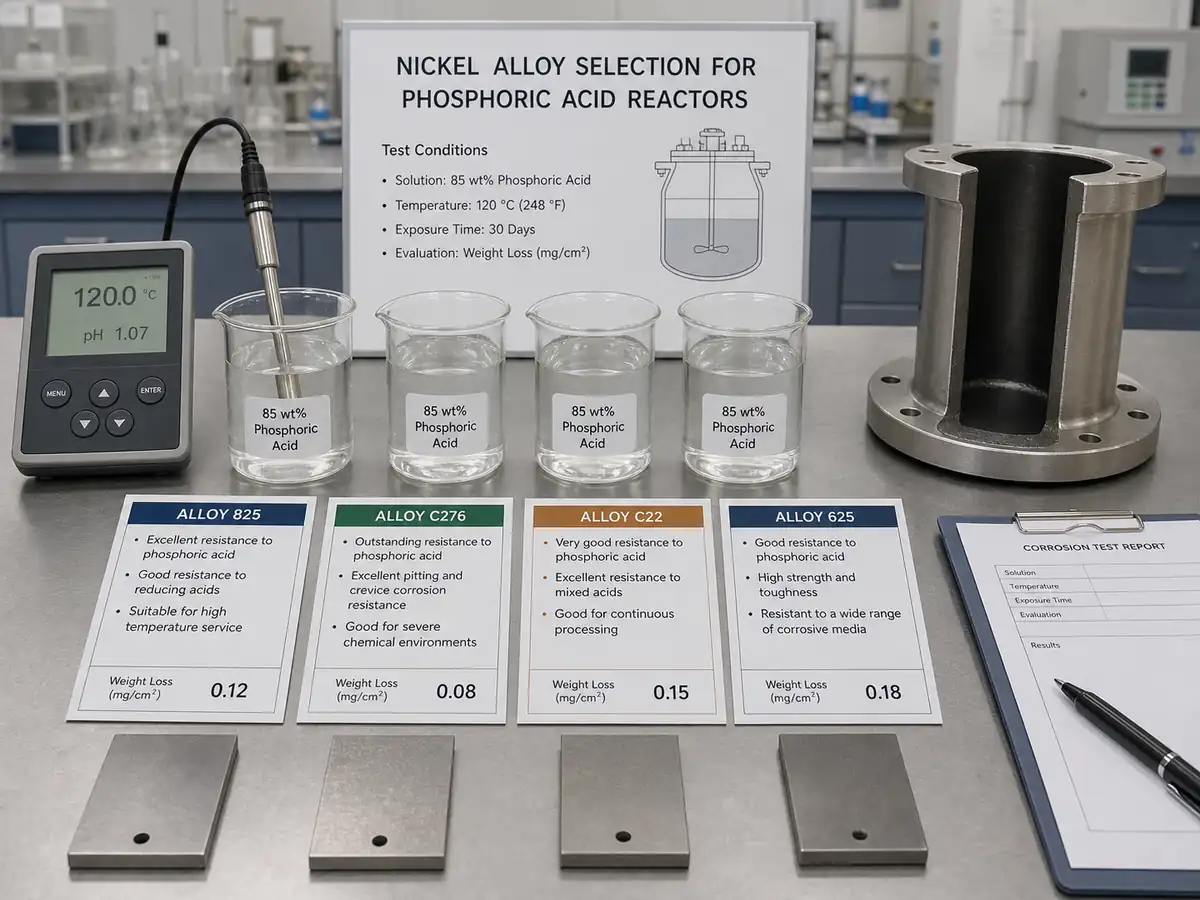
Phosphoric acid looks less aggressive than some mineral acids on paper, but reactor service is rarely clean. The best nickel alloy for phosphoric acid reactors depends on acid concentration, temperature, fluoride, chloride, sulfate, oxidizing impurities, solids, agitation, and whether wet-process acid is involved. Alloy 825 is often considered for phosphoric and sulfuric acid combinations, C276 and C22 are candidates when chlorides and oxidizing contaminants rise, and Alloy 625 may be used where strength, fabrication, and mixed chloride resistance are important.
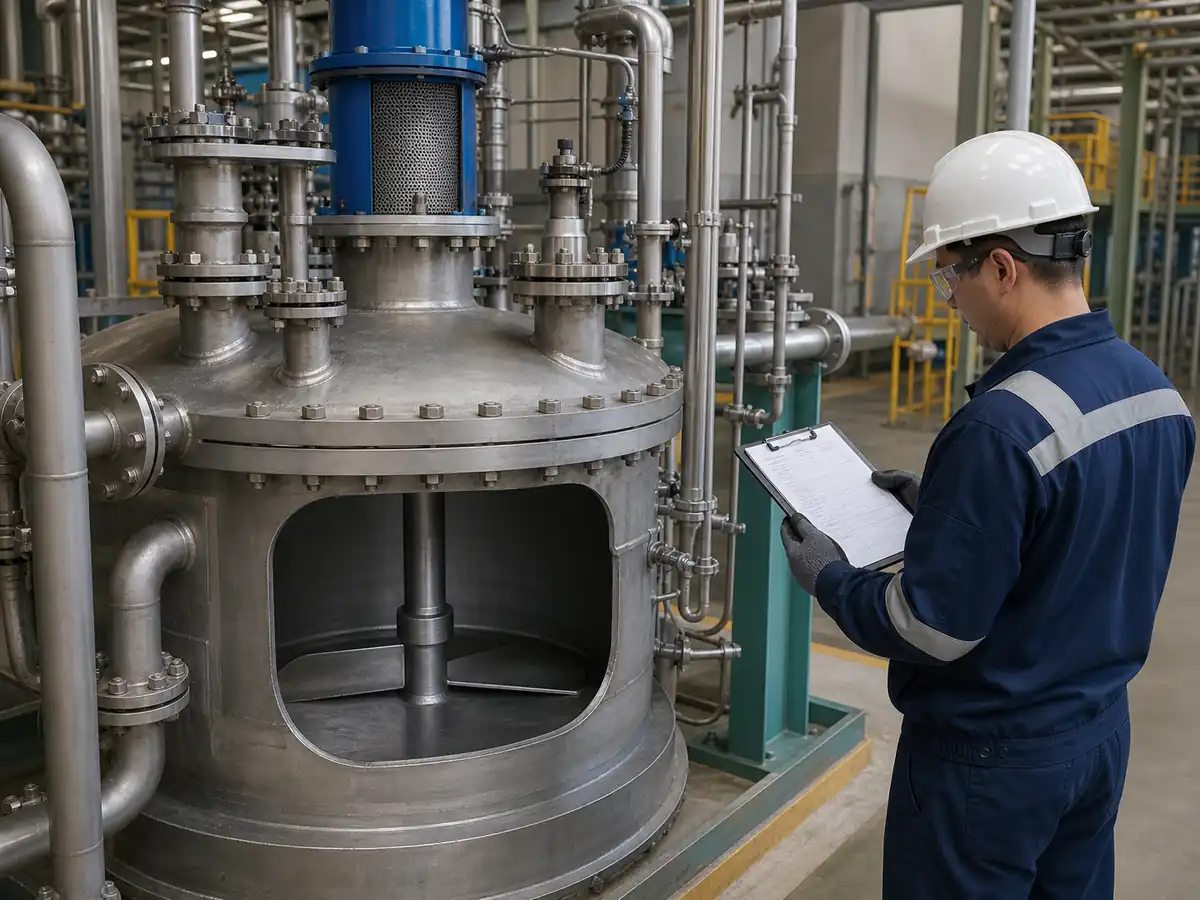
Reactor geometry changes the corrosion map. The shell, nozzles, agitator zone, baffles, heat-transfer surfaces, and drain areas do not see the same velocity or deposit behavior. The best nickel alloy for phosphoric acid reactors must be checked against both uniform corrosion and localized attack under deposits. Fluorides can be particularly troublesome, and chloride contamination can make an alloy that looks acceptable in pure phosphoric acid perform poorly in plant acid.
Fabrication route should be part of selection. Plate-lined reactors, clad plate, weld overlay, forged nozzles, pipe connections, and agitator components may require different alloy forms and inspection methods. Weld metal dilution, heat-affected-zone cleaning, pickling, passivation expectations, and post-fabrication inspection can all influence the final performance. A purchase request that lists only the alloy grade misses the real reactor risk.
| Selection factor | Engineering reason | What 28Nickel should verify |
| Alloy 825 | Often considered for phosphoric and sulfuric acid combinations | Temperature, chloride, fluoride, and sulfuric acid carryover |
| C276/C22 | Candidates for contaminated acids with chlorides or oxidizers | Impurity profile, localized corrosion risk, and cost |
| Alloy 625 | Useful where mixed chloride resistance and strength are needed | Weldability, overlay route, and strength requirement |
| Reactor zones | Agitation, deposits, and nozzles create local corrosion differences | Baffles, drain areas, heat-transfer zones, and crevices |
| Documentation | Complex reactors need traceable pressure-boundary release | MTC, PMI, NDE, weld records, and service data sheet |
Inspection Evidence for phosphoric acid reactor alloy
For best nickel alloy for phosphoric acid reactors, inspection should start before the material is cut or packed. The reviewer needs to connect alloy grade, heat number, delivery condition, product form, and service note to the purchase order. A certificate alone is useful, but it does not prove that the chosen material fits the local corrosion mechanism.
The release package should include MTCs, PMI, heat treatment condition, weld consumable traceability where applicable, dimensional reports, and NDE records for pressure-boundary items. The best nickel alloy for phosphoric acid reactors should also be supported by a service data sheet that identifies impurity levels, operating temperature, cleaning cycles, and solids. Without those details, the supplier cannot separate a commodity acid tank from a high-risk reactor.
A good supplier will not promise one universal alloy for all phosphoric acid units. The best nickel alloy for phosphoric acid reactors is selected by matching impurity profile, temperature, flow, solids, fabrication route, and inspection requirements. 28Nickel can help compare Alloy 825, C276, C22, 625, and related grades, then supply plate, pipe, bar, forgings, fittings, or weld consumables with documentation aligned to the reactor package.
Conclusion
The right answer to best nickel alloy for phosphoric acid reactors is a controlled decision, not a slogan. Buyers should confirm chemistry, temperature, impurities, stress state, product form, welding or machining route, inspection scope, and certificate requirements together. When those details are clear, 28Nickel can help supply nickel alloy materials that are easier to approve, easier to inspect, and safer to install in demanding service.
Related Q&A
Q1: Is Alloy 825 enough for phosphoric acid reactors?
Sometimes. The best nickel alloy for phosphoric acid reactors depends on impurities, temperature, solids, chloride, fluoride, and whether wet-process acid is present.
Q2: Why are fluorides important?
Fluorides can increase corrosivity and change alloy ranking. They should be identified in the service data before alloy selection is finalized.
Q3: Should reactor nozzles use the same alloy as the shell?
Not automatically. Nozzles, agitator zones, and drain areas may see different velocity, crevice, and deposit conditions, so they should be reviewed individually.