











Inconel 625 coil is often ordered as a simple line item, but in a real B2B project it is not simple at all. The buyer is usually trying to protect machining time, corrosion performance, weldability, document approval, and delivery risk in one purchase. If the inquiry only says alloy, size, and quantity, too many engineering assumptions remain hidden.
For 28Nickel, the right way to supply Inconel 625 coil is to connect the material to the service condition before quotation. Inconel 625 is a nickel-chromium-molybdenum-niobium alloy chosen when chloride pitting, crevice corrosion, seawater exposure, mixed acid service, and weldability must be handled in the same material package. Its strength is mainly from solid-solution hardening, so it does not need a precipitation-hardening cycle to be useful in many chemical, marine, offshore, and flue-gas desulfurization projects. That sounds convenient, but it also tempts buyers to treat every product form as interchangeable. They are not. That is why a technically useful offer should discuss product form, delivery condition, inspection scope, and certificate release rather than only giving a kilogram price.
How Should Engineers Specify Inconel 625 coil?
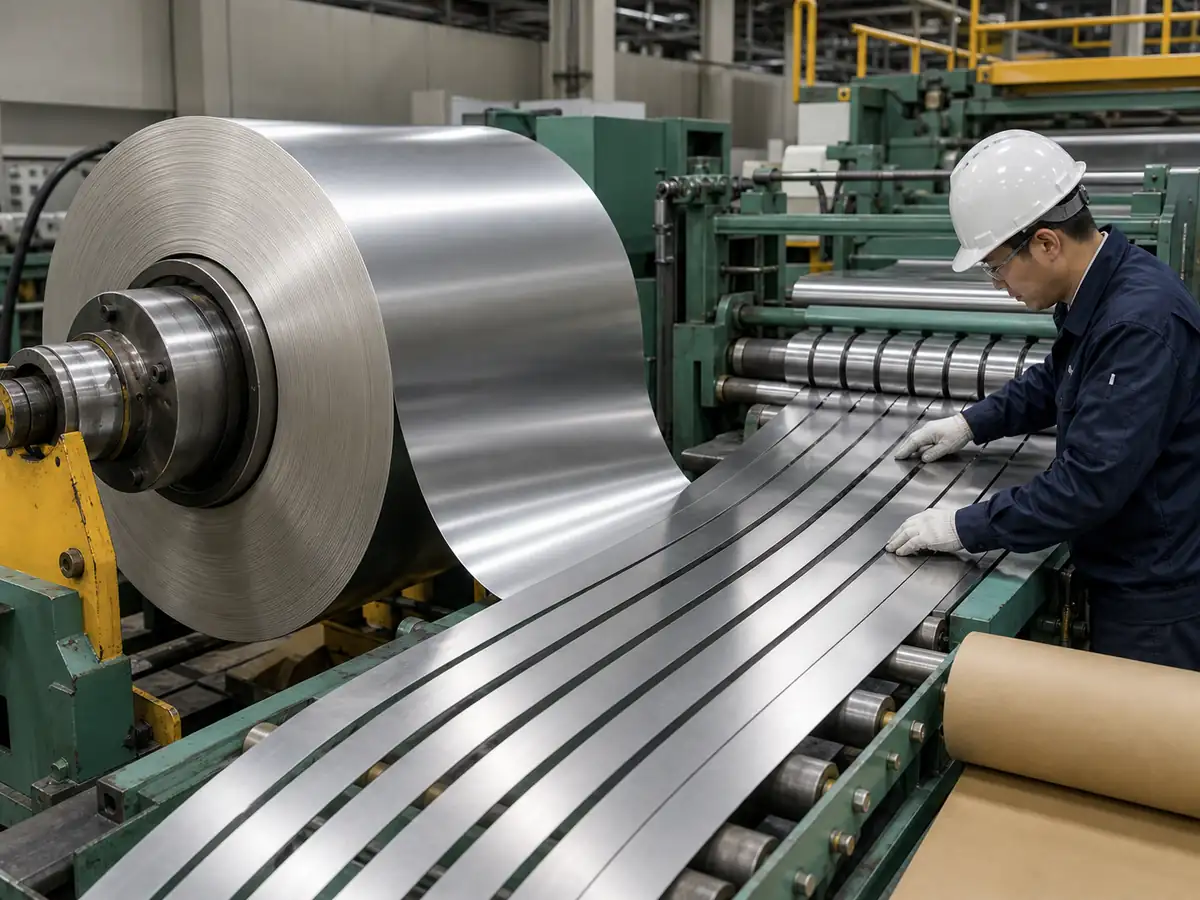
The first step is to define why Alloy 625 is being used. In many projects, Inconel 625 coil is selected for slitting lines, continuous forming, stamped parts, ducting, liners, heat shields, and corrosion-resistant strip conversion. Those applications may involve chloride-bearing water, acidic condensate, sour process fluids, high-temperature oxidation, or a combination of corrosion and mechanical load. Each service has a different controlling risk. A valve stem cares about galling and straightness; a pressure pipe cares about wall control and code testing; a thin sheet cares about surface damage and forming behavior.
Coil procurement is a yield problem as much as a material problem. A coil can pass chemical and mechanical requirements but still create cost if its edges are bruised, the surface is scratched, the inner diameter does not fit the decoiler, or the coil set is not suitable for the line. Because nickel alloy coil is expensive, small percentage losses translate into real money.
The second step is to define the manufacturing route. For Inconel 625 coil, the route may involve rolling, forging, drawing, peeling, grinding, slitting, welding, extrusion, or heat treatment. These words are not paperwork decoration. They explain why two pieces with the same chemistry may behave differently during cutting, bending, welding, hydrotesting, or final inspection. A senior engineer will usually ask for the route when the part is expensive, safety-related, or exposed to a corrosive fluid.
| Review item | Why engineers care | What 28Nickel should confirm |
| Coil dimensions | Line setup depends on ID, OD, width, and weight | Coil ID, OD, width, weight, and handling limits |
| Surface and edge | Scratches and edge dents reduce slitting yield | Protective paper, edge protectors, visual inspection, and photos |
| Shape control | Coil set and camber influence continuous feeding | Flatness, camber, coil set, and trial processing notes |
| Lot release | Long production runs need consistent material behavior | Coil number, heat number, mechanical data, and reserved stock |
| Packing | Transit damage is costly and hard to dispute later | Export packing, moisture control, edge guards, and before-shipment photos |
Inspection and Documentation for coil
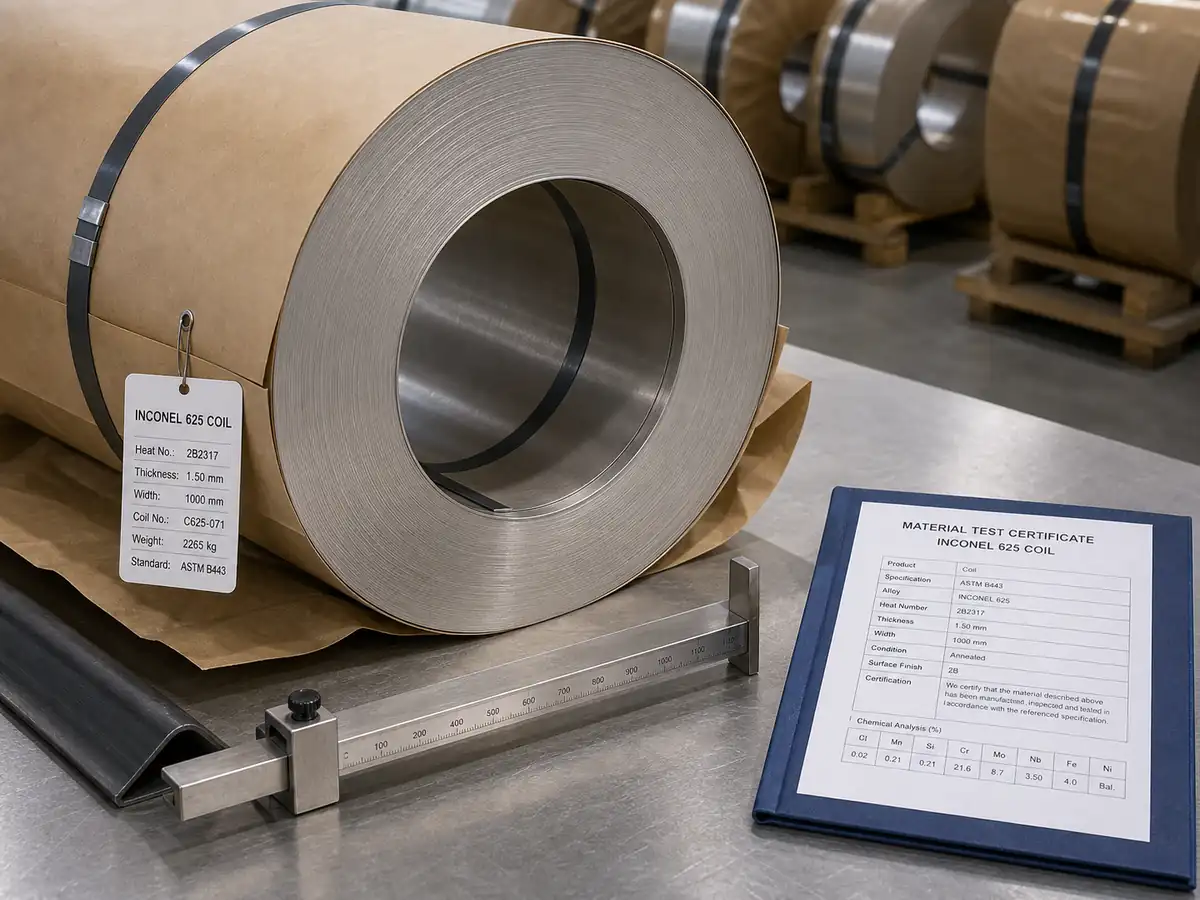
A reliable Inconel 625 coil package should be released with more than a chemical analysis. Chemistry confirms the alloy family, but it does not prove dimensional stability, surface condition, heat treatment, pressure-test status, or traceability after cutting. The most common export dispute I see is not that the alloy is completely wrong. It is that the paper trail cannot prove the right material reached the right project in the right condition.
At minimum, Inconel 625 coil should be tied to an EN 10204 3.1 mill test certificate or the project-specified equivalent. The certificate should list heat number, chemical composition, mechanical properties, delivery condition, and applicable product standard. Depending on the form, the buyer may also need PMI, dimensional reports, ultrasonic testing, eddy-current testing, hydrostatic testing, surface photographs, or third-party inspection. When material will be cut before shipment, mark transfer must be planned before the saw starts.
Packaging is also part of the technical control plan. Inconel 625 coil can be scratched, contaminated by carbon steel contact, mixed with another nickel alloy, or separated from its tags during international handling. For a low-risk stock sale, this may sound excessive. For a chemical plant, offshore package, or pressure-equipment project, these details are what let the receiving engineer approve the material without repeated clarification.
Conclusion
The best Inconel 625 coil order is not the cheapest line on a spreadsheet. It is the order where alloy selection, product form, manufacturing route, inspection evidence, and traceability all support the same engineering decision. If your team is reviewing drawings, comparing stock options, or preparing a technical inquiry, 28Nickel can help turn the service condition into a material package that is easier to approve and safer to put into production.
Related Q&A
Q1: What makes Inconel 625 coil different from sheet?
Coil is intended for continuous processing, so coil geometry, edge protection, and feed behavior are critical.
Q2: Should coil photos be requested before shipment?
Yes. Photos of coil face, edge protection, tags, and packing help resolve transit or receiving disputes.
Q3: Can one coil be slit into multiple widths?
Yes, but the slitting plan should preserve traceability for every slit coil and remnant.