










Cuando los ingenieros evalúan Monel 400 vs Níquel 201 para tubos de intercambiadores de calor, La elección equivocada rara vez falla el primer día. Suele fallar silenciosamente, por corrosión bajo depósito, agrietamiento asistido por tensión, comportamiento inesperado de ensuciamiento o desajuste entre la metalurgia y la química de servicio. Por este motivo, esta comparación nunca debe reducirse a un simple argumento de “aleación más resistente frente a níquel más puro”. En el servicio de intercambiadores de calor, el rendimiento de los tubos es una cuestión de sistema: la composición del fluido, el nivel de cloruro, el oxígeno disuelto, los cambios de pH, la velocidad, la ruta de fabricación, la soldabilidad y las prácticas de limpieza interactúan con la aleación. Si está especificando tubos de repuesto, diseñando un nuevo haz o intentando reducir las paradas imprevistas, la decisión entre Monel 400 y Níquel 201 merece una revisión de ingeniería más disciplinada.
Por qué el Monel 400 frente al Níquel 201 para tubos de intercambiadores de calor no es un simple intercambio de materiales
A primera vista, ambas aleaciones pertenecen a la familia del níquel y son conocidas por su resistencia a la corrosión. Pero su metalurgia es muy diferente.
El Monel 400 es una aleación de solución sólida de níquel y cobre. Su combinación de níquel y cobre le confiere una excelente resistencia a numerosos entornos de agua de mar y salmuera, especialmente en aquellos en los que intervienen medios que contienen cloruro. Además, ofrece una mayor resistencia mecánica que los grados de níquel comercialmente puro, lo cual es importante cuando las tuberías están sometidas a vibraciones, fluctuaciones de presión o un riesgo moderado de erosión-corrosión.
El níquel 201, por el contrario, es esencialmente níquel comercialmente puro con un bajo contenido controlado de carbono. Su verdadero valor no radica en la resistencia de amplio espectro a los cloruros. Su fortaleza reside en su alta pureza, su excelente resistencia a los medios cáusticos en las condiciones adecuadas y su buen rendimiento en aquellos casos en los que es necesario minimizar la contaminación del producto o en los que las condiciones reductoras favorecen el uso de níquel puro. La composición química con bajo contenido en carbono del níquel 201 también mejora su comportamiento a temperaturas elevadas, al reducir el riesgo de grafitización en comparación con el níquel 200.
Desde el punto de vista de la ingeniería, Monel 400 vs Níquel 201 para tubos de intercambiadores de calor es fundamentalmente una cuestión de química del servicio, no de preferencia de marca o precio inicial del tubo.
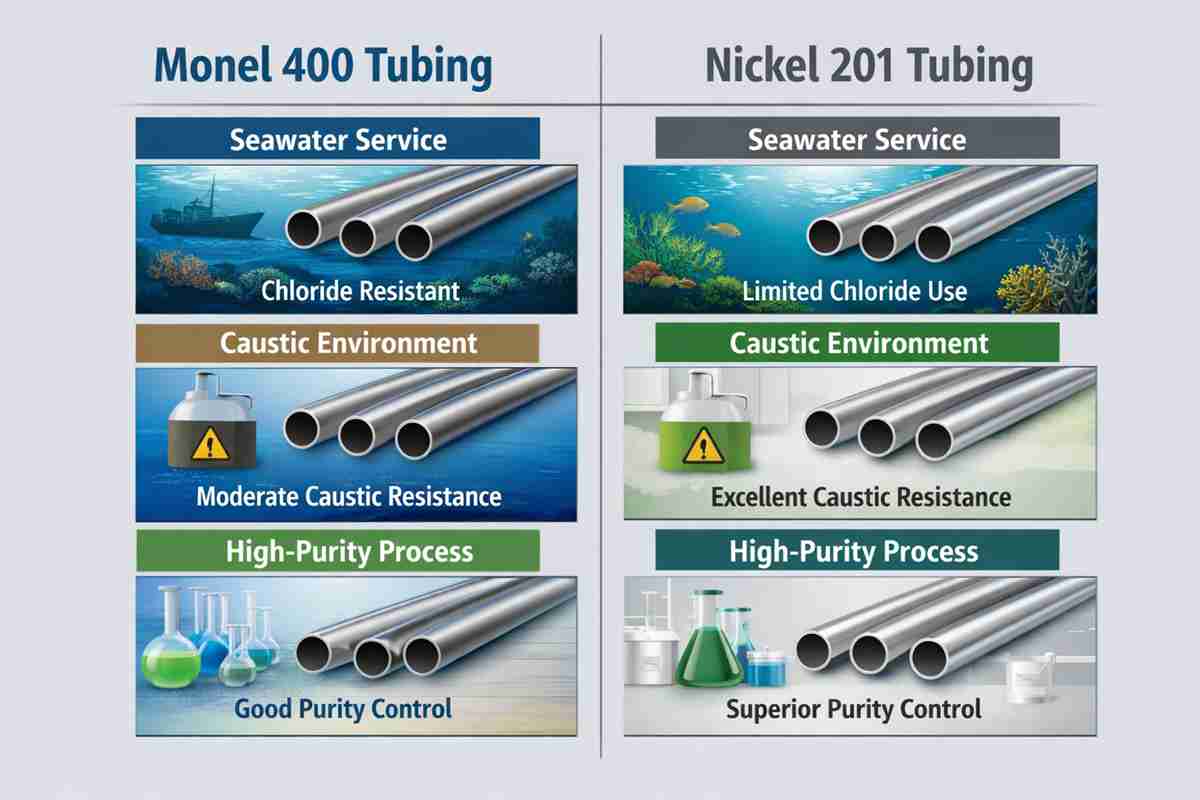
Comportamiento de la corrosión: El verdadero factor decisivo
En la mayoría de los proyectos prácticos de intercambiadores, la resistencia a la corrosión determina la selección final del material más que la resistencia a la tracción.
Monel 400 en servicio de refrigeración por cloruro, salmuera y marina
El Monel 400 se utiliza desde hace mucho tiempo en sistemas de manipulación de agua de mar, equipos de producción de sal, calentadores de salmuera e intercambiadores de calor marinos. Se comporta bien en agua de mar corriente y en muchas sales de neutras a alcalinas. Esto lo hace atractivo para tareas en el lado del tubo o del casco, donde la concentración de cloruros es significativa y las aleaciones de cobre ya no son suficientes.
Dicho esto, el Monel 400 no es inmune a las malas prácticas de funcionamiento. El agua de mar estancada, las incrustaciones biológicas, la contaminación por sulfuros y las zonas muertas de bajo caudal pueden provocar ataques localizados. En otras palabras, Monel 400 es tolerante, no invencible. Los ingenieros que lo especifican con éxito suelen controlar también la ventana de velocidad, la limpieza en el arranque y la conservación en el apagado.
Níquel 201 en sistemas cáusticos y de alta pureza
El Níquel 201 es a menudo la mejor respuesta en servicio cáustico concentrado y en ciertos entornos reductores donde el níquel puro permanece pasivo y el control de la contaminación es importante. Si su intercambiador está vinculado a la sosa cáustica, al procesamiento de álcalis especiales o a un circuito químico de alta pureza, el níquel 201 puede ofrecer una solución más limpia y químicamente compatible que el Monel 400.
Sin embargo, en aguas ricas en cloruros, muchos ingenieros sobrestiman lo que puede hacer el níquel puro. En aguas de refrigeración con cloruros, el níquel 201 no suele ser la primera opción para tubos de larga duración. Ahí es donde Monel 400 vs Níquel 201 para tubos de intercambiadores de calor se convierte en algo muy específico del servicio: El níquel 201 puede ser excelente en el entorno químico adecuado, pero no es la solución universal contra la corrosión que algunos equipos de compras suponen.
Resistencia mecánica, fabricación y fiabilidad de los tubos
La resistencia no lo es todo en los tubos para intercambiadores de calor, pero afecta a la resistencia a las abolladuras, los daños por manipulación, la tolerancia a las vibraciones y el margen de adelgazamiento de las paredes.
El Monel 400 proporciona normalmente una mayor resistencia y dureza que el Níquel 201. Esto ayuda durante la fabricación, el montaje de los haces y el funcionamiento en sistemas con turbulencias intermitentes o desgaste mecánico. También ofrece a los diseñadores un poco más de comodidad cuando se trata de vanos no soportados o ciclos de presión.
El níquel 201 es más blando y dúctil. Esto puede ser útil para el conformado, pero también significa una mayor sensibilidad a la deformación por manipulación si el control del taller es deficiente. En los tubos de pared delgada, esta distinción es importante. Un tubo más blando es más fácil de expandir en placas tubulares, pero también puede ser menos tolerante si el diseño del intercambiador ya está cerca de los umbrales de vibración.
La soldabilidad de ambas aleaciones es manejable con un procedimiento correcto, pero la soldadura no consiste únicamente en hacer uniones sólidas. La zona afectada por el calor, la compatibilidad del relleno, la limpieza posterior a la fabricación y el estado de tensión residual influyen en la vida útil del intercambiador. En los trabajos de sustitución sobre el terreno, ésta es otra razón Monel 400 vs Níquel 201 para tubos de intercambiadores de calor deben revisarse junto con el método de fabricación, no sólo los datos del certificado de materiales.
| Propiedad / Factor de selección | Monel 400 | Níquel 201 | Comentarios de ingeniería |
|---|---|---|---|
| Tipo de aleación | Aleación Ni-Cu | Ni comercialmente puro, bajo en C | Lógica de corrosión diferente; no intercambiable por apellido |
| Nivel de resistencia típico | Más alto | Baja | El Monel 400 suele ser más robusto frente a las agresiones mecánicas |
| Resistencia al cloruro / salmuera | Fuerte | Limitado a casos específicos del servicio | El Monel 400 se utiliza generalmente en aguas cloruradas. |
| Idoneidad del servicio cáustico | Moderada a selectiva | Excelente en muchas tareas cáusticas | El níquel 201 suele preferirse para corrientes de proceso alcalinas. |
| Control de la pureza y la contaminación | Bien | Excelente | El níquel 201 es atractivo para el servicio químico de alta pureza |
| Aplicaciones en agua de mar | Común | Menos frecuente | Las condiciones de caudal y el control de las incrustaciones siguen siendo importantes |
| Expansión del tubo / Conformabilidad | Bien | Muy buena | El níquel 201 es más blando y fácil de formar |
| Coste relativo del material | Normalmente más alto | Depende del servicio y del mercado | El coste total del ciclo de vida es más importante que el precio de los tubos |
| El mejor caso de uso | Refrigeración de procesos marinos, salmueras y cloruros | Medios cáusticos, reductores y de gran pureza | Basar la elección en la química real del fluido |
Coste por contador frente a coste por parada
Un error común en las compras es comparar únicamente el coste bruto de los tubos. Eso es lógica de compra, no ingeniería de ciclo de vida.
Si el medio de servicio contiene cloruros, entrada intermitente de oxígeno, sólidos o tendencia a la bioincrustación, un material más barato pero químicamente menos adecuado resulta caro muy rápidamente. Las fugas en los tubos provocan mantenimiento no planificado, pérdida de producto, riesgo de contaminación y, a veces, daños colaterales en los equipos adyacentes. Por otra parte, especificar Monel 400 cuando el níquel 201 funcionaría perfectamente en un bucle cáustico limpio puede suponer un coste de capital innecesario.
La forma más práctica de evaluar Monel 400 vs Níquel 201 para tubos de intercambiadores de calor es revisar conjuntamente cinco variables de campo: química normal, química de alteración, temperatura de funcionamiento, régimen de flujo y método de mantenimiento/limpieza. Una vez aclaradas estas variables, la selección del material es mucho menos subjetiva.
¿Qué aleación elegir?
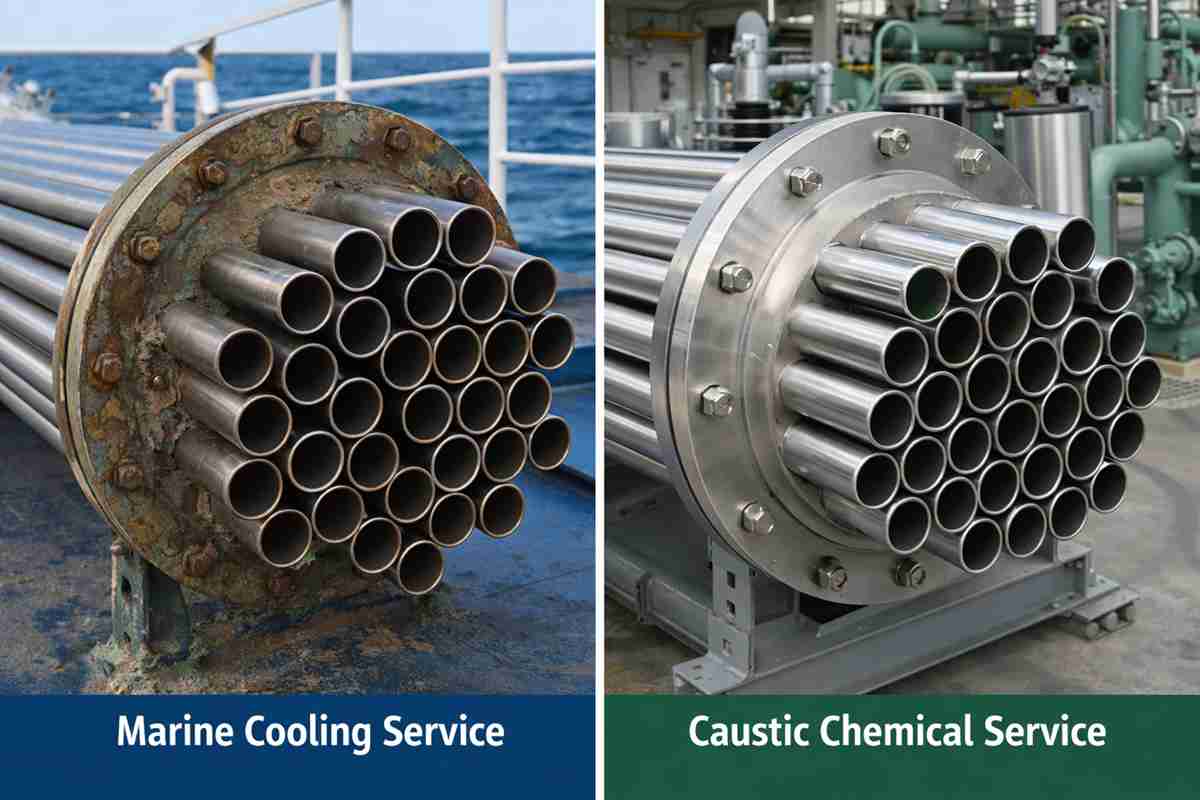
Si el servicio implica agua de mar, salmuera, medios de refrigeración con cloruros o servicio de procesos marinos, el Monel 400 suele ser el punto de partida más fiable. Su historial en entornos con cloruros y su mayor resistencia mecánica lo convierten en una opción práctica para muchos tubos de intercambiadores.
Si la aplicación es cáustica concentrada, química reductora o procesamiento de alta pureza donde el control de la contaminación es importante y los cloruros no son la amenaza dominante, el Níquel 201 puede ser la selección más inteligente.
El punto clave es éste: Monel 400 vs Níquel 201 para tubos de intercambiadores de calor no puede decidirse responsablemente a partir de un folleto genérico de aleaciones. Debe decidirse a partir de los datos de servicio. Un proveedor serio debe preguntar por la composición del fluido, el intervalo de temperatura, la velocidad, los productos químicos de limpieza, la ruta de fabricación y el intervalo de inspección previsto antes de recomendar un grado u otro. Ahí es donde la asistencia técnica crea valor real, no en la rapidez de la oferta, sino en ayudarle a evitar la metalurgia equivocada.
Si está revisando un proyecto específico de intercambiador, un paquete de sustitución de tubos o una petición de oferta con datos incompletos sobre los medios, merece la pena obtener una segunda opinión de ingeniería antes de bloquear el material. Ese paso suele ahorrar más dinero que cualquier negociación de precios.
Preguntas y respuestas relacionadas
1. ¿Es siempre mejor el Monel 400 que el Níquel 201 para tubos de intercambiadores de calor?
No. El Monel 400 es generalmente más resistente y más adecuado para tareas relacionadas con el cloruro, la salmuera y el agua de mar, pero el Níquel 201 puede superarlo en muchos entornos de proceso cáusticos o de alta pureza. La mejor aleación depende de la química real del proceso.
2. ¿Puede utilizarse níquel 201 en tubos de intercambiadores de calor de agua de mar?
Sólo puede utilizarse tras una cuidadosa revisión del servicio, pero no suele ser la primera opción para el servicio de agua de mar rica en cloruros. En la mayoría de las aplicaciones marinas o relacionadas con intercambiadores de salmuera, los ingenieros tienden a favorecer el Monel 400 por su perfil de resistencia más consolidado.
3. ¿Qué información debe revisar un proveedor antes de recomendar tubos de Monel 400 o Níquel 201?
Como mínimo: composición química completa del fluido, contenido de cloruro, pH, oxígeno disuelto, temperatura de funcionamiento y de alteración, velocidad de flujo, productos químicos de limpieza, método de fabricación y si el sistema es propenso al estancamiento o a las incrustaciones. Sin estos datos, la recomendación es sólo una suposición.