









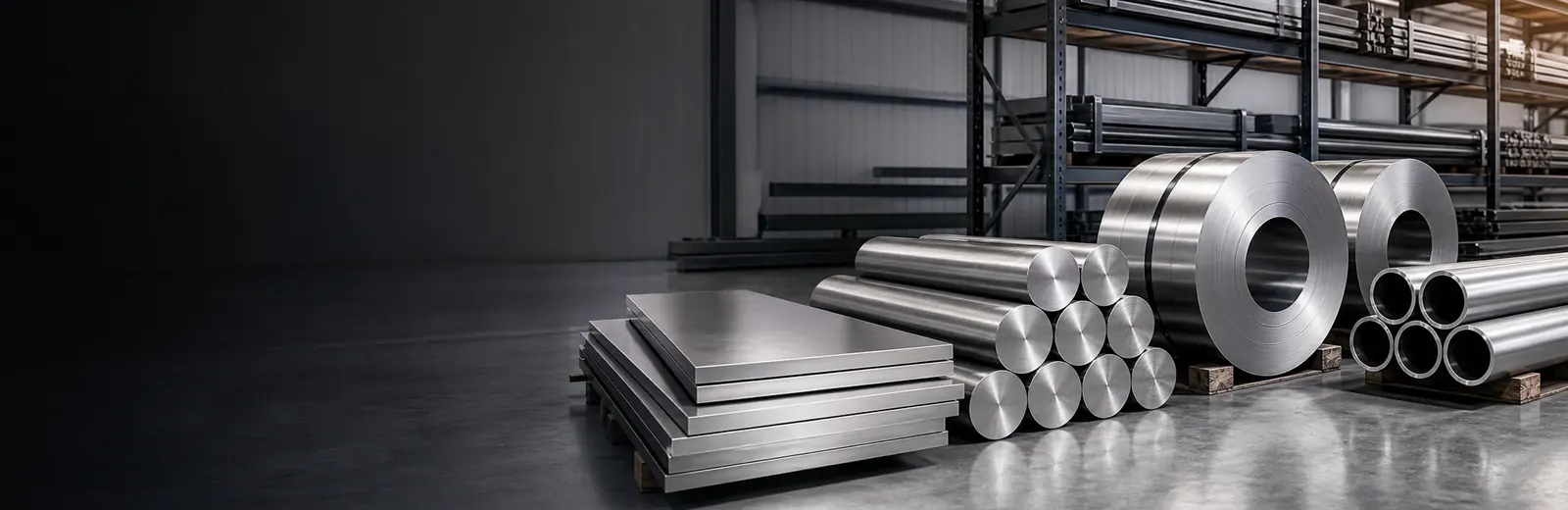
La inspección BV de chapas y barras de aleación de níquel suele solicitarse cuando el comprador quiere algo más que una promesa del proveedor y algo más que un paquete de documentos enviado por correo electrónico. En los proyectos de exportación, especialmente los relacionados con equipos a presión, fabricación en alta mar, paradas de plantas químicas o paquetes aprobados por el propietario, una comprobación neutral antes del envío puede evitar semanas de discusiones posteriores. Las chapas y barras de aleación de níquel suelen entrar en trabajos en los que la tolerancia a la corrosión es baja, los procedimientos de soldadura se controlan estrictamente y volver a pedir el calor equivocado es caro y lento. Por este motivo, la inspección BV de chapas y barras de aleación de níquel suele considerarse una medida práctica de control de riesgos, más que un paso ceremonial de inspección.
Las planchas y las barras plantean un reto específico para la trazabilidad. Las chapas se cortan con frecuencia en múltiples piezas anidadas, mientras que las barras se dividen en longitudes de mecanizado cortas que pueden desviarse de la identificación original del paquete. Si el rastro del número de colada es débil antes de que comience el corte, el problema es mucho más difícil de solucionar después del mecanizado, la preparación de los bordes o la fabricación subcontratada. Un programa de inspección BV de placas y barras de aleación de níquel bien planificado ayuda a verificar que los materiales físicamente presentes en el almacén siguen coincidiendo con los documentos aprobados, las marcas, las cantidades y el estado del embalaje antes de que se libere la carga.
Qué debe cubrir la inspección BV de placas y barras de aleación de níquel
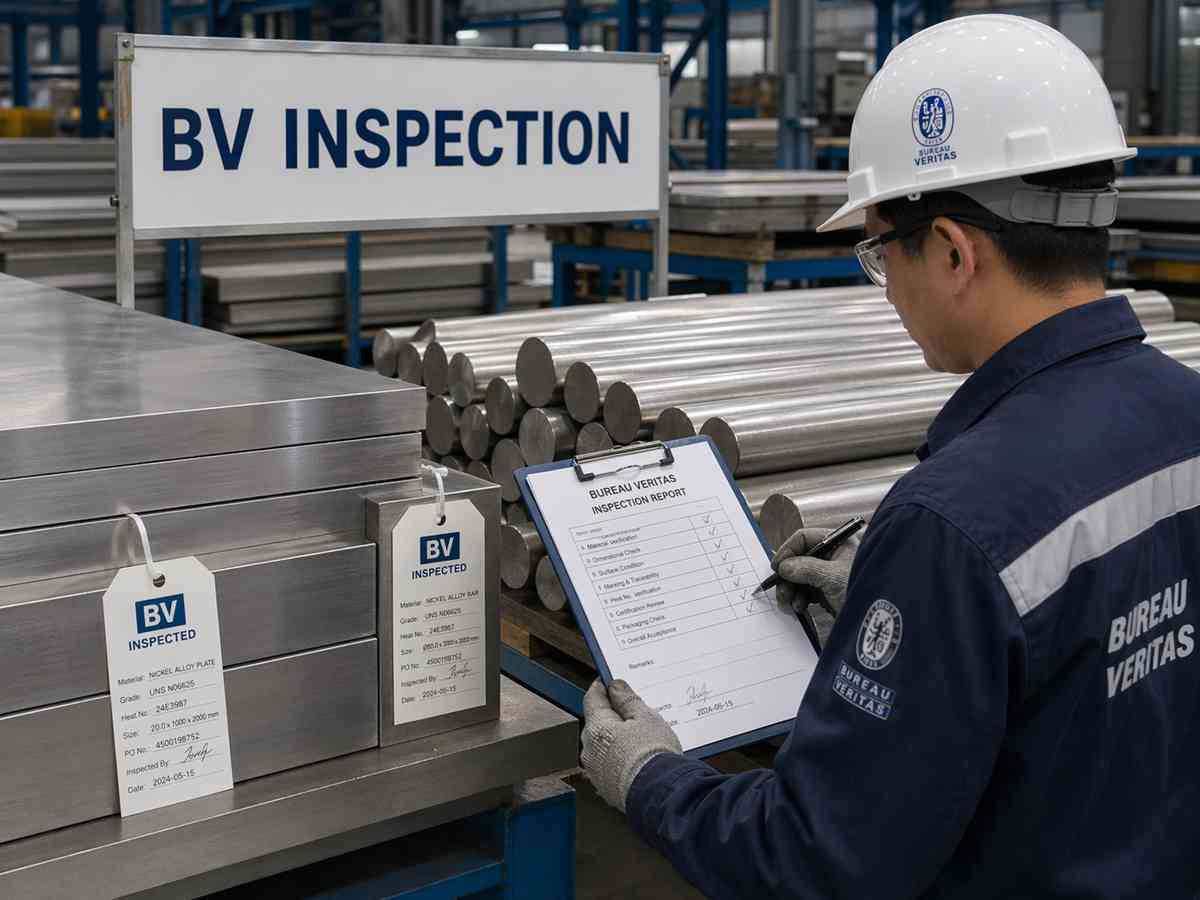
Una visita útil de Bureau Veritas comienza con un alcance claro. Los compradores deben definir si se espera que la inspección BV de chapas y barras de aleación de níquel cubra la revisión de documentos, las comprobaciones dimensionales, la verificación del número de colada, la visibilidad del marcado, la confirmación de la cantidad, el estado del embalaje o puntos testigo como PMI. Sin ese alcance, el informe de inspección puede parecer formal pero no responder a las preguntas que realmente interesan al equipo del proyecto. En el caso de las placas de aleación de níquel, las dimensiones, la separación térmica y el estado de los bordes suelen ser importantes, ya que una placa puede destinarse a varias piezas críticas. En el caso de las barras, el control de los haces, la identificación del grado y la gestión de los restos pueden ser igualmente importantes, especialmente cuando se almacenan en la misma zona diámetros similares de aleaciones diferentes.
La inspección también debe conectar los documentos con las existencias físicas de forma que sobrevivan a una auditoría posterior. Un informe creíble de inspección BV de chapas y barras de aleación de níquel suele registrar la referencia del pedido, la forma del producto, la cantidad comprobada, los números térmicos visibles, la lógica de muestreo y cualquier desviación encontrada in situ. Aquí es donde la presencia de terceros añade valor real. El comprador no recibe simplemente otro resumen del proveedor. El comprador recibe una observación independiente de lo que realmente se vio antes de la entrega. Esta distinción es fundamental cuando un envío se somete a una revisión aduanera, a la aprobación del expediente del propietario o a controles de trazabilidad de la fabricación.
| Punto de inspección | Por qué es importante | Comprobación típica de BV |
| Revisión del certificado | Confirma que las existencias entregadas coinciden con la aleación y la norma pedidas | Comprobar MTC, referencias térmicas y detalles del pedido |
| Verificación del marcado | Protege la trazabilidad antes de cortar o mecanizar | Comparar las marcas de la placa/barra con el certificado y la lista de embalaje. |
| Muestreo dimensional | Evita reclamaciones por no coincidencia de talla tras la entrega | Medir el grosor, la anchura, la longitud o el diámetro de la barra en las piezas muestreadas |
| Estado del embalaje | Preserva las marcas y evita daños durante el transporte | Inspeccionar el paletizado, los separadores, el embalaje y la visibilidad de las etiquetas |
Cuando la inspección BV de chapas y barras de aleación de níquel aporta el mayor valor añadido
El argumento más sólido a favor de la inspección por ultrasonidos (BV) de placas y barras de aleación de níquel surge cuando el plazo de suministro es largo o cuando cualquier disputa sobre la entrega podría paralizar un proyecto. Esto es habitual en soportes de revestimiento resistentes a la corrosión, placas para componentes internos de reactores, barras para elementos de fijación críticos o boquillas mecanizadas, y envíos de exportación en los que el comprador no se encuentra físicamente cerca del almacén. En esas situaciones, un informe de un tercero neutral ayuda a responder a la pregunta fundamental antes del envío: ¿son estos realmente los materiales por los que pretendemos pagar y que vamos a fabricar? Esa pregunta puede parecer básica, pero en la adquisición de aleaciones de níquel es una de las preguntas cuya respuesta tardía resulta más costosa.
Los compradores deben seguir recordando que la inspección por terceros no sustituye a un lenguaje de compra claro. La orden de compra debe indicar qué normas se aplican, qué nivel de documentación se requiere, cómo deben separarse los calores y si se espera alguna PMI de testigos o una reidentificación. Cuando estos requisitos se definen con antelación, la inspección BV de placas y barras de aleación de níquel resulta mucho más eficaz. En 28Nickel, solemos recomendar alinear la hoja de inspección con la exposición real del proyecto: sensibilidad de la trazabilidad, valor de la aleación, complejidad del mecanizado y requisitos de liberación del propietario. De este modo, se mantiene el alcance práctico y se evitan los errores más importantes.
Conclusión
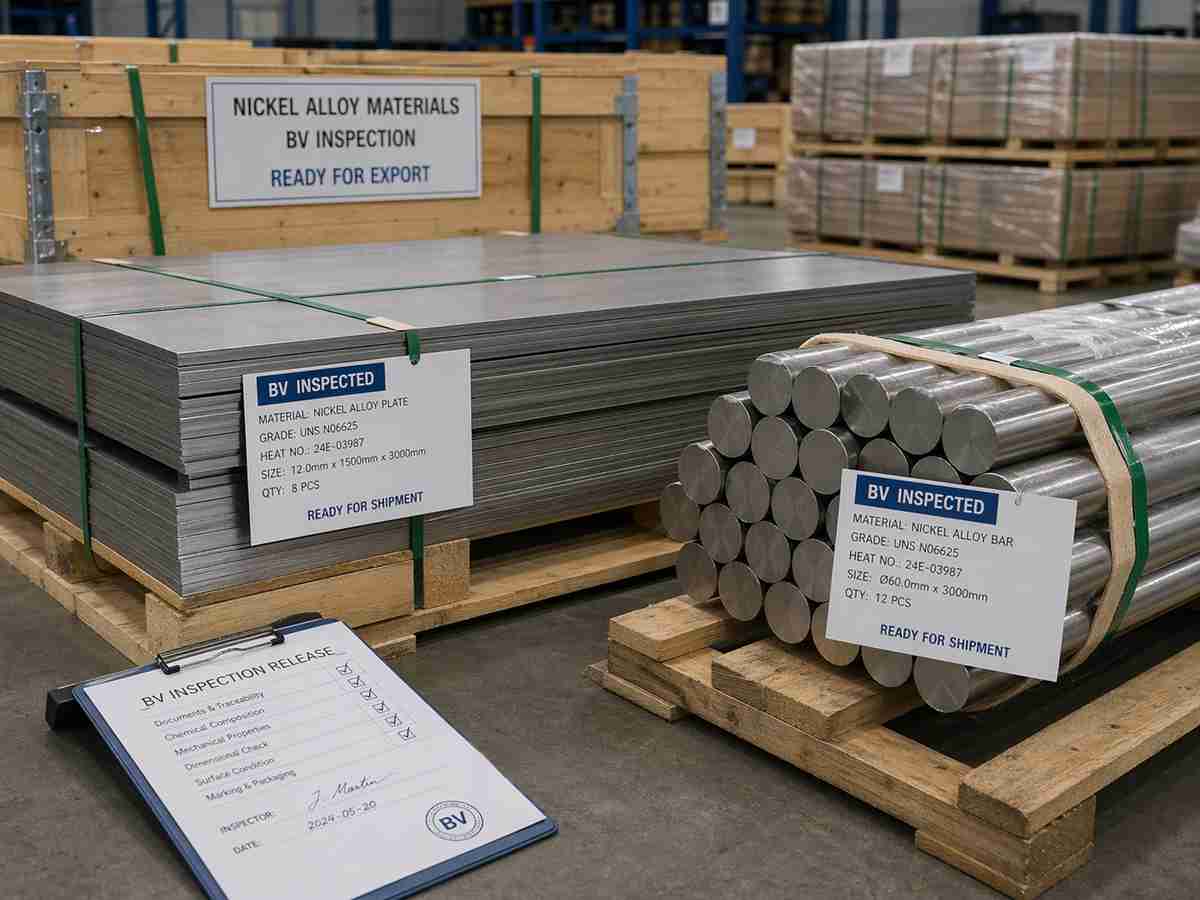
La inspección por terceros es más útil antes de que la incertidumbre se convierta en costes de flete, mecanizado y calendario. En el caso de las existencias críticas para el proyecto, la inspección BV de placas y barras de aleación de níquel puede ser una de las formas más sencillas de garantizar un punto de control independiente. Si desea ayuda para definir los puntos de retención adecuados para las chapas y barras antes del envío, 28Nickel puede ayudarle a preparar un alcance que sea lo suficientemente técnico como para ser útil sin convertirse en papeleo innecesario.
Preguntas y respuestas relacionadas
P: ¿Sustituye la inspección BV a los certificados de fábrica?
No. La inspección BV de chapas y barras de aleación de níquel complementa la documentación del laminador, comprobando las existencias físicas y el estado de liberación con dichos documentos. No sustituye a las pruebas originales del laminador.
P: ¿Deben los compradores solicitar el PMI durante la inspección BV?
En el caso de los almacenes de calidades mixtas o de los pedidos de exportación de mayor riesgo, suele ser un complemento sensato. El PMI puede reforzar la confianza en el grado cuando el marcado por sí solo no es suficiente.
P: ¿Puede BV inspeccionar envíos parciales de un mismo pedido?
Sí, pero el ámbito de aplicación debe indicar claramente cómo se identifican y documentan los lotes parciales. De lo contrario, la trazabilidad entre piezas inspeccionadas y no inspeccionadas puede quedar desdibujada.