











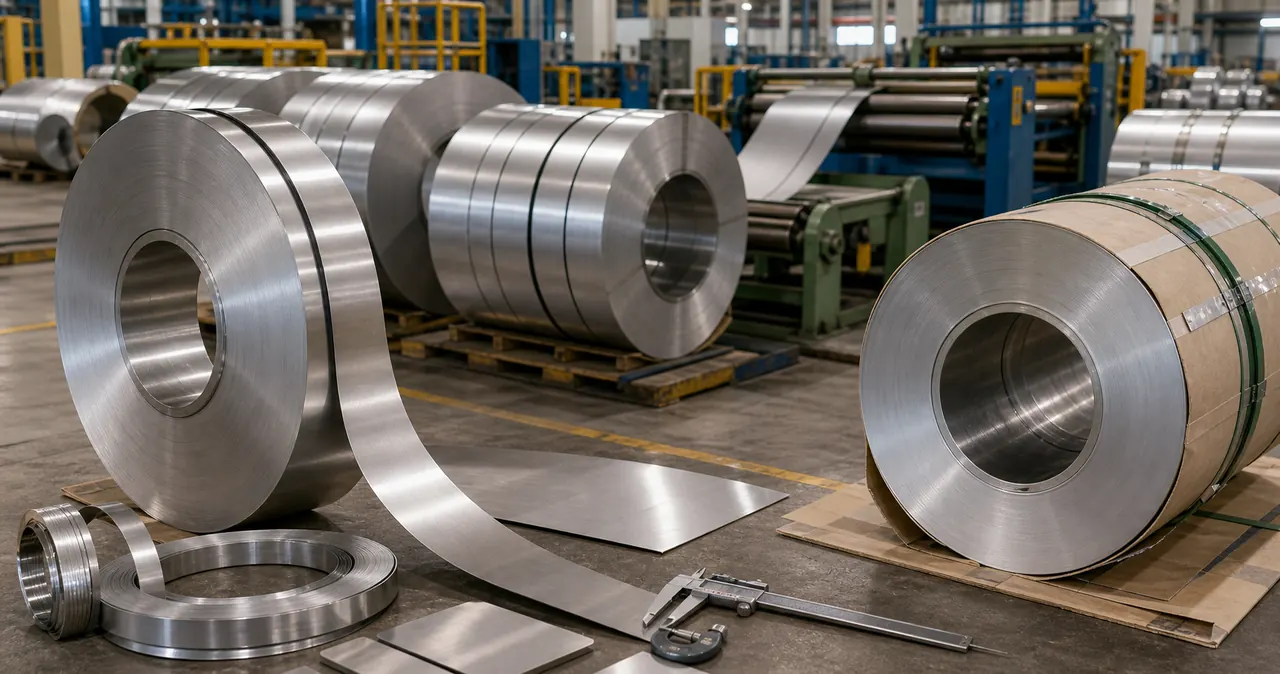
Una búsqueda de Bobina de níquel 201 para servicio con sosa cáustica a alta temperatura suele proceder de un comprador que ya ha ido más allá de una simple consulta genérica sobre aleaciones de níquel. Lo que queda por hacer es demostrar la identidad del grado, definir los mecanismos de daño determinantes, convertir el plano en una bobina lista para su pedido y decidir qué registros de inspección harán que la compra sea justificable.
En este caso, el servicio combina álcali cáustico concentrado, temperatura elevada, sales oxidantes, contaminación por azufre, consistencia del calibre, deformación por conformado, limpieza de la superficie y depósitos de parada. Se opta por la bobina de níquel 201 cuando se requiere el comportamiento frente a la corrosión del níquel comercialmente puro en servicio cáustico y es importante un bajo contenido en carbono para la estabilidad a temperaturas elevadas. Esta afirmación constituye una justificación de la selección, no una garantía de inmunidad. La distinción respecto al níquel 200 debe quedar clara. La temperatura, la concentración, los contaminantes oxidantes, las especies de azufre, los sólidos arrastrados y los productos químicos de limpieza siguen determinando si el níquel 201 dispone de un margen adecuado.
A la hora de adquirir bobinas de níquel 201 para aplicaciones cáusticas a alta temperatura mediante procesos de fabricación con alimentación por bobina, el valor de la bobina depende de la longitud útil, y no únicamente del peso bruto. Las variaciones en el espesor, los daños en los bordes, el efecto telescópico, los defectos superficiales o un diámetro interior incompatible pueden reducir el rendimiento antes de que comience la producción. Por lo tanto, la solicitud de presupuesto debe incluir el espesor, la anchura, el diámetro interior de la bobina, el diámetro exterior máximo, el peso de la bobina, el estado de los bordes, la superficie y la curvatura admisible; también debe especificar las condiciones de suministro, el alcance del certificado, los requisitos de ensayo, el calendario de entrega y el destino. Si se omite algún dato, los proveedores pueden ofrecer productos sustancialmente diferentes bajo descripciones que parecen similares.
Esta guía está dirigida a ingenieros, fabricantes, equipos de mantenimiento y compradores industriales. En ella se explica en qué aplicaciones destaca el níquel 201, cuáles son sus límites de selección, cómo especificar bobinas según la norma ASTM B162 y cómo revisar un presupuesto sin confundir un certificado de fábrica con una prueba de idoneidad para el servicio.
Ponte en contacto con 28Nickel para solicitar un presupuesto para tu proyecto junto con la calidad, el tipo, las dimensiones, la cantidad, las condiciones de servicio, el alcance de la inspección, el destino y la fecha de entrega prevista.
Identificación del material, designación UNS y control según la norma ASTM
El níquel 201 se identifica como UNS N02201 y es el grado de níquel comercialmente puro con bajo contenido en carbono que se utiliza cuando son importantes tanto la resistencia a los álcalis como la estabilidad a altas temperaturas. Para este artículo, la norma de adquisición es la ASTM B162 y la forma solicitada es en bobina. La orden de compra debe incluir los tres datos identificativos, ya que los nombres de los grados comerciales, las designaciones UNS y las normas de forma de la ASTM tienen finalidades diferentes.
El cumplimiento de la norma ASTM regula los requisitos del producto dentro del ámbito de aplicación de la misma. Por sí sola, no aprueba el uso del níquel 201 para aplicaciones cáusticas a alta temperatura en las que se utilice fabricación a partir de bobinas, ni calcula el margen de corrosión, ni certifica un procedimiento de soldadura, ni acredita la vida útil restante. Esas responsabilidades recaen en la especificación del proyecto y en la autoridad de diseño. El estado de entrega debe indicarse como el estado recocido especificado, con un control del espesor, una calidad de superficie, una estructura de la bobina y una identificación adecuados para la línea de procesamiento del comprador.
Repaso de química nominal
| Elemento | Rango de especificaciones nominales | Relevancia desde el punto de vista de la ingeniería |
|---|---|---|
| Níquel y cobalto | 99,01 TP3T mín. | Proporciona una base de níquel comercialmente puro |
| Carbono | 0,021 TP3T máx. | Un nivel bajo mejora la idoneidad por encima del rango de temperaturas en el que la grafitización afecta al Nickel 200 |
| Hierro | 0,401 TP3T máx. | Contenido residual controlado |
| Cobre | 0,25% máx | Contenido residual controlado |
| Manganeso | 0,351 TP3T máx. | Se ha comprobado la calidad del producto |
Estos rangos constituyen un resumen orientado a la adquisición del níquel 201, y no sustituyen a la edición vigente de la norma ASTM B162. Para la aceptación, deben utilizarse los valores exigidos en la orden de compra y en el certificado de fábrica correspondiente. El comprador debe comprobar que el número de lote, el grado, el UNS, la composición química, las dimensiones, el estado y los resultados de los ensayos se refieran todos a la misma bobina entregada.
La química explica por qué el níquel 201 se comporta como lo hace, pero la microestructura y el estado determinan cómo se comporta esa composición química en aplicaciones cáusticas a alta temperatura en los procesos de fabricación con bobinas. El tratamiento térmico, el conformado en frío, la estructura del grano, la superficie y el tamaño de la sección pueden influir en el comportamiento y la fabricación. Para esta bobina, no acepte ninguna oferta que deje el estado del material sin determinar tras la realización del pedido.
Relacionar la metalurgia de las aleaciones con el problema del servicio
La elección de la bobina de níquel 201 para aplicaciones cáusticas a alta temperatura se basa en varios factores distintos, más que en una única propiedad destacada. La bobina de níquel 201 se elige cuando se requiere el comportamiento frente a la corrosión del níquel comercialmente puro en aplicaciones cáusticas y es importante un bajo contenido en carbono para garantizar la estabilidad a temperaturas elevadas. Los siguientes puntos explican cómo la metalurgia de la aleación se adapta al servicio indicado.
Excelente resistencia a numerosos entornos alcalinos cáusticos
El níquel 201 ofrece una excelente resistencia a numerosos entornos alcalinos cáusticos. En aplicaciones cáusticas a alta temperatura en las que se utiliza la fabricación a partir de bobinas, este material respalda el diseño al hacer frente a parte de la exposición combinada: álcalis cáusticos concentrados, temperaturas elevadas, sales oxidantes, contaminación por azufre, uniformidad del espesor, deformación por conformado, limpieza de la superficie y depósitos acumulados durante las paradas de producción. Su valor práctico se pone de manifiesto en la zona local más severa, no en una tabla genérica de propiedades. El proyecto debe identificar la ubicación exacta en la que se necesita esta propiedad y la condición que invalidaría la hipótesis.
Bajo contenido en carbono para uso a altas temperaturas
El níquel 201 ofrece un bajo contenido en carbono para su uso a temperaturas elevadas. En aplicaciones cáusticas a alta temperatura en las que se utiliza un proceso de fabricación con alimentación por bobinas, este material respalda el diseño al hacer frente a parte de la exposición combinada: álcalis cáusticos concentrados, temperaturas elevadas, sales oxidantes, contaminación por azufre, uniformidad del espesor, deformación por conformado, limpieza de la superficie y depósitos acumulados durante las paradas. Esta ventaja solo es relevante cuando las hipótesis sobre el proceso y la fabricación siguen siendo válidas. El proyecto debe identificar la ubicación exacta en la que se necesita esta propiedad y las condiciones que invalidarían dicha hipótesis.
Ductilidad útil para la fabricación controlada de bobinas
El níquel 201 ofrece una ductilidad útil para la fabricación controlada de bobinas. En aplicaciones cáusticas a alta temperatura en las que se utiliza la fabricación a partir de bobinas, esto respalda el diseño al tener en cuenta parte de la exposición combinada: álcalis cáusticos concentrados, temperatura elevada, sales oxidantes, contaminación por azufre, uniformidad del espesor, deformación por conformado, limpieza de la superficie y depósitos acumulados durante las paradas. El plano debe plasmar esta ventaja en los requisitos geométricos, de estado y de inspección. El proyecto debe identificar la ubicación exacta en la que se requiere esta propiedad y las condiciones que invalidarían dicha suposición.
Una química sencilla que resulta fácil de verificar mediante certificados y la planificación del PMI
El níquel 201 presenta una composición química sencilla que resulta fácil de verificar mediante certificados y análisis de composición de materiales (PMI). En aplicaciones cáusticas a alta temperatura en las que se utiliza la fabricación con alimentación por bobina, este material respalda el diseño al hacer frente a parte de la exposición combinada: álcalis cáusticos concentrados, temperatura elevada, sales oxidantes, contaminación por azufre, espesor de la chapa, deformación por conformado, limpieza de la superficie y depósitos acumulados durante las paradas de producción. En un presupuesto no se debe alegar esta ventaja sin confirmar la identidad del grado y las condiciones de suministro solicitadas. El proyecto debe identificar la ubicación exacta en la que se requiere esta propiedad y las condiciones que invalidarían dicha suposición.
El criterio de selección es igualmente importante: el níquel 201 no es una solución universal para todos los procesos alcalinos. Deben tenerse en cuenta las sales oxidantes, los compuestos de azufre, la concentración, la temperatura y la contaminación por otros productos químicos del proceso. La distinción con respecto al níquel 200 debe ser explícita. La temperatura, la concentración, los contaminantes oxidantes, las especies de azufre, los sólidos arrastrados y los productos químicos de limpieza siguen determinando si el Nickel 201 ofrece un margen adecuado. Por eso, una redacción técnica responsable distingue entre una opción justificable y una recomendación universal.
Los valores de resistencia a la tracción a temperatura ambiente y los resúmenes de corrosión de los manuales son útiles para la selección del níquel 201, pero para su aceptación se debe recurrir a la norma ASTM B162, a los valores de diseño del proyecto y al certificado específico de cada lote. Para el servicio con sosa cáustica a alta temperatura en el que se utilice la fabricación a partir de bobinas, se debe evaluar el comportamiento frente a la corrosión en condiciones representativas de concentración, temperatura, contaminantes, aireación, velocidad, depósitos y tensión.
Elaborar los argumentos sustantivos en torno a todo el ciclo del proceso
La selección del material para las bobinas de níquel 201 destinadas a un servicio con sosa cáustica a alta temperatura debe basarse en una línea temporal, en lugar de en un único punto de funcionamiento normal. La puesta en marcha, el funcionamiento estable, las alteraciones del proceso, la limpieza y la parada pueden generar, cada una de ellas, un potencial de corrosión, una temperatura, una carga mecánica o unas condiciones de humectación diferentes. Un registro del proceso que solo recoja los parámetros químicos nominales puede pasar por alto esa breve fase que determina la vida útil.
| Fase del proceso | Preocupación importante | Pregunta para la revisión del diseño |
|---|---|---|
| Recepción | Una mezcla de calidades entre 200 y 201 puede que no resulte evidente a simple vista. | Comprueba el número UNS, el resultado del análisis de carbono, el marcado y el certificado. |
| Desbobinado | Los materiales blandos y dúctiles pueden sufrir daños en los bordes o en la superficie durante su manipulación. | Utiliza superficies de sujeción y contacto limpias y controladas. |
| Conformado | El endurecimiento por deformación y la acumulación de impurezas en la superficie pueden alterar la calidad del acabado. | Controla las herramientas, la lubricación y la secuencia de plegado. |
| Exposición a sustancias cáusticas calientes | La concentración y la temperatura determinan la gravedad de la corrosión. | Ten en cuenta las condiciones locales y los niveles de contaminación máximos. |
| Apagado | Los depósitos pueden concentrar contaminantes mientras el equipo se enfría. | Planifica el drenaje, la limpieza y la conservación en seco. |
La tabla también es una herramienta práctica para las solicitudes de presupuesto. El proveedor no necesita conocer los detalles confidenciales del proceso, pero el análisis de materiales sí requiere información suficiente para distinguir entre la exposición normal y la peor combinación plausible. En el caso del servicio con álcalis a alta temperatura mediante fabricación con alimentación por bobina, esto implica documentar el alcance de cada término del resumen de servicio: álcalis concentrados, temperatura elevada, sales oxidantes, contaminación por azufre, espesor nominal, deformación por conformado, limpieza de la superficie y depósitos acumulados durante las paradas.
En aplicaciones cáusticas a alta temperatura en las que se utilice una fabricación con alimentación por serpentín, hay que diferenciar entre la temperatura del fluido a granel y la temperatura real del metal de níquel 201. La transferencia de calor, el aislamiento, los depósitos, el flujo deficiente, el calor directo y la refrigeración ambiental pueden hacer que la temperatura del metal se sitúe por encima o por debajo del valor del fluido. Asimismo, hay que distinguir entre la composición química media y la composición química local en torno al serpentín en cuestión; las zonas de bajo caudal, los límites de vapor, los depósitos y las superficies de secado pueden concentrar especies diluidas.
La recomendación más fiable sobre el níquel 201 incluye una regla de interrupción. El níquel 201 no es una solución universal para todos los procesos alcalinos. Deben tenerse en cuenta las sales oxidantes, los compuestos de azufre, la concentración, la temperatura y la contaminación por otros productos químicos del proceso. La distinción con respecto al níquel 200 debe ser explícita. La temperatura, la concentración, los contaminantes oxidantes, las especies de azufre, los sólidos arrastrados y los productos químicos de limpieza siguen determinando si el Níquel 201 tiene un margen adecuado. Cuando los datos disponibles para el servicio cáustico a alta temperatura con fabricación mediante alimentación por bobina no aclaran estas cuestiones, la autoridad de diseño debe recurrir al historial de la planta, a un especialista en corrosión o a ensayos representativos antes de dar la aprobación definitiva.
Cómo este servicio puede echar por tierra una aleación que, por lo demás, sería buena
Un artículo útil sobre materiales debería explicar cómo puede fallar una compra. En aplicaciones cáusticas a alta temperatura en las que se utiliza un sistema de alimentación por serpentín, el deterioro rara vez se distribuye de forma perfectamente uniforme. Comienza donde se concentran las sustancias químicas, aumenta la tensión, cambia el flujo, las superficies permanecen húmedas, se alcanzan picos de temperatura o el acceso para la inspección es más difícil. Los siguientes mecanismos convierten el análisis de las aleaciones en ubicaciones y controles que pueden incluirse en los planos y en los planes de inspección.
| Mecanismo de fallo | Señal típica de campo | Control de ingeniería o de aprovisionamiento |
|---|---|---|
| Composición por cursos | El material tiene una composición de carbono inadecuada para su uso a altas temperaturas. | Solicitar la revisión de la identidad y el certificado N02201 |
| Ataque asistido por contaminantes | Corrosión inesperada en un servicio nominalmente cáustico | Cuantificar las sales oxidantes, el azufre y los residuos de procesos |
| Daños superficiales | La contaminación incrustada o los arañazos se convierten en zonas localizadas | Utiliza herramientas limpias y protege la superficie de la bobina |
| Variación del calibre | Las dimensiones de conformado y unión varían a lo largo del proceso de producción | Definir la tolerancia y realizar controles de recepción multipunto |
Los mecanismos identificados para el servicio con sosa cáustica a alta temperatura mediante la fabricación con bobinas pueden interactuar entre sí. La corrosión local puede reducir la sección transversal y aumentar la tensión; las vibraciones pueden dañar la superficie; los depósitos pueden alterar la temperatura y la composición química; y la contaminación durante la fabricación puede crear el primer punto activo. Por lo tanto, la elección de la bobina de níquel 201 debe tenerse en cuenta junto con la geometría, el control del proceso, la limpieza y el mantenimiento.
La inspección debe basarse en el riesgo, no distribuirse de manera uniforme por motivos de conveniencia. El énfasis específico del artículo es: el resultado del análisis de carbono es una comprobación fundamental del documento. Añada al plan de recepción la química, las propiedades mecánicas, el mapeo de calibres, la anchura, la curvatura, los cantos, la superficie, la estructura de la bobina, el peso y la trazabilidad del lote. Esa información debe figurar en los registros de referencia previos a la puesta en servicio, de modo que las lecturas posteriores puedan compararse con las mismas ubicaciones físicas y los mismos métodos.
Compensaciones en la selección frente a alternativas habituales
Una especificación fiable para aplicaciones cáusticas a alta temperatura en las que se utiliza la fabricación a partir de bobinas explica por qué se prefiere la bobina de níquel 201 frente a otras alternativas en la misma forma de suministro. El objetivo no es clasificar las aleaciones de más baratas a más caras, sino identificar las condiciones ambientales o mecánicas que influyen en la decisión.
| Alternativa con la misma forma | Cuando sea viable | Por qué aún se puede optar por el níquel 201 |
|---|---|---|
| Bobina de níquel 200 | Excelente para numerosas condiciones cáusticas a bajas temperaturas | El níquel 201 es la opción preferida cuando se requiere un bajo contenido en carbono para un funcionamiento a temperaturas más elevadas. |
| Bobina de Monel 400 | Útil en agua de mar y en determinados entornos cáusticos | El cobre cambia las bases de la corrosión y la fabricación |
| Bobina de Incoloy 800 | Ofrece una mayor resistencia a las altas temperaturas | Puede que no sea necesario utilizar una aleación más compleja cuando se controla la corrosión cáustica |
| Bobina de acero inoxidable 316L | Menor coste inicial en aplicaciones con alcalinidad moderada | La sosa cáustica concentrada caliente puede requerir níquel comercialmente puro |
Al comparar la bobina de níquel 201 con estas alternativas, utilice los mismos parámetros de proceso, vida útil prevista, margen de corrosión, método de fabricación, plan de inspección y condiciones de entrega. Es posible que un presupuesto parezca más bajo porque parte de unas condiciones diferentes, una tolerancia más holgada, menos ensayos, unas dimensiones útiles más reducidas o un margen de funcionamiento más limitado.
La recomendación más firme para el servicio con sosa cáustica a alta temperatura en el que se utiliza la fabricación con alimentación por bobina es condicional: se debe seleccionar el níquel 201 cuando el servicio y el diseño documentados requieran su combinación de propiedades; se debe utilizar una opción de aleación de menor contenido cuando el historial verificado de la planta o los datos representativos muestren un margen adecuado; y se debe utilizar una aleación más especializada cuando el proceso no se ajuste a los límites descritos anteriormente.
Elabora un expediente de documentación que supere la inspección final
El control de calidad de las bobinas de níquel 201 destinadas a aplicaciones cáusticas a alta temperatura debe responder a cuatro preguntas distintas: ¿Es el material la aleación solicitada? ¿Se trata de la bobina y el estado solicitados? ¿Cumple con las dimensiones y los ensayos especificados? ¿Se puede rastrear cada artículo entregado hasta el paquete de documentación correspondiente? El hecho de superar una categoría no compensa una deficiencia en otra.
| Prueba | Qué hay que comprobar | Lo que establece |
|---|---|---|
| Certificado de molino | Número de fundición, calidad, UNS, norma, composición química, resultados mecánicos, estado y dimensiones | Confirma que el producto cumple con los requisitos documentados |
| PMI | Verificación de la calidad con la periodicidad y en los lugares acordados | Reduce el riesgo de mezcla de materiales, pero no sustituye al certificado |
| Informe dimensional | comprobaciones con medidores multipunto, anchura, estado de los bordes, curvatura, revisión de la superficie, formación de la bobina, peso, trazabilidad térmica y verificación del diámetro interior | Confirma la geometría utilizable antes de la fabricación |
| Examen de la superficie | Criterios de aceptación ordenados y gestión de defectos | Detecta daños que los análisis químicos no pueden revelar |
| Ensayo no destructivo | Método, cobertura, calibración y aceptación, cuando se especifiquen | Aborda el riesgo de discontinuidad interna o superficial |
| Mapa de trazabilidad | Vincular las marcas de calor y de los elementos a la ubicación de corte o instalación | Conserva las pruebas tras el procesamiento |
| Registro de embalaje | Estado, protección, marcas del embalaje y fotografías | Permite gestionar el transporte y el control de la recepción |
El certificado de fábrica es el documento de referencia fundamental sobre el material, pero no constituye una prueba de corrosión para el servicio con sosa cáustica a alta temperatura en el que se utilice la fabricación a partir de bobinas. Indica que un lote de producción cumplía los requisitos del producto solicitado. La idoneidad para el servicio depende de los criterios de selección del material, los cálculos de diseño, la calidad de la fabricación y las condiciones de funcionamiento.
El PMI es un método útil para identificar el Nickel 201, especialmente tras su procesamiento o en talleres donde se mezclan distintos materiales. No permite verificar todos los elementos controlados, las condiciones de tratamiento térmico, las propiedades mecánicas ni la respuesta a la corrosión. El procedimiento para esta bobina debe definir la capacidad del instrumento, su calibración, la preparación de la superficie, la frecuencia y la identificación fehaciente de cada lectura.
Para la inspección dimensional y superficial, la prioridad específica de cada artículo es la siguiente: el resultado del análisis de carbono constituye una comprobación fundamental del documento. Añádase al plan de recepción la composición química, las propiedades mecánicas, el mapeo de espesores, el ancho, la curvatura, los bordes, la superficie, la estructura de la bobina, el peso y la trazabilidad del lote. Además, el alcance general de la inspección de las bobinas incluye comprobaciones de calibre en varios puntos, anchura, estado de los bordes, curvatura, revisión de la superficie, estructura de la bobina, peso, trazabilidad del lote y confirmación del diámetro interior. Los criterios de aceptación deben establecerse por escrito antes de que comience la inspección, incluyendo quién puede aprobar una reparación o una concesión.
La inspección por parte de terceros de la bobina de níquel 201 resulta más eficaz cuando los puntos de control se definen en la orden de compra. Para aplicaciones cáusticas a alta temperatura en las que se utiliza la fabricación a partir de bobinas, los puntos más habituales incluyen la revisión de certificados, la identificación, las dimensiones, la presencia en los ensayos cuando sea necesario, la superficie, el marcado, el embalaje y la aprobación final de la documentación. Una solicitud tardía puede retrasar el envío sin que ello suponga una mejora en el trabajo realizado.
Antes de dar el visto bueno a la bobina de níquel 201 destinada a aplicaciones cáusticas a alta temperatura mediante un proceso de fabricación con alimentación por bobina, hay que cotejar la oferta, la orden de compra, el certificado, las marcas físicas y el informe de inspección. Se deben aclarar los sufijos de calidad, la edición de la norma ASTM B162, las dimensiones, el tratamiento térmico, las excepciones en los ensayos y la cantidad mientras el material aún sea identificable y sustituible.
Lo que los compradores deben indicar, además del tamaño nominal
La descripción del producto debe traducir el plano técnico en términos de suministro cuantificables. En el caso de la bobina de níquel 201, esto incluye el espesor, la anchura, el diámetro interior de la bobina, el diámetro exterior máximo, el peso de la bobina, el estado de los bordes, la superficie y la curvatura admisible. Indique N02201, espesor, anchura, tolerancia de calibre, diámetro interior, límite del diámetro exterior, peso de la bobina, estado de los bordes, curvatura, superficie y la temperatura máxima de servicio utilizada para la selección del grado.
| Dimensión | Qué indicar | Por qué es importante |
|---|---|---|
| Espesor | Valor nominal, tolerancia, muestreo y exclusión de extremos | Controla la fuerza, la geometría y el rendimiento útil |
| Ancho | Valor nominal, tolerancia y zona de trabajo | Controla las dimensiones de la materia prima y del producto acabado |
| Diámetro interior | Valor exacto y rango admisible | Debe ser compatible con los equipos de manipulación y producción |
| Peso de la bobina | Objetivo y máximo | Gestiona la capacidad de la línea de producción y la logística |
| Curvatura y canto | Método de medición y aceptación | Controla la alimentación estable y la calidad del conformado |
La tolerancia de las bobinas de níquel 201 debe estar en función de su aplicación. Establecer tolerancias muy ajustadas en todas las dimensiones puede aumentar los costes y los plazos de entrega sin mejorar la fiabilidad, mientras que dejar una dimensión crítica sin especificar transfiere el riesgo a la fase de fabricación. Antes de enviar la solicitud de presupuesto, pregunte qué dimensiones determinan el ajuste, el conformado, el mecanizado, la unión o la configuración de la línea para el servicio con sosa cáustica a alta temperatura en procesos de fabricación con alimentación por bobina.
Un informe de inspección dimensional resulta especialmente útil cuando el material cruza las fronteras antes de su fabricación. Permite al comprador resolver cualquier discrepancia antes de que la bobina de níquel 201 llegue a un taller con mucha actividad o a una ubicación remota, donde el tiempo de sustitución y la manipulación resultan mucho más costosos.
Controles de fabricación que protegen el rendimiento de los materiales
El níquel 201 debe procesarse como una aleación de níquel sensible a la corrosión, y no como material de taller corriente. El proceso correspondiente incluye el desenrollado, el nivelado, el corte, el conformado, la soldadura cuando sea necesario, la limpieza y la protección de la superficie acabada de la aleación de níquel. Proteja la superficie blanda del níquel contra la presencia de hierro incrustado y el contacto brusco con las líneas de producción. Las pruebas de conformado deben tener en cuenta la recuperación elástica, la acumulación de residuos en la superficie y el comportamiento de los bordes, mientras que las operaciones de unión y limpieza deben ser compatibles con el servicio en entornos cáusticos.
Limpieza y separación de residuos
Utilice superficies de trabajo limpias y herramientas que no dejen restos de hierro libre ni transfieran azufre, plomo, zinc, contaminación por cobre incompatible, cloruros o residuos desconocidos a la bobina de níquel 201 destinada a aplicaciones cáusticas a alta temperatura en las que se utilice un proceso de fabricación con alimentación por bobina. Los compuestos de marcado, lubricantes, productos de limpieza, medios y fijaciones temporales deben estar homologados para esta aleación y este tipo de aplicación.
Procesamiento específico por formulario
El procesamiento de bobinas de níquel 201 para aplicaciones cáusticas a alta temperatura mediante un proceso de fabricación con alimentación por bobina comienza con una manipulación segura y una alimentación estable. El diámetro interior, la restricción, la orientación, el estado de los bordes, la curvatura, la deformación de la bobina y la limpieza de los rodillos de contacto deben ajustarse a las especificaciones del comprador antes de que comience la producción.
Registre los datos de configuración y dimensiones de cada bobina de níquel 201 utilizada en aplicaciones con sosa cáustica a alta temperatura mediante el proceso de fabricación con alimentación por bobina. Cuando la geometría cambia durante un ciclo de producción, el mapa de espesores, la posición de la bobina, los ajustes de nivelación, la carga de conformado y las observaciones de la superficie resultan más útiles que una afirmación general de que la aleación es difícil de procesar.
Uniones y aporte de calor
Los procedimientos de soldadura del níquel 201 en aplicaciones cáusticas a alta temperatura mediante fabricación con alimentación por bobina deben ser homologados por el fabricante en lo que respecta a la sección, el diseño de la unión, la posición, los consumibles, la protección, el aporte de calor, el control entre pasadas y los ensayos requeridos. Limpia cada pasada según sea necesario y evita los encendidos de arco o las uniones temporales fuera del procedimiento aprobado.
No se debe dar por sentado que una unión visualmente aceptable haya conservado su resistencia a la corrosión o su comportamiento a altas temperaturas. En el caso de un servicio cáustico a altas temperaturas en el que se utilice la fabricación con bobinas, la geometría de la unión, la tensión residual, el estado de la superficie, la dilución, el tinte térmico, las fisuras y el acceso para la limpieza final pueden ser tan importantes como la resistencia. Las especificaciones del proyecto deben definir la limpieza y la aceptación tras la unión.
Versión definitiva de las especificaciones dimensionales y de superficie
Elimine la contaminación y la decoloración inaceptable de la bobina de níquel 201 mediante un método homologado que no deje abrasivos incrustados ni una rugosidad incontrolada. Verifique las dimensiones críticas para el servicio con sosa a alta temperatura utilizando un proceso de fabricación con alimentación por bobina tras las operaciones térmicas y mecánicas finales, ya que las mediciones iniciales no reflejan la deformación posterior.
¿Por qué dos cotizaciones técnicamente similares pueden entrañar riesgos diferentes?
El precio de las bobinas de níquel 201 depende del contenido de la aleación, el proceso de fundición y transformación, las dimensiones, el estado, las tolerancias, la cantidad del pedido, el alcance de los ensayos, la disponibilidad actual, el rendimiento, el embalaje, el transporte y las condiciones de pago. El comprador debe tener en cuenta todas estas variables antes de considerar que una oferta es más económica.
Aspectos comerciales específicos del artículo: El precio del níquel 201 depende de la pureza, el calibre, el ancho, la campaña de laminación, el peso de la bobina y la tolerancia. Evite comparar una bobina con especificaciones poco precisas con otra que cumpla requisitos más estrictos en cuanto a calibre y acabado superficial. La comparación también debe incluir el coste de la aclaración, la inspección, el rendimiento de fabricación, la exposición al calendario de entrega y la sustitución en caso de que se detecte una desviación tras la entrega.
| Factor de coste | ¿Qué cambia? | Efecto comercial |
|---|---|---|
| Aleación y estado | Composición química, tratamiento térmico y requisitos mecánicos | Define la ruta de producción principal |
| Dimensiones | Requisitos de tamaño, tolerancia y longitud o superficie útil | Modifica el rendimiento de fresado y el rendimiento de fabricación |
| Cantidad | Peso total, número de artículos y potencial de repetición | Afecta a la rentabilidad de la campaña y a la cantidad mínima |
| Inspección | Pruebas, certificaciones, documentación y aceptación especial | Añade puntos de control de costes directos y de calendario |
| Procesamiento | Corte u otra preparación acordada | Puede reducir el trabajo de configuración para el comprador, pero supone más trabajo para el proveedor |
| Logística | Tamaño del paquete, protección, ruta y plazo de entrega | Gestión de cambios, transporte y riesgo de daños |
El plazo de entrega de las bobinas de níquel 201 debe dividirse en disponibilidad del material, producción, ensayos, aprobación de la inspección, aprobación de la documentación, embalaje y transporte hasta el destino. Pregunta qué fechas son firmes y cuáles son estimadas; un plazo de producción corto con una fase de aprobación indefinida podría no garantizar el servicio en entornos cáusticos a alta temperatura cuando se utiliza un programa de fabricación basado en el suministro de bobinas.
Embalaje y transporte
El concepto de embalaje para las bobinas de níquel 201 destinadas a aplicaciones cáusticas a alta temperatura en procesos de fabricación con alimentación por bobina incluye protección rígida de los ojales, sujeción circunferencial y radial, barrera contra la humedad, protectores de bordes, soporte antideslizante, marcado del centro de gravedad e instrucciones de manipulación. Los embalajes deben permitir identificar los lotes y los tamaños, evitar el contacto contaminante y permitir una descarga segura con el equipo disponible en el destino.
Para la exportación de esta bobina de níquel 201, hay que acordar las dimensiones del embalaje, el peso bruto y neto, los puntos de elevación, la barrera contra la humedad, la manipulación en destino y el formato de marcado antes del envío. Se debe fotografiar el material y los embalajes cerrados. En los registros de recepción se deben diferenciar los daños ocasionados durante el transporte de las condiciones de fabricación necesarias para el servicio con sosa cáustica a alta temperatura mediante un proceso de fabricación con alimentación por bobina.
El coste del ciclo de vida es el indicador final más útil para aplicaciones cáusticas a alta temperatura en las que se utiliza un sistema de alimentación por serpentín. Incluye la adquisición, la fabricación, la inspección, la instalación, el tiempo de inactividad, el acceso para el mantenimiento, la supervisión, el intervalo de sustitución y las consecuencias de un fallo. La elección del níquel 201 solo se justifica cuando mejora esa ecuación en las condiciones de servicio documentadas.
Secuencia de revisión por parte del comprador y el ingeniero
La siguiente secuencia garantiza que la decisión sobre la bobina Nickel 201 siga vinculada al equipo, en lugar de permitir que las revisiones técnicas y comerciales se desmarquen entre sí. Cada fase debería generar un breve informe antes de que se asuma el siguiente compromiso.
- Definir las condiciones de funcionamiento: registrar las condiciones normales, máximas, de perturbación, de limpieza y de parada para el servicio con sosa cáustica a alta temperatura en instalaciones con alimentación por serpentín, incluyendo la composición química, la temperatura, la presión, la carga, la velocidad, los depósitos y la duración.
- Aprobar la base material: confirmar por qué se han seleccionado el níquel 201 y el UNS N02201, qué alternativas se han estudiado y en qué circunstancias se procedería a una nueva selección.
- Traducir el plano: definir el espesor, la anchura, el diámetro interior de la bobina, el diámetro exterior máximo, el peso de la bobina, el estado de los bordes, la superficie y la curvatura admisible, la cantidad, el margen, la superficie, el estado, el proceso de fabricación y las unidades de entrega.
- Prepara el expediente de documentación: indica la norma ASTM B162, el certificado, el informe dimensional, el análisis de materiales (PMI), el examen, la trazabilidad, el marcado y los puntos de control de terceros cuando sea necesario.
- Emita una solicitud de presupuesto comparable: facilite los mismos supuestos técnicos y comerciales a todos los proveedores y exija que se indiquen por escrito las desviaciones.
- Liberación y recepción: conciliar los documentos con las marcas físicas antes de la fabricación, inspeccionar el estado del envío, poner en cuarentena las discrepancias y garantizar la trazabilidad hasta el equipo final.
En el caso de pedidos repetidos, actualiza las especificaciones con el rendimiento real de fabricación, los resultados de las inspecciones, el historial de mantenimiento y el rendimiento logístico. La segunda compra de bobinas de níquel 201 debería ser más precisa que la primera, y no limitarse a ser una copia de una orden de compra anterior.
Revisión final de la solicitud de presupuesto antes de enviarla a los proveedores
Una solicitud de presupuesto concisa pero completa para bobinas de níquel 201 permite obtener presupuestos más comparables que una solicitud extensa elaborada a partir de especificaciones inconexas. La siguiente lista puede adjuntarse al plano de fabricación con alimentación por bobina para servicio cáustico a alta temperatura y adaptarse a la normativa del proyecto y a los requisitos del propietario.
- Material: Níquel 201 / UNS N02201
- Formato del producto: bobina
- Norma: ASTM B162, además de cualquier requisito específico del proyecto o de la normativa aplicable
- Dimensiones y tolerancias: espesor, anchura, diámetro interior de la bobina, diámetro exterior máximo, peso de la bobina, estado de los bordes, superficie y curvatura admisible
- Cantidad: número de unidades o bobinas, peso estimado, margen de producción y repuestos necesarios
- Estado y superficie: el estado recocido especificado, con control del calibre, calidad de la superficie, confección de la bobina e identificación adecuados para la línea de procesamiento del comprador.
- Aplicación: servicio con sosa cáustica a alta temperatura mediante fabricación con alimentación por bobina
- Condiciones de funcionamiento: álcali cáustico concentrado, temperatura elevada, sales oxidantes, contaminación por azufre, consistencia de calibre, deformación de conformado, limpieza de la superficie y depósitos acumulados durante las paradas
- Proceso de fabricación: desenrollado, nivelado, corte, conformado, soldadura cuando sea necesario, limpieza y protección de la superficie acabada de la aleación de níquel
- Inspección: certificado, PMI, dimensiones, superficie, ensayos no destructivos y presencia de testigos, según sea necesario
- Trazabilidad y marcado: vinculación entre el tratamiento térmico, el artículo, el lugar de corte y el documento final
- Embalaje: protección rígida para los ojos, sujeción circunferencial y radial, barrera contra la humedad, protectores de bordes, soporte antideslizante, indicación del centro de gravedad e instrucciones de manipulación
- Datos comerciales: plazo de entrega, destino, fecha de llegada prevista, validez del presupuesto y condiciones de pago
- Norma sobre excepciones: el proveedor debe indicar todas las excepciones antes de aceptar el pedido
Añade directamente las notas específicas del artículo: aspectos dimensionales — estado N02201, espesor, anchura, tolerancia de calibre, diámetro interior, límite de diámetro exterior, peso de la bobina, estado de los bordes, curvatura, superficie y la temperatura máxima de servicio utilizada para la selección del grado—. Aspectos de fabricación: protege la superficie blanda de níquel del hierro incrustado y del contacto brusco con la línea de producción. Las pruebas de conformado deben tener en cuenta la recuperación elástica, la adherencia superficial y la respuesta de los bordes, mientras que las operaciones de unión y limpieza deben seguir siendo compatibles con el servicio en entornos cáusticos. Aspectos de inspección: el resultado del análisis de carbono es un elemento fundamental de la comprobación documental. Añada la composición química, las propiedades mecánicas, el mapeo de espesor, el ancho, la curvatura, los bordes, la superficie, la estructura de la bobina, el peso y la trazabilidad del lote al plan de recepción.
Pide a los proveedores que, en primer lugar, presenten un presupuesto basado en el níquel 201 solicitado y que indiquen las alternativas en líneas separadas. Aclara si los pesos de las bobinas son teóricos o reales, si las dimensiones son exactas o aproximadas y si la entrega se refiere a la finalización en la fábrica o a la llegada al destino del proyecto.
Preguntas frecuentes
¿Es el Nickel 201 automáticamente adecuado para aplicaciones cáusticas a alta temperatura en las que se utiliza un proceso de fabricación con alimentación por bobina?
No. Se trata de una opción defendible, ya que la bobina de níquel 201 se elige cuando se requiere el comportamiento frente a la corrosión del níquel comercialmente puro en aplicaciones con sosa cáustica y es importante un bajo contenido en carbono para garantizar la estabilidad a temperaturas elevadas. La aprobación definitiva sigue requiriendo el análisis completo de las condiciones de servicio, la base de diseño, el plan de fabricación y la revisión por parte de la autoridad responsable del proyecto. La distinción respecto al níquel 200 debe quedar clara. La temperatura, la concentración, los contaminantes oxidantes, las especies de azufre, los sólidos arrastrados y los productos químicos de limpieza siguen determinando si el níquel 201 tiene un margen adecuado.
¿Qué norma ASTM se aplica a esta bobina?
Esta guía de compras se basa en la norma ASTM B162 para bobinas de níquel 201. Confirme la edición vigente, cualquier requisito de la ASME o del cliente, así como las condiciones exactas del producto en la orden de compra.
¿Qué debe figurar en el certificado de la fábrica?
Para las bobinas de níquel 201 destinadas a aplicaciones con sosa cáustica a alta temperatura mediante un proceso de fabricación con alimentación por bobina, compruebe el número de lote, la designación UNS N02201, la norma ASTM B162, la composición química, los resultados mecánicos exigidos en el pedido, el estado, las dimensiones, la cantidad y la identificación trazable. Los resultados de los ensayos específicos del proyecto deben indicarse claramente.
¿Sustituye el PMI al certificado de fábrica?
No. En el caso de las bobinas de níquel 201 utilizadas en aplicaciones cáusticas a alta temperatura mediante un proceso de fabricación con alimentación por bobina, el análisis PMI constituye una verificación de identidad dentro de los límites de capacidad del método y del instrumento. No sustituye a los análisis químicos específicos de cada lote, los registros de tratamiento térmico, los ensayos mecánicos, las dimensiones ni la trazabilidad completa. Utilice el análisis PMI junto con el certificado.
¿Qué dimensiones son fundamentales para una bobina?
Para el níquel 201 utilizado en aplicaciones cáusticas a alta temperatura mediante fabricación a partir de bobinas, indique el espesor, la anchura, el diámetro interior de la bobina, el diámetro exterior máximo, el peso de la bobina, el estado de los bordes, la superficie y la curvatura admisible. Defina qué tolerancias se ajustan a la norma ASTM B162, cuáles son más estrictas, cómo se medirán y qué margen de fabricación se incluye.
¿Qué problema de fabricación merece mayor atención?
Para esta aplicación: Proteja la superficie blanda de níquel del hierro incrustado y del contacto brusco con la línea. Las pruebas de conformado deben tener en cuenta la recuperación elástica, la adherencia superficial y la respuesta de los bordes, mientras que las operaciones de unión y limpieza deben ser compatibles con el servicio en entornos cáusticos. En términos más generales, proteja la superficie de la aleación de níquel, controle la deformación y el aporte de calor, utilice procedimientos homologados y verifique la geometría final tras todas las operaciones térmicas y mecánicas.
¿En qué aspectos debería centrarse la inspección inicial?
Utiliza el mapa de daños del servicio en lugar de un espaciado uniforme. El resultado del análisis de carbono es una comprobación del documento principal. Añade al plan de recepción la composición química, las propiedades mecánicas, el mapeo del calibre, la anchura, la curvatura, los bordes, la superficie, la estructura de la bobina, el peso y la trazabilidad del lote. Conserva referencias de ubicación permanentes para que las lecturas futuras sean comparables.
¿Por qué pueden variar tanto los precios para un mismo grado?
Las cotizaciones pueden variar en función del tamaño, la tolerancia, el estado, la cantidad, los ensayos, el rendimiento útil, el proceso de producción, el embalaje y la entrega. El precio del níquel 201 depende de la pureza, el calibre, el ancho, la campaña de laminación, el peso de la bobina y la tolerancia. Evite comparar una bobina con especificaciones poco precisas con otra que cumpla requisitos más estrictos en cuanto a calibre y acabado superficial. Normalice esos supuestos antes de comparar el precio unitario.
¿Qué información debe incluirse en una solicitud de bobinas de níquel 201 para uso en aplicaciones cáusticas a alta temperatura?
Para bobinas de níquel 201 destinadas a servicios cáusticos a alta temperatura, indique: níquel 201, UNS N02201, ASTM B162; las dimensiones completas de la bobina; la cantidad; el estado; los datos de servicio; el proceso de fabricación; los requisitos de inspección y documentación; el destino; las condiciones de entrega; y la fecha de llegada requerida. Incluya planos cuando resulte difícil describir las tolerancias en el texto.
Posición definitiva de adquisición de bobinas de níquel 201
La bobina de níquel 201 para servicio cáustico a alta temperatura constituye una especificación fiable cuando el pedido cumple con las normas UNS N02201 y ASTM B162, abarca el ciclo completo de servicio, presenta dimensiones verificables, cumple con las condiciones adecuadas, se fabrica bajo control, se somete a inspecciones específicas y garantiza la trazabilidad. El argumento técnico es más sólido cuando se explica tanto por qué se ha seleccionado la aleación como en qué circunstancias sería necesario revisar dicha decisión.
Para aplicaciones cáusticas a alta temperatura en las que se utilice la fabricación a partir de bobinas, hay que partir del mapa de procesos y fallos, y no de una lista de existencias. A continuación, utilice el plano y el plan de fabricación para definir la bobina exacta. Compare a los proveedores en función del material apto y conforme a las normas, la documentación acreditativa, los plazos de entrega, el embalaje y el impacto a lo largo del ciclo de vida, en lugar de basarse únicamente en el precio por kilogramo.
En lo que respecta a las bobinas de níquel 201 para aplicaciones cáusticas a alta temperatura, 28Nickel suministra chapas, tubos, barras y bobinas de aleación de níquel para proyectos industriales internacionales. Envíenos las especificaciones del material, las dimensiones, la cantidad, los datos de aplicación, el alcance de la inspección, el destino de la entrega y el calendario previsto para que podamos realizar un análisis técnico y comercial.