











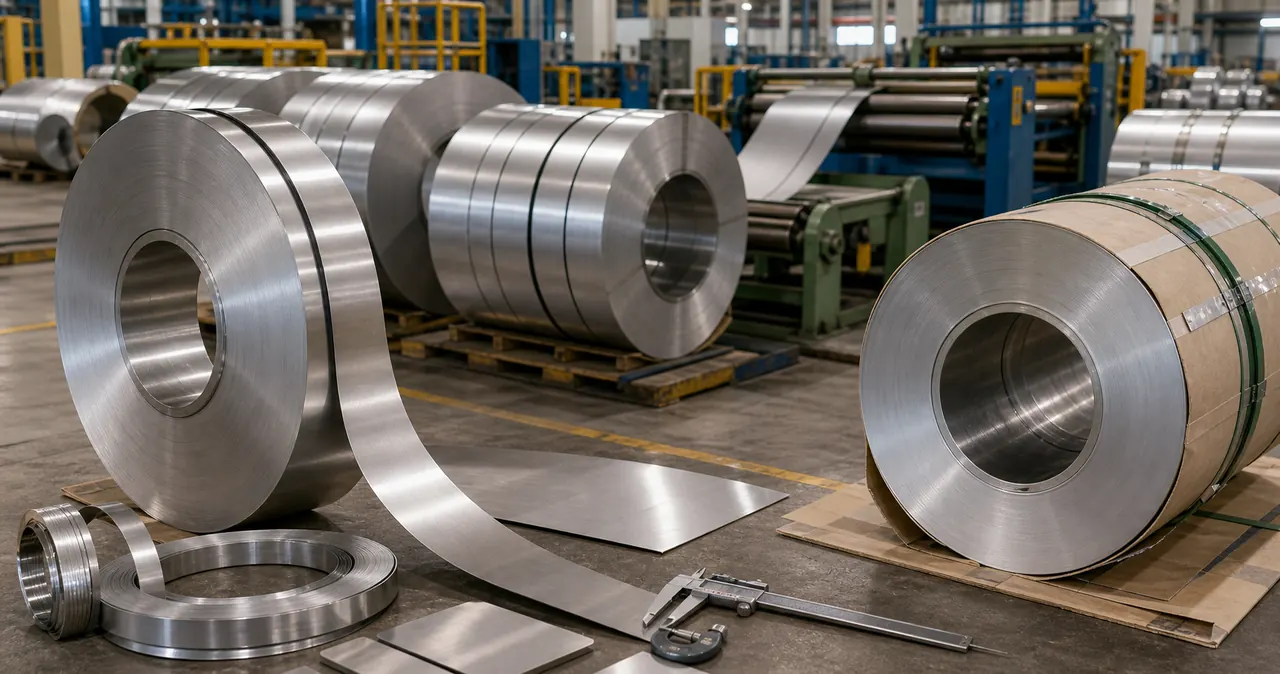
Une recherche sur Bobine en nickel 201 destinée à une utilisation en milieu caustique à haute température provient généralement d'un acheteur qui a déjà dépassé le stade d'une simple demande d'informations générales sur les alliages de nickel. Il reste alors à vérifier la conformité de la nuance, à définir les mécanismes de dégradation déterminants, à transformer le dessin technique en bobine prête à être commandée et à déterminer quels rapports d'inspection permettront de justifier l'achat.
Dans ce cas précis, l’application combine la présence d’alcalis caustiques concentrés, une température élevée, des sels oxydants, une contamination par le soufre, une consistance de la couche, une contrainte de formage, la propreté de la surface et des dépôts liés à l’arrêt de la production. On opte pour une bobine en nickel 201 lorsqu’il est nécessaire de bénéficier du comportement à la corrosion du nickel commercialement pur en milieu caustique et qu’une faible teneur en carbone est importante pour la stabilité à haute température. Cette affirmation constitue un critère de sélection, et non une garantie d’immunité. La distinction par rapport au nickel 200 doit être clairement établie. La température, la concentration, les contaminants oxydants, les composés soufrés, les solides entraînés et les produits chimiques de nettoyage déterminent toujours si le nickel 201 dispose d’une marge de sécurité suffisante.
Pour l’achat de bobines de nickel 201 destinées à des applications caustiques à haute température et à la fabrication à partir de bobines, la valeur de la bobine dépend de la longueur utilisable, et non pas uniquement du poids brut. Les variations d’épaisseur, les dommages sur les bords, l’effet télescopique, les défauts de surface ou un diamètre intérieur incompatible peuvent réduire le rendement avant même le début de la production. La demande de devis doit donc préciser l’épaisseur, la largeur, le diamètre intérieur de la bobine, le diamètre extérieur maximal, le poids de la bobine, l’état des bords, l’état de la surface et le cambrage admissible ; elle doit également indiquer les conditions de commande, l’étendue du certificat, les exigences d’essai, le calendrier de livraison et la destination. Lorsqu’un élément n’est pas précisé, les fournisseurs peuvent proposer des produits sensiblement différents sous des descriptions qui semblent similaires.
Ce guide s'adresse aux ingénieurs, aux fabricants, aux équipes de maintenance et aux acheteurs industriels. Il explique dans quels domaines le nickel 201 trouve sa place, quelles sont ses limites d'utilisation, comment prescrire des bobines conformes à la norme ASTM B162 et comment examiner un devis sans confondre un certificat d'usine avec une preuve d'adéquation à l'usage prévu.
Contactez 28Nickel pour obtenir un devis pour votre projet en précisant la qualité, la forme, les dimensions, la quantité, les conditions d'utilisation, l'étendue des contrôles, la destination et la date de livraison requise.
Identification des matériaux, désignation UNS et contrôle selon les normes ASTM
Le nickel 201, désigné sous la référence UNS N02201, est une nuance de nickel commercialement pur à faible teneur en carbone utilisée lorsque la résistance aux alcalis et la stabilité à haute température sont toutes deux essentielles. Pour cet article, la norme d'approvisionnement est l'ASTM B162 et la forme commandée est la bobine. Le bon de commande doit mentionner les trois éléments d'identification, car les noms de qualité commerciale, les désignations UNS et les normes de forme ASTM ont des finalités différentes.
La conformité à la norme ASTM régit les exigences relatives au produit dans le cadre de ladite norme. Elle ne permet pas, à elle seule, d’homologuer le nickel 201 pour une utilisation en milieu caustique à haute température avec un procédé de fabrication à partir de bobines, de calculer la surépaisseur de corrosion, de valider un procédé de soudage ou de déterminer la durée de vie résiduelle. Ces responsabilités incombent à l’autorité chargée du cahier des charges et de la conception du projet. L’état à la livraison doit être défini comme l’état recuit spécifié, avec un contrôle de l’épaisseur, une qualité de surface, une structure de bobine et une identification adaptés à la chaîne de transformation de l’acheteur.
Révision de la chimie nominale
| Élément | Plage nominale de spécifications | Pertinence technique |
|---|---|---|
| Nickel et cobalt | 99,0% min | Fournit une base de nickel de pureté commerciale |
| Carbone | 0,02% max | Une faible teneur améliore l'aptitude à l'emploi au-delà de la plage de températures où la graphitisation pose problème pour le Nickel 200 |
| Fer | 0,401 TP3T max | Teneur résiduelle contrôlée |
| Cuivre | 0,25% max | Teneur résiduelle contrôlée |
| Manganèse | 0,351 TP3T max | Contrôle de la qualité des produits |
Ces fourchettes constituent un résumé destiné aux achats concernant le Nickel 201 ; elles ne remplacent pas l'édition en vigueur de la norme ASTM B162. Pour la réception, il convient d'utiliser les valeurs requises par le bon de commande et le certificat d'usine correspondant. L'acheteur doit vérifier que le numéro de coulée, la nuance, la référence UNS, la composition chimique, les dimensions, l'état et les résultats d'essai se rapportent tous à la même bobine livrée.
La chimie explique pourquoi le Nickel 201 se comporte ainsi, mais ce sont la microstructure et l’état du matériau qui déterminent comment ces propriétés chimiques se manifestent en service caustique à haute température dans le cadre d’une fabrication à partir de bobines. Le traitement thermique, le formage à froid, la structure granulaire, la surface et les dimensions de la section peuvent influencer le comportement et la fabrication. Pour cette bobine, n’acceptez pas d’offre qui laisse l’état du produit indéfini après la passation de commande.
Établir un lien entre la métallurgie des alliages et le problème lié au service
Le choix des bobines en nickel 201 pour une utilisation en milieu caustique à haute température repose sur plusieurs facteurs plutôt que sur une seule propriété principale. Les bobines en nickel 201 sont choisies lorsqu’il est nécessaire de bénéficier du comportement à la corrosion du nickel commercialement pur en milieu caustique et qu’une faible teneur en carbone est importante pour la stabilité à température élevée. Les points suivants expliquent en quoi la métallurgie de l’alliage est adaptée à l’application visée.
Excellente résistance à de nombreux milieux alcalins caustiques
Le Nickel 201 offre une excellente résistance à de nombreux environnements alcalins caustiques. Dans le cadre d’une utilisation à haute température en milieu caustique, avec un processus de fabrication à partir de bobines, ce matériau soutient la conception en tenant compte d’une partie des facteurs d’exposition combinés : alcalis caustiques concentrés, température élevée, sels oxydants, contamination par le soufre, uniformité de l’épaisseur, déformation due au formage, propreté de la surface et dépôts liés à l’arrêt de l’installation. Sa valeur pratique se manifeste dans la zone locale la plus sévère, et non dans un tableau générique de propriétés. Le projet doit identifier l’emplacement exact où cette propriété est requise, ainsi que les conditions qui pourraient invalider cette hypothèse.
Faible teneur en carbone pour une utilisation à haute température
Le Nickel 201 présente une faible teneur en carbone, ce qui le rend adapté à une utilisation à haute température. Dans le cadre d’une utilisation en milieu caustique à haute température avec un procédé de fabrication par alimentation en bobines, ce matériau facilite la conception en tenant compte d’une partie des contraintes combinées : alcalis caustiques concentrés, température élevée, sels oxydants, contamination par le soufre, uniformité de l’épaisseur, déformation due au formage, propreté de surface et dépôts liés à l’arrêt de l’installation. Cet avantage n’est pertinent que si les hypothèses relatives au procédé et à la fabrication restent valables. Le projet doit identifier l’emplacement exact où cette propriété est nécessaire, ainsi que les conditions susceptibles d’invalider cette hypothèse.
Ductilité utile pour la fabrication contrôlée de bobines
Le Nickel 201 offre une ductilité utile pour la fabrication contrôlée de bobines. Dans le cadre d’une utilisation à haute température en milieu caustique avec un procédé de fabrication à alimentation par bobine, cela facilite la conception en tenant compte d’une partie des contraintes combinées : alcalis caustiques concentrés, température élevée, sels oxydants, contamination par le soufre, uniformité de l’épaisseur, déformation lors du formage, propreté de surface et dépôts liés à l’arrêt de l’installation. Le cahier des charges doit traduire cet avantage en exigences géométriques, d'état et d'inspection. Le projet doit identifier l'emplacement exact où cette propriété est requise, ainsi que les conditions qui pourraient invalider cette hypothèse.
Une chimie simple, facile à vérifier à l'aide des certificats et de la planification PMI
Le Nickel 201 présente une composition chimique simple, facile à vérifier à l'aide d'un certificat et d'une analyse PMI. Dans le cadre d'une utilisation en milieu caustique à haute température avec un procédé de fabrication par alimentation en bobines, il soutient la conception en tenant compte d'une partie des facteurs d'exposition combinés : alcali caustique concentré, température élevée, sels oxydants, contamination par le soufre, épaisseur constante, contrainte de formage, propreté de surface et dépôts liés à l'arrêt de l'installation. Un devis ne doit pas invoquer cet avantage sans confirmation de la référence de l’acier et de l’état de livraison commandé. Le projet doit identifier l’emplacement exact où cette propriété est requise, ainsi que les conditions qui pourraient invalider cette hypothèse.
Les critères de sélection sont tout aussi importants : le Nickel 201 n’est pas une solution universelle pour tous les procédés alcalins. Il faut tenir compte des sels oxydants, des composés soufrés, de la concentration, de la température et de la contamination par d’autres produits chimiques utilisés dans le procédé. La distinction par rapport au Nickel 200 doit être clairement établie. La température, la concentration, les contaminants oxydants, les espèces soufrées, les solides entraînés et les produits chimiques de nettoyage déterminent toujours si le Nickel 201 dispose d'une marge de sécurité suffisante. C'est pourquoi une rédaction technique rigoureuse fait la distinction entre un choix justifiable et une recommandation universelle.
Les valeurs de résistance à la traction à température ambiante et les résumés de corrosion figurant dans les manuels sont utiles pour la présélection du nickel 201, mais l'acceptation doit se fonder sur la norme ASTM B162, les valeurs de conception du projet et le certificat spécifique à la cuvée. Pour les applications caustiques à haute température utilisant une fabrication à partir de bobines, le comportement à la corrosion doit être évalué en tenant compte de concentrations, de températures, de contaminants, d’aération, de vitesses d’écoulement, de dépôts et de contraintes représentatifs.
Construire le dossier factuel en tenant compte de l'ensemble du cycle du processus
Le choix du matériau pour une bobine en nickel 201 destinée à un service caustique à haute température doit s'appuyer sur un calendrier plutôt que sur un seul point de fonctionnement normal. La mise en service, le fonctionnement stable, les perturbations du procédé, le nettoyage et l'arrêt peuvent chacun entraîner un potentiel de corrosion, une température, une charge mécanique ou des conditions de mouillage différents. Un dossier de procédé qui ne rend compte que de la composition chimique nominale risque de passer à côté de la brève phase qui détermine la durée de vie en service.
| Étape du processus | Problème important | Question relative à la revue de conception |
|---|---|---|
| Réception | Une différence de qualité entre les classes 200 et 201 peut ne pas être perceptible à l'œil nu. | Vérifier le numéro UNS, le résultat de l'analyse au carbone, le marquage et le certificat. |
| Déroulement | Les matériaux souples et ductiles peuvent subir des dommages au niveau des bords ou de la surface lors de leur manipulation. | Utilisez des dispositifs de contention et des surfaces de contact propres et contrôlées. |
| Formation | L'écrouissage et les dépôts superficiels peuvent altérer la qualité de la finition. | Contrôler l'outillage, la lubrification et la séquence de cintrage. |
| Exposition à des substances caustiques chaudes | La concentration et la température déterminent la gravité de la corrosion. | Tenez compte au maximum des conditions locales et des niveaux de contamination. |
| Arrêt | Les dépôts peuvent entraîner une concentration des contaminants pendant le refroidissement des équipements. | Prévoir le drainage, le nettoyage et la conservation à sec. |
Ce tableau constitue également un outil pratique pour les appels d’offres. Le fournisseur n’a pas besoin de connaître le savoir-faire confidentiel lié au procédé, mais l’analyse des matériaux doit s’appuyer sur suffisamment d’informations pour distinguer une exposition normale de la pire combinaison plausible. Pour une utilisation en milieu caustique à haute température avec un procédé de fabrication par alimentation en bobines, cela implique de documenter la plage correspondant à chaque expression du résumé des conditions d’utilisation : alcali caustique concentré, température élevée, sels oxydants, contamination par le soufre, épaisseur de la tôle, déformation lors du formage, propreté de la surface et dépôts liés à l’arrêt de l’installation.
Pour les applications caustiques à haute température utilisant une fabrication à alimentation par serpentin, il convient de distinguer la température du fluide en vrac de la température réelle du métal Nickel 201. Le transfert thermique, l’isolation, les dépôts, un écoulement insuffisant, la chaleur directe et le refroidissement par l’environnement peuvent faire varier la température du métal au-dessus ou en dessous de celle du fluide. Il convient également de distinguer la composition chimique moyenne de la composition chimique locale autour du serpentin commandé ; les zones à faible débit, les limites de vapeur, les dépôts et les surfaces de séchage peuvent entraîner une concentration des espèces diluées.
La recommandation la plus fiable concernant le Nickel 201 inclut une règle d'arrêt. Le Nickel 201 n'est pas une solution universelle pour tous les procédés alcalins. Il faut tenir compte des sels oxydants, des composés soufrés, de la concentration, de la température et de la contamination par d'autres produits chimiques utilisés dans le procédé. La distinction par rapport au Nickel 200 doit être clairement établie. La température, la concentration, les contaminants oxydants, les espèces soufrées, les solides entraînés et les produits chimiques de nettoyage déterminent toujours si le Nickel 201 dispose d'une marge de sécurité suffisante. Lorsque les données disponibles concernant l'utilisation en milieu caustique à haute température avec une fabrication par alimentation en bobines ne permettent pas de répondre à ces questions, l'autorité de conception doit s'appuyer sur l'historique de l'installation, faire appel à un spécialiste de la corrosion ou réaliser des essais représentatifs avant de donner son accord définitif.
Comment ce service peut compromettre un alliage par ailleurs de bonne qualité
Un article utile sur ce sujet devrait expliquer comment un achat peut se solder par un échec. Dans les applications caustiques à haute température utilisant une fabrication par alimentation par serpentin, les dommages sont rarement répartis de manière parfaitement homogène. Ils apparaissent là où les substances chimiques se concentrent, où les contraintes augmentent, où le débit change, où les surfaces restent humides, où la température atteint des pics, ou encore là où l’accès pour l’inspection est le plus difficile. Les mécanismes suivants permettent de traduire la discussion sur les alliages en emplacements et contrôles pouvant être intégrés aux plans et aux programmes d’inspection.
| Mécanisme de défaillance | Signal de terrain typique | Contrôle de l'ingénierie ou des achats |
|---|---|---|
| Répartition par niveau scolaire | La composition en carbone de ce matériau n'est pas adaptée à une utilisation à haute température. | Exiger l'examen de l'identité et du certificat N02201 |
| Attaque assistée par un contaminant | Corrosion inattendue dans un milieu nominalement caustique | Quantifier les sels oxydants, le soufre et les résidus de transformation |
| Dommages superficiels | Les salissures incrustées ou les rayures deviennent des zones localisées | Utilisez des outils propres et protégez la surface de la bobine |
| Variation de calibre | Variations des cotes de formage et d'assemblage au cours de la production | Définir les tolérances et effectuer des contrôles de réception multipoints |
Les mécanismes identifiés pour les applications caustiques à haute température utilisant une fabrication à partir de bobines peuvent interagir entre eux. La corrosion locale peut réduire la section et augmenter les contraintes ; les vibrations peuvent endommager la surface ; les dépôts peuvent modifier la température et la composition chimique ; la contamination liée à la fabrication peut créer le premier site actif. Le choix de la bobine en nickel 201 doit donc être pris en tenant compte de la géométrie, du contrôle des processus, du nettoyage et de la maintenance.
L'inspection doit être fondée sur les risques et non répartie de manière uniforme par simple commodité. L'accent mis dans cet article est le suivant : le résultat de l'analyse au carbone constitue un élément central de la vérification des documents. Ajoutez la composition chimique, les propriétés mécaniques, la cartographie des jauges, la largeur, le cambrage, les arêtes, la surface, la structure de la bobine, le poids et la traçabilité thermique au plan de réception. Ces éléments doivent figurer dans les registres de référence avant la mise en service, afin que les mesures ultérieures puissent être comparées en se référant aux mêmes emplacements physiques et aux mêmes méthodes.
Compromis de sélection par rapport aux alternatives courantes
Une spécification fiable pour les applications caustiques à haute température utilisant une fabrication à partir de bobines explique pourquoi la bobine de nickel 201 est préférée aux autres options disponibles sous la même forme. L'objectif n'est pas de classer les alliages du moins cher au plus cher, mais d'identifier les conditions environnementales ou mécaniques qui influencent le choix.
| Autre variante sous la même forme | Lorsque cela s'avère envisageable | Pourquoi le Nickel 201 peut encore être choisi |
|---|---|---|
| Bobine Nickel 200 | Idéal pour de nombreuses conditions caustiques à basse température | Le Nickel 201 est privilégié lorsque de faibles teneurs en carbone sont requises pour un fonctionnement à des températures plus élevées. |
| Bobine de Monel 400 | Convient à une utilisation en eau de mer et dans certains environnements corrosifs | Le cuivre modifie les principes de la corrosion et de la fabrication |
| Bobine d'Incoloy 800 | Offre une meilleure résistance aux températures élevées | Un alliage plus complexe n'est peut-être pas nécessaire lorsque la corrosion par les substances caustiques est maîtrisée |
| Serpentin en acier inoxydable 316L | Coût initial réduit en service alcalin modéré | La soude caustique concentrée à haute température peut nécessiter du nickel de pureté commerciale |
Lorsque vous comparez une bobine en nickel 201 à ces alternatives, veillez à utiliser les mêmes paramètres de processus, la même durée de vie nominale, la même marge de corrosion, le même procédé de fabrication, le même plan d'inspection et les mêmes hypothèses de livraison. Un devis peut sembler moins élevé s'il repose sur des conditions différentes, des tolérances plus larges, un nombre réduit d'essais, des dimensions utiles plus courtes ou une plage de fonctionnement plus restreinte.
La recommandation la plus stricte concernant l'utilisation dans des applications caustiques à haute température avec des systèmes d'alimentation par serpentin est conditionnelle : choisir le nickel 201 lorsque les conditions d'exploitation et la conception documentées exigent sa combinaison de propriétés ; opter pour un alliage moins performant lorsque l'historique vérifié de l'installation ou des données représentatives indiquent une marge suffisante ; recourir à un alliage plus spécialisé lorsque le procédé ne s'inscrit pas dans les limites décrites ci-dessus.
Constituez un dossier de justification capable de résister à l'inspection finale
Le contrôle qualité des bobines de nickel 201 destinées à une utilisation en milieu caustique à haute température doit permettre de répondre à quatre questions distinctes : le matériau correspond-il à l'alliage commandé ? S'agit-il de la bobine commandée, dans l'état spécifié ? Respecte-t-elle les dimensions et les essais spécifiés ? Chaque article livré peut-il être rattaché au dossier de traçabilité ? La conformité dans une catégorie ne compense pas une lacune dans une autre.
| Élément de preuve | Ce qu'il faut vérifier | Ce qu'il établit |
|---|---|---|
| Certificat de moulin | Numéro de coulée, nuance, UNS, norme, composition chimique, résultats mécaniques, état et dimensions | Confirme la conformité du produit, telle qu'elle est documentée |
| PMI | Vérification des notes selon la fréquence et dans les lieux convenus | Réduit le risque lié au mélange de matériaux, mais ne remplace pas le certificat |
| Rapport dimensionnel | contrôles à plusieurs points, largeur, état des bords, cambrure, examen de la surface, constitution de la bobine, poids, traçabilité thermique et vérification du diamètre intérieur | Vérifie la géométrie exploitable avant la fabrication |
| Examen de surface | Critères d'acceptation ordonnés et traitement des défauts | Détecte les dommages que les analyses chimiques ne permettent pas de mettre en évidence |
| Contrôle non destructif | Méthode, couverture, étalonnage et acceptation, le cas échéant | Traite le risque lié aux discontinuités internes ou de surface |
| Carte de traçabilité | Lien entre les repères de chaleur et les repères d'élément vers l'emplacement de découpe ou d'installation | Préserve les éléments de preuve après le traitement |
| Registre d'emballage | État, protection, marques sur l'emballage et photographies | Prend en charge la gestion des transports et de la réception |
Le certificat d'usine constitue le document de référence principal concernant le matériau, mais il ne s'agit pas d'un essai de corrosion destiné à une utilisation en milieu caustique à haute température dans le cadre d'une fabrication à partir de bobines. Il atteste que le lot de production répondait aux exigences du produit commandé. L'aptitude à l'emploi dépend du choix du matériau, des calculs de conception, de la qualité de fabrication et des conditions d'exploitation.
Le PMI constitue un moyen utile de contrôle d'identité pour le Nickel 201, en particulier après transformation ou dans les ateliers utilisant des matériaux mixtes. Il ne permet toutefois pas de vérifier tous les éléments contrôlés, les conditions de traitement thermique, les propriétés mécaniques ou la résistance à la corrosion. La procédure applicable à cette bobine doit définir les capacités de l'instrument, son étalonnage, la préparation de la surface, la fréquence ainsi que l'identification formelle de chaque mesure.
Pour le contrôle dimensionnel et de surface, la priorité spécifique à l'article est la suivante : le résultat de l'analyse au carbone constitue un élément central de la vérification des documents. Il convient d'ajouter au plan de réception les analyses chimiques, les propriétés mécaniques, la cartographie des jauges, la largeur, le cambrage, les bords, la surface, la structure de la bobine, le poids et la traçabilité de la cuve. De plus, le périmètre général de l’inspection des bobines comprend des contrôles de jauge en plusieurs points, la largeur, l’état des bords, le cambrage, l’examen de la surface, la constitution de la bobine, le poids, la traçabilité du lot de coulée et la confirmation du diamètre intérieur. Les critères d’acceptation doivent être consignés par écrit avant le début de l’inspection, en précisant notamment qui est habilité à approuver une réparation ou une dérogation.
Le contrôle par un organisme tiers de la bobine de Nickel 201 s'avère particulièrement efficace lorsque les points à vérifier sont précisés dans le bon de commande. Dans le cadre d'une utilisation en milieu caustique à haute température avec fabrication à partir de bobines, les points à vérifier comprennent notamment l'examen des certificats, l'identification, les dimensions, la présence d'un témoin lors des essais si nécessaire, l'état de surface, le marquage, l'emballage et la validation finale des documents. Une demande formulée trop tardivement peut retarder l'expédition sans pour autant améliorer la qualité du travail réalisé.
Avant la mise en service d'une bobine Nickel 201 destinée à une utilisation en milieu caustique à haute température et fabriquée selon le procédé de fabrication par alimentation en bobines, il convient de vérifier la cohérence entre l'offre, le bon de commande, le certificat, les marquages physiques et le rapport d'inspection. Il est nécessaire de clarifier les suffixes de nuance, l'édition de la norme ASTM B162, les dimensions, le traitement thermique, les exceptions aux essais et la quantité tant que le matériau est encore identifiable et remplaçable.
Ce que les acheteurs doivent préciser au-delà de la superficie nominale
La description du produit doit traduire le plan technique en caractéristiques de fourniture mesurables. Pour une bobine de nickel 201, cela comprend l'épaisseur, la largeur, le diamètre intérieur de la bobine, le diamètre extérieur maximal, le poids de la bobine, l'état des bords, la surface et le cambrage admissible. Indiquez la référence N02201, l'épaisseur, la largeur, la tolérance de calibre, le diamètre intérieur, la limite du diamètre extérieur, le poids de la bobine, l'état des bords, le cambrage, l'aspect de surface et la température maximale d'utilisation retenue pour le choix de la nuance.
| Dimension | Ce qu'il faut indiquer | Pourquoi c'est important |
|---|---|---|
| Épaisseur | Valeur nominale, tolérance, échantillonnage et exclusion des valeurs extrêmes | Contrôle la force, la géométrie et le rendement exploitable |
| Largeur | Valeur nominale, tolérance et plage de fonctionnement | Contrôle les dimensions des pièces brutes et finies |
| Diamètre intérieur | Valeur exacte et plage admissible | Doit être adapté aux équipements de manutention et de production |
| Poids de la bobine | Objectif et maximum | Gère la capacité de la chaîne de production et la logistique |
| Cambrure et carre | Méthode de mesure et critères d'acceptation | Assure la stabilité de l'alimentation et de la qualité de formage |
La tolérance applicable aux bobines de nickel 201 doit être déterminée en fonction de leur utilisation. Le resserrement de toutes les cotes peut entraîner une augmentation des coûts et des délais de livraison sans pour autant améliorer la fiabilité, tandis que le fait de laisser une cote critique sans tolérance transfère le risque à la phase de fabrication. Avant d'envoyer votre demande de devis, renseignez-vous sur les cotes qui déterminent l'ajustement, le formage, l'usinage, l'assemblage ou la configuration de la ligne de production pour une utilisation en milieu caustique à haute température avec un procédé de fabrication à partir de bobines.
Un rapport d'inspection dimensionnelle s'avère particulièrement utile lorsque les matériaux franchissent les frontières avant leur mise en œuvre. Il permet à l'acheteur de résoudre tout écart avant que la bobine de Nickel 201 n'arrive dans un atelier très sollicité ou sur un site éloigné, où le temps nécessaire au remplacement et les frais de manutention sont bien plus élevés.
Contrôles de fabrication garantissant les performances des matériaux
Le nickel 201 doit être traité comme un alliage de nickel sensible à la corrosion, et non comme un matériau de stock ordinaire. Le processus à suivre comprend le déroulement, le planage, la découpe, le formage, le soudage le cas échéant, le nettoyage et la protection de la surface finie de l'alliage de nickel. Il convient de protéger la surface tendre du nickel contre la présence de particules de fer incrustées et les contacts brutaux avec les lignes de production. Les essais de formage doivent permettre d’évaluer le retour élastique, les dépôts de surface et le comportement des arêtes, tandis que les opérations d’assemblage et de nettoyage doivent rester compatibles avec une utilisation en milieu caustique.
Propreté et tri des déchets
Utilisez des plans de travail propres et des outils qui ne risquent pas de déposer du fer libre ni de transférer du soufre, du plomb, du zinc, des impuretés de cuivre incompatibles, des chlorures ou des résidus inconnus sur la bobine de nickel 201 destinée à une utilisation en milieu caustique à haute température dans le cadre d’un procédé de fabrication par alimentation en bobine. Les composés de marquage, les lubrifiants, les produits de nettoyage, les supports et les fixations temporaires doivent être homologués pour cet alliage et cette application.
Traitement spécifique au formulaire
La transformation d'une bobine de nickel 201 destinée à une utilisation en milieu caustique à haute température, dans le cadre d'un procédé de fabrication à alimentation par bobine, commence par une manutention sécurisée et une alimentation stable. Le diamètre intérieur, le serrage, l'orientation, l'état des bords, le cambrage, le gauchissement de la bobine et la propreté des rouleaux de contact doivent correspondre aux spécifications de l'acheteur avant le démarrage de la production.
Enregistrer les données de configuration et les cotes de chaque bobine de Nickel 201 utilisée dans des applications caustiques à haute température dans le cadre d'un procédé de fabrication par alimentation en bobines. Lorsque la géométrie change au cours d'un cycle de production, la carte d'épaisseur, la position de la bobine, les réglages de nivellement, la charge de formage et les observations de surface sont plus utiles qu'une simple remarque générale indiquant que l'alliage est difficile à usiner.
Assemblage et apport de chaleur
Les procédures d'assemblage du Nickel 201 en service caustique à haute température, dans le cadre d'une fabrication à partir de bobines, doivent être validées par le fabricant en ce qui concerne la section, la conception des joints, la position, les consommables, la protection, l'apport thermique, le contrôle entre passes et les contrôles requis. Nettoyer chaque passe comme prévu et éviter les amorçages d'arc ou les fixations temporaires en dehors de la procédure approuvée.
Il ne faut pas supposer qu’un assemblage d’aspect satisfaisant conserve ses performances en matière de résistance à la corrosion ou aux hautes températures. Dans le cadre d’une utilisation en milieu caustique à haute température avec fabrication à partir de bobines, la géométrie de l’assemblage, les contraintes résiduelles, l’état de surface, la dilution, la coloration thermique, les interstices et l’accès pour le nettoyage final peuvent être tout aussi importants que la résistance mécanique. Le cahier des charges du projet doit définir les modalités de nettoyage et de réception après l’assemblage.
Validation finale des surfaces et des cotes
Éliminez les impuretés et les décolorations inacceptables de la bobine en nickel 201 à l'aide d'une méthode agréée qui ne laisse pas d'abrasifs incrustés ni de rugosité incontrôlée. Vérifiez les dimensions critiques pour une utilisation en milieu caustique à haute température en recourant à un procédé de fabrication par alimentation en bobines après les opérations thermiques et mécaniques finales, car les mesures effectuées trop tôt ne permettent pas de détecter les déformations ultérieures.
Pourquoi deux devis techniquement similaires peuvent présenter des risques différents
Le prix des bobines de nickel 201 dépend de la composition de l'alliage, du procédé de fusion et de transformation, des dimensions, de l'état, des tolérances, de la quantité commandée, de l'étendue des essais, de la disponibilité actuelle, du rendement, de l'emballage, des frais de transport et des conditions de paiement. Un acheteur doit tenir compte de ces variables avant de considérer qu'un devis est plus avantageux qu'un autre.
Précisions commerciales spécifiques au produit : le prix du nickel 201 dépend de la pureté, de l’épaisseur, de la largeur, du cycle de laminage, du poids de la bobine et des tolérances. Évitez de comparer une bobine dont les spécifications sont vagues à une autre pour laquelle les exigences en matière d’épaisseur et de finition de surface sont plus strictes. La comparaison doit également tenir compte du coût de la clarification, de l’inspection, du rendement de fabrication, des contraintes de délai et du remplacement si un écart est constaté après la livraison.
| Facteur de coût | Quels sont les changements ? | Impact commercial |
|---|---|---|
| Alliage et état | Composition chimique, traitement thermique et exigences mécaniques | Définit le processus de production principal |
| Dimensions | Dimensions, tolérances et exigences en matière de longueur utile ou de surface | Modifications du rendement de broyage et du rendement de fabrication |
| Quantité | Poids total, nombre d'articles et potentiel de renouvellement | A une incidence sur la rentabilité de la campagne et sur la quantité minimale |
| L'inspection | Essais, vérifications, documents et réception spéciale | Ajoute des coûts directs et des points de contrôle du calendrier |
| Traitement | Découpe ou autre préparation convenue | Cela peut réduire la charge de travail liée à la configuration pour l'acheteur, mais alourdit celle du fournisseur |
| Logistique | Dimensions du colis, protection, itinéraire et délai de livraison | Gestion des modifications, du fret et des risques de dommages |
Le délai de livraison des bobines de Nickel 201 doit être décomposé en plusieurs étapes : disponibilité du matériau, production, essais, validation après inspection, approbation des documents, emballage et transport jusqu'à la destination. Demandez quelles dates sont fermes et lesquelles sont approximatives ; un délai de production court associé à une étape de validation indéfinie pourrait ne pas garantir la compatibilité avec une utilisation en milieu caustique à haute température dans le cadre d'un calendrier de fabrication basé sur l'approvisionnement en bobines.
Emballage et transport
Le concept d'emballage des bobines de nickel 201 destinées à une utilisation en milieu caustique à haute température dans le cadre d'un processus de fabrication par alimentation en bobines comprend une protection rigide des extrémités, un maintien circonférentiel et radial, une barrière contre l'humidité, des protections d'arêtes, un support de palette, un marquage du centre de gravité et des consignes de manutention. Les emballages doivent permettre d’identifier les lots de fabrication et les dimensions, empêcher tout contact susceptible d’entraîner une contamination et permettre un déchargement en toute sécurité à l’aide de l’équipement disponible à destination.
Pour l'exportation de cette bobine de nickel 201, convenir au préalable des dimensions de l'emballage, du poids brut et net, des points de levage, de la barrière anti-humidité, des modalités de manutention à destination et du format de marquage avant l'expédition. Photographier le matériau et les emballages fermés. Les registres de réception doivent distinguer les dommages liés au transport des conditions de fabrication requises pour une utilisation en milieu caustique à haute température dans le cadre d'un processus de fabrication à partir de bobines.
Le coût du cycle de vie constitue l'indicateur final le plus pertinent pour les applications caustiques à haute température utilisant une fabrication par alimentation par serpentin. Il inclut l'achat, la fabrication, l'inspection, l'installation, les temps d'arrêt, l'accès pour la maintenance, la surveillance, la fréquence de remplacement et les conséquences d'une défaillance. Le choix du nickel 201 ne se justifie que s'il permet d'améliorer ce bilan dans les conditions d'utilisation documentées.
Déroulement d'une revue par l'acheteur et l'ingénieur
La séquence suivante permet de maintenir le lien entre la décision relative à la bobine Nickel 201 et l'équipement, plutôt que de laisser les analyses techniques et commerciales évoluer en parallèle. Chaque étape devrait donner lieu à un bref compte-rendu avant que l'engagement suivant ne soit pris.
- Définir les conditions de fonctionnement : consigner les conditions normales, maximales, de perturbation, de nettoyage et d'arrêt pour un service caustique à haute température utilisant une fabrication à alimentation par serpentin, y compris la composition chimique, la température, la pression, la charge, la vitesse, les dépôts et la durée.
- Valider le choix des matériaux : confirmer les raisons pour lesquelles le Nickel 201 et l’UNS N02201 ont été sélectionnés, préciser quelles alternatives ont été examinées et indiquer dans quelles conditions un nouveau choix serait nécessaire.
- Traduire le dessin : définir l'épaisseur, la largeur, le diamètre intérieur de la bobine, le diamètre extérieur maximal, le poids de la bobine, l'état des bords, la surface et le cambrage admissible, la quantité, la tolérance, la surface, l'état, le processus de fabrication et les unités de livraison.
- Préparez le dossier de documentation : précisez la norme ASTM B162, le certificat, le rapport dimensionnel, l'analyse des éléments métalliques (PMI), l'examen, la traçabilité, le marquage et, le cas échéant, les points de contrôle par un organisme tiers.
- Lancer un appel d'offres comparable : fournir les mêmes hypothèses techniques et commerciales à tous les fournisseurs et exiger qu'ils signalent par écrit tout écart par rapport à celles-ci.
- Validation et réception : vérifier la conformité des documents avec les repères physiques avant la fabrication, contrôler l'état des marchandises à la livraison, mettre en quarantaine les éléments non conformes et garantir la traçabilité jusqu'à l'équipement final.
Pour les commandes récurrentes, mettez à jour le cahier des charges en y intégrant le rendement réel de fabrication, les résultats des contrôles, l'historique d'entretien et les performances logistiques. La deuxième commande de bobines de nickel 201 doit être plus précise que la première et ne pas se limiter à une simple copie d'un ancien bon de commande.
Vérification finale de l'appel d'offres avant son envoi aux fournisseurs
Un appel d'offres concis mais complet concernant une bobine de Nickel 201 permet d'obtenir des devis plus comparables qu'une demande détaillée composée de spécifications sans rapport les unes avec les autres. La liste suivante peut être jointe au plan de fabrication prévoyant une alimentation par bobine pour une application en milieu caustique à haute température, et adaptée aux normes du projet et aux exigences du maître d'ouvrage.
- Matériau : nickel 201 / UNS N02201
- Forme du produit : bobine
- Norme : ASTM B162, ainsi que toute exigence spécifique au projet ou prévue par la réglementation
- Dimensions et tolérances : épaisseur, largeur, diamètre intérieur de la bobine, diamètre extérieur maximal, poids de la bobine, état des bords, surface et cambrure admissible
- Quantité : nombre d'articles ou de bobines, poids estimé, marge de production et pièces de rechange nécessaires
- État et surface : l’état recuit spécifié, avec contrôle de l’épaisseur, qualité de surface, constitution de la bobine et marquage adaptés à la chaîne de transformation de l’acheteur
- Application : utilisation en milieu caustique à haute température avec un système de fabrication à alimentation par bobine
- Conditions d'exploitation : alcali caustique concentré, température élevée, sels oxydants, contamination par le soufre, consistance de la pâte, contrainte de formage, propreté de la surface et dépôts liés à l'arrêt de la production
- Processus de fabrication : déroulement, planage, découpe, formage, soudage le cas échéant, nettoyage et protection de la surface finie en alliage de nickel
- Inspection : certificat, PMI, dimensions, état de surface, contrôles non destructifs et présence d'un témoin si nécessaire
- Traçabilité et marquage : lien entre la température, l'article, le lieu de découpe et le document final
- Emballage : protection rigide pour les yeux, dispositifs de maintien circonférentiels et radiaux, barrière anti-humidité, protections des arêtes, support antidérapant, marquage du centre de gravité et consignes de manutention
- Données commerciales : délai de livraison, destination, date d'arrivée requise, durée de validité du devis et conditions de paiement
- Règle relative aux dérogations : le fournisseur doit énumérer toutes les exceptions avant l'acceptation de la commande
Ajouter directement les remarques spécifiques à l'article : aspects dimensionnels – État N02201, épaisseur, largeur, tolérance d'épaisseur, diamètre intérieur, limite de diamètre extérieur, poids de la bobine, état des bords, cambrure, surface et température maximale de service utilisée pour la sélection de la nuance. Aspects de fabrication – Protéger la surface tendre en nickel contre les inclusions de fer et les contacts brutaux avec les lignes de production. Les essais de formage doivent permettre d’évaluer le retour élastique, l’adhérence de la surface et la réponse des bords, tandis que les opérations d’assemblage et de nettoyage doivent rester compatibles avec une utilisation en milieu caustique. Points clés relatifs à l’inspection – Le rapport d’analyse au carbone constitue une vérification documentaire essentielle. Ajoutez la composition chimique, les propriétés mécaniques, la correspondance des jauges, la largeur, le cambrage, les bords, la surface, la structure de la bobine, le poids et la traçabilité de la coulée au plan de réception.
Demandez aux fournisseurs de vous proposer d'abord un devis sur la base du Nickel 201 demandé et d'indiquer les alternatives sur des lignes distinctes. Précisez si les poids des bobines sont théoriques ou réels, si les dimensions sont exactes ou approximatives, et si la livraison s'entend « sortie d'usine » ou « arrivée sur le site du projet ».
Questions fréquemment posées
Le Nickel 201 est-il automatiquement adapté à une utilisation en milieu caustique à haute température dans le cadre d'un procédé de fabrication par alimentation en bobines ?
Non. Il s'agit d'un choix défendable, car la bobine en nickel 201 est sélectionnée lorsque le comportement à la corrosion du nickel commercialement pur est requis en milieu caustique et qu'une faible teneur en carbone est importante pour la stabilité à haute température. L'approbation finale nécessite toutefois l'examen complet de l'enveloppe de service, des bases de conception, du plan de fabrication et de l'autorisation du projet. La distinction par rapport au nickel 200 doit être clairement établie. La température, la concentration, les contaminants oxydants, les composés soufrés, les solides en suspension et les produits chimiques de nettoyage déterminent toujours si le nickel 201 dispose d’une marge de sécurité suffisante.
Quelle norme ASTM s'applique à cette bobine ?
Le présent guide d'achat se réfère à la norme ASTM B162 pour les bobines en nickel 201. Veuillez vérifier l'édition en vigueur, les éventuelles exigences de l'ASME ou du maître d'ouvrage, ainsi que l'état exact du produit sur le bon de commande.
Que doit figurer sur le certificat de minoterie ?
Pour les bobines de nickel 201 destinées à une utilisation en milieu caustique à haute température dans le cadre d'un procédé de fabrication par alimentation en bobines, vérifier le numéro de coulée, la norme UNS N02201, la norme ASTM B162, la composition chimique, les résultats des essais mécaniques requis par la commande, l'état, les dimensions, la quantité et l'identification traçable. Les résultats des essais spécifiques au projet doivent être clairement répertoriés.
Le PMI remplace-t-il le certificat d'usine ?
Non. Pour les bobines de nickel 201 utilisées dans des applications caustiques à haute température et fabriquées selon un procédé d’alimentation par bobine, l’analyse PMI constitue une vérification d’identité dans les limites des capacités de la méthode et de l’instrument. Elle ne remplace pas l’analyse chimique spécifique à chaque coulée, les registres de traitement thermique, les essais mécaniques, les dimensions ou la traçabilité complète. Utilisez conjointement l’analyse PMI et le certificat.
Quelles sont les dimensions essentielles d'une bobine ?
Pour l'acier au nickel 201 utilisé dans des applications caustiques à haute température et fabriqué à partir de bobines, précisez l'épaisseur, la largeur, le diamètre intérieur de la bobine, le diamètre extérieur maximal, le poids de la bobine, l'état des bords, l'état de surface et le cambrage admissible. Précisez quelles tolérances sont conformes à la norme ASTM B162, lesquelles sont plus strictes, comment elles seront mesurées et quelle marge de fabrication est incluse.
Quelle question liée à la fabrication mérite le plus d'attention ?
Pour cette application : protéger la surface tendre du nickel contre la présence de fer incrusté et les contacts linéaires brutaux. Les essais de formage doivent permettre d’évaluer le retour élastique, l’adhérence de la surface et la réaction des arêtes, tandis que les opérations d’assemblage et de nettoyage doivent rester compatibles avec une utilisation en milieu caustique. De manière plus générale, il convient de protéger la surface en alliage de nickel, de contrôler la déformation et l'apport thermique, d'utiliser des procédures validées et de vérifier la géométrie finale après toutes les opérations thermiques et mécaniques.
Sur quels aspects l'inspection de référence devrait-elle se concentrer ?
Utilisez la carte des dommages du service plutôt qu'un espacement régulier. Le résultat de l'analyse au carbone constitue une vérification centrale du document. Ajoutez au plan de réception les informations suivantes : composition chimique, propriétés mécaniques, cartographie de l'épaisseur, largeur, cambrure, bords, surface, structure de la bobine, poids et traçabilité de la cuve. Conservez les références d'emplacement de manière permanente afin que les lectures futures soient comparables.
Pourquoi les devis peuvent-ils varier autant pour un même type de produit ?
Les devis peuvent varier en fonction de la taille, des tolérances, de l'état, de la quantité, des essais, du rendement utilisable, du procédé de fabrication, de l'emballage et des conditions de livraison. Le prix du nickel 201 dépend de la pureté, de l'épaisseur, de la largeur, de la campagne de laminage, du poids de la bobine et des tolérances. Évitez de comparer une bobine aux spécifications approximatives avec une autre présentant des exigences plus strictes en matière d’épaisseur et de finition de surface. Harmonisez ces hypothèses avant de comparer les prix unitaires.
Quelles informations doivent accompagner une demande de bobines en Nickel 201 destinées à une utilisation en milieu caustique à haute température ?
Pour les bobines de nickel 201 destinées à un usage caustique à haute température, veuillez indiquer : nickel 201, UNS N02201, ASTM B162, les dimensions complètes des bobines, la quantité, l'état, les données d'utilisation, le processus de fabrication, les exigences en matière d'inspection et de documentation, la destination, les conditions de livraison et la date d'arrivée requise. Joignez des plans lorsque les tolérances sont difficiles à décrire par écrit.
Position finale concernant l'approvisionnement en bobines de nickel 201
La bobine en nickel 201 destinée à un service caustique à haute température constitue une spécification fiable lorsque la commande précise les références UNS N02201 et ASTM B162, le cycle de service complet, les dimensions mesurables, l’état correct, une fabrication contrôlée, une inspection ciblée et la traçabilité. L'argumentaire technique est d'autant plus convaincant qu'il précise à la fois les raisons du choix de l'alliage et les conditions dans lesquelles cette décision devrait être réexaminée.
Pour les applications caustiques à haute température utilisant une fabrication à partir de bobines, commencez par consulter la carte des procédés et des défaillances, et non par la liste des stocks. Utilisez ensuite le plan de fabrication et le schéma technique pour définir précisément la bobine requise. Comparez les fournisseurs en fonction de la conformité des matériaux utilisables, des justificatifs fournis, des délais de livraison, de l’emballage et de l’impact sur le cycle de vie, plutôt qu’en vous basant uniquement sur le prix au kilogramme.
Pour les bobines de nickel 201 destinées à des applications caustiques à haute température, 28Nickel fournit des tôles, des tubes, des barres et des bobines en alliage de nickel pour des projets industriels internationaux. Veuillez nous transmettre les spécifications du matériau, les dimensions, la quantité, les données d'application, l'étendue des contrôles, le lieu de livraison et le calendrier afin que nous puissions procéder à une analyse technique et commerciale.