In the world of high-performance metallurgy, choosing between Inconel 625 (UNS N06625) and Incoloy 825 (UNS N08825) is a critical decision for engineers working in harsh environments. While both are nickel-based superalloys designed to combat extreme corrosion, their chemical compositions, mechanical strengths, and cost structures differ significantly.
625 vs 825 Comparison: Chemical Composition and Properties
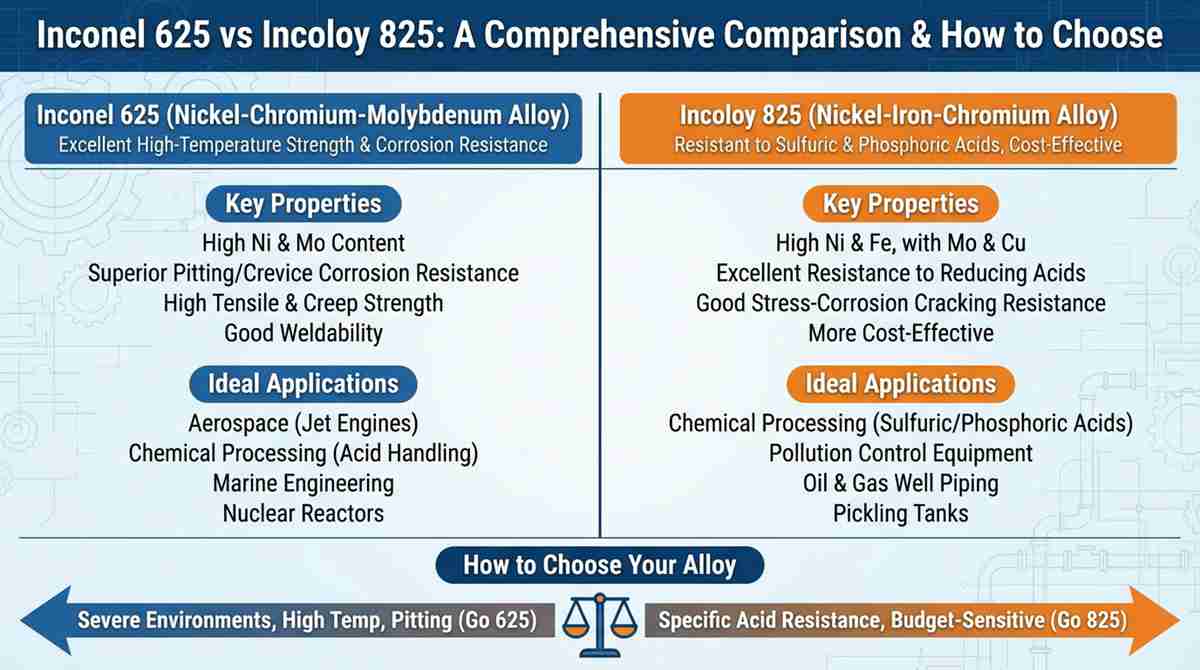
The fundamental difference between these two alloys lies in their nickel and iron content. Inconel 625 is a nickel-chromium-molybdenum alloy with an addition of niobium, which acts as a solid solution strengthener. In contrast, Incoloy 825 is a nickel-iron-chromium alloy with additions of copper and titanium, making it more cost-effective due to its higher iron content.
Key Technical Specifications
| Property | Inconel 625 (UNS N06625) | Incoloy 825 (UNS N08825) |
| Nickel Content | 58.0% min | 38.0% – 46.0% |
| Iron Content | 5.0% max | 22.0% min (Balance) |
| Chromium | 20.0% – 23.0% | 19.5% – 23.5% |
| Molybdenum | 8.0% – 10.0% | 2.5% – 3.5% |
| Niobium (+Ta) | 3.15% – 4.15% | N/A |
| Tensile Strength (psi) | 120,000 | 85,000 |
| Main Advantage | High strength & Fatigue resistance | Excellent acid resistance & Cost-efficiency |
625 vs 825 for Chloride Corrosion
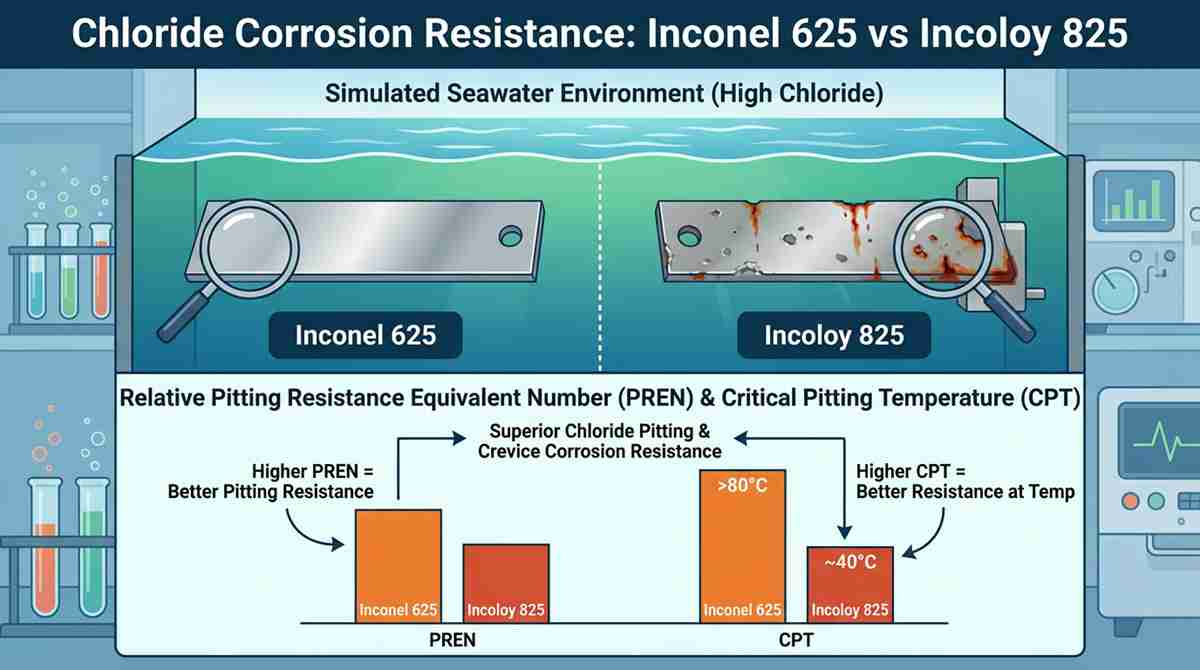
When evaluating 625 vs 825 for chloride corrosion, the Pitting Resistance Equivalent Number (PREN) is the most reliable metric.
-
Inconel 625 boasts a much higher molybdenum content (up to 10%), resulting in a PREN typically above 45. This makes it nearly immune to chloride-induced pitting and crevice corrosion in seawater and brine environments. It is the gold standard for offshore splash zones and marine hardware.
-
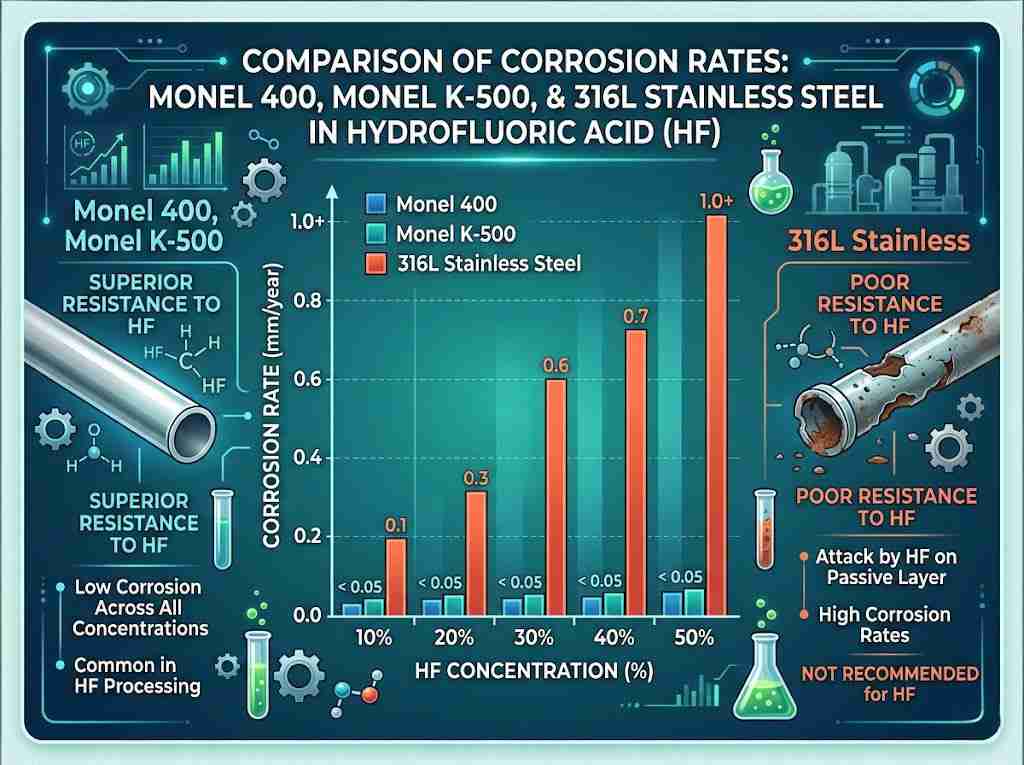
Incoloy 825 has a PREN ranging between 26 and 32. While it provides excellent resistance to Stress Corrosion Cracking (SCC) thanks to its nickel content, it is more susceptible to localized pitting in high-chloride, stagnant water compared to Alloy 625. However, the addition of copper in 825 makes it uniquely superior when dealing with sulfuric acid and phosphoric acid.
625 vs 825: How to Choose the Right Alloy
The “625 vs 825 how to choose” dilemma usually boils down to three factors: Temperature, Pressure, and Budget.
-
Temperature Requirements: If your application exceeds 540°C (1000°F), Inconel 625 is the mandatory choice. Its niobium-strengthened matrix maintains high creep-rupture strength at elevated temperatures where Incoloy 825 might soften.
-
Mechanical Loading: For high-pressure piping or bellows that undergo cyclic stress, the superior tensile and fatigue strength of 625 justifies the premium.
-
Economic Considerations: Incoloy 825 is significantly cheaper because it replaces a large portion of nickel with iron. For oil and gas downhole tubing where sulfuric acid or CO2 is present but the extreme pitting resistance of 625 isn’t required, 825 is the most “value-engineered” solution.
Related Q&A
Q1: Can Inconel 625 replace Incoloy 825 in all applications? Technically, yes, due to its superior strength and corrosion resistance. However, it is rarely done in practice because Inconel 625 is roughly 2 to 3 times more expensive.
Q2: Which alloy is better for welding? Both exhibit excellent weldability. However, Inconel 625 is frequently used as a filler metal (like ERNiCrMo-3) to weld other dissimilar metals because of its high alloy content and resistance to cracking.
Q3: Is Incoloy 825 better for sulfuric acid than Inconel 625? Yes. Due to the specific addition of copper, Incoloy 825 offers exceptional resistance to sulfuric acid in various concentrations, often outperforming Alloy 625 in specialized chemical processing environments.