When choosing a material for demanding applications, the Inconel vs Stainless Steel debate is a critical one for engineers and designers. Both are known for their excellent corrosion resistance, but their performance under extreme conditions varies significantly. Stainless steel, a versatile and cost-effective alloy of iron, chromium, and often nickel, is a go-to for a vast range of applications. Inconel, a family of nickel-chromium-based superalloys, enters the scene when conditions become too severe for conventional materials. This article provides an in-depth comparison to help you understand the key differences and make an informed decision for your project.
Understanding the Core Differences: Inconel vs Stainless Steel
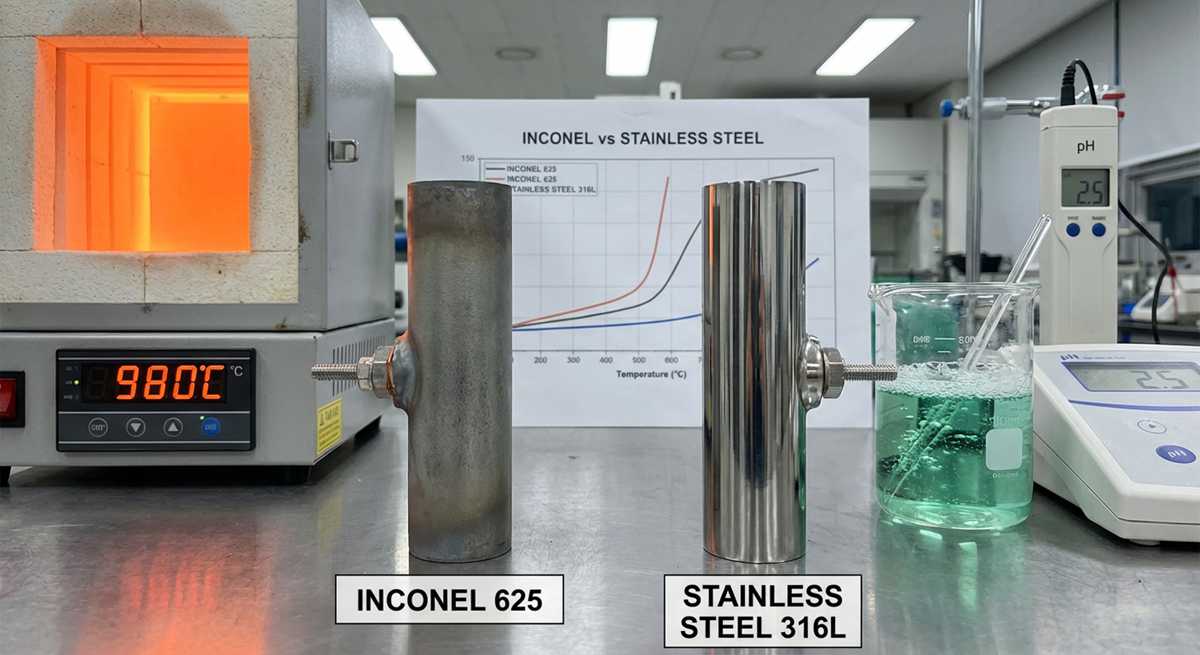
The primary distinction in the Inconel vs Stainless Steel comparison lies in their composition and, consequently, their thermal and chemical stability. Stainless steel’s properties are primarily defined by the chromium content, which forms a passive oxide layer, preventing corrosion. Inconel, with nickel as its principal element, offers superior strength and stability at high temperatures, a domain where most stainless steels would falter and lose their structural integrity.
High-Temperature Performance
When it comes to high-temperature applications, Inconel is the undisputed champion. Alloys like Inconel 625 and 718 maintain exceptional strength and creep resistance at temperatures approaching 1000°C (1800°F). This is due to the formation of stable, strengthening phases within its nickel-chromium matrix. In contrast, while certain grades of stainless steel (like 310 or 330) can operate at elevated temperatures, they begin to lose significant strength and become susceptible to scaling and oxidation far sooner than Inconel. This makes the Inconel vs Stainless Steel choice clear for applications like gas turbine components, jet engines, and high-temperature chemical reactors.
Corrosion Resistance: A Deeper Look
Both materials offer excellent corrosion resistance, but the devil is in the details. In the Inconel vs Stainless Steel matchup, Inconel generally provides a higher level of resistance across a wider range of corrosive media, especially in extreme environments. It excels in handling acids, saltwater, and chloride-ion stress-corrosion cracking. While stainless steel performs admirably in everyday atmospheric conditions and with many chemicals, it can be vulnerable to pitting and crevice corrosion in aggressive chloride environments. Therefore, for marine engineering, chemical processing, and oil and gas extraction, Inconel is often the safer, more reliable choice.
Cost, Machinability, and Welding
Cost is a significant factor where stainless steel has a clear advantage. Being primarily iron-based, it is far less expensive to produce than the nickel-heavy Inconel. The price difference can be substantial, making stainless steel the preferred option for projects where the extreme performance of Inconel is not a strict requirement.
Furthermore, working with Inconel presents challenges. It is notoriously difficult to machine due to its rapid work-hardening and high strength. It requires specialized tools, slower speeds, and more robust equipment. Welding Inconel also demands more skill and specific consumables to avoid cracking. Stainless steel, in comparison, is relatively easy to fabricate and weld, contributing to its widespread use in countless industries.
Inconel vs Stainless Steel: Comparison Table
| Feature | Inconel (e.g., 625) | Stainless Steel (e.g., 316L) |
|---|---|---|
| Primary Composition | Nickel (58%+), Chromium, Molybdenum | Iron, Chromium (16-18%), Nickel (10-14%) |
| Max Operating Temp. | Up to 1000°C (1800°F) | Up to 870°C (1600°F), with reduced strength |
| High-Temp Strength | Excellent, retains strength at high heat | Good, but significantly lower than Inconel |
| Corrosion Resistance | Superior, especially against chlorides and acids | Excellent, but vulnerable to specific corrosives |
| Cost | High | Low to Moderate |
| Machinability | Difficult | Easy to Moderate |
| Common Applications | Aerospace, chemical processing, marine, nuclear | Food processing, medical, architectural, automotive |
Making the Right Choice in the Inconel vs Stainless Steel Debate
Ultimately, the choice between Inconel vs Stainless Steel comes down to application-specific needs and budget. If your project involves extreme heat, aggressive chemical exposure, and high mechanical stress, Inconel is the superior material, providing safety and longevity that justify its cost. For general-purpose applications requiring good corrosion resistance and strength at a reasonable price point, stainless steel remains the unbeatable industry standard.
Related Q&A
- Is Inconel magnetic?
Generally, Inconel alloys are non-magnetic. However, some can exhibit slight magnetism after work hardening. This is a key difference from many stainless steel grades, especially the ferritic and martensitic types, which are magnetic. - Can you use stainless steel bolts with Inconel parts?
While possible, it’s generally not recommended, especially in high-temperature or corrosive environments. The differing thermal expansion rates and potential for galvanic corrosion between the two materials can lead to joint failure. It’s best to use fasteners made of a compatible material. - Why is Inconel so expensive?
The high cost of Inconel is primarily due to its high nickel content. Nickel is a much more expensive metal than iron, which is the main component of stainless steel. The complex and energy-intensive processes required to mine, refine, and alloy nickel also contribute to the final price.