








インコネル601染料浸透探傷試験品質チェックリスト?

エンジニアが インコネル601 dye penetrant testing quality checklist, they are usually not looking for a generic PT summary. They are trying to avoid one very practical failure: a nickel-alloy part passes shop inspection, then a weld toe crack, lack of fusion indication, or surface-connected porosity shows up later during fabrication, heat-up, or customer audit. INCONEL alloy 601 is a nickel-chromium-iron alloy specified as UNS N06601 / W.Nr. 2.4851, widely chosen for heat- and oxidation-resistant service; penetrant testing, meanwhile, is intended to reveal discontinuities open to the surface on nonporous materials rather than subsurface flaws.

That combination is exactly why an インコネル601染料浸透探傷試験品質チェックリスト has to be material-aware. On paper, the governing route may look simple: follow ASTM E1417/E1417M, ISO 3452-1, or the NDE framework referenced by ASME Section V, then accept or reject to the drawing, customer specification, or code section. In reality, nickel-alloy surfaces can be deceptively difficult. Oxide tint, embedded smear from grinding, residual cleaner, incomplete drying, and loose interpretation of acceptance criteria are what usually separate a clean audit trail from expensive rework. ASTM E1417 establishes the basic parameters and requires a detailed written procedure; ISO 3452-1 likewise covers the method and process/control requirements, but it is not itself an acceptance-criteria document.

Why this Inconel 601 dye penetrant testing quality checklist matters

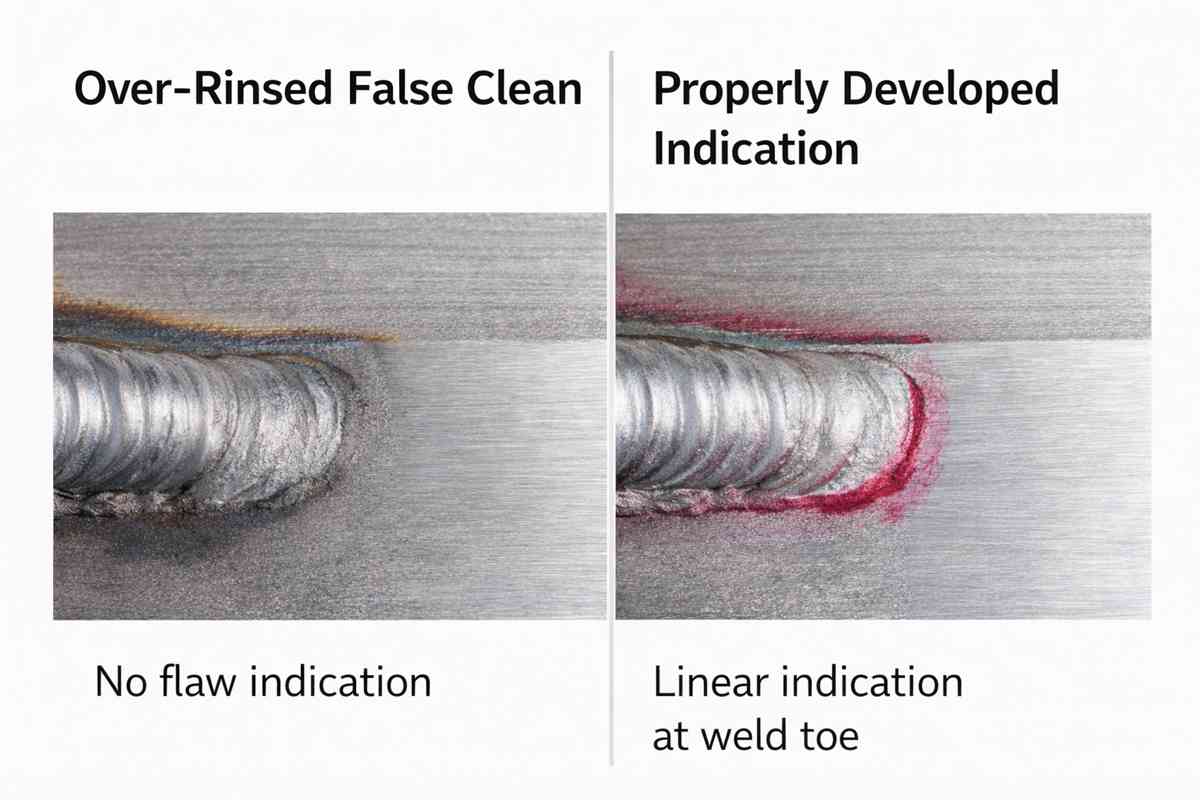
For Inconel 601, the inspection risk is often not “wrong method,” but “right method applied to the wrong surface condition.” Because alloy 601 is selected for high-temperature oxidation resistance and is readily welded, inspected parts frequently arrive with weld heat tint, service oxide, or aggressive local blending marks. PT only works on clean, dry, nonporous surfaces where penetrant can enter a surface-breaking discontinuity and developer can pull it back out as a readable indication. Water left in a tight indication can block penetrant entry, and over-rinsing can wash out relevant penetrant response.

インコネル601染料浸透探傷試験品質チェックリスト

A second reason to use an インコネル601染料浸透探傷試験品質チェックリスト is terminology. In many shops, “dye penetrant” is used loosely for all PT work, even though the actual qualified process may be visible color-contrast or fluorescent penetrant under UV-A at 365 nm. That distinction matters because the written procedure, lighting conditions, system sensitivity, post-cleaning route, and customer acceptance documents must line up. If the contract calls ASTM or ISO process control but your team is making go/no-go decisions from habit rather than from the referenced acceptance standard, you are already exposed.

Inconel 601 dye penetrant testing quality checklist for shop release

Before the table, one principle is worth stating plainly: this checklist is not a substitute for the approved procedure. It is a control tool engineers and QA teams can use to verify that the approved PT procedure is being applied correctly to Inconel 601 base metal, weldments, and repaired areas. ASTM E1417 is explicit that the standard practice must be supplemented by a detailed procedure, and ISO 3452-1 is explicit that it is not the acceptance standard.

Inspection checkpoint Why it matters on Inconel 601 What the inspector should verify Typical red flag
材料の識別 Mixed-alloy fabrication lots are not rare in nickel-alloy shops Heat number, MTC, alloy callout, weld map, and part traceability match the traveler PT report says “nickel alloy” but not 601 / UNS N06601
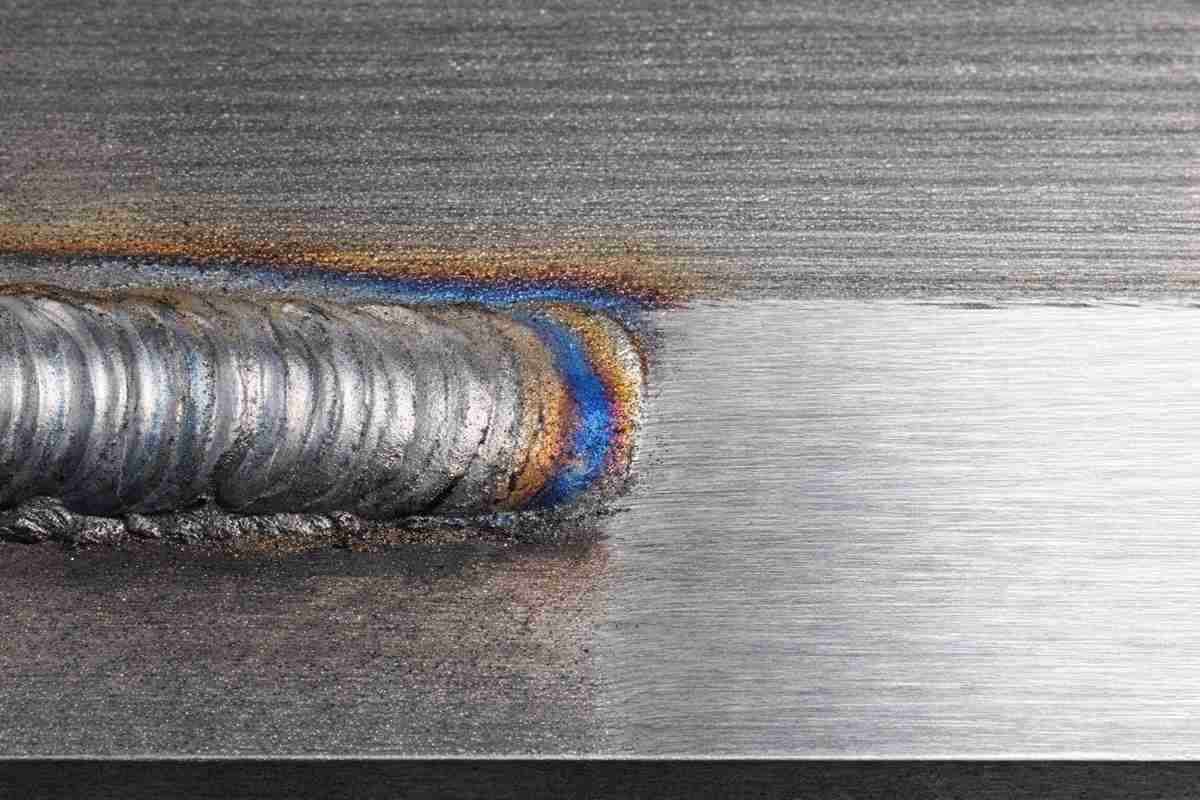
Surface condition before PT Oxide tint, scale, smeared metal, and grinding residue can mask tight surface indications Inspection zone is metallically clean, dry, and free of paint, oil, scale, and peened surfaces Rainbow heat tint still present at weld toe or repair area
Precleaning method Wrong cleaning route can leave residue or moisture in defects Cleaner type is procedure-approved; rinsing is complete; drying is complete before penetrant application Solvent wipe done quickly, then penetrant applied to a still-cool, damp surface
Weld profile accessibility High crowns and sharp undercut zones reduce reliable viewing Weld toe, stop-start areas, attachment removal zones, and local repairs are fully accessible Only weld face centerline examined; toes not properly viewed
Penetrant system used “Dye penetrant” in conversation may not match the qualified process Product family, sensitivity level, batch status, and expiration conform to the written procedure Wrong penetrant family or expired materials used
Contaminant control Nickel-base alloys require tighter discipline on PT consumables in many code-driven jobs Batch certifications for relevant PT materials are on file when required by code/customer spec No sulfur/halogen-related certification available for a code job
Dwell and development control Tight cracks do not forgive rushed timing Penetrant dwell, excess removal, drying, developer application, and development time follow the approved procedure Operator uses “shop standard timing” from memory
Removal of excess penetrant Over-removal can erase faint relevant indications Removal method matches process and is controlled, especially near weld toes and blend-outs High-pressure rinsing or excessive solvent wiping
Lighting and viewing conditions Indications are only as reliable as the viewing environment White light or UV-A conditions meet the qualified method and are verified before interpretation UV lamp used without current verification or dirty filter
Indication interpretation PT finds surface-connected discontinuities, not cause or depth by itself Relevant vs nonrelevant indications are classified to the applicable acceptance criteria Rounded and linear indications logged inconsistently
Recording and traceability Customer disputes are usually document disputes Report identifies part, zone, method, materials, inspector, date, and acceptance basis Report lacks exact location sketches or photo references
Disposition of suspect areas In nickel-alloy fabrication, “blend and forget” is not quality control Repair, re-exam, and final acceptance are tied to the repair route and spec Indication removed by grinding with no re-PT record

The checkpoints most teams skip

The most commonly skipped item in an インコネル601染料浸透探傷試験品質チェックリスト is not dwell time. It is contaminant control and compatibility discipline. In ASME-governed penetrant examination practice, users are directed to obtain contaminant-content certification for penetrant materials used on nickel-base alloys, austenitic or duplex stainless steels, and titanium. Even when the job is outside pressure-code scope, experienced buyers and QA engineers still expect the PT material set to be compatible with the alloy and traceable by batch. That is a strong signal of process maturity.

The second skipped item is precleaning quality. Shops often underestimate how easily residual moisture or cleaner residue can suppress fine indications. Thorough drying is not housekeeping; it is sensitivity control. If the part was water-rinsed, alkaline-cleaned, or recently blasted and re-cleaned, the inspector should be able to show that the surface was actually dry before penetrant application. On Inconel 601 welds, this matters most at weld toes, crater repairs, and blended attachment-removal zones where cracks can be tight and shallow at the surface.

The third skipped item is the acceptance basis. A lot of rejected or escaped product comes from teams using PT correctly but interpreting indications against the wrong document. ASTM E1417 and ISO 3452-1 tell you how to run the process; they do not, by themselves, decide whether a linear indication at a weld toe is acceptable for your part. That decision has to come from the applicable drawing note, customer standard, code section, or product specification. For procurement teams, this is where a supplier either looks disciplined or risky.

インコネル601染料浸透探傷試験品質チェックリスト

Final engineering note

良い インコネル601染料浸透探傷試験品質チェックリスト does not make PT slower. It makes PT defensible. That matters when you are releasing furnace hardware, radiant tube assemblies, retorts, trays, welded duct parts, or any fabricated Inconel 601 item that will later see thermal cycling and oxidation service. For 28Nickel, the practical value is simple: when a customer asks for nickel-alloy supply plus technical support, the conversation should move beyond “we can provide the material” to “we understand the inspection risks that decide whether your fabricated part actually ships.” If your team needs a material-specific review of Inconel 601 plate, pipe, bar, or weldment inspection requirements, that is exactly the kind of discussion worth having before the first NCR appears.

関連Q&A

1) Is dye penetrant testing enough for Inconel 601 weld quality?

Not by itself. PT is intended to find discontinuities open to the surface on nonporous materials; it does not size subsurface flaws or replace volumetric methods where those are required. For critical weldments, PT is usually one layer of the inspection plan, used alongside the applicable welding, dimensional, and sometimes radiographic or ultrasonic requirements from the governing specification.

2) What is the biggest PT mistake on Inconel 601?

The biggest field mistake is treating Inconel 601 like ordinary stainless fabrication with no extra attention to oxide tint, dry surface condition, and PT consumable control. Alloy 601 is widely used because of its oxidation resistance, so the surface state after welding or service exposure can work directly against reliable PT if cleaning and drying are weak.

3) Do ASTM E1417 or ISO 3452-1 give the acceptance criteria?

No. ASTM E1417 establishes the basic parameters for the method and requires a detailed procedure, while ISO 3452-1 covers the test method and process/control requirements but states it is not intended to be used for acceptance criteria. Acceptance has to come from the referenced drawing, customer standard, or code/specification.

この記事を共有する

関連記事

この見出しは訪問者の注意を引く

あなたのビジネスとサービスを訪問者に紹介する短い説明文。.
スオルエットゥ
上部へスクロール