








エンジニアや調達チームから次のような質問があった場合 なぜISO認証を取得したニッケル合金サプライヤーが必要なのか, …通常、これらは実際の課題、すなわち化学組成のばらつき、トレーサビリティの不備、書類の遅延、あるいは書類上は問題ないように見えても製造や使用段階で不適合となる材料などに対する反応です。ニッケル合金の調達において、リスクが単に「納期の遅れ」にとどまることはめったにありません。 それは、溶接現場での手直し、現場でのPMI(材料成分分析)の不合格、NCR(不適合報告)のエスカレーション、あるいは塩化物環境、酸性環境、高温環境下での早期腐食などである。 ISO認証を取得したサプライヤーは、劣悪な金属組織を魔法のように良質なものに変えるわけではありませんが、材料の購入、検査、識別、文書化、および出荷を管理する、規律ある品質システムを構築しています。重要な用途においては、その違いが大きな意味を持ちます。.
重要な用途において、なぜISO認証を取得したニッケル合金サプライヤーが必要とされるのか?
ニッケル合金は、一般的な炭素鋼とは異なります。Alloy 625、718、C-276、400、あるいは800H/HTのいずれを購入する場合でも、使用環境はしばしば過酷です。高温、還元性酸、海水中の塩化物、サワーガス、あるいは周期的な機械的負荷などが挙げられます。 こうした用途において、サプライチェーンにたった一つの弱点があるだけで、高級合金の利点が台無しになってしまう可能性があります。.
だから, なぜISO認証を取得したニッケル合金サプライヤーが必要なのか 単に価格や納期を比較するだけでなく、なぜそうすべきなのでしょうか? 技術的なリスクは細部に潜んでいるからです:
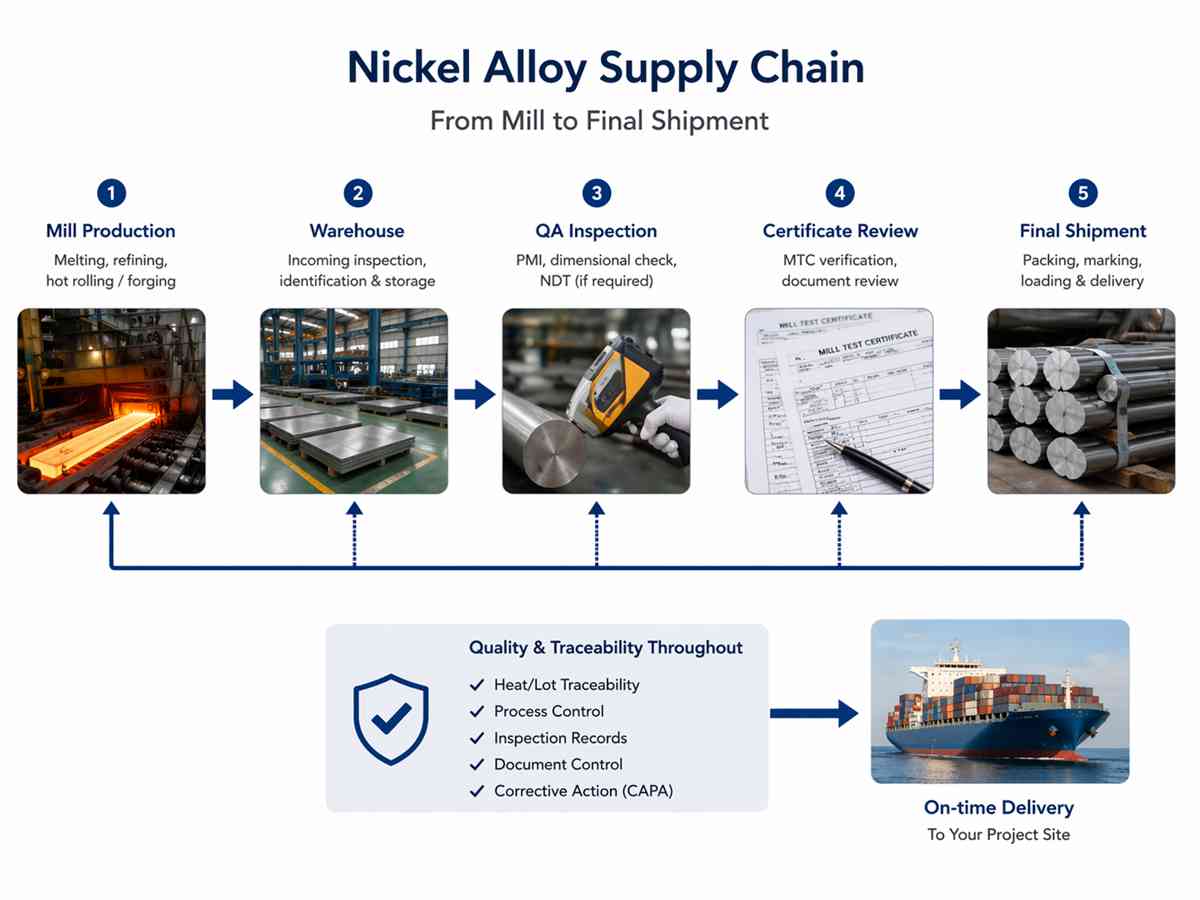
- 製紙工場から最終出荷に至るまでの熱処理およびロットの追跡可能性
- UNSグレード、ASTM/ASME規格、および製品形状の確認
- MTC/MTRの正確性の管理および改訂履歴
- 入荷検査、PMI、寸法確認、および表面検査
- 適合品と不適合品の分別
- NACE、PED、EN 10204 3.1/3.2 文書など、顧客からの特別な要件への適切な対応
正式な品質管理システムがない場合、こうした管理はしばしば個々の経験に依存することになります。しかし、圧力機器、航空宇宙機器、化学プロセスシステム、あるいは海洋用部品にとっては、それだけでは十分な堅牢性を確保できません。.
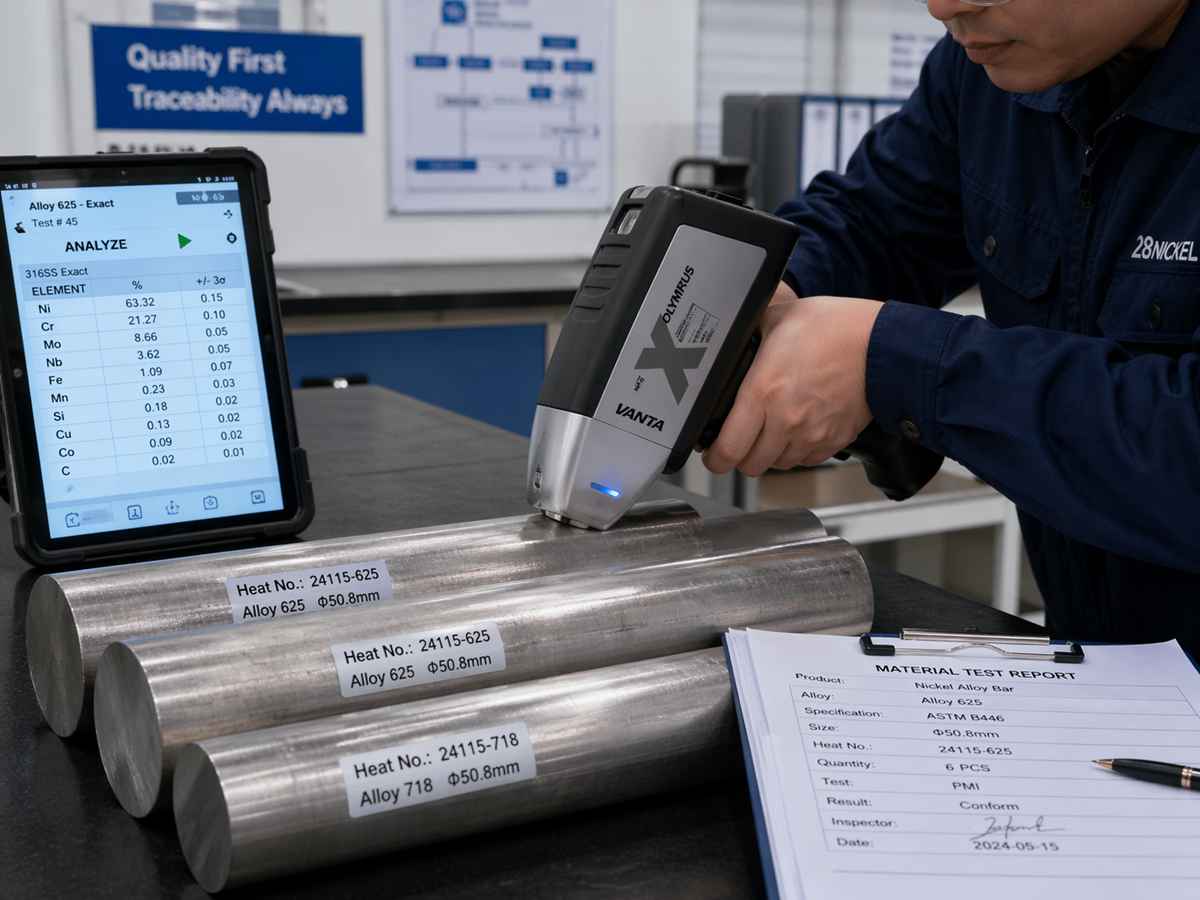
ISO認証は単なるスローガンではありません。それはプロセスにおける規律なのです。.
買い手から質問があった場合 なぜISO認証を取得したニッケル合金サプライヤーが必要なのか, 、その最善の答えは、ISO認証(通常はISO 9001)が、ワークフローに対する再現性のある管理を義務付けるという点にあります。これには、文書化された手順、記録の保存、内部監査、是正措置、研修管理、サプライヤー評価、およびリスクベースの考え方が求められます。ニッケル合金の場合、こうした仕組みによって、いくつかの一般的な故障モードを低減することができます。.
まず、混同のリスクを低減できます。合金600、601、625、および800シリーズの材料は、保管時には見た目が似ている場合がありますが、使用時や溶接時にはその挙動が大きく異なります。認定サプライヤーであれば、誤った取り替えが発生する可能性を大幅に低減するための識別および分離に関する規則を定めているはずです。.
第二に、文書の整合性が向上します。多くの紛争において、金属そのものが第一の問題となることは少なく、むしろ書類に問題がある場合がほとんどです。ISO認証を取得した信頼できるサプライヤーは、改訂状況、文書の発行、製造証明書の審査、および製品マーキングと証明書との関連性を適切に管理しています。.
第三に、問題が発生した際の対応力が向上します。堅固なサプライチェーンであっても、硬度値の変動、寸法不適合、報告書の欠落、あるいは疑わしい表面検査結果など、時折逸脱が生じることがあります。ISOシステムでは、場当たり的な対応ではなく、NCR(不適合報告)の処理、根本原因の分析、およびCAPA(是正措置・予防措置)が求められます。.
ニッケル合金の購入者にとって、ISO認証が真の価値をもたらす場面
以下がその場所です なぜISO認証を取得したニッケル合金サプライヤーが必要なのか 理論的なものから実践的なものへと変わる。.
| 調達リスク分野 | よくある問題点 | ISO認証を取得したサプライヤーがどのようにリスクを低減するか | ニッケル合金で重要な理由 |
|---|---|---|---|
| 等級の判定 | 混合ヒートまたは誤った合金の出荷 | 管理されたタグ付け、PMI、在庫の区分管理 | わずかな寸法誤差でも、重大な腐食や溶接不良を引き起こす可能性があります |
| ドキュメンテーション | MTC/MTRの不完全または不一致 | 文書の確認、改訂管理、記録の保存 | エンドユーザーは、監査やプロジェクトの完了手続きのために、完全なトレーサビリティを求めることがよくあります |
| 入荷時の品質 | 出典が確認されていない資料 | 認定サプライヤー管理および入荷検査 | ニッケル合金のコストは高く、隠れた不適合は大きな損失につながる |
| 不適合品 | 在庫のある商品は、引き続き発送可能です | NCRの処理および隔離手順 | 製造工程への意図しない放出を防止します |
| 顧客仕様 | NACEや3.1認証などの特別条項が記載されていない | 受注前の契約内容確認 | EPCまたはエンドユーザーによる最終段階での拒否を防ぐ |
| 是正措置 | 注文ごとに同じ問題が繰り返される | 根本原因分析とCAPA | 一度限りの復旧よりも、長期的な信頼性の方が重要である |
コンプライアンス以上の理由で、なぜISO認証を取得したニッケル合金サプライヤーが必要なのか?
これにはもう一つの側面があり、 なぜISO認証を取得したニッケル合金サプライヤーが必要なのか: 業務効率。優れた調達とは、単に不良品を避けることだけではありません。調達、品質保証、製造、現場の各チーム間の摩擦を軽減することでもあります。.
規律あるサプライヤーであれば、通常、重要な質問には遅滞なく回答できます:
- この材料は、1回の溶融から供給されたものですか、それとも複数の溶融から供給されたものですか?
- 追加の試験は受けられますか?
- 必要に応じて、サプライヤーはPMI、UT、硬度、結晶粒径、または腐食に関する試験記録を提出できますか?
- 溶接性の考慮事項や熱処理条件は明確に明記されていますか?
- 切断、機械加工、または分割出荷を行った後も、トレーサビリティは維持できますか?
これらの点は、製造業者がWPS/PQRパッケージを作成する際、品質保証(QA)チームが引き渡し書類をまとめる際、そして現場の検査員がマーキングや証明書との関連性に疑問を呈した際に重要となります。サプライヤーが書類の連鎖を立証できない場合、たとえ金属の化学組成が規格に適合していても、プロジェクトは遅延を余儀なくされます。.
ISO認証が保証しないこと
経験豊富なエンジニアもまた、現実的であるべきだ。. なぜISO認証を取得したニッケル合金サプライヤーが必要なのか だからといって、ISO認証だけで十分だということにはなりません。ISO認証は、サプライヤーが監査済みのマネジメントシステムに基づいて運営されていることを証明するものです。しかし、それだけでは、すべての在庫品が一流の製鋼所から供給されていること、すべての作業員が合金特有の加工リスクを理解していること、あるいはすべてのプロジェクト要件が正確に把握されていることを自動的に証明するものではありません。.
だからこそ、見識のある買い手は今でも以下を確認しているのです:
- 必要に応じて、ミルソースおよび溶解工程を記載すること
- 製品規格および納入条件
- 追加の非破壊検査(NDT)または試験の必要性
- エンドユーザー向けドキュメントの要件
- 包装、表示、および輸出手続きに関する規定
つまり、ISO認証は「最低基準」であり、「最高基準」ではない。しかし、ニッケル合金業界において、最低基準が低すぎるのは危険だ。.
結論
それでもまだ聞きたいのであれば なぜISO認証を取得したニッケル合金サプライヤーが必要なのか, 、簡単に言えば、ニッケル合金は、代替品の使用、トレーサビリティの欠如、あるいは管理されていない文書化が、技術的および商業的な失敗につながる可能性のある条件下での性能を発揮するために調達されるからです。 ISO認証を取得した適格なサプライヤーは、化学組成の管理、熱処理のトレーサビリティ、検査体制、および是正措置の徹底を支援します。これはエンジニアリングレビューに代わるものではありませんが、プロジェクトにとってより信頼性の高い出発点を提供します。.
ニッケル合金製の板材、棒材、パイプ、継手、溶接材料、または鍛造部品を購入する方にとって、最も賢明な問いは「今日、どこが最も安いのか?」ではありません。それは「品質保証(QA)、溶接、そしてエンドユーザーから厳しい質問が寄せられた際、その材料について引き続きサポートできるのはどこなのか?」という問いです。通常、適切なサプライヤーはそのような場面でこそ、その価値を証明するのです。.
関連Q&A
Q1. 圧力機器用のニッケル合金を購入する際、ISO 9001の認証だけで十分でしょうか?
必ずしもそうとは限りません。ISO 9001は品質管理の強力な基準ですが、圧力機器プロジェクトでは、PEDへの準拠、EN 10204 3.1/3.2認証、NACE関連の管理措置、あるいは顧客固有の検査計画も求められる場合があります。.
Q2. なぜニッケル合金において、トレーサビリティは一般的なステンレス鋼よりも重要なのでしょうか?
ニッケル合金は通常、耐食性、クリープ強度、あるいは高温安定性といった、狭い使用条件の範囲で選定されるためです。グレードの誤選定は、性能の急激な低下や、多額の費用を要する故障調査につながる可能性があります。.
Q3. 流通業者や株主もISO認証を取得すべきですか、それとも製紙工場のみですか?
はい。製粉所が完全に認定を受けていたとしても、保管、ラベルの貼り替え、裁断、書類の引き渡し、出荷の承認については、販売代理店や在庫管理者が管理しています。これらの工程は、厳格なシステムの下で管理されなければ、トレーサビリティが損なわれる可能性があります。.