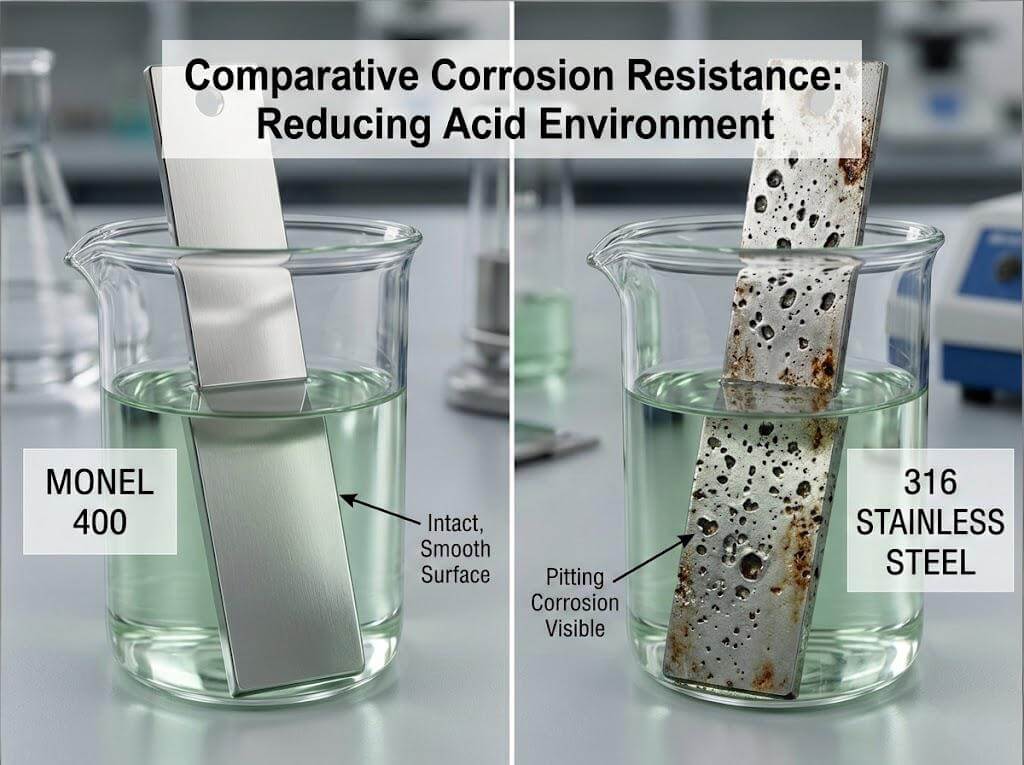
Engineers designing for severe offshore and chemical processing environments face a constant battle against localized chloride attack and stress corrosion cracking (SCC). When standard austenitic stainless steels fail prematurely, we must look toward solid-solution strengthened nickel-copper alloys. Understanding exactly how monel 400 properties mitigate these degradation mechanisms is critical for extending asset lifecycles and minimizing downtime.
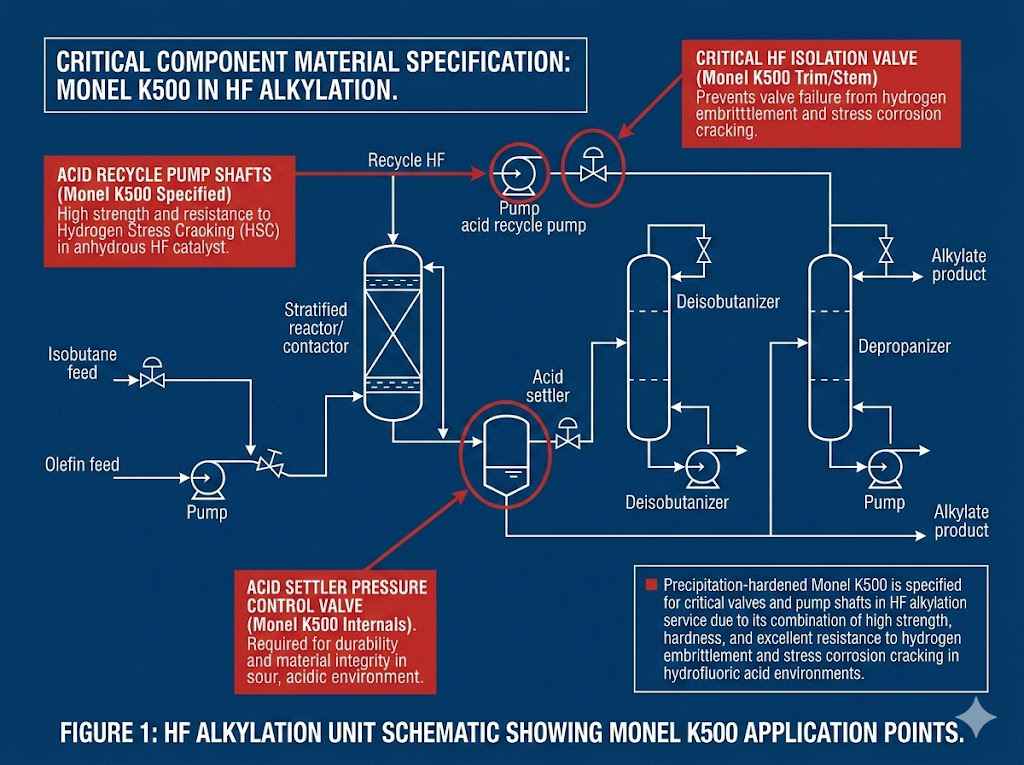
Unlike standard materials that rely heavily on delicate passive oxide layers, this alloy exhibits exceptional thermodynamic stability in many reducing environments. This inherent resistance makes it a foundational staple in marine engineering, salt production, and hydrofluoric acid alkylation units where reliability under pressure is absolutely non-negotiable.
Metallurgical Drivers of Alloy 400 Characteristics
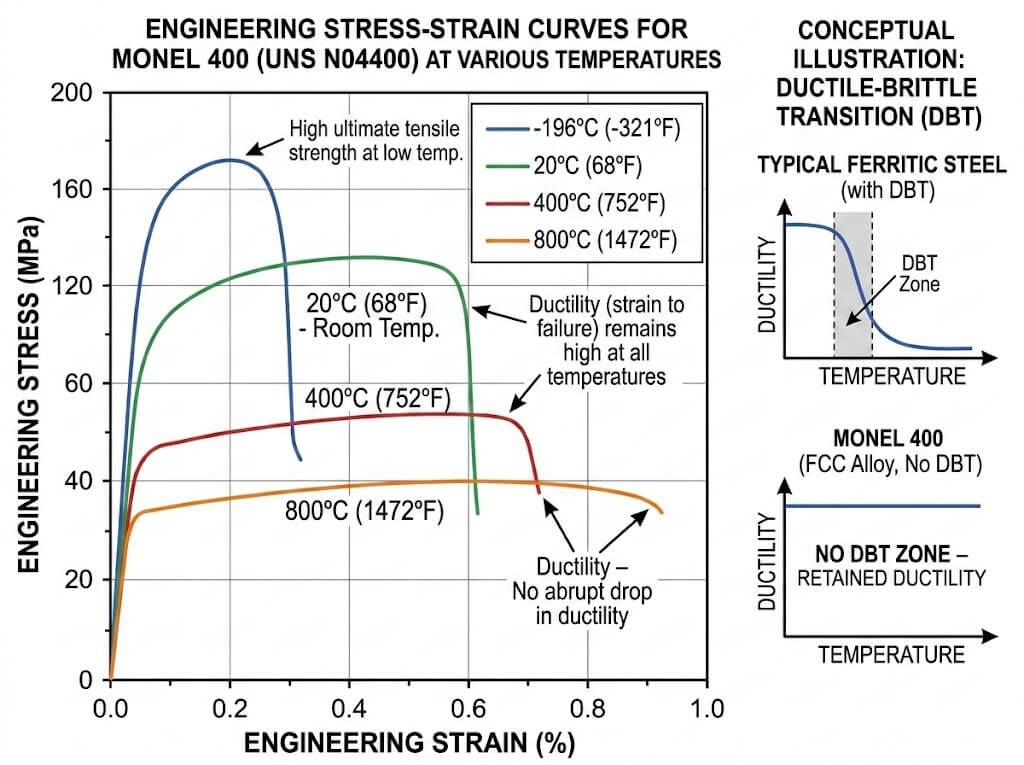
The foundational science driving superior monel 400 properties lies in its single-phase face-centered cubic (FCC) crystal structure. Because nickel and copper are mutually soluble in all proportions across the binary phase diagram, the alloy avoids deleterious phase precipitations during complex welding or severe thermal cycling.
This microstructural stability ensures that the alloy maintains exceptional toughness without undergoing ductile-to-brittle transitions, even down to extreme cryogenic temperatures. Furthermore, the strict control of trace elements like sulfur and carbon during the melting process prevents grain boundary embrittlement, ensuring consistent mechanical performance across varied heat lots.
| Element / Physical Property | Value / Nominal Range (ASTM B164) |
| Nickel (Ni) | 63.0% Min |
| Copper (Cu) | 28.0% – 34.0% |
| Iron (Fe) | 2.5% Max |
| Yield Strength (Annealed) | 170 – 345 MPa |
| Tensile Strength (Annealed) | 480 – 585 MPa |
| Elongation | 35% Min |
Mechanical Response in Aggressive Media
Beyond standard baselines, specific mechanical monel 400 properties can be heavily tailored through targeted cold working. Although it cannot be age-hardened via precipitation like its cousin Alloy K-500, cold drawing increases its yield strength substantially while retaining excellent formability. For practical applications, this means valve stems, pump shafts, and high-strength fasteners can endure extreme torque and dynamic fluid loads without yielding.
When evaluating performance in hydrofluoric (HF) acid, oxygen concentration becomes the primary rate-determining step for corrosion. In deaerated HF up to the boiling point, the corrosion rate of this Ni-Cu matrix remains virtually nil, showcasing another critical dimension of unique monel 400 properties.
Engineering Support and Material Selection
Navigating the nuances of nickel-copper alloys requires looking beyond standard datasheet minimums. Real-world performance depends heavily on systemic operational variables like aeration, fluid velocity, and the presence of oxidizing salts. Selecting the right metallurgical condition—whether hot-finished, cold-drawn, or stress-relieved—is highly application-dependent and requires rigorous analysis.
At 28Nickel, our engineering team continuously analyzes these exact parameters to help clients prevent premature equipment failure. If you are struggling with material selection for an aggressive flow control system or a highly corrosive chemical reactor, connect with our technical specialists for a detailed failure analysis and precise metallurgical recommendation.
Related Q&A
1. Does the alloy suffer from pitting in stagnant seawater? Yes. While monel 400 properties excel in high-velocity seawater (e.g., pump impellers and piping), stagnant or low-velocity marine environments can invite biofouling. This biofouling initiates under-deposit corrosion and subsequent pitting, which is why fluid velocity must be maintained.
2. How do monel 400 properties change at extreme cryogenic temperatures? The alloy is microstructurally unique because its tensile and yield strengths actually increase significantly in sub-zero environments without any measurable loss of ductility or impact toughness. It does not become brittle at liquid hydrogen temperatures.
3. Can it withstand strongly oxidizing acids like nitric acid? No. Its high chemical resistance is strictly limited to reducing conditions. In strongly oxidizing media like nitric acid, chromic acid, or aerated ammonia, the absence of a robust passive chromium oxide layer leads to rapid anodic dissolution.