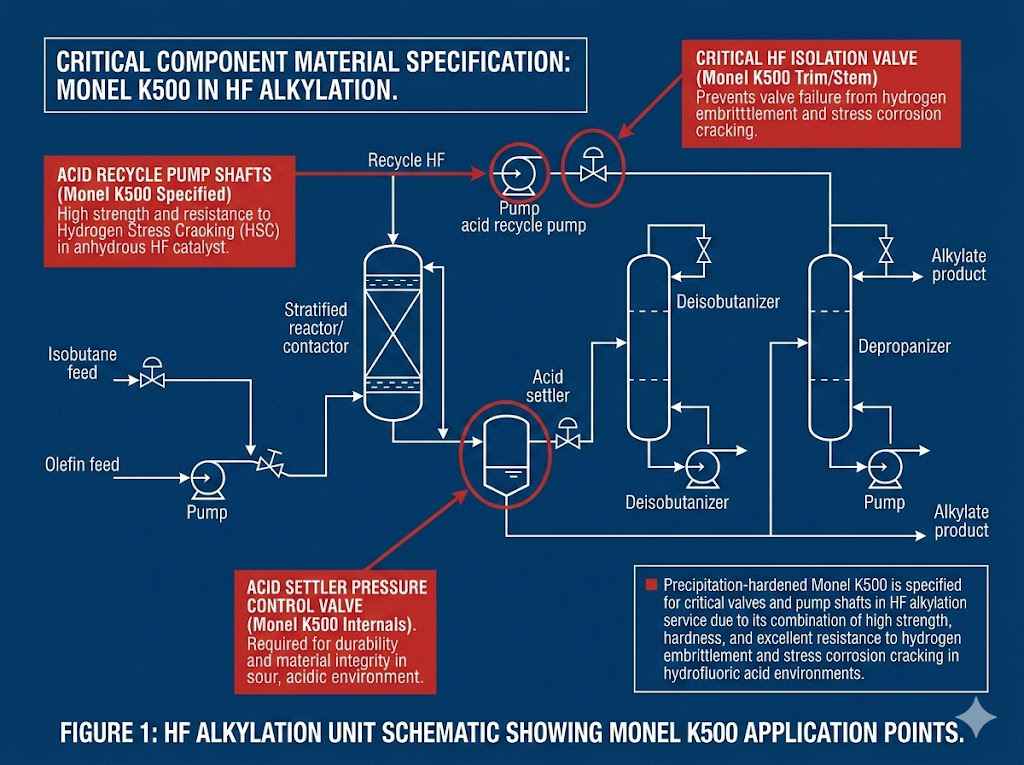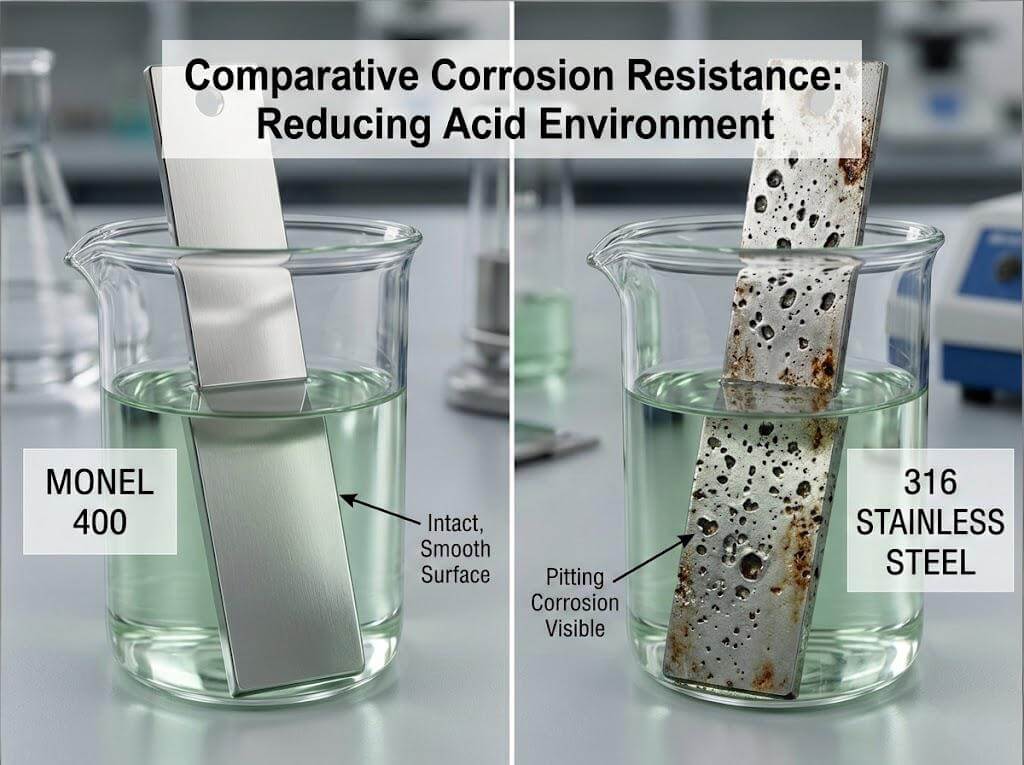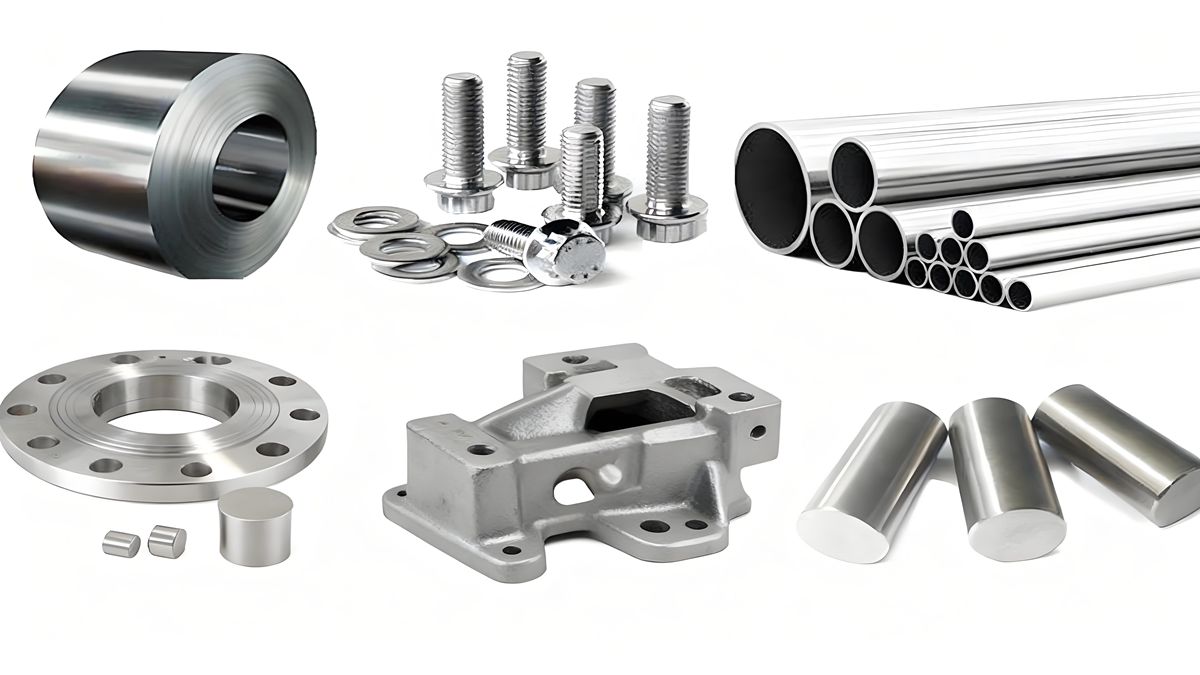
Selecting the right material for extreme environments is a critical decision for engineers and procurement specialists. At 28Nickel, we understand that the performance of a component often hinges on the specific nickel alloy grades chosen for the task. Nickel alloys are celebrated for their exceptional heat resistance, corrosion protection, and mechanical strength. However, with hundreds of variations available, navigating the landscape of nickel alloy grades requires a deep understanding of chemical compositions and their industrial applications.
Classification of Common Nickel Alloy Grades
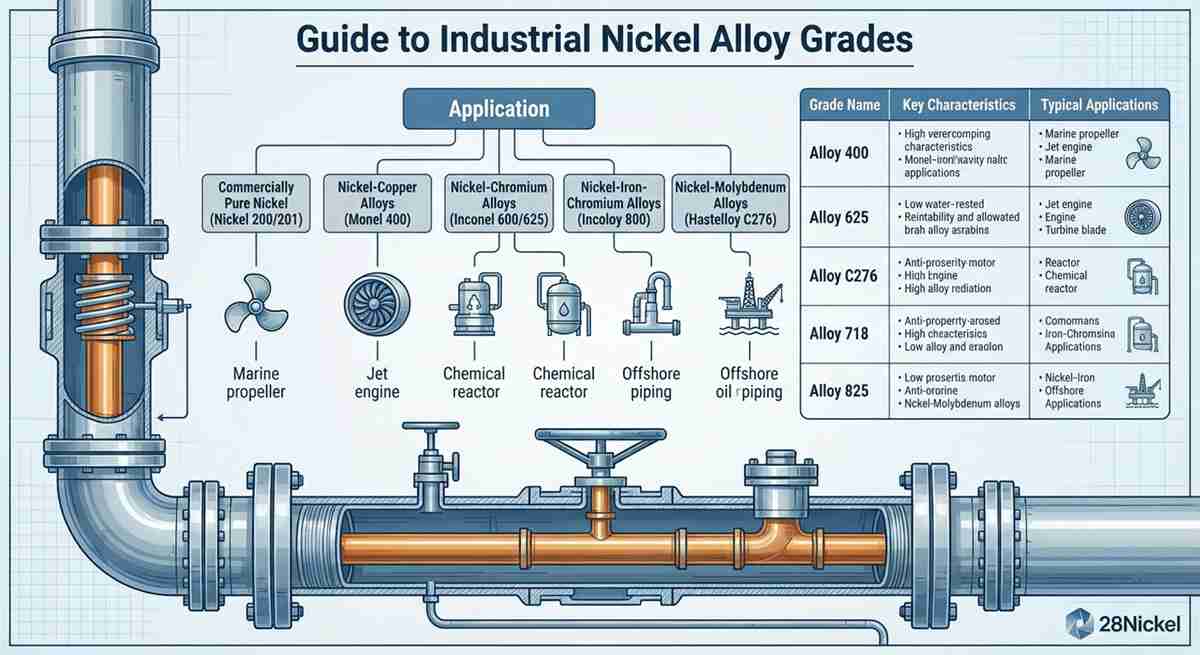
To simplify the selection process, nickel alloy grades are generally categorized by their primary alloying elements. Each category serves a distinct purpose:
-
Commercially Pure Nickel: Known for high electrical conductivity and resistance to caustic alkalis (e.g., Nickel 200/201).
-
Nickel-Copper Alloys: Excellent resistance to seawater and steam at high temperatures (e.g., Monel 400).
-
Nickel-Chromium Alloys: High-strength “superalloys” designed for oxidation and heat resistance (e.g., Inconel 600/625).
-
Nickel-Iron-Chromium Alloys: Engineered for high-temperature strength and resistance to carburization (e.g., Incoloy 800).
-
Nickel-Molybdenum Alloys: Primarily used in chemical processing to resist strong reducing acids (e.g., Hastelloy C276).
Comparing Key Nickel Alloy Grades
The following table outlines the most frequently utilized nickel alloy grades in the global market and their primary strengths:
| Grade Name | Common Trademark | Key Characteristics | Typical Applications |
| Alloy 400 | Monel 400 | Sea water corrosion resistance | Marine engineering, chemical processing |
| Alloy 625 | Inconel 625 | High fatigue strength & oxidation resistance | Aerospace, offshore oil & gas |
| Alloy C276 | Hastelloy C276 | Resistance to pitting & stress corrosion | Pollution control, waste treatment |
| Alloy 718 | Inconel 718 | High strength up to 700°C | Jet engines, high-speed airframes |
| Alloy 825 | Incoloy 825 | Resistance to sulfuric & phosphoric acids | Acid production, oil well tubing |
Factors Influencing the Selection of Nickel Alloy Grades
When choosing between different nickel alloy grades, one must consider the “Environment-Property-Cost” triad. For instance, while Inconel 625 offers superior performance in exhaust systems, a less expensive grade might suffice for low-pressure chemical storage. At 28Nickel, we prioritize helping clients match the mechanical requirements of their projects with the most cost-effective nickel alloy grades available, ensuring both safety and budget efficiency.
Related Q&A
Q1: What are the most versatile nickel alloy grades for corrosive environments?
A: Hastelloy C276 and Inconel 625 are often considered the most versatile due to their ability to withstand a wide range of acids and oxidative environments.
Q2: How do temperature fluctuations affect nickel alloy grades?
A: Higher nickel alloy grades maintain their crystalline structure and mechanical integrity at cryogenic temperatures as well as extreme heat, unlike standard carbon steels.
Q3: Can 28Nickel provide customized nickel alloy grades?
A: Yes, we supply a wide range of standard and specialized grades tailored to specific industrial specifications and high-performance requirements.