When components operate in increasingly severe environments—from ultra-deepwater sour gas wells to the combustion chambers of supercritical gas turbines—material selection cannot rely on guesswork. Engineering teams face immense pressure to specify materials that withstand complex multiaxial loading under extreme temperatures and corrosive media. To prevent catastrophic yielding or premature fatigue cracking, a meticulous nickel alloy mechanical strength comparison is mandatory. The subtle interplay between specific alloying elements dictates whether a given internal matrix will shear, creep, or catastrophically fracture under operational loads.
Solid Solution vs. Precipitation Hardening
When evaluating different grades for structural integrity, any valid nickel alloy mechanical strength comparison must first categorize the materials by their primary strengthening mechanism. Solid solution strengthened alloys, such as Alloy 600 or Hastelloy C-276, rely entirely on atomic lattice distortion. Elements with larger atomic radii, specifically molybdenum and tungsten, are dissolved into the face-centered cubic (FCC) nickel matrix. This size mismatch creates localized internal strain fields that impede dislocation movement, providing exceptional baseline ductility alongside moderate yield strength.
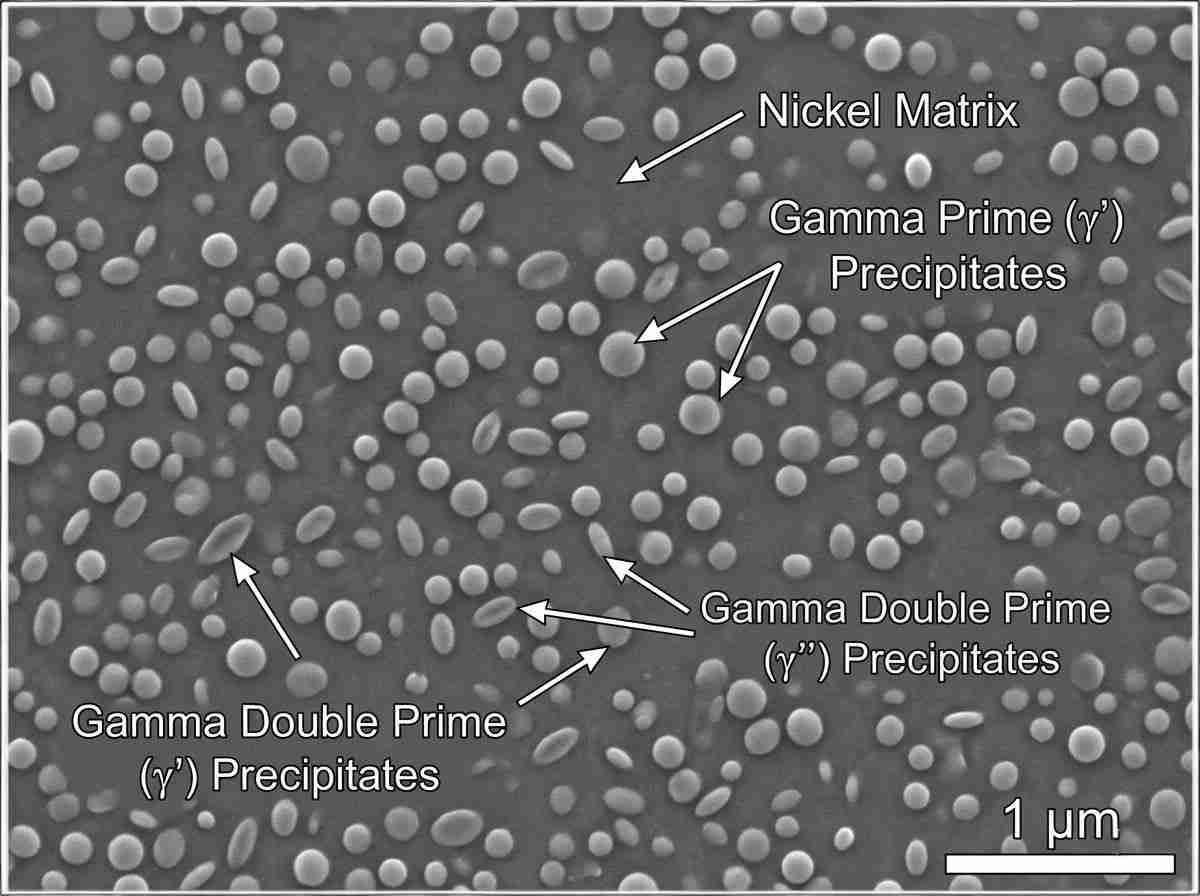
Conversely, when operational envelopes demand yield strengths exceeding 100 ksi (690 MPa), precipitation-hardenable (PH) alloys become the necessary choice. Grades like Inconel 718 and Monel K-500 undergo specific aging heat treatments to form finely dispersed intermetallic precipitates. The precipitation of gamma prime ()—nominally —and gamma double prime ()—nominally —acts as hard microstructural barriers. Dislocations are forced to either shear through or loop around these precipitates (Orowan bowing), requiring significantly higher applied stress before plastic deformation initiates.
Quantitative Baseline Analysis
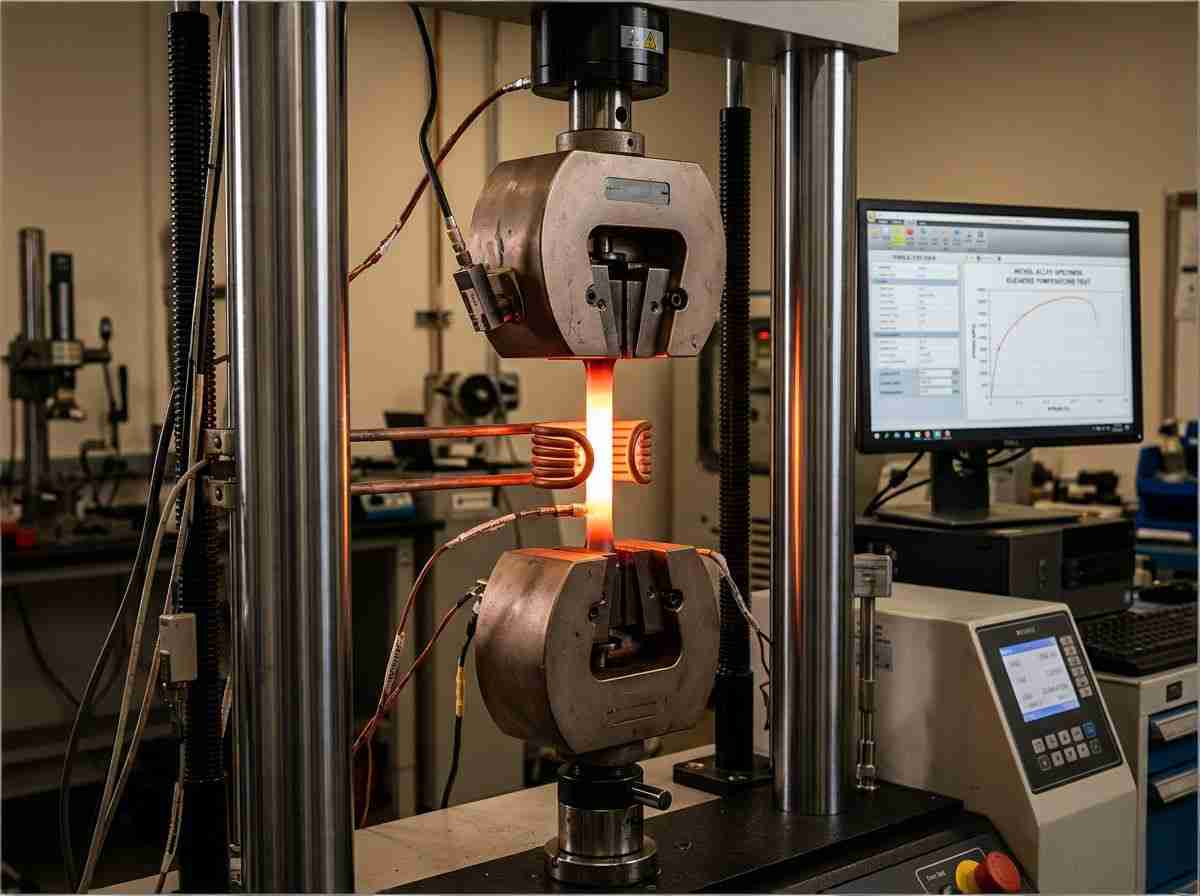
To accurately bridge the gap between theoretical metallurgy and practical component design, we must reference standard empirical test data. The structural differences discussed above manifest clearly in standard room-temperature tensile testing.
| Alloy Grade | Primary Matrix Mechanism | Yield Strength (0.2% Offset) | Ultimate Tensile Strength (UTS) | Elongation (%) | Typical Hardness |
| Alloy 400 | Solid Solution (Ni-Cu) | 240 MPa (35 ksi) | 550 MPa (80 ksi) | 40% | 75 HRB |
| Alloy 625 | Solid Solution (Ni-Cr-Mo) | 414 MPa (60 ksi) | 827 MPa (120 ksi) | 30% | 90 HRB |
| Hastelloy C-276 | Solid Solution (Ni-Mo-Cr) | 355 MPa (52 ksi) | 790 MPa (115 ksi) | 40% | 87 HRB |
| Alloy 718 (Aged) | Precipitation Hardened | 1034 MPa (150 ksi) | 1241 MPa (180 ksi) | 15% | 36 HRC |
| Monel K-500 (Aged) | Precipitation Hardened | 790 MPa (115 ksi) | 1100 MPa (160 ksi) | 20% | 30 HRC |
Creep Rupture and High-Temperature Degradation
Room-temperature data only provides a partial baseline. A comprehensive nickel alloy mechanical strength comparison must strictly factor in time-dependent plastic deformation, known as creep, especially when applications exceed 0.4 times the absolute melting temperature (). As temperatures rise above 600°C (1112°F), atomic diffusion rates accelerate exponentially, allowing dislocations to climb over microstructural obstacles that would typically block them at ambient temperatures. Grain boundary sliding also becomes a primary failure mechanism.
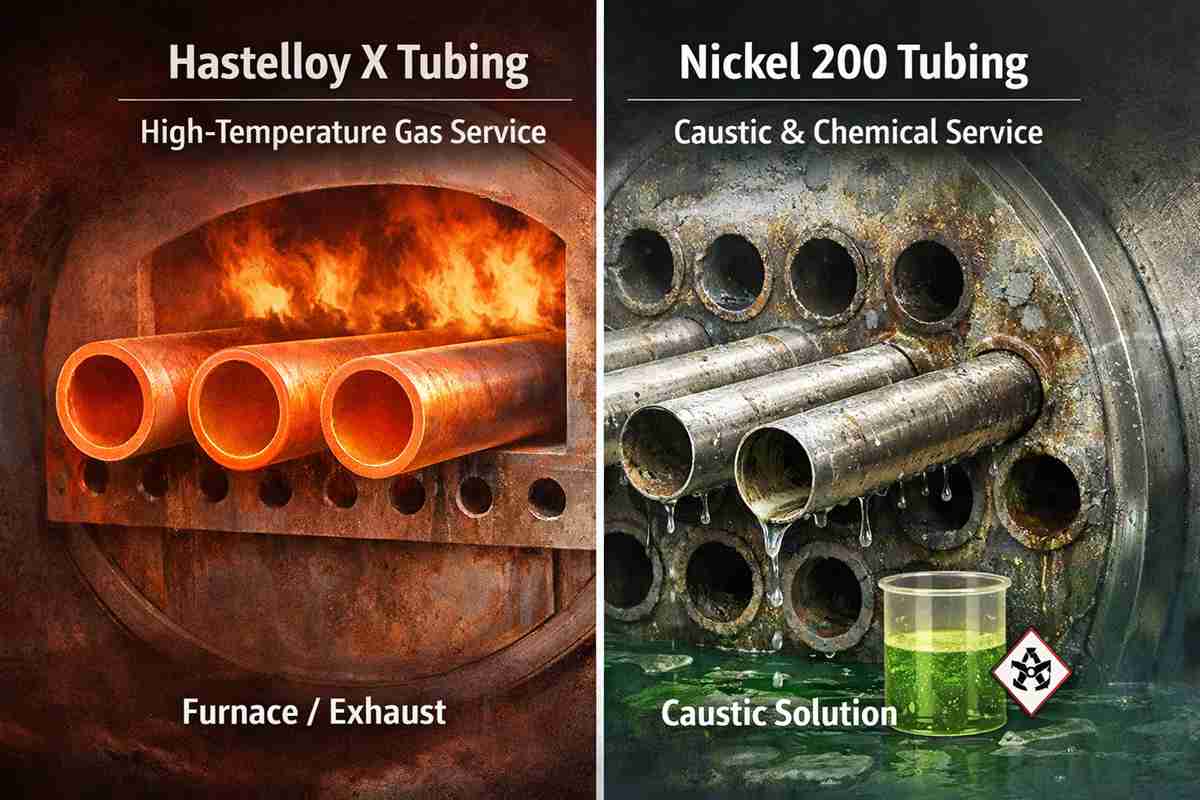
For instance, while Alloy 625 possesses robust ambient strength, its yield strength drops off aggressively above 815°C (1500°F). By contrast, the sluggish precipitation kinetics of Alloy 718 allow it to maintain its structural integrity up to 650°C (1200°F) for extended durations without overaging. For even more extreme high-temperature applications, alloys relying heavily on carbide network strengthening and solid-solution matrices (like Hastelloy X) often outperform heavily precipitation-hardened grades in terms of long-term creep rupture life over 10,000-hour intervals.
Low-Cycle Fatigue and Cryogenic Toughness
Another critical engineering metric often ignored in a standard nickel alloy mechanical strength comparison is the response to low-cycle fatigue (LCF) and cryogenic impact. Because nickel alloys retain an FCC crystalline structure at all temperatures, they do not suffer from the ductile-to-brittle transition temperature (DBTT) that plagues standard carbon and ferritic stainless steels. This intrinsic lattice stability means alloys like Inconel 718 and Alloy 400 retain nearly all of their impact toughness and resistance to crack propagation even when submerged in liquid nitrogen or liquid hydrogen (-253°C).
Securing Operational Integrity
Matching the exact metallurgical profile to a specific mechanical load envelope requires deep, empirical insight. A superficial nickel alloy mechanical strength comparison is simply insufficient when designing safety-critical components subject to combined stress, fatigue, and severe corrosion. At 28Nickel, our metallurgical engineering team routinely models complex load profiles to calculate exact failure loci for our clients. If your current material selection is underperforming, or if you are designing a next-generation component, reach out to our technical support team for a rigorous, data-driven material evaluation.
Related Q&A
Q1: How does cold working affect the results of a nickel alloy mechanical strength comparison?
Cold working (strain hardening) dramatically increases both the yield and tensile strength of solid-solution alloys by increasing dislocation density and entanglement. For example, heavily cold-drawn Alloy 625 can achieve yield strengths nearing 800 MPa, rivaling some precipitation-hardened grades, though this comes at a significant cost to overall ductility and can induce anisotropic mechanical behavior.
Q2: Why does Alloy 718 lose strength rapidly if continuously operated above 650°C?
The primary strengthening phase in Alloy 718 is gamma double prime (), a metastable body-centered tetragonal phase. When exposed to temperatures above 650°C for prolonged periods, this phase transforms into the thermodynamically stable, but mechanically weaker, orthorhombic delta () phase. This phase transformation consumes the hardening precipitates, causing a sharp decline in yield strength.
Q3: Is hardness testing a reliable substitute for yield strength evaluation in nickel alloys?
No. While there is a general correlation between hardness and ultimate tensile strength, using hardness values to estimate yield stress in nickel superalloys is dangerously inaccurate. The complex work-hardening rates and microstructural variations (like localized carbide precipitation) mean that two alloys with identical Rockwell hardness values can exhibit wildly different yield points under multiaxial tension.